Kimberly Gallagher:
You're listening to Herb Mentor Radio by LearningHerbs.com. I'm Kimberly Gallagher.
Tara Ruth:
And I'm Tara Ruth. Today, we're chatting with Mimi Prunella Hernandez.
Mimi is a clinical herbalist, educator, author of the National Geographic Herbal and co-author of The Backyard Guide to Edible Wild Plants. Rooted in her Colombian heritage and the Mexican tradition of curanderismo, she honors the art of folk healing while also integrating modern science. She's the former executive director of the American Herbalist Guild, and she received the 2023 Botanical Excellence Award for herbal community building from the American Botanical Council.
Welcome to Herb Mentor Radio, Mimi.
Mimi Prunella Hernandez:
Thank you, Tara. And thank you, Kimberly. I'm so excited to be here. What a fun trio we have.
Tara Ruth:
Yes. Thank you so much for joining us.
I'm thinking about the first time I met you was at a conference years ago in North Carolina and you were teaching there and I was just so inspired by you. I remember you teaching about cactus and yeah, you just had so much beautiful wisdom to share. And I also really loved getting to read your recent monograph for us on sunflower on HerbMentor. So just thank you for weaving with us over the years.
Mimi Prunella Hernandez:
Oh, absolutely.
Those are fun projects for me. Especially things like cactus, cactus fruit, medicinal cactus pads, sunflowers. We love them. But not all of us use them medicinally or know of all these... How treasured they are culturally. So that was such a beautiful opportunity. I'm so grateful.
Tara Ruth:
Yeah. Me too.
Mimi Prunella Hernandez:
So fun. Thank you.
Kimberly Gallagher:
Gosh, Mimi, we were already so excited to have you back on the podcast and then you presented your idea for the episode and we got even more excited.
You shared that you wanted to have a conversation on herbs for life after menopause and talk about the late bloomer archetype. We were thinking to get us started, it would be great if you could share what inspired you to dive into these topics of conversation.
Mimi Prunella Hernandez:
Awesome.
Well, I'm coming out as a late bloomer. I'm coming out as a postmenopausal woman for the first time publicly. No. But yeah, I just was reflecting last time I did a podcast or radio interview here with John and it was almost like a different lifetime ago for me and so much has shifted for me between then and now. And so it really just made me reflect on these last few years.
One of the things that... How I can surmise these years... I think of that shift. For me, perimenopause, I was really caught off guard and I really didn't know it was happening, but I think I went a little wild. I was like a queenager. I saw that term somewhere and I just... 40s are the new 20s and my kids were a little grown and I started hitting the dance floor and traveling and socializing and working out hardcore. Really fitness buff. And so it was really exciting and all this. And then it just all came to... It all just hit a wall. I was like, "Whoa. I can't keep going this way." And so I feel like I went from the queenager to the late bloomer.
Because what happened during this late bloomer phase is that for the first time ever, I put down roots on the homestead here. I bought my first house. I got married; postmenopausal marriage. I became a land steward. The native plant sanctuary became more important. And so instead of chasing wildness, I started tending wildness and it really just was a whole different form of being for me.
And I wrote my first book during that session too, during that time. And so I really sat down. For three years, I sat down and I was working and writing, working and writing. And I emerged from those three years of, I don't know, a new person or having to look at my life through a whole different lens. And between then and now, it's just been this whole looking at the late bloomer in me and the late bloomer in a plant ally that I've really made over the years, which is with evening primrose, became my late bloomer archetype. So it's just been an interesting blossoming, if you will. Yeah.
Tara Ruth:
Wow. I love what you said about that shift from chasing wildness to tending wildness and tending all the wildness around you with the plant sanctuary, the native plant sanctuary that you tend and... Yeah, I'm just going to sit with that. It's so beautiful.
I'm thinking about this late bloomer archetype you've invoked a few times. I'd love to hear more about what that archetype means to you and how you relate to this archetype. And you also mentioned evening primrose as a late bloomer. So I'd just love to hear more.
Mimi Prunella Hernandez:
Well, yeah, it did come out of my relationship with evening primrose. So evening primrose is this flower that I've really encountered on the meadow here at the sanctuary. And it's called evening primrose because these bright yellow blossoms start to flower, start to open up in the evening. So all day long, they're closed up and then as the evening comes, they start to open up. And then they also are around here late season. So I still... Even right now, fall is really here and it's starting to get cold and we're getting our first frost this weekend, the evening primrose is still opening up out there on the meadow.
And so I started really in another context doing some research for postmenopause for... I do a lot of education for doctors and I was putting together a series of webinars and evening primrose just emerged as has so much science behind it with the seeds. The seeds are really rich in gamma-linoleic acid and they press them into this brilliant oil and there's a lot of research on that oil, not just for the hot flashes and the night sweats, but also for mood and anxiety. And I don't know about...
Well, I do know because other women have told me that anxiety is something that creeps up after menopause. That's something I've never had, I've never experienced and now I really have to really tune into my body and feel, "Oh, what is that?" I'm feeling this anxiety. I'm feeling a little more just sensitive to wanting everything around me to be a certain way or... I'm such a tender and want everything to be in its place. And I have to loosen up. I feel like the evening primrose oil has really helped with that.
And then, because, let's face it, a lot of women who are concerned about aging with wisdom, aging with care, just being that late bloomer, we also want to be beautiful. We also want to be radiant. We also want soft, supple skin. And lo and behold, all this research on evening primrose for giving your skin a glow, for helping support your skin's collagen, for helping the radiance, the improved smoothness, just make it more supple so I was like, "Oh, evening primrose oil is real nourishment from the inside out." And just... So I had this alignment with that in the evening primrose.
But I also had... With other women, we had a circle. And one of the things I'm loving more than ever now is threshing and winnowing seeds. It takes so much patience and it's not something I ever really did as a young herbalist, but now that I'm growing a lot and I'm on the sanctuary, I'm like, "Ooh, I want to check out these seeds."
And so I started collecting the evening primrose as it was drying, you can see the crisp tops and I would just put them upside down in a paper bag. And I collected maybe just a dozen plants, maybe 20 tops and just left them in a bag, put them aside, and then later brought them out.
Threshing and winnowing, something that I talk about in The Backyard Guide to Edible Plants, you smack the plants to get all the seeds out and then you have to apply a fan to get all the chaff out and you're left with just seeds. I do that now with poppy seeds, with coriander seeds. You have to have the most patience to get to the seeds, these little tiny seeds, but it's such a worthwhile process.
I made with the circle of women evening primrose seed crackers.
Tara Ruth:
Yum.
Mimi Prunella Hernandez:
So delicious.
Tara Ruth:
Wow.
Mimi Prunella Hernandez:
Yeah. The kitchen is just such a fun space for me right now.
Kimberly Gallagher:
Wow.
I love just the processing of plant material. There's something just primal and whenever I'm out harvesting or doing the processing work, it just feels right in my body, like this is the kind of thing I'm supposed to be doing. It's so deep in our DNA. So I love that description of that process. Yeah.
Tara Ruth:
Wow.
Kimberly Gallagher:
And yeah, evening primrose has been an ally for me as well as I've traveled through the menopause journey. So yeah, I love hearing you share about it and...
Yeah, I think doing those processes too are really empowering processes for us. This whole journey of menopause and postmenopause sometimes gets cast in a really negative way in our culture. And as I've gone through it and my friends have gone through it, I've also started to see it as this transformative portal into another stage of our lives in a powerful stage. And I wonder if you're feeling that too, if you could share anything about the power that you've gained as you've moved through this journey.
Mimi Prunella Hernandez:
I think that for me, it's just a real grounded time. Whereas before, like I said earlier, I felt like I was always chasing something. I was always on the go.
I don't think that I could have had such a deeply connected relationship with my husband if I wasn't postmenopausal. I don't think I could have written books if I wasn't postmenopausal. I really credit this new phase of my life with not having the mid-month mood swings and all the cravings and the blood sugar yoyo. I just feel like I'm so patient now. It's like a whole different outlook. It is that groundedness, that rootedness.
I feel like I'm more happy just in my kitchen, which I've always been a kitchen herbalist but now I'm profoundly a kitchen herbalist. I want to bring everything in and create new things. That's what I do for fun now. It's no longer, "Let me go dancing," or "Let me go out to eat," or go shopping. Now, I just want to be in my kitchen, even by myself, that's the most centered I feel is like, "What am I going to do?" Right now, the lemongrass is coming in this weekend. I'm like, "What am I going to do and how am I going to do this? "
And this last summer, I gave myself a goal because I'm also new to Instagram. I miss the boat on a lot of these things and in some ways, I feel like the late bloomer boomer. I'm like, "Oh, what's Instagram?" And so I'm on there now trying to make reels and do something creative every day from what's in my garden or what's in the sanctuary. And so that's been fun just making something fun every day.
And it's been so hands on like elderflower infused whipped cream or hibiscus compound butter. I know. I know it's like... I did prickly pear fruit rollups. It's like, "Can I do that? Well, let's see." It's trial and error and not quite sure what I'm going to do with the lemongrass yet, but it's always like...
Sometimes, I'm just in the kitchen with a big basket of herbs and it just starts... It's like an artist. It just starts coming to me and my son will be like, "What are you doing?" And I'm like, "I don't know. I'm just chopping lemongrass, but it's about to become something." So yeah, the kitchen space has been just so fulfilling to have, to experiment and be creative.
Kimberly Gallagher:
Wow.
Tara Ruth:
Yeah. I got to say I've gotten to see some of the videos you posted on Instagram of your beautiful creations, and I highly recommend everyone check out your Instagram page because it's so inspiring and you just make things that look like they taste so good, which is part of the medicine in and of itself. It's like, "Oh, this is just part of our everyday life and it's irresistible to taste this primrose cracker or this whipped cream," whatever it may be. Such a great way to get the plants into our bodies.
Mimi Prunella Hernandez:
Yeah. And I'm really blessed to have a... Because I inherited a son through my husband and he lives with us full time and he is a teenager. And one of the biggest blessings is that he's actually interested in the kitchen space. His avenue is more through spices now. He's totally owned my spice cabinet. He's making his own spice blends now. I think he's a super taster. Some of us, a lot of herbalists I think are super tasters and he's just...
It's just another avenue of fulfillment I have found on this side of life and it just gives me another grounded focus to really help my family flourish. He doesn't want to be outside weeding the garden, but I'm like, "Well..." I still make him weed the gardens. You need that experience, right?
Tara Ruth:
Totally.
Mimi Prunella Hernandez:
You keep studying science and when you grow up, you don't have to weed your own garden.
Tara Ruth:
Well, that's great.
Mimi Prunella Hernandez:
But he loves the kitchen, so that's been a lot of fun.
Tara Ruth:
Oh, that's so sweet. Wow.
Oh my gosh. Kimberly, I am so enjoying this conversation with Mimi. Wow.
Kimberly Gallagher:
So much amazing information she's bringing to us.
Tara Ruth:
Yeah. And I love just... She brings all this embodied wisdom. She keeps talking about these different things she's been making in her kitchen or things she's been growing or foraging. And this other through thread I really see her weaving throughout is this attentiveness to the nervous system during this particular phase in life but important for all of us at different phases of life.
Kimberly Gallagher:
Definitely. Seems like something that is just inherent need to tend when we live in a culture that's moving so fast and yeah, so many things coming at us at once. So the nervous system is such an important aspect of our bodies to be tending and the herbs can be so helpful for that.
Tara Ruth:
Yeah. Hearing you say that even made me take an exhale. Let this tension that I didn't even know I was holding.
But it makes me think about this course that we have on HerbMentor called Relax, which offers these natural solutions for stress and anxiety and inflammation. And there's just so many beautiful herbal allies out there that can really support our nervous systems in times of transition, in times of particular stress, or if we're just going through our everyday lives, but we're wanting to be more in touch with our nervous systems and feel just a little more grounded with the highs and lows of daily living.
Kimberly Gallagher:
Yeah. That course is by K.P. Khalsa and he just has so much wisdom to bring on this topic and so many others, but people really love learning from K.P.
And that's just one of the many courses that are available on HerbMentor. And Mimi's also been talking about how she loves just being in her kitchen now and we have a couple of courses about food as medicine and bringing the herbs into your kitchen. And I think K.P. has one of those as well on there. So there's lots of ways to learn more about the things that Mimi's talking about in this interview right on our membership website, HerbMentor.
Tara Ruth:
Yeah. And then in addition to that, we have these meetups where we gather as a community about twice a month. And Kimberly and I facilitate those and we get to do deep dives into different topics.
In November, we're doing a deep dive into herbs for hormonal health. So if this conversation we're having with Mimi really inspired you, you could check out that recording, but we also just meet in all sorts of different topics. We've talked about the nervous system before, we've talked about the lymphatic system, etc. And it gives you this opportunity to gather as a community and really lean into your own grounded knowledge too. You get to see the other remedies that your peers are making or get inspired by other recipes that people share.
Kimberly Gallagher:
That's one of my favorite things about HerbMentor because I get to get on with you, Tara, and we get to talk about herbs and all of the wonderful things they can do to support us. And such a really nice time to get on it and actually see our members' faces and talk with people and different people from the community come on and share too. And oftentimes in the chat, there's all these different recipes that get shared. So it's really a time when we can learn from each other as a community.
HerbMentor is this hub for students of herbal studies all around the world. So we get to gather the wisdom and the knowledge from people all over who are excited about learning about plants. And we have a forum on there too where people can ask questions and we have challenges to keep you inspired and out doing things. So many different resources to take advantage of on that platform.
Tara Ruth:
Yeah. And we have monographs about so many of the herbs that Mimi shares about today as well. And maybe you have some lingering questions after this conversation. Asking them in the HerbMentor Forum would be a great venue for that. We have all of this and more at HerbMentor and we have a set price for HerbMentor but for our lovely listeners, we like to offer HerbMentor at a little discount.
Kimberly Gallagher:
Yes.
Tara Ruth:
Yes. So if you go to HerbMentorRadio.com, you can find that discount, join our thriving community there on HerbMentor. We'd love for you to add your own little special magic to the cauldron that we're stirring together of all this herbal goodness.
Kimberly Gallagher:
We'll be so excited to welcome you on. So please click over and take a look at that special offer today.
Tara Ruth:
For folks who want to check out what you're putting out on Instagram, what's your handle on there so people can follow you?
Mimi Prunella Hernandez:
Oh, yes. herbalandhome.
Tara Ruth:
Great.
Mimi Prunella Hernandez:
It's all one word.
That's just another part of redefining... I've had so many, I think, monikers along the way. When I was really young in my early 20s, I started off as Herbal Nymph, and that was my soap line, just the Herbal Nymph. And then it became so many things, Advanced Herbal Science. It was my science years, my really nerdy years. Got into Herbal Forager because I didn't have a home base, I was always out foraging.
And then I really had to think about it because now I'm so just rooted here, here with gardens and here with sanctuary that I'm like, "Well, I'm not really the Herbal Forager anymore. I'm always in my kitchen, always in my garden. So what am I now? Who am I today?" I'm like, "I'm Herbs and Home. How can I be at home with herbs and make fun stuff?"
And my medicine, my way of working with herbs has really shifted from the whole weight to volume, clinical protocols, ratios, one part this, three parts that... It's really shifted to just folk style for me and my family and just really listening to the plants and listening to my heart and then sharing medicine, baskets of medicine, baskets of herbs. And that's something that brings me a lot of passion is if someone, if a neighbor or friend down the street says they've sprained their ankle, I'm like, "What kind of basket am I going to make? What am I going to drop off?" And so that's really fun. Really fun.
Tara Ruth:
Oh, that's so sweet.
Kimberly Gallagher:
So beautiful. Yeah. I know...
I love how you're describing these different chapters. It's like these different times in our life and how we just... Each one has a little bit different character and yeah, we're moving into this postmenopausal time, which is a time in our culture where women are discounted and this way that you're talking about being in the home and creating baskets for people just makes me think about how important these elder women really are in a culture and the things that they do bring in that grounded home space.
As we were putting this together today, we were thinking about herbs we might talk about in postmenopausal life, and we were wondering about red clover, which you describe as the pink haired lady.
Mimi Prunella Hernandez:
The pink haired lady.
Kimberly Gallagher:
Would you care to share a little bit about red clover?
Mimi Prunella Hernandez:
Absolutely. Yeah.
I think I've always loved red clover because she's so out there. You see her from the road. You can't miss her. She wants to be noticed. And what made me dub her the pink haired lady is I was reading this study... Because I do love... I still bury my head in research and in studies. I'm always reading clinical trials and what have you. But in this one study, it was like red clover improves the hair, the skin, the libido, hydration. It was like, "Oh, the pink haired lady, she's out there still being ornery and still catching eyes."
But red clover... And we know in the wise woman tradition, we steep our red clover overnight. We get these really mineral rich overnight infusions and those minerals being so good for bone building and for protecting our bones and this magnesium to help our blood vessels and our nourishment.
But there's a lot of great research on red clover, especially the isoflavones in there that are gentle estrogen modulators that can really help support bone, especially... Because bone loss is one of the things we are concerned with, helps support our skin and cardiovascular health and urinary tract health. So I like to think of it as that pink haired grandmother flower that is really protective and making those really nourishing deep green infusions but with a pink twist.
Tara Ruth:
So sweet.
Kimberly Gallagher:
Oh. I love a pink twist.
Tara Ruth:
Yeah. Again, I love these characters that you're bringing in. And it feels like you have such a deep relationship with these plants. They're not just an inanimate object that you reach for off the shelf. It's like, "Oh, I see these beings growing around me and I get to work with them and bring them into my daily life and into my own story." Yeah. Really sweet. Yeah.
Mimi Prunella Hernandez:
Right. And then like around here... So I know you're in a whole different part of the country but around here... I live in kudzu country. So I'm in the Southeast. I can walk across the street and there is kudzu. I'm really blessed that kudzu is not on the land here but just a mile down the road.
Kudzu, if you're unfamiliar with it, it's an Asian vine. It's called she who ate the south because it's such an invasive sprawling vine. It'll take over miles and miles of... It'll take over homes and cars and forests.
Have you seen this, Kimberly?
Kimberly Gallagher:
No.
Mimi Prunella Hernandez:
Oh my gosh. It will. It is one of the most invasive weeds in America, but yes, there's some places around here where you can just look out and the entire landscape is kudzu.
Tara Ruth:
Wow.
Mimi Prunella Hernandez:
It's sad but it's interesting because you can't help but have a connection with kudzu here.
It is an Asian herb. There's so many medicinal uses of it in Asian research and menopause is at the top of that list, not only for things like hot flashes, but also headaches and mood support and migraines and even blood sugar and metabolic support and even like alcohol cessation. Kudzu has come up with alcohol use syndrome.
When I think of kudzu, this vine that ate the south, this sprawling, tangled... I think of almost the image that comes to mind is connective tissue. And we have a lot of herbs that are great for bone support, like the red clover and the black cohosh and the black cumin seed. But kudzu root has this very specificity for collagen support. I'm sorry. I'm sorry. For cartilage support.
Tara Ruth:
Oh, wow.
Mimi Prunella Hernandez:
Cartilage. And we don't often think about our cartilage unless you're postmenopausal women in a lot of pain. We have... Our joints feel like they're getting a little drier, they're getting a little more... Rubbing on each other. And so the research around kudzu is really interesting with that promoting cartilage regeneration.
Tara Ruth:
What?
Mimi Prunella Hernandez:
And that is a really, yeah, special niche and collagen. So yeah, both of them. So bone density, cartilage support, collagen support, and metabolic balance and so...
Yeah, we need some more of this big vine that ate the south. She's super strong. She's holding it all together.
Tara Ruth:
Wow.
Mimi Prunella Hernandez:
And in my book, I talk about the kudzu flower because it's edible and it's this really beautiful purple flower. It's quite exotic looking. And it smells like grape jelly. Literally grape jelly from the grocery store shelf, not the natural grape jelly, the real fruity, sugared grape jelly.
We work with it around here. A lot of ladies will, a lot of older folks will weave baskets from kudzu vines and those make some really beautiful art. A lot of kitchen herbalists like to make kudzu jelly, and it turns out this really bright pink, fruity, grape scented jelly. And just even a kudzu flower tea, it's just so bright and pink. Another pink one, right?
Tara Ruth:
Yeah.
Mimi Prunella Hernandez:
So yeah, we love our kudzu around... It's a love-hate relationship around here.
Tara Ruth:
I understand.
Wow. So you were talking about the flower. Is the leaf or root also used or is it mostly the flower? I'm not super familiar with kudzu.
Mimi Prunella Hernandez:
Uh-huh.
In Chinese medicine, it's the root that's used. And the leaf has a lot of these compounds. Like red clover, it's another source of isoflavones. So that's what's really being studied there.
The flower is just bonus. If you happen to live around it, you get exposure to the flowers and they're so gorgeous. And the whole air around the neighborhood starts smelling like grape jelly. And it's just a fun experience to get out there with the kudzu vines, as long as you don't get trapped in there and it doesn't grow over you-
Tara Ruth:
Over you.
Mimi Prunella Hernandez:
... as you're out there.
Tara Ruth:
Yeah. Got to keep moving.
Wow. Thank you for sharing. I love learning about plants that don't grow where I am just to... Especially when they're so prolific in other areas and such an everyday part of people's lives. Scenting the air grape jelly.
Mimi Prunella Hernandez:
It always blows my mind when people haven't heard of kudzu. I'm like, "What?" Because it's everywhere.
Tara Ruth:
Yeah. Wow.
You also mentioned black cohosh relating to the bones, and I know that was another herb that you wanted to talk about for this postmenopausal time. You referred to black cohosh as the graceful spine.
Mimi Prunella Hernandez:
The graceful spine.
Tara Ruth:
Yeah. Tell us more, please.
Mimi Prunella Hernandez:
The graceful spine, it has this tall floral wand and because I live in a native plant sanctuary that's very like Appalachian woods, really rich cove and so there's an area of these woods here that I called Cohosh Cove because there's a humongous stand of black cohosh. And when these flowers, they're full blossom, you can see the breeze is like... So you have like... It's almost like a yoga dance. These little spines are waving in the wind.
And as a... I have a lot of musculoskeletal issues. I have struggled with them and I'm thinking, "Ooh, I wish I had that graceful spine." And it's like, "Oh, black cohosh."
Because ironically, it's a native plant. It's been used for millennia since the beginning of time around here by the ancestors of the land but the eclectics used it for nervous tension and for muscular tightness, so for things like whiplash. So I think of black cohosh now for just muscle tightness along the spine, along the neck. And I see Kimberly relaxing your shoulders being like, "Oh, it's working."
Tara Ruth:
Bringing in the spirit.
Mimi Prunella Hernandez:
And the more I've worked with it, it's like it's not just for muscular tension. It seems to be for the exhale of internal tension.
So I remember as a younger person taking it, because I had that menstrual pattern where I knew my period was supposed to come any day and I could feel it and I had all this tension in my belly and then I would take some drops of black cohosh and then it's like I could literally feel my uterus unlock and my menstruation began. Well, I still feel that sensation except it's more of energetic level. So I'll take a few drops of black cohosh and it's like, "Oh, wow, I was really locked up. I feel more free now and my muscular tension feels more free now."
As I was reading about some of the history of black cohosh, actually, the root is used for deep and dark depression. So you think about someone who's really locked up in a pattern and I just feel the essence, the energetic of it is so releasing of that darkness, releasing of that inner tension. And so that's one of the most profound ways that I've learned to work with it here.
And of course, still it's in research touted for the hot flashes and the menopausal symptoms and I find myself really using it less for that but more for this muscular tension type of picture, more for that easing anxiety, and easing the uptightness because I feel like I do get more uptight as a postmenopausal person. I'm like, "I'm a little pickier about things. I'm grounded, but I'm also a little more uptight." So it's the herb that lets me exhale and think about yielding to the breeze. And that's such an important reminder. It's so graceful.
Kimberly Gallagher:
What a beautiful description. I'm learning so much now. I'm like, "Okay, I got to get some black cohosh and start experimenting," because I can certainly feel that, the tension you're talking about and the need for it to just ease. Yeah. That sounds really-
Tara Ruth:
Sounds really beautiful.
Mimi Prunella Hernandez:
It is. It's amazing. It's usually just a few drops of tincture for that pattern.
Kimberly Gallagher:
Very nice. Very nice. I think so many women are going to be excited to hear all these little tidbits that you're sharing.
Mimi Prunella Hernandez:
Oh, wonderful.
Kimberly Gallagher:
I was wondering also about ginseng. You talk about that as the elder she-root. How do you like to work with ginseng?
Mimi Prunella Hernandez:
Oh, I'm so glad you brought up ginseng because I think that's probably one of my most revealing love affairs right now is with ginseng root. And for so long, you always hear about all the time, it's the man root, it's the man root. It's got the yang. It's this fiery masculine and every man in the world wants it because virile and all this.
Well, I started reading research about Korean in the feminine sense that it's also taken during menopause, after menopause, and I started studying in context to cognition because it really is a cognitive ally later in life. And one of these long-term studies was looking at postmenopausal women who took it for five years and they had a lot better cognition at the end of those five years. Just more improvement markers in memory and things like that. And so I was like, "Oh, well, that's really interesting."
And then I started really embracing her more personally, again, drops of ginseng root tincture for... We know it as an adaptogen. For stress to help our cortisol, which is going to be an issue too after menopause, to help regulate. Libido. When you start diving into the research, it's really good, really... There's one for the libido talk for lots of studies there on ginseng and libido postmenopausally.
One of my favorite parts of ginseng is this connection it has with the amygdala in fear memory extinction. So that's a loaded research word for if you are in the seat of trauma and you don't want that to become imprinted in your inner fear matrix, ginseng, a few drops. So we have all gone through this when we know we're going through something very deep but we want to protect our future self from those repercussions, that's when I start taking ginseng drops to help so it doesn't really imprint into my...
And there's research around that. It's called fear memory extinction, which is amazing that it has that support of the HPA axis to the point of the amygdala, which I consider the little red flag that goes up in response to fear, or it can be the little white flag that stays neutral if we feel safe. So we don't want to be over that post trauma that we get. If we want to prevent that, I love ginseng for that.
But to me, it's more... It's just warm and it's restorative. And I think of the little Korean ladies stirring the pot of Korean ginseng soup.
And here, of course, we have American ginseng, which is a little warmer, but very nourishing for us mountain folks and very traditional.
And so I guess I want to change that moniker from man root to she-root, elder she-root, because I don't think that it's always the best for women who are still menstruating or for people who are premenstrual, I'm sorry, premenopausal because it can interfere with the cycles but as postmenopausal, we're in the clear. We don't have to worry about the cycles anymore. So bring it on. Bring it on.
Tara Ruth:
Wow. I've never heard of ginseng being used for... Did you call it the fear memory extinction? I've never heard of that concept before or that usage. That's incredible.
Kimberly Gallagher:
Yeah.
Mimi Prunella Hernandez:
It really is. It's not just that, but it's also addiction, alcohol use disorder, even addictive patterns. There's a lot of research around ginseng root that it's for recovery scenarios, that's quite profound as we really take a look at our vices and our habits, and as we mature with those and how to help ourselves be the healthiest version of ourselves, I think ginseng is a real amazing ally.
Wow. That's so special. I'm excited to learn more about ginseng.
Kimberly, I see your face too in awe over there.
Kimberly Gallagher:
Yeah. I just feel like, "Wow." That's a really good one for us to know about right now in our family, just with the trauma and the grief that we're going through. I feel like that ginseng could be a really good ally for us to know about. So I'm just feeling personally so grateful for that little information. Wow.
Mimi Prunella Hernandez:
And even game changer. In a way, your rescue remedy, like here on the homestead, we lost a chicken. We lost one of our hens and it was a little tragic and it happened suddenly. And then my son and my husband are all running around like, "What do we do? What do we do? " And we're all crying. So I'm like come out with the ginseng drops. I'm like, "We're going to get through this. " So it's the farmstead rescue remedy over here.
Kimberly Gallagher:
So good. These herbs just are right there for us.
Tara Ruth:
It's really special.
Kimberly Gallagher:
So grateful for all these allies.
Tara Ruth:
Yeah.
Kimberly Gallagher:
Yeah.
Tara Ruth:
Wow.
Another one you shared with us, Mimi, was nigella, who you referred to as the multitasking crone, and that name intrigued me so much. I was like, "I got to hear more about this." Please share.
Mimi Prunella Hernandez:
It's because I am in awe of black cumin seed. We hear about the black seed oil and it's one of these turmeric root. You see it everywhere. It's good for everything. But I think it's really specific for us. It's also a lot of support for bone health, a lot of support for connective tissue, incredibly anti-inflammatory.
One of the things to consider during postmenopause, I didn't know this, but a lot of our symptoms, a lot of our situation can be traced back to just more systemic inflammation. And the whole reason for this is that our natural estrogens, our estradiol, it turns on the switch for something called NRF2 or N-R-F 2.
That is a transcription factor that just turns on a whole lot of antioxidants, a lot of our own inner antioxidant and detoxification pathways. So when estrogen starts to decline, we get less of that on switch for our inner antioxidant systems, which means we just inflame more. So a lot of us feel hot, we feel dry, we're always inflamed. We got body aches and pains. We gain weight more. Cognition is more at risk. Neuro inflammation, depression. All this is inflammation. It's all inflammation.
And so I want to look at things that activate NRF2. By the way, ginseng activates NRF2. A lot of our... Of course, berries, turmeric, these activate NRF2. And so does black cumin seed. And so it's in a way, I like to think of it as compensating for our lack of estrogen for that little estradiol that turns on the switch. Well, maybe we need the multitasking crone to come in here and turn on the switch for us. And so we need all that support wherever we can get it.
But it's really useful, especially not just for bone support but also for this metabolic balance. Research is associating it with decreasing BMI, helping with weight loss, and metabolic health and just enhancing detox through glutathione availability. And just even allergies and sinus issues and... It's one of the first things I go to because it's relatively affordable. It's not like one of these really... It's a little trendy but it's not like... I think it's underutilized or underconsidered either the black seed oil or the extracts of the black cumin seed. It's just so...
Has this... Thymoquinone is the compound that's in there. Has one of the compounds that just has this, I would say, lights up the whole grid of health. We call that... In science, some of us like to call that molecularly promiscuous. So we like that when we're in postmenopause too, the idea of promiscuity, but it's in a different sense. It's promiscuous in it's not just targeting one receptor. It's lighting up a whole grid of a vast amount of pathways in the body that lead to vibrance and health. It's multitasker.
If you've ever tasted black seed, it's sharp, it's a little fiery multitasking crone turning the light on.
Kimberly Gallagher:
Wow. I love that image of the grid coming on. It's just that feeling of vibrancy and... Woo. Yeah.
I had nigella growing in my yard and it's definitely one that takes some time to harvest those seeds. Have you done the harvesting process?
Mimi Prunella Hernandez:
I have not because around here... So I'm always on the fence about because this native plant... I have United Plant Savers Botanical Sanctuary here, a part of the network, and so I always have to really struggle with like, "Should I let that go? Should I not?" Things like evening primrose is native plant here, so I'm like, "Let her go."
But nigella's not native here at least in my area. And I've heard from people that once she takes off, she takes off. So I'm like, "Oh, I don't know." But maybe one of these days. But oh my gosh, this sounds fun to get those little seeds. I can imagine.
Kimberly Gallagher:
I thought maybe you'd have some tips because I would be out there trying to get them and I was like, "Wow, this is tedious work." I didn't quite ever figure out the best way. And now she's exited. I haven't seen her in the last couple of years. So I've had so many and now they're gone. So maybe they'll come back.
Mimi Prunella Hernandez:
Ain't that funny?
Kimberly Gallagher:
Yeah. We think plants-
Mimi Prunella Hernandez:
I think it's the-
Kimberly Gallagher:
... don't move but they actually do.
Mimi Prunella Hernandez:
Yeah. I had that here once. I have a patch of a native St. John's wort and I was making the most brilliant oil from it. I grew it because I do have native St. John's wort, but I'm not trying to harvest anything that's native here or that came with the property. "Oh, I'm going to leave you alone and let you thrive."
But I grew some in my garden and that really started thriving and I started making the red St. John's wort oil and then the next year, just nothing. But then another year went by and then there she was in another garden patch entirely. So it's like, "Oh, you're moving around."
Kimberly Gallagher:
Doing what they want to do.
Mimi Prunella Hernandez:
Your little disappearing act. I'm like, "I see you. "
Tara Ruth:
Oh my gosh. So funny. So great. Wow.
These plants have such life forces that we're so lucky that we get to share with them and just get to know their personalities and watch them move around us.
Mimi, thank you so much for joining us. This has just been such a treat of... All the information is just washing over me and I'm feeling so excited to share it with more people.
Mimi Prunella Hernandez:
So sweet.
Tara Ruth:
Yeah.
Mimi Prunella Hernandez:
Thank you.
Tara Ruth:
Yeah.
Mimi Prunella Hernandez:
Yeah, this is fun.
Tara Ruth:
Kimberly, do you have any final questions before we wrap up?
Kimberly Gallagher:
I was just going to ask Mimi if there's anything that you feel like you want to share before we close, any other pearls of wisdom that you have for these postmenopausal women out there listening.
Mimi Prunella Hernandez:
Ooh. Eat more beets.
Tara Ruth:
Eat more beets.
Mimi Prunella Hernandez:
I think that's another one. I went from dance floor beats to kitchen beets.
Mobility is important. And I will say that when I spent three years writing the National Geographic Herbal that I was very sedentary. I had to work my day job all day long. I work from home and then immediately shift gears to writing and then writing on the weekends because you have deadlines. So at the end of those three years, I emerged and I had a lot of trouble walking.
Tara Ruth:
Wow.
Mimi Prunella Hernandez:
I don't know if it was like some atrophy. I used to be a heavy dance floor person and then the pandemic happened and everything shut down. I moved to the country. It's like... Stop going to the gym. So I experienced this time of just sedentary lifestyle, which I've never had and that took a real toll and it was really eye-opening to be... We hear that. Use it or lose it. So we have to keep in motion. We have to make time for movement.
And the thing about beets and the science of beets, the red beets is that they have these dietary nitrates in them that help our blood vessels. They help our blood vessels relax so we get greater oxygen delivery to our muscles.
The study that I love is on postmenopause and it's literally a half a glass of beetroot juice, which led to postmenopausal women walking longer, walking longer, significantly longer, 40 meters longer in a six-minute walk test. And to me, at the time when I was having trouble walking, I was like, "Ooh, if I could walk 40 meters longer without hurting myself..."
Beets, even if you're just getting off the couch or just going back to the gym, getting some of those healthy beets in you is going to make you work out better and recover easier.
I'm a lot better. I actually had to go to physical therapy. I'm sure it wasn't just writing the book and being sedentary, but just things that catch up with you in postmenopause. So now you have to learn what works for your body and so now I keep up with that and I eat my beets.
Beets have these real bright pink compounds too called betacyanins, which is that same compound that's in prickly pear fruit, that pink... Like mocktail margaritas, the prickly pear margaritas. That pink pigment is really good for you too. So yeah, don't forget to eat your pinks and eat your reds.
Kimberly Gallagher:
Pinks and reds have been the theme, right?
Tara Ruth:
Yes.
Kimberly Gallagher:
Starting out with the pink haired lady and we're ending with the beets. Very beautiful.
Tara Ruth:
So good.
Kimberly Gallagher:
Wow. Thank you so much.
Mimi Prunella Hernandez:
You're welcome.
Kimberly Gallagher:
I just feel like this podcast is going to be such a blessing for so many people out there.
Mimi Prunella Hernandez:
Yeah. Thank you.
Kimberly Gallagher:
Yeah. Really appreciate you.
Mimi Prunella Hernandez:
Lots of recipes, lots of... We talked about evening primrose, prickly pears, things like that, all in the National Geographic Backyard Guide to Edible Plants. And a lot of the plants I talked about are in the herbal.
Kimberly Gallagher:
So beautiful.
Mimi Prunella Hernandez:
This is my life's work in here. So check it out and thank you for letting me plug those.
Tara Ruth:
Yes.
Kimberly Gallagher:
Yes. Oh my gosh. Definitely check out Mimi's books because they're stunning. So, so beautiful and well, well done.
Tara Ruth:
Yeah. Mimi, do you have a website that you want to send people to?
Mimi Prunella Hernandez:
It is Herbal and Home.
Tara Ruth:
Great.
Mimi Prunella Hernandez:
Just HerbalandHome.com or you can just look up my full name, Mimi Prunella Hernandez, and that'll get you there too.
Tara Ruth:
Yeah. And I can't recommend your book enough to listeners right now. It's one of my favorite herbal books I've ever read. On Friday when I taught an herb class, I brought five herb books with me to share with people who wanted... If you want to learn more. And it was one of the ones that I brought. It's up there just in my absolute favorites. And you share so beautifully about plants and bring in story, medicine, and science and just weave them together in the most wonderful ways. It's very engaging. And there's so much in it that I... Just information that I haven't found in a lot of other herbal books too. I was like, "Whoa, I didn't know this about that plant." And then you bring this history and folk wisdom and science altogether. So please, please go read this book. It's amazing, everybody.
Mimi Prunella Hernandez:
Thank you so much.
Tara Ruth:
Yes. Yeah.
Mimi Prunella Hernandez:
And thanks for having me. This was fun.
Tara Ruth:
This was very fun.
Kimberly Gallagher:
Let's do it again sometimes.
Tara Ruth:
Yes.
Mimi Prunella Hernandez:
That sounds like a plan.
Tara Ruth:
Aw, well, thank you again, Mimi.
And for those listening, please stick around for an Herb Note.
Welcome to Herb Notes. I'm Tara Ruth with LearningHerbs.
Ginger, Zingiber officinale, is far more than a spicy addition to your meals. This beloved plant has been used for centuries as a powerful herbal remedy. Let's dive into three gifts of ginger.
One, ginger for colds and flu. When the first signs of a cold appear, ginger is one of the best herbs to turn to. Its warming, stimulating properties help increase circulation and promote gentle sweating, which can support the body's natural immune defenses. A hot cup of fresh ginger tea can soothe a sore throat, ease congestion, and help you feel comforted and warm from the inside out.
Two, ginger for healthy digestion. Ginger is famous for its ability to calm the stomach and ease digestive upset. It's a go-to herb for nausea, motion sickness, or indigestion after heavy meals. A small cup of ginger tea before meals can help awaken the appetite and prepare the body for digestion, while sipping it after eating can help soothe the stomach.
Three, topical ginger for pain relief. Used externally, ginger can help ease sore muscles and stiffness. Its warming nature helps increase blood flow to the affected area, bringing relief and relaxation. You can topically apply a fresh ginger poultice or a compress to the affected sore or spasming muscle, taking care to avoid sensitive areas like the eyes, for example.
And just a few contraindications to keep in mind. Because ginger is very warming and has drying properties as well, it may not be a good match for those already showing signs of heat or dryness. It should not be used in large amounts during pregnancy and those taking blood thinning medication should consult with their doctor before consuming large amounts regularly.
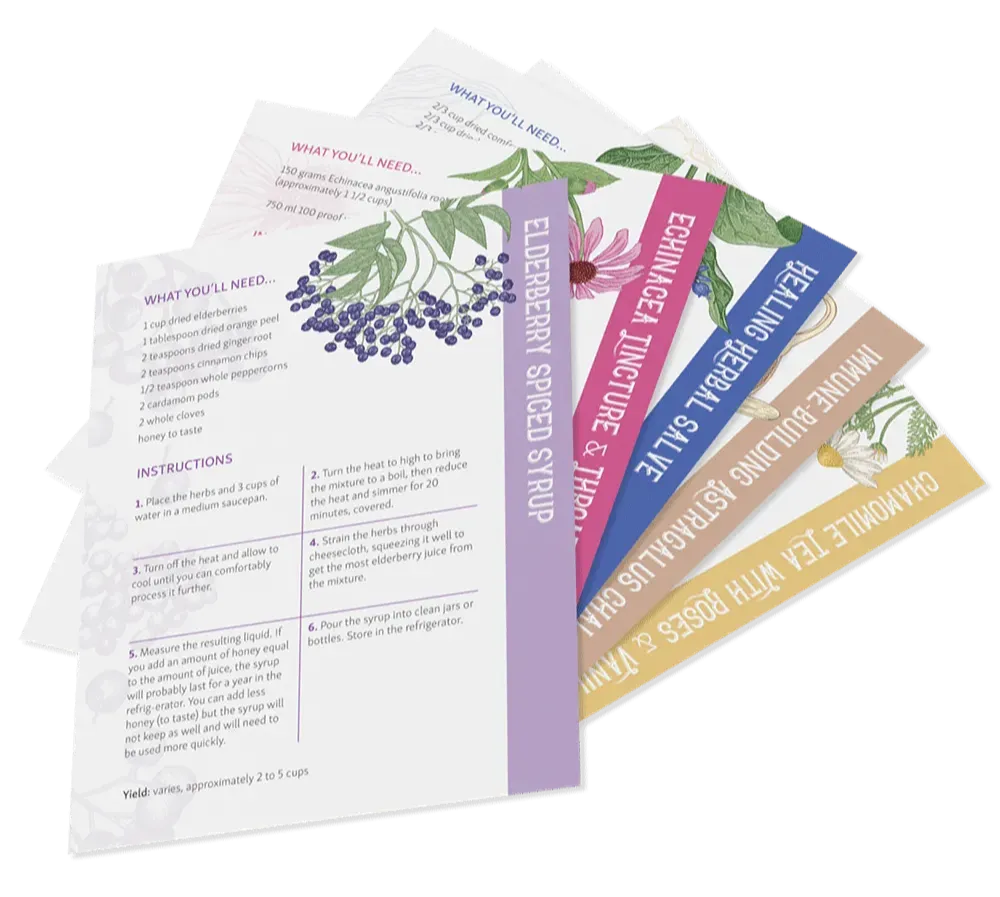
Want to learn more about the benefits of other common herbs? Visit HerbNotes.cards to grab a free deck of our top 12 herb notes. You learn all about herbs like elderberry, chamomile, and more.
This has been Herb Notes with me, Tara Ruth. Catch you next time.
Herb Mentor Radio is a 100% sustainably wildcrafted podcast. Written, performed, and produced by me, Tara Ruth, with sound engineering by Rowan Gallagher. Visit HerbMentorRadio.com to subscribe on your favorite podcast app and find out how you can be a part of HerbMentor, which is a website and community that you got to see to believe. Herb Mentor Radio is a production of LearningHerbs.com, LLC. Thank you so much for listening.