Kimberly Gallagher:
Welcome everyone. You are listening to Herb Mentor Radio by LearningHerbs.com. I'm Kimberly Gallagher.
Tara Ruth:
And I'm Tara Ruth. Today we're chatting with Maria Noël Groves. Maria is the author of several books, including but not limited to Body into Balance and Herbs for Gut Health, which is upcoming and I'm very excited about it. She is a clinical herbalist and herbal medicine teacher with more than two decades of experience and a registered professional member of the American Herbalist Guild. Her business, Wintergreen Botanicals is based in Chichester, New Hampshire. Welcome to Herb Mentor Radio. Maria, thank you so much for joining us.
Maria Noël Groves:
Thank you so much for having me. I'm really excited to be here.
Kimberly Gallagher:
Yeah. It's so great to get to welcome you onto the podcast. Recently I was invited by Maria and a couple of other women herbalists who own businesses to be in this little mastermind group where we support each other in our herbal businesses, and it's been so fun to start to get to know you through that, Maria. And it was just really fun to hear that you had this book coming out and to be able welcome you in this moment when you're about to release the book. So I'd love to dive into learning more about herbs and gut health with you today. So yeah. This might sound like a silly question, but why should we care about gut health?
Maria Noël Groves:
Well, that is definitely something I'd love to get into, but I do want to just give a little shout-out to you all at LearningHerbs because I've been following you for many years now. I bought your Wildcraft game years ago and then would sell it to my students and just have really loved all of the content that you folks have been putting out. It's been pretty awesome. So thank you. It's an honor to be here. I know I said that before, but I really, really mean it.
Kimberly Gallagher:
Thank you.
Maria Noël Groves:
Herbal Gut Health ... I don't know what'll show up in the camera, but Herbal Gut Health is the new book that is coming out. So technically as we record this, it's not officially released, but I believe when it's releasing it will be released when this podcast releases. So why should gut health matter? There are so many ways that our digestive system impacts our overall health and well-being. And for those of us who work in herbal care or for anybody who's really interested in herbs, there are a lot of folks who just simply have digestive health concerns that might respond really well to herbs a lot of the day-to-day stuff. But beyond that, our digestive health affects almost all facets of our health and well-being because we are not only what we eat, but we're also what we can digest. And so our ability to access those nutrients to fuel our body and make everything from hormones to skin and tissues and bones and all of that is impacted by how good our digestive system is at breaking down and absorbing those nutrients.
And then there are so many other ways that our digestive system interfaces with other aspects of our health. So our mood, we get a lot of hormones that are produced there and neurotransmitters. We also have connections to our immune health. Our digestive system is a key part of our immune health and our ability to fend off certain types of infections as well as to modulate immune function when it comes to things like allergies and autoimmune disease. And so there are just so many ways in which the digestive system impacts the whole body of being. And in the herbal world, we not only work with the direct digestive concerns, but also that interface. And so that's why I pitched it to the publishers and said, Hey, I'd really love to write a book on gut health because really not much out there that dives deep into herbalism when it goes into the digestive system. And so we did. It was a big project, but we did it.
Tara Ruth:
Yeah. That's so true. I haven't seen a book before that's gone into this much depth and also been really accessible too where, oh, there's great formulas in here. This really just walks you through step by step how things are working in the digestive system and what happens when they're off too. So I really appreciate the perspective you bring to this. I feel like a lot of folks first become really aware of their digestive system when something's off, they're like, "Something's not quite right here." And so I'm curious, what are some signs that our digestion might be off and that it's either just things aren't flowing right or we might need a little extra herbal support?
Maria Noël Groves:
And there's a continuum there too because there's day-to-day stuff like if one day you eat a whole mess of grapes and you end up with some loose stools and gas, that's probably not cause for alarm. You could take some herbs, but it's not really necessary. It's usually going to shake out with time. Or if you're just really stressed, sometimes there might be a little change in your digestive function or your stool or something like that. That's pretty typical. Then there are a lot of the day-to-day things that may be cause for concern as far as their interfering with people's quality of life or having some kind of a negative impact on their overall health. And so we've got that. And then you've got signs that could indicate that maybe you should go to the hospital right away. And so even though some of the herbs might be very helpful and supportive for really extreme cases of gut inflammation and damage, so a good example might be like ulcers. There are also times when these burning pain ... Pain is one of those things that a lot of people experience with digestive concerns. And it could be just a little bit of mild pain that a cup of tea would be really helpful for, or it could be a sign of something more serious that really should get checked out.
So just keeping in mind that there is that continuum to things. But I would say we've got gas, bloating. Ideally we should be having bowel movements about once or twice a day and they should be fully formed and not too difficult to pass. But a lot of people don't fall into that description. And so if things are too loose or not very frequent ... I encountered one client who went I think like a month without a bowel movement. That was cause for going to the doctor's probably. That was before she came to me. And so bowel health, gas bloat. Sometimes people just feel like food sits in their stomach and isn't being digested very well. Or maybe you're taking all the things and you're eating all the right things and you're taking all the supplements and you're just noticing that it doesn't seem to be translating well. So maybe the bone density ... Bone density takes a while to improve and can be tricky, especially in our older years. But if somebody is doing all the things and they're not seeing the improvements or their nails, their skin, dry skin, dry eyes, but you're taking the fish oil, those might be signs that the digestive system isn't functioning optimally. And there may be ways that herbs and other approaches could help enhance the vitality of it a bit more.
Tara Ruth:
Right, like the absorptions off. So no matter how much of this great supplement that you're taking, it's not really going to show up down the line for your nails, et cetera. Got it. Got it. And I love that you brought too, just, you're right, that whole spectrum of experience we can have with our gut health in terms of signs of something being off, it can just be a one-off very minor thing or it could be like, oh, there's this really serious acute condition or a serious chronic condition and everywhere in between too.
Maria Noël Groves:
And herbs are often helpful in the grand scheme of all those scenarios, but sometimes it's not necessary to panic and go ahead and take something. And then sometimes you might also want conventional care in addition to the herbs. And herbs do play a really nice adjunct role in those more acute cases.
Kimberly Gallagher:
Yeah. It's amazing to just think about all of the different ways that digestion can affect our bodies, like nails and skin. We might not normally think of that like, oh, it's a digestive system issue. So just to get that perspective, it affects our whole bodies when we're not able to absorb the nutrients that we're taking in. I'm curious, what are some of the root causes for gut issues? Where do they come from and how long does it tend to take to get to the root cause and really be able to heal that?
Maria Noël Groves:
Yeah. It's different for every person, but there are certainly some common things that tend to pop up where one or more of them are happening for somebody. So one of them is just microbiome upset. So the microbiota, little critters that live in our digestive system, particularly they're very prevalent in the colon or the last major section before we get to the rectum. And so we have all these great critters that help our body in many different ways, but if their balance of what types of critters are in there, how many is off, or they change location to places in the gut where they're not as ideally supposed to be, that can cause some problems. And sometimes that can be caused by taking antibiotics, which occasionally are necessary but occasionally are not.
But we're exposed to a lot of them and that can really wipe out the critters. And then as time goes on, what grows back is not always the best. Think of it as if you had this beautiful garden and you just took a flame torch to it or rototilled the whole thing or whatever, and then you just said, all right, I'm done. This whole garden is just going to regrow on its own. And maybe a few of your beloved plants might grow back, but probably also some opportunistic weeds, maybe some good ones, but maybe not some good ones will grow back in their place. So that can cause some problems.
We may also see issues with stress. That's a biggie. There's so much of a stress gut connection where gut health when it's off can be stressful or agitate our nervous system a little bit. But then also when our nervous system is in that stress mode, it really downplays the focus on digestive function. So if somebody is in stress a lot, that often has a variety of impacts on the gut, and so we'll often want to support gut health and support the nervous system at the same time. And we have lots of herbs that do both. A lot of the relaxing, bitter and carminative herbs are really wonderful in those cases too.
And we also have pathogens that we may get exposed to elsewhere. So everything from COVID, to food poisoning, stomach bugs, those can really mess up the GI. And then also just not taking the time to eat or eating too much or eating too little or spacing of meals. If we're snacking all day long. There are some people for whom that might be the best approach for them for other reasons, but there should be this few hour window between meals where the digestive system cleans house in between. And if it doesn't have the opportunity to do that, sometimes that leads to other problems. And there are quite a few others that we discuss in the book, but those are, I would say, some of the most common ones.
Tara Ruth:
That makes so much sense. Yeah. There's just so many different factors that go into it. Oh my gosh. Yeah. Sometimes I forget too about even just the snacking and needing to allow our digestive systems to reset like that. Such a good reminder. And while you were answering that question, you mentioned herbs, so I was feeling like let's dive more into herbs and how can herbs support our gut health? I know this is such a broad question and we'll get more into it, but just yeah, broad strokes, how can herbs support our lovely gut health?
Maria Noël Groves:
So I would say that one big thing to remember is that when we consume herbs, probably more than almost any other body system except perhaps our skin, they're coming into direct contact with it as you're consuming the herb. And maybe as we get further down in the GI tract, it's more broken down, but especially for the upper GI, there's direct contact there. So there's a direct contact response as well as a systemic benefit so they can enhance our digestion and enhance our digestive juices, our motility. Some of them can even slow down our motility if that's the goal, but most often we're looking at just having healthy motility. They can ease spasms and tension and gas and bloating. They can help either slow down or speed up as far as bowel movements go. So if things are too loose or too constipated, a lot of times the herbs can be really helpful to address that, but we usually want to get to the root cause of that too. And they can also be very soothing and healing. And that's a big part.
I'd say the book, when it comes to the herbal part is largely divided into the herbs that stimulate the digestive system function and motility, and then the herbs that tend to be helpful for soothing and healing the gut, which is literally helping the tissue itself of the gut lining be more vital and less irritated and just have proper function to it. And over time, you get some benefit right away where things can be very soothing. But over time ... And this was a question I think Kimberly asked earlier but I didn't get to was how long? And so oftentimes the herbs have some almost immediate or within a few minutes to the day, you might notice, oh, my digestive system just feels a little better. It's more soothed, it's less irritated, it helps with that gas or bloating, or I had a little bit of loose stools and it tightened it up a little bit or whatever it may be. You often will notice some pretty immediate benefit. But when we have more serious chronic or damaged states, that takes time. And so usually that is a couple of months to even a year or two of consistently working with the herbs.
And I have seen phenomenal cases where things that medically we don't think can heal, have healed, or at least as far as the scope it was on it. And then the person drank their tea for a few years and it was no longer on the endoscopy. And so that was exciting. I can't say for sure that the herbs did it, but I personally had my viewpoints on that. So with those scenarios, usually it does take time to have real foundational change when there's something really serious or damaged, but we often will notice some improvements pretty quickly.
Kimberly Gallagher:
I really love just listening to you say how the herbs can help and just the words, it's soothing and it's like it's going to relieve the gas and the bloating. I don't know. Yeah. There's something about herbs and just how beautiful they are when we take them in and really allow them to help our bodies out. And it's just like, "Oh, there's relief." Really beautiful to hear the descriptions like, "Here's what the herbs can do for you." And I was thinking about the part in your book where you talk about the microbiome. That has become such a buzzword in our culture these days, and I wonder if you could talk a little bit about the gut microbiome and how we can keep it healthy and how herbs specifically can be used to keep our microbiome healthy.
Maria Noël Groves:
Yeah. Some of our foundational start to the microbiome happens in utero whatever our parent that's carrying us is eating and doing, and then how we're born and if we're breastfed and all of those things will support a healthy microbiome from the start. They have found ways now that if somebody, for example, does need to be born by a C-section, that they can swab some of the parents' juices, if you will, on the baby and that will help replace a little bit of the fact that they're not being born the typical way. But most of us are beyond that point of being able to make that impact on our health. We're a bit older and so we are what we are. So having minimal antibiotics unless they're medically necessary and taking probiotics during and especially afterwards, can be really supportive because antibiotics, occasionally they're medically necessary, but they do tend to affect the microbiome because they kill off a lot of the good stuff along with the bad.
We can also be eating more fiber and more polyphenols, especially soluble fibers are a favored food of the microbiota. So that'd be things like beans and a lot of our vegetables, a lot of our root vegetables and flaxseeds have some soluble fiber. Some of our whole grains have soluble fiber. So just really eating a diversity of whole plant foods, whether or not you eat meat, but really emphasizing a lot of fruits and especially vegetables in your diet can be great. And even the polyphenols alone, which is something I learned from other herbalists like Thomas Easley. And there's quite a bit of research on it coming out that the polyphenols are really wonderful to help feed a healthy microbiome. And that's nice because not everybody digests the good for the microbiome fibers anymore. That's a whole thing around small intestinal bacterial overgrowth and other forms of dysbiosis unfortunately, that people are like, "Well, I can't eat fiber because get really gassy or bloated or other problems." And that usually indicates something that probably should get worked on. Not that that person should not eat fiber, but that they need to address that and then start eating more fiber.
But the polyphenols can be really helpful to consume. And polyphenols, if I didn't make that clear already, would be a lot of a really deeply pigmented foods and herbs. So berries, pomegranate, probably having things like hibiscus in your tea would be another great way. And a lot of those real blue, purple red pigments as well as other things like green tea. A lot of these things are a little bit puckery, a little bit astringent when you consume them. So you'll notice that little bit of a feeling on your mouth and they're loaded with the antioxidants. And so those are great to consume regularly in the diet for a lot of reasons, including that they're supportive of a microbiome. Those are just a few, but there are many others, like ginger has this pretty cool ability to fend off pathogens while feeding gut flora. Rose petals is more of a lab study, but they found that rose petals helped feed good gut flora encouraged that while discouraging, more pathogenic, which was also ... I love how plants can have these dual actions of often supporting what our body needs versus being a one-way direction of doing something to the point of being problematic.
Tara Ruth:
Oh, that's so incredible. Yeah. It feels like magic. But I love when we have that scientific perspective too of like, yeah, this study was showing how the rose petals are doing this and this at the same time. It's incredible. Gosh.
Maria Noël Groves:
There's not a lot of research. I love to look at studies. I'm probably known for being somebody who incorporates science into their herbalism. And I will say for this book, there's not as much of that because there's not a lot of research on herbs and gut health. There's a little bit, but not much. Other topics of health get a lot more scientific airplay for whatever reason. But they are phenomenal. We've been turning to them for millennia for good reason.
Tara Ruth:
Kimberly, I am so enjoying this conversation with Maria. Oh my gosh. Wow.
Kimberly Gallagher:
Yeah. She is such a wealth of information and I feel like my gut is healthier just listening to her talk about how we can soothe and heal and help support our healthy gut.
Tara Ruth:
I'm like, follow your gut instincts and keep listening to Maria talk about the gut. She's so great.
Kimberly Gallagher:
For sure. Yes.
Tara Ruth:
Yes. My gut's also telling me that I feel like we need to talk about HerbMentor. I just have this feeling, right, as we're talking with Maria. Yeah. I think people are really going to want to learn more about what we have on HerbMentor, especially this course we have called Culinary Herbalism.
Kimberly Gallagher:
Yes. This is a course that we recorded a few years ago with KP Khalsa. And I know that a lot of the members on HerbMentor have really loved the courses by KP. And in this course on culinary herbalism, he has a module specific for digestion. So if you're wanting to get another perspective on this topic, you can as an HerbMentor member dive into this course with KP Khalsa and learn about his perspective on healthy digestion and how we can bring foods into our cooking and into our diet to help support healthy digestion.
Tara Ruth:
He's all into medicinal foods and bringing in these medicinal aspects of foods. And herbs play a big part in that too. Making our food very medicinal and nourishing by getting in all these different herbal ingredients. And just like Maria talks about in this episode, when we're working with herbs in this way, bringing them into our foods, bringing them in as medicines, they not only affect our digestive system, but then they affect all these other body systems too. They affect our immune system, our respiratory system, our skin, our muscular and cardiovascular system. So when we do all those things, we really get to have this holistic approach to health and just support our overall vitality. And when you check out Culinary Herbalism, you're going to get to learn about all these different body systems from that perspective of culinary herbalism. It's very helpful.
Kimberly Gallagher:
For all of you who are listening to this podcast today, we also have a special discount for you for being a podcast listener. And you can access that by going to the show notes or also clicking on Herb Mentor Radio, and you'll see that there's a discount offer for HerbMentor, to become a member of our community. And we've been talking about this course, Culinary Herbalism by KP Khalsa, but also on HerbMentor there's many more facets of our membership site. And one of the things I also thought to highlight today is that our next year of this course called Materia Medica, where as a community, we study one herb per month, and this next year we're going to be talking about a lot of the culinary herbs. So that's another way that you can learn how to bring these herbs into your diet and support your gut health through your cooking. So there's many, many resources on HerbMentor, and we would love to welcome you into our community here at LearningHerbs.
Tara Ruth:
Oh, that's such a great point. I was just reviewing all the different herbs for Materia Medica and the recipes that go with each, and they're so tasty. I'm like, this is the perfect pairing with herbs for gut health. You're so right, Kimberly.
Kimberly Gallagher:
Yes. Yes. We have meetups where Tara and I will get on and you can ask us questions. And also Maria's going to join us on HerbMentor for a meetup next year, and you can ask her some questions directly. So we bring on guest herbalists to come to our meetups and you can also access the wisdom of all the other students that are on HerbMentor. So HerbMentor has really this hub for students who are studying herbs all around the world. And so you can really gain a lot of perspective from all these different people who are trying things out in their kitchen or studying with different herbal teachers. So it's a really lively, vital place where you can ask your questions and also just enjoy so many beautiful resources.
Tara Ruth:
Nice. So go to HerbMentorRadio.com, get that discount and sign up for HerbMentor today, and let's get back into that conversation with Maria.
Kimberly Gallagher:
I love that idea.
Tara Ruth:
One of the herbal actions you mentioned earlier was bitters, and I'm thinking also about carminatives and sours that you mentioned in your book, and I'd love to just break down those terms a little bit more. And can you just walk us through how things like bitter herbs, carminatives and sours can support our GI tracts?
Maria Noël Groves:
Yeah. so all of those really strongly flavored herbs, whether it tastes bitter, tastes sour, carminatives, which are sometimes put in the pungent category of flavor, although more often I tend to think of pungents as like the really spicy herbs, but there's definitely some crossover there. But all of those do tend to have a very stimulating effect on digestion. So they all seem to help enhance digestive juices. Many of them support healthy motility, so the rate at which things move through the digestive system so that it's not too slow or too fast, but especially that it's not too slow. But each one of them does it a little differently. So bitters have a very specific action and a reflex on our system as soon as we taste them, although you do get some benefits if you swallow them as a pill, but we love to really taste them to get the full sensory impact of the plant for all of these, including bitters.
And so they have some benefits for digestive juices, for balancing blood sugar, for regulating appetite in both directions, which is again, one of those neat things. If you have bitters with a meal, if you're somebody who's having a hard time eating because you're just not feeling engaged or excited about the food, often regularly consuming something a little bitter with the meal, especially if it's a pretty safe meal will slowly induce a healthy appetite where you start to crave and enjoy the food a bit more. But then on the flip side, for folks who have a tendency more to overeat or really crave junk food, having a little bit of bitter before a meal seems to help downplay that more unhealthy appetite response, which is really cool. So bitters do all that and so much more.
And then we have our carminatives and they also enhance digestion. They're a little bit more what they call prokinetic so they help with the motility. And really when you combine some carminative with a bitter, it's even better than a bitter alone. One, there's an energetic property where bitters are energetically often cold in nature and carminatives and spices tend to be energetically more warm. So there's a balancing there. But then also there's a chemical response in the digestive system, whereas if you just had a boatload of really, really, really bitter things, especially long-term, it will slow gastric emptying. So like the emptying of the stomach, but if you add a carminative to it, it actually regulates it so that it's healthy, so it's not going out too fast or too slow, which is really neat.
And I have talked to people who just fell in love with bitter herbs and did bitter, bitter bitters, and they confirmed what I've heard from my herbal teachers that just having bitters alone, especially in high doses long-term, isn't really recommended for the gut either. It's that balance with that warming herb. And so those folks were like, "Yeah. After a while I just felt cold and things just didn't feel right." And so usually we're combining the bitters and the carminatives and there's so many choices in each category. You can use gentler ones or stronger ones or adjust to your own personal taste buds or what plants are available. So carminatives also in addition to helping with motility and enhancing the digestive juices and just they often taste really good ... Not all, but a lot of them do taste and smell good. They have a lot of volatile oils. They also are really great for spasms and bloating and gas. They tend to have this nice relaxing effect for the musculature that's pretty unique more to the carminatives. So I love adding them to formulas for that as well. And so we're talking about herbs like ginger and fennel and cinnamon and cardamom and peppermint. Peppermint's a pretty strong one. So some examples there.
And then the sours, I don't work with them as much as a digestive, but they also really enhance digestion. They tend to get the bile flowing. So that's another digestive juice that's also a waste product as the liver is cleaning things out. Bile will help us digest fats while also getting the waste that the liver has cleared out of the blood out through the feces, which a little side note, having fiber will help hold onto that bile so the waste can get out a little bit better. So those are just a lot of cool little nuances, even though they all stimulate digestion, but they also have different specialties.
Kimberly Gallagher:
So good to start to break it down like here's why you want to choose this and what it's going to do that help with the motility or the help with stimulating the digestive juices and why would I choose this herb and this herb? And as we start to understand what's going on inside, then it's easier to look for the herbs that are going to help with your particular situation. So speaking of particular situations, I wonder if we could dive into a few things that people might be experiencing and just give them some ideas about what might help. So what about heartburn or GERD from an herbalist's perspective? Could you talk about what those are and what maybe a conventional treatment for them would be and what an herbal treatment might be?
Maria Noël Groves:
Yeah. So heartburn or GERD, usually pretty much the same thing. So GERD is gastroesophageal reflux disease or disorder. Disease. I can't remember which, I think it's disease. But basically things are coming up out of the digestive system. Generally the digestive system should be working its way down and out, not up. And so with GERD, it's coming up. So your stomach has two little sphincters on the top, one on the top and one on the bottom. The one on the top is the cardiac because it's near the heart or also called the lower esophageal sphincter or LES. And so when the food enters, I think of it's like that ride that spins at the amusement park where you go in, but we got to close the doors because we want to make sure that nothing goes flying out the doors. So those sphincters are going to be shutting so that as everything's churning around and the stomach has all these muscles that's moving all the food and all of the different acids and enzymes and things all over the place, we want to make sure they stay in place. And in GERD, for one reason or another, that acid is kicking up and getting past that upper sphincter and into the esophagus and it can cause burning sensations. So that's the heartburn. It feels burning and it's around the heart that you feel that.
It can also cause other symptoms. Not everybody feels the burning, so it might be that it's kicking up and then going down because our esophagus also connects to our lungs. So sometimes people will end up with a cough or they might end up with laryngitis, but they might not even realize it because they might not be experiencing that burning sensation. And it can happen for a lot of different reasons. And so that's something that for herbalism, we tend to look at it in this very nuanced way trying to assess how ... We're not doctors, so we can't diagnose. And even though there are diagnosis methods that doctors can use, it's very rare that they dig that deep into it. But just to get a sense based off of what's bothering a person, when it occurs.
So conventionally, the approach is to just suppress stomach acid, which is valid because anytime we have acid kicking up on tissues that really aren't designed to handle that level of acid, you're going to damage them. They can over time become scarred with Barrett's esophagus is what they call that, and then it can increase to the risk of esophageal cancer later on. So it is serious and not only is it uncomfortable. And so there is a place for that, those medications like proton pump inhibitors to shut down stomach acid, but that doesn't address whatever the root cause was. And in long-term, now we don't have good stomach acid, so we're not absorbing our nutrients. We've lost some of our immune barriers. So there can be some long-term concerns with those medications, especially if there maybe was another way to address it that didn't involve that.
So it could be that people actually have sluggish digestion, and so as the food is going in, the signals just aren't being made that say, "Hey, we're about to start digesting food here. Close those doors, close those sphincters so everything stays inside." So sometimes it's just a matter of a little bit of bitters or some other digestion enhancing herb.. Bitters are a pretty popular one. Sours sometimes work here too that folks feel immediately better because it just improves the signaling, improves the digestion, the sphincters. Theoretically, I don't think there's a lot of research into this, but theoretically things shut like they should and things work. And that one, people will know right away. If you take bitters or sours and you feel more worse ... If you feel worse if you feel burning, if the symptoms increase, that's a good sign to stop. That is not the remedy and there may be damage already present and kicking up those digestive juices is just too much.
I used to think of it as a high acid, low acid, and while there may be some truth to that, it's probably more nuanced than that and there's really just not a good lot of great research digging into it. It could be that there's dysbiosis, like small intestinal bacterial overgrowth or a hiatal hernia that often tends to be present alongside small intestinal bacterial overgrowth in folks. Hiatal hernia is where the tissue is popped out in a way it shouldn't be. And so it makes it trickier for things to be in the stomach and cinched shut at the top, you get this little pocket there. With small intestinal bacterial overgrowth, that's when some of the bacteria that should generally be further down in your digestive system has crept up into the small intestines. And so as you eat certain fibers and starchy things, it ferments and causes bloating, and that can often exacerbate symptoms too.
Sometimes it's just movement. If you eat too much food or you lay down after you eat those little things, that extra pressure on the sphincter might be enough to pop it open and cause the contents to come up. So those are just a few of the possibilities. There are a few others too. But each one of them might warrant a different approach, whether it was herbs to kick up digestion or soothe and heal tissue that's irritated or increase acid, decrease acid, or just really focus on physical movement and what we're doing after we're eating, giving us a few hours between eating and lying down or doing a headstand.
Kimberly Gallagher:
Yeah. It really speaks to that idea that you have to really dive into what's going on with the person and get to know the story and really find out what might be underlying it rather than just, let's give you this drug to suppress the stomach acids. When you can really tune into what is going on with that particular person, then you can dial in what treatment is going to be the best.
Maria Noël Groves:
Yeah. I do have a chart in the book. I think it's in the heartburn section where it gives examples of what kinds of foods would be bothering and helping to help people assess which pattern they might be falling into, and then what kinds of methods of eating or herbs and things might be better to focus on in order to support them. And so that's a fun thing to help like, "Well, how do I know?" And I often will just say, "Try something bitter or try some ginger. Does it make you feel better or worse?" A lot of times they already know. Or if you try something really mucilaginous, really high in those fibers that the microbiota like to eat, did that make it better or worse? If it made it better it's because they're soothing. If it made it worse, it's probably because there's some kind of bacterial overgrowth or fermentation happening that's aggravating the symptoms. So you can do a little home testing.
Kimberly Gallagher:
Trial and error.
Maria Noël Groves:
It's still a good idea to go to a gastroenterologist. And there are tests that can be done to indicate those things. So these are not substitutes for medical care, but they can be some ways to help kind of sleuth out for some personal focus in which herbs you might be choosing.
Tara Ruth:
That's so great. Yeah, I love that you're bringing in just all the different causes that might be happening and all the different herbs and energetics and actions that can really help us match make the herbs to the condition. A year or so ago just suddenly started getting heartburn. I'm just like, oh my gosh. I never understood how uncomfortable this was for people. So much more compassion for folks who have this all the time. And herbs helped me so much. I was so grateful to have my friends show up in that way for my digestive system, so they can totally help. Yay. Yes.
Maria Noël Groves:
Yay. Do you know which herbs ended up being really helpful for you?
Tara Ruth:
Yeah. I started taking some licorice and then aloe, the inner filet. Just really soothing cooling things were very helpful. And I started spacing out when I was eating and going to yoga and being upside down. When you're saying doing headstands, it was like, yep.
Maria Noël Groves:
Good things to do, just not right after you've eaten.
Tara Ruth:
Exactly. Just space it out a little bit. Yeah. Well, another condition I'd love to dive into is it's this other buzzword that I've heard tossed around more and more over the last few years is leaky gut. And I'd just love to know more from your perspective about what exactly leaky gut is and how herbs can potentially help us if we're dealing with that.
Maria Noël Groves:
It's been really interesting to watch some of these things that initially the medical system was like, "That's not a thing." And then over time they're like, "Well, there is sometimes some intestinal permeability." So that's technically what leaky gut is. And this is another one of those areas where there's not a lot of research, but there is a little bit. And so intestinal permeability or leaky gut, we have these junctions of the cells on the gut lining and they should be somewhat permeable. So this is one of the things that frustrates conventional practitioners when folks talk about leaky gut. There should be some amount of leakiness in a way because that's how certain compounds get through to get to other parts of the body in a positive way, but it should be selective. Some stuff gets through, some stuff doesn't, and so with leaky gut, those openings get bigger than they should be.
There might be damage to the gut lining that is part of it, or it might actually just be that there are hormones like zonulin, which sounds like something very sci-fi that tell the body what to do, and that might tell the body to open up those spaces a bit more, and then more things get through that gut lining than should, and that can really tick off the immune system. So oftentimes we will see in people who have more severe intestinal permeability, more of a malnourished type state, but also just a lot of irritation and immune problems. So folks might start reacting to whatever they're eating. If I see that somebody, all of their food allergies from their food allergy tests are all the things that they eat regularly and it's a bunch of very random foods, then I'm going to be suspicious that they're probably that gut lining health is not great and maybe just simply gut healing is going to be supportive in addition to maybe temporarily reducing or eliminating those foods maybe, but especially supporting the gut. So that's pretty much what leaky gut is. And at least it's what we believe it is. It's still a more holistic concept than one that conventional medicine tends to focus on beyond inflammatory bowel diseases where the immune system attacks.
We may also see with leaky gut is because it aggravates the immune system to now it's fighting things that are getting through because it says invader invader or this substance, this protein does not belong on this side of the wall and starts to mount an immune system response to it. There is a risk that then it's going to start to mount an immune system response to other things like the thyroid or the gut lining or whatever you happen to be eating or whatever it may be.
So a lot of times we see a lot of immune dysregulation that comes from that, and that one's one of those things that it can be a pretty long slow process to see the impacts of supporting the healing of the gut. You might feel a little better right away, but to actually start to see that gut improvement benefit, the immune dysregulation might take months or longer than that. But usually after about a year or so, folks will have noticed a pretty big difference. So that's part of my take on it. And then usually to support it, we're going to try to figure out what's ticking off the body and try to address that, all the usual R's of gut repair. So remove the problem, replace it with healthy stuff, add in repair things like our soothing and healing, gut healing herbs, and then we can reseed and rebalance and all of that later on. Sometimes some astringent herbs, but really it's mostly about the gut healing stuff and addressing the cause.
Kimberly Gallagher:
What are some of those ones that are the gut healing herbs? Which ones come to mind? It's like the soothers in this.
Maria Noël Groves:
They're my favorite. I like bitters and carmenatives and all those. They're awesome too. But I really love the gut healing herbs and I've seen them do so much good for so many people, including myself. I should probably use them even more than I already do, but I have definitely had my own personal beneficial experiences. One of my favorites is marshmallow. So marshmallows just ... Talk about soothing and soft. I love to just go into the garden and pet marshmallow because it's literally soft to touch. And then most of my teas will have some type of gentle mucilaginous herb and marshmallow is one of my favorites. I've also come to love linden, which is another mucilaginous herb. So those are really great herbs [that] like coat and soothe, and they're very demulcent. And for someone like me, they're definitely herbs that I really love to add to my teas. They'll give the tea a little bit of body, a little bit of a velvety texture, which is nice.
And then we also have the vulnerary herbs, which are the healing herbs, which I feel like to say healing is confusing because all herbs are healing, but healing tissues. So these are a lot of the same herbs that we would use topically for skin and wounds, but when we take them internally, they have direct contact with our gut and they can be helpful for promoting the healing of the tissue. So whether there's damage, inflammation or just a lack of integrity in the moment, and especially over time, they can be pretty phenomenal. So a favorite is plantain leaf, because it tastes pretty good in tea and it's usually pretty safe and well tolerated. But licorice, if folks tolerate licorice, it's a great one too. It's a little demulcent and it's very healing, but it does have some potential side effects in its crude form, so big doses for some sensitive people might not always be appropriate.
We have things like calendula, a lot of other herbalists really love to put a lot of calendula in their gut healing teas. I don't like the way it tastes, so it's not my top choice, but it does work really well. It is also a bit bitter, so it's something to remember. When we use a lot of calendula, it's bitter, vitamin-y and expensive. So that's one. Gotu kola is a plant that I love to grow and I sometimes will buy. That has a profound history throughout India and other countries throughout Africa, India and so forth, parts of Asia for healing tissues including gut healing and there is a bit of research on that one. And so those are just a few. There are more, but those are some of my favorite ones. I'd say plantain is my immediate go to.
Kimberly Gallagher:
Thank you for that. Yeah. I always love to hear about the allies. Who are they? And yeah, I love that soothing and then the tissue healing, those two components, putting them together and bringing that gut back into health.
Maria Noël Groves:
And meadowsweet of course. I think of meadowsweet more from the anti-inflammatory component for the gut. That's pretty tea-friendly, especially I often will like to buffer those herbs with those soft, moistening, mucilaginous herbs. I feel like they just feel nicer in a tea.
Kimberly Gallagher:
Yeah. Taking them in tea form is the way that you would recommend people?
Maria Noël Groves:
If they can, because especially if you make a big pot of tea, you just sip it throughout the day you're just constantly exposing that gut tissue to the herbs, which is really nice. And the constituents extract really well in water. The mucilage is very water-friendly. Mucilage will actually repel alcohol. Plus often if people have irritation, inflammation, damage, they usually don't tolerate tinctures anyway. Even if they were working with them for say, bitters, which do great as an alcohol extract, but beyond whether or not a bitter was appropriate, they may find that the alcohol of the extract is irritating, whereas teas are very soothing. But they really are just one of the best ways to deliver these herbs because of how they extract. And then also just how they come in contact and soothe as you sip that throughout the day. It's just really, really nice.
If you don't like tea, powders are okay. Pastilles or pastilles. Rosalee does a much better job with the French pronunciation than I do, and I believe she's got some great recipes on your website, but you could do a little powder, like honey ball that you suck on as a lozenge. You could take the powder and mix it in something and drink it. But it's still a quick-ish hit to the body versus sipping a tea throughout the day. Or even capsules if it's something that's in the stomach or below a capsule might work okay. I have taken marshmallow as a capsule and it still works quite nicely, but if you're trying to address things in the esophagus, for example, it might not be quite as helpful there.
Kimberly Gallagher:
Oh, that's such good information. Thank you. Yeah. I'm wondering also about things like food allergies and sensitivities. Can you talk about the difference between those things and how you might approach those from an herbal perspective?
Maria Noël Groves:
That was an interesting and challenging part of the book to write. I did do a pretty deep dive into the topic because there's quite a range. There are food allergies where people are just reactive to the food, but it's not a state where it could be life-threatening. Then there are people who have very life-threatening food allergies, and with those, there's a very specific immune response to the protein in the food, and it's usually IgE or immunoglobulin E that's impacted by that. So when you get the scratch tests, one of the big things we're looking for these IgE modulators, they might do a blood test, scratch test. It might also be testing your histamine response to things.
And then we have a lot of other more lesser allergies like IgG ... Did I say IgG? Yeah, IgE is the really intense allergy. Then there's IgG, IgM, IgA. Those are also still technically allergic responses, but they're usually a little bit more subtle and not the big wham-bam allergic response. So some people refer to those as food allergies or sensitivities and the tests for them are not as reliable. And so that can be very tricky. You'll get different opinions as far as whether or not those food allergy tests are accurate or not accurate. But there's still technically an allergic response in that it's an immune system response. The immune system has said, this food, I think it's a problem and I've developed antibodies for it, and it's those immunoglobulins that are reacting.
But then there are lots of other reasons why people might react to food or be sensitive to food. So nightshades, sometimes people are just easily irritated by nightshades, maybe they don't break down certain constituents very well of them. Nightshades being like tomatoes, potatoes, peppers, eggplant. You could have gluten sensitivities and wheat sensitivities for so many different reasons. I have a whole blog and it doesn't even cover all of them. But there are a lot of reasons out there for that. Sometimes it's dairy, like a lactose. You could be allergic to dairy, but you could also have a lactose intolerance where you just simply don't have the enzyme to break down milk, the lactose, the lactase enzyme to break down lactose. And that's normal for most adults across the world. It's just that for folks who have grown up in cultures that ate dairy into adulthood, some of those generally more European ancestry folks might have adapted or mutated to still make that enzyme. But most of the world, especially a lot of non-European cultures, and even a lot of people with European ancestry just simply don't have that enzyme. And so they'll react to the dairy because they can't break it down very well.
And then there's the small intestinal bacterial overgrowth and the fibers that are irritating because the bacteria are off. And then on and on. There's so many different reasons why some folks might react. Now we're seeing on the rise this alpha-gal thing, I don't know if you've heard of that. It's alpha and then gal, G-A-L. And often it's a tick-borne response, which is more common in some other areas of the country than here. I'm in New Hampshire. But we are starting to get a little bit of it in New Hampshire too. I know some folks who have it. It causes a reaction to mammalian proteins. So folks who are eating meat or dairy from cows and other mammals have this pretty violent reaction, sometimes anaphylaxis, and sometimes it's just a lot of massive GI upset from eating those foods. And that can be a little tricky to suss out because it's not something people are usually looking for, whereas they'll be fine with poultry or fish or plants.
But as far as approaching it, really, there's such a diversity. Some research actually suggests that if we avoid things a hundred percent that we tolerate but don't do super great with that, avoiding them a hundred percent can create an even stronger reaction to the food. Whereas for some people, it is better to cut it out a hundred percent. So it's hard to know. And depending upon how severe the response was and what kind of a great medical team they had to support them in that process, if somebody went into anaphylaxis, I probably would not be saying, "Oh yeah, eat tiny bits of it." If they did, I'd want them to do that at an allergist's office. So sometimes it's an exposure, gentle exposure, but often we would support the gut healing first. And then once we have gut healing, they may or may not be able to slowly reintroduce foods. And sometimes the immune modulating herbs like mushrooms and reishi mushroom, nettle, goldenrod, sometimes those herbs are helpful as well for re-regulating the immune system's response. But often a gut healing part of it is big. That was a big, long answer.
Kimberly Gallagher:
That was great.
Maria Noël Groves:
It's a complicated topic though.
Tara Ruth:
Yeah. I was so excited to read that in your book. I have so many food sensitivities and maybe allergies. Who knows?
Maria Noël Groves:
Yeah. There's still fascinating stuff too with the stress response because sometimes people create a trauma response to the foods. And so I have met folks who have done trauma retraining therapies with food and have found that really helpful. But as just a self-treatment care, you just would want to be a little careful if it's something that you're having a very strong violent response to. But sometimes just bringing more joy into your way of being and giving yourself opportunities to take the deep breaths and set a beautiful meal or distract yourself with some lovely music, if you're reintroducing something that you have a bit of a panic response to, that might be helpful. But I would dig more into that before just saying, "Oh, just do some deep breathing and eat that food that put you into anaphylaxis." That's potentially dangerous too so that's a little tricky to advise upon.
Tara Ruth:
Totally. Yeah. That makes a lot of sense. Wow, that makes me think so much about the gut-brain connection there for trauma. Yeah. So interesting.
Maria Noël Groves:
There are whole protocols out there for brain retraining. That is not my area of expertise that folks can look into a little bit more if they're interested.
Tara Ruth:
So cool. Wow. Maria, thank you so much for joining us. I am thinking back to when I was in herb school and I was like, "What books should I be reading?" And everyone was like, "You got to read this book. It really makes things make sense. It's so helpful, it's so practical." And it was your book, the Body into Balance, and it was like this little coveted resource that people would pass around in class like, "Have you checked this one out yet?" It's so great to get to talk with you today and lovely to get to dive deep into the digestive system with you. And just like you did in your other book, you make things so clear and accessible in here and also really fun to read. So I really appreciate you have such a great systems way of thinking about things and then breaking it down into simple terms, which really aligns too with so many folks that we reach through HerbMentor and LearningHerbs, it's like let's keep things simple and make it fun too, and things you can actually do at home. So thank you for making these resources.
Maria Noël Groves:
Thanks. And I will note that the digestion chapter, the gut health chapter is the biggest chapter in Body into Balance, but certainly there are a lot of similar concepts that we've talked about today that are in the book, but there's so much more and more in depth and more content and things in the new book. I was really excited to get to dive even deeper in this book with that. But I'm so honored to hear that you folks enjoyed the book at your school.
Tara Ruth:
Yes. We really did. And yeah, like you were just saying, there's all these opportunities with the book to dive deeper. I'm curious for folks who want to learn more from you where they can dive deep with you. And then also, where would you recommend folks buy your book?
Maria Noël Groves:
Well, it's always nice to buy books through authors if you're in the United States. I do sell signed copies through my website. That said I cannot compete with big box pricing and there's shipping. And shipping has gotten quite expensive these days. So you can certainly get books anywhere books are sold, and that might mean that you get them at a discount or you get them with free shipping, your local booksellers may carry it or you may be able to order it through them. It should be available whether it's there or you ask to order it pretty much anywhere books are sold. And it'll be releasing on January 13th. I'm not quite sure of 2026. I'm not quite sure exactly what date this particular thing will air, but I believe it'll be out around the same time that this airs. And so my website is wintergreenbotanicals.com. From there, you can go to other places if you don't want to pay the full price and the shipping or you can get it through me and you'll get some little bonus items at the same time, which will be fun. On my website, wintergreenbotanicals.com I also have my classes. I have a lot of just free information about herbs on the Learn More tab, and I also do sometimes have time for consultations as well. So that's pretty much where you can find out stuff. I am on a lot of the major social media places too.
Tara Ruth:
Yes. Yeah. Definitely check out her website folks. Like you were saying, there's so many great resources on there, and I know for myself and so many folks, gut health can just sometimes be kind of mystifying. It can be so helpful to have a practitioner to work with. So if there are any spots available, I highly recommend working with Maria. And yeah, just learning more about your own gut health and how all of these incredible herbal allies you've talked about can support you on your own journey.
Maria Noël Groves:
Awesome. Thank you.
Kimberly Gallagher:
It feels like such a skill to be able to take this topic that's so big and make a book that's so clear and simple for people to move through and get understanding of how they can support their gut health. So yeah, thank you so much for the work that you're doing, Maria, and yeah, it's been such a pleasure to have you with us today.
Maria Noël Groves:
Thank you. And I definitely have to give a shout-out to the editor, Sarah and the rest of the folks at Story who helped put everything together. The illustrators were amazing. Three really beautiful illustrators that did the illustrations in the book, and then my teachers, folks like Michael Moore and Rosemary Gladstar and Thomas Easley and so many others who have impacted my understanding of gut health. So super grateful for all of them for everything that went into this book. Was definitely a team effort. Even if I was the one typing furiously away on deadline.
Tara Ruth:
Yeah. The ecosystem that supported this beautiful project. Love it. Well, thank you everyone for listening too. And thank you again, Maria, for joining us on Herb Mentor Radio. And for folks listening, let's stick around for an Herb Note.
Clove, Syzygium aromaticum, is a pungent culinary delight that makes for a wonderful spice and herbal ally. Let's dive into three gifts of clove. One, clove for digestive health. Like so many of our most beloved spices, clove is a carminative. Carminatives are aromatic herbs that can help reduce gas and bloating. Clove can soothe the digestive tract, easing stagnation, addressing gas and bloating and lessening nausea. To experience the digestive benefits of clove, you can simply cook with this dynamic spice. Two, clove for oral care. Clove can support a healthy oral microbiome, easing toothaches and reducing bad breath. Clove is antimicrobial and has a natural anesthetic quality that can prove helpful for toothaches as a powder applied topically to the gums. Three, clove for aromatherapy. Clove's warm pungent scent offers a sense of grounding and coziness. You can enjoy the uplifting scent of clove at home in an orange pommander, sticking whole cloves into the rind of a whole orange. Clove's spicy scent mixes wonderfully with the citrus. You can keep this near your bed as you sleep to inhale its healing fragrance during the night, or place it in your kitchen for some sweet decor.
And just a few contraindications to keep in mind. Taking clove essential oil could cause bleeding in people with bleeding disorders. It's not recommended to take clove oil during the two weeks leading up to a surgery. Clove essential oil may also cause an allergic reaction or inflammation on the skin. Swallowing pure clove essential oil can be toxic, and there's not enough information to know if clove is safe to use in medicinal amounts when pregnant or lactating.
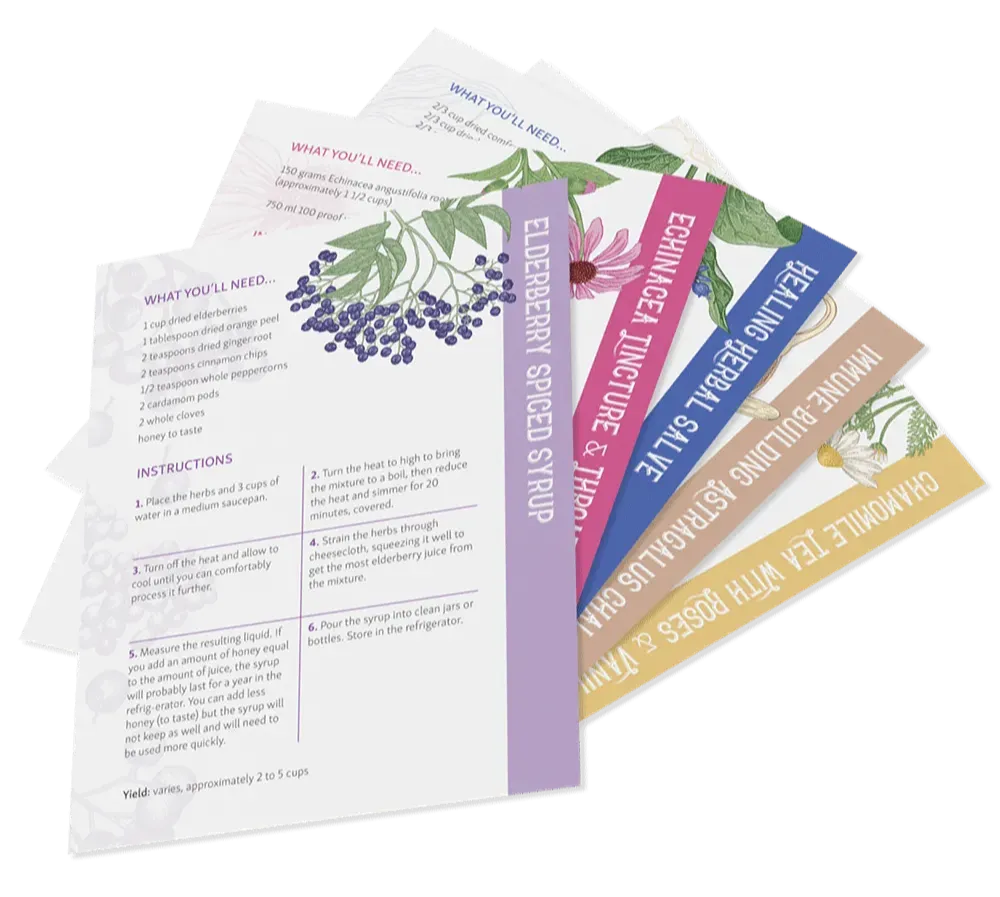
Want to learn more about the benefits of other common herbs? Visit HerbNotes.Cards to grab a deck of our top 12 Herb Notes. You'll learn all about herbs like elderberry, chamomile, and more. This has been Herb Notes with me, Tara Ruth. Catch you next time.
Herb Mentor Radio is a 100% sustainably wildcrafted podcast written, performed, and produced by me, Tara Ruth, with sound engineering by Rowan Gallagher. Visit HerbMentorRadio.com to subscribe on your favorite podcast app and find out how you can be a part of HerbMentor, which is a website and community that you got to see to believe. Herb Mentor Radio is a production of LearningHerbs.com LLC. Thank you so much for listening.