Kimberly Gallagher:
You're listening to HerbMentor Radio by LearningHerbs. I'm Kimberly Gallagher. Today I have some really exciting news for all of you HerbMentor Radio listeners. But before I get to that, I need to let you all know that my fabulous co-host Tara Ruth, has moved on to new adventures. Tara was with us at LearningHerbs for five wonderful years, and we're so grateful for all that she contributed during that time. Let's take a moment right now to just send her some love as she re-enters the non-profit world.
And now for the exciting news that I promised, one of our recent podcast guests, Mimi Prunella Hernandez, has agreed to step in and co-host HerbMentor Radio with me. And today I'll be chatting with Mimi about her National Geographic Herbal. And if you've been listening with us since 2022, you might remember that Mimi talked with us about kitchen herbalism in September of that year and introduced us to this beautiful herbal that she wrote. And today we're going to learn a little bit more about Mimi and about how she likes to teach herbalism. So welcome, Mimi. I'm so excited for this new collaboration. Thank you so much for stepping in with me.
Mimi Prunella Hernandez:
Hi, Kimberly and listeners. I am so grateful to be here. I feel a lot of joy in stepping into this space. Of course, I was sad too when I heard about Tara leaving. I have had such great interactions with her whenever I've been invited into this space, whether it was the sunflower monograph or the menopause chat, Tara just had a huge smile and she's got really big shoes to fill, so I'm really flattered to be sitting here with you. And this community was such a beautiful legacy and really just talking about what we love, which is herbs and herbal medicine. It just feels so meaningful. So super duper happy.
Kimberly Gallagher:
All right, me too. Well, how about I start us off by sharing your bio with our listeners, and then I'd love to hear anything you'd like to share about your herbal background to add to what we've got here for the official bio. So Mimi is a clinical herbalist, educator and author of the National Geographic Herbal, which I have right here. Such a beautiful, beautiful book and co-author of The Backyard Guide to Edible Wild Plants. Her herbalism is rooted in her Colombian heritage and the Latin American tradition of "curanderismo." Did I get that right? She honors the art of folk healing while integrating modern science. She's the former executive director of the American Herbalist Guild, and she received the 2023 Botanical Excellence Award for Herbal Community Building from the American Botanical Council. Pretty amazing, Mimi.
Mimi Prunella Hernandez:
Well, it's been a long journey and a beautiful journey. And also part of, I think why I'm here as an educator and why I love the space of mentoring is because it's always a mystery how you're going to design your path along the herbal dream. There's not really like, hey, I'm going to grow up and be an herbalist and get a bachelor's degree. Check that off, and go be an herbalist. So it's just interesting how my path has evolved in such a way. And just listening to you read my bio is... Helps me reflect on kind of the three values that I really consider along with herbalism, which is intuition and science and tradition. I think anywhere along my own personal journey, I've always felt like I'm either steeped in the tradition of it and listening to the stories and the music and the chanting and just the history because that is a doorway for a lot of herbalists.
But then there's that science piece, and somewhere along the way, I am just a little science obsessed, and I took a research track in my master's degree and just really all about inflammatory processes and NRF 2, nuclear factor kappa-beta, how the herbs interact with all these systems and with the body. But I'm also always finding myself just sitting next to flowers and daydreaming and seeing what comes to me and slapping myself with lemongrass because I wanted to clean my energy field. So it's like this hodgepodge of the herbal path. And I hope that by having that experience or background with the multiple languages of herbalism, that it empowers me as a mentor to communicate with a variety of people that are embarking upon that herbal path, whether they're looking for the science and the pharmacokinetics and the herb-drug interactions or physiology or if they're really wanting those stories around the world and the global healers and the wisdom rootedness, or if they want to be more in tune with the relationship with plants.
And so that's what came up in just listening to you read the bio. But the other thing too is the teachers. We all have a legacy or a lineage, if you will, when we become herbalists. And it's interesting, a lot of people, it's a family lineage, multiple generations. I definitely had some shaping, some inspiration from grandmothers. It was a little bit of a broken lineage because it skipped my parental generation. And so when I decided to go into herbalism, they're like, those are the old superstitious ways. Why would you want to be an herbalist when you can be a doctor and all that? And now you can be an herbalist and a doctor. And I love that. I love that for the herbalist doctors. I do actually train a lot of doctors in herbalism, so that's cool.
Kimberly Gallagher:
Yeah, it's becoming more and more mainstream. It's becoming more known about and accepted, and our generation is bringing it back.
Mimi Prunella Hernandez:
But a lot of people don't have those teachers in their family dynamic. And that's okay too because look at all these resources we have now. There's so many teachers in the HerbMentor community just poking around the forum. There's so many wise teachers that can become part of someone's herbal lineage, if you will. So I like to claim my teachers as part of my lineage. And I think one of the most profound teachers that I've sat with is my mentor, Dr. James Duke, who was a USDA scientist for many, many years, and spent a lot of time in the Amazon with the ethnobotanists and exploring and learning. And he wrote a book called The Green Pharmacy, and he had a garden in Maryland called the Green Pharmacy Garden. And I used to just go weed his garden so I could just listen to his stories and his songs.
And he just had a way because he was kind of a southern folk singer. He was really folksy, but he was a USDA scientist. So he had this synergy that I really loved with being folksy, but also being science-y. And then Kevin Spelman, who is such a brainiac, and every time he teaches, he just goes cosmic on us. And I love that. And Rocίo Alarcόn, who's an Ecuadorian shaman and an ethnobotanist who really taught me a lot about intuition and more the magical side of herbalism the traditions. So I always like to call out some teachers along the way because this didn't just come out of nowhere. It's a journey. And if you're a listener here, you're on that journey and here we are, and maybe we'll become lineage together.
Kimberly Gallagher:
Right. Yeah. I feel like this, we are just needing to reclaim that idea of lineage because I didn't have an herbalist grandmother, or I think if I go back a couple generations, there was a grandmother who was a midwife in her community, but I didn't know her or interact. So it's like I got into herbalism, and then I've had to create my own path to knowing and learning about the plants. And I think a lot of us are in that boat like, oh, I'm curious, and who can my teachers be to help me move along this path?
Mimi Prunella Hernandez:
And then you created this huge path for lots of people. I mean, it's such an entry point. It's such an open door for people to get started. And one of the reasons I really resonate with you, Kimberly, and this community at LearningHerbs and HerbMentor is that I think we all agree here that we really want every household to have an herbalist.
Kimberly Gallagher:
That's part of our mission!
Mimi Prunella Hernandez:
Every community should have an herbalist. That should be a part of our upbringing. It's just simple. We're not saying everyone needs to go and get a master's degree or anything like that, but just simple common sense, self-care and tending to each other. Just little things we can do in our kitchen and in our gardens or in our neighborhoods. So I mean, it's so empowering and really, like I said, just common sense, and it just makes sense to be able to tend to yourself and tend to others and have that skill set.
Kimberly Gallagher:
Yeah, yeah. And the plants have always been the people's medicine, and they're just growing all around us, waiting for us to call on them for help. So it's so beautiful and like, oh, I can go out into my yard and just gather this plant and bring it in and help my family through their cold. It's a whole different thing than like, oh, my gosh, we're sick. We have to go to the doctor and get this medical advice. And the medical advice is often very helpful in various situations, but there is a lot that we can handle at home with our common sense, just like you're saying. Yeah.
And I love what you said about the weave of the science and the intuition and the lineage. It's a really beautiful way to think about herbalism and all of the pieces weaving together to help you find your way. So we have all these great traditions and possibilities for learning.
Mimi Prunella Hernandez:
Absolutely.
Kimberly Gallagher:
Yeah. I'm curious, what is behind your inspiration to jump on to co-host a podcast with me?
Mimi Prunella Hernandez:
Well, yes, I'm so excited, and I think I've just been... You caught me at a perfect time. I was looking for a space to, I live, I feel like I live in the middle of nowhere and in between communities, if you will, in terms of teaching, and being in circle with other herbalists is really special to me. And also that word mentor, because mentorship is so important. I mean, just what you said, that you didn't have family lineage at first, and that I didn't really have an academic pathway that was direct, like a lot of students would think, and it really makes me want to give back in the way of mentoring and help steer people on that mysterious path. So that I think is where I'm at in my work now, especially in the ways of the herb... I want to say the herb wife, because I am like, okay, just obviously I have to work. And I do a lot of work in the more corporate scientific realm of clinical studies and substantiations and real technical things like that right now.
So I need a fun space where we can talk about just how to make things and that we can also platform other people who are doing great things because this is, I think, my third time on the radio show, and I love it, but also I'm ready to talk about everyone else. I'm like, there's so many great people that I can't wait to bring on and introduce them to Kimberly, and you probably know a lot of them, but just it's going to be fun to have conversations. So yeah, it's an honor. There's already a great legacy here with, I mean, this space has been here for such a long time. It's really set the bar for all the other podcasts. We love other podcasts too, but it's just really accessible, and it's not presumptuous at all. It's just down home and rolling around in the dirt and taking roots, making syrups, getting through that next cold, yeah.
Kimberly Gallagher:
Yeah, John and I started it just because we were so inspired by what we were learning and what we were able to do with our family. So it has been a home project. Our family has been so much a part of creating this business, and I love that you think of it as a playground, because that's been sort of the heart of LearningHerbs all the way through is learning through experience and learning through play. And that's why we created a board game to help people learn.
Mimi Prunella Hernandez:
Exactly.
Kimberly Gallagher:
It doesn't have to be this really academic thing where you're trying to memorize all this material, but there's so much that we can learn just through play and through story and through experience. So we're always trying to get people out and playing and picking things and making things in their kitchen. I know you do a lot of crafting of beautiful things in your kitchen. I was just noticing on your, I think it was your Facebook, this beautiful cake that you made this weekend. Yeah.
Mimi Prunella Hernandez:
Yes, yes. And because when I started, really, when I decided I was going to be in herbalism for my life, and I became quite obsessed. So that's the passion, and I think a lot of our listeners are going to relate to that. You start dabbling in herbs and then you're like, I want to learn everything about herbs, and I want to learn this plant and that plant. What's that for? And how do you use that? But a lot of it is herbal enthusiasm. I was really young, 18, and I joined the Herb Society of America. And they're not really about herbal medicine and things like that, but they're more about, let's just smell the herbs. Let's cook with herbs. Let's plant the herbs. Let's talk about herbs. I'm like, oh, my gosh, I met my people. And they were all... I don't know, I don't want to say they were all elderly women, but as an 18-year-old, that's what it felt like. I was like, oh, yeah, but I love that enthusiast, the herbal enthusiast type of thing.
And so that's what I mean with the playground. It's like an enchanted path of learning about herbs. And yes, there are things to be taken seriously. We want to be responsible. We want to learn skills. We want to learn from the monographs and from the hands-on. And I think a lot of that herbal path has to do also with trusting yourself, trusting your medicine, just having that reassurance from your teachers, listening to the folks who are doing it and doing it with authority and with knowledge and real high standard of care. And so it's a playground, but it's also, we want to do our diligence because any kind of tending is a serious... When you become the herbalist, it's a serious role in your homestead or in your town and your community. So yeah, we can have a lot of fun with it. And then we also want to honor it and take it seriously and rise up to that high standard of caregiving.
Kimberly Gallagher:
Yeah, for sure. I think one of the first things is to know the hazards. Know what plants are poisonous because there are some out there. And to know those so that you are picking the ones that are going to be helpful for your family, and then knowing at what dosage and how long, and there's all of those details to grapple with. And like you're saying, there's so much fun in just falling in love with the plants and Hey, what about this one? What does it do? And how can I bring this one in? So it's a mix of those things.
And I did want to circle back around to like, oh, yes, we can highlight other people on our platform. I think that's been a heart of LearningHerbs too, is wanting to lift other people up and share what they're doing. It's been such a great honor and pleasure to have so many podcast guests over the years. And like you said, this was one of the first herbal podcasts that John started ages and ages and ages ago, curating herbal information at LearningHerbs for the last 20 years. So yeah, we've been able to bring together a lot of information for people, and it feels really special to be able to have this body of work that we can offer as a way for people to learn those hazards and the exciting, beautiful ways that the herbs can heal. Yeah.
Oh, this has been such a great conversation, Mimi. It's so fun to get to talk to you about all these wonderful plants and your book. And I just wanted to take a brief moment here to tell all of our listeners about HerbMentor, which is our membership site at LearningHerbs, and it's a community where we explore more about these herbs in depth. And not only are you going to be co-hosting the podcast, but you're also going to be coming onto HerbMentor and spending some time there now. So would you like to tell our listeners about what kinds of things you're going to be doing on HerbMentor?
Mimi Prunella Hernandez:
Well, I am so excited to jump into the community and use some of those mentor skills in the forums where we get to engage, you get to ask questions and share your experiences and what you're making, what you're learning with Kimberly and some of our other guests. So I'll also be guiding some of the community meetups. And through there, I'm hoping that we can go through the National Geographic Herbal, we'll learn about some of those sensory herbs, some of those kitchen herbs, walk through those chapters and just experience herbs from the personal to the global. And we'll walk through that together with Kimberly.
Kimberly Gallagher:
Yeah, it's going to be such an exciting year we're going to be going on. We have meetups twice a month, and as a community, we're always studying one herb a month, and we have challenges and quizzes and all these different ways that we bring people into experiences with the plants. So HerbMentor is a great way to get yourself inspired to go out and harvest some plants and bring them into your kitchen and make some beautiful remedies and just have fun getting your hands dirty and bringing the plants into your life. So we hope that you will consider joining us on HerbMentor. We have a special price always for our podcast listeners, so please click on that button and find out what the special deal is this month, and I hope that you will consider joining us as part of our HerbMentor community.
Mimi Prunella Hernandez:
Good deal. And speaking about fun, let's get back to our great conversation that we're having at HerbMentor Radio.
Kimberly Gallagher:
Sounds great. Thanks, Mimi. I'd love to jump into talking about your book a little bit more. It's such a beautiful, beautiful book with... I just love looking at the pictures in it because they're so stunning. And then all of the ways that you've put this book together and made it a journey for people to learn. I'm curious just about the whole organization and how you laid it out and maybe some thinking behind how you chose to organize it.
Mimi Prunella Hernandez:
Sure, sure. Thank you. Yes, it is quite a beautiful book. I was really fortunate to have National Geographic design team on it, so they curated so many spreads and the photography, and except I do have one photo in there of my own, and we could talk about that later, but that was a big deal for me. I was like, yay. But yeah, it started off as a... I based it on an eight part course that I used to teach many, many years ago, and that was just a community herbalist course, and it really was eight evenings, three hours a night. But it really, to me just felt like a journey through what is herbalism. And along the way, we can learn about a hundred plants. That might've been more than eight weeks, but the book, it does highlight a hundred plants and 10 plants in every chapter. No, 11 plants in every chapter, and then 12 plants in just one chapter. And there's a story there too, which I'll get to.
So I felt like it was so important to start from this microcosmic one-on-one with the plant's perspective. And what I would say is maybe the entry point with our relationship with herbs, which is the sensory experience, and this is... Obviously, I think most of us would relate to this with maybe aromatic herbs. In fact, I've got Kimberly's book here, the Aphrodisiac book, the Herbal Path to Healthy Sexual Fulfillment and Vital Living. With Valentine's Day, I've been really going through this book and making recipes, but the rose picture on the cover, [you] automatically feel this sensory pull when you have a rose, the aroma, but it's also the soft velvety petals. It's so delicate. So the aromatics and the sound of herbs like the black cohosh in the woods rattling or the texture of herbs like the red raspberry leaf that has that rough texture, soft herbs, the mucilagenous marshmallow root and peach leaf that make these soft infusions that are slimy and slippery.
But also then the real bold cayenne, there's a book about cayenne called Capsicum. It's an old book by Dr. Christopher. He talks about putting cayenne in your eyes for eye infections. That's a sensory experience I do not want to have, but it's like, okay, cayenne is very sensory. Mustard, these spices, but also bitters. Bitters are a huge sensory input. They actually engage with your taste buds and your vagus nerve and elicit responses in your body through these sensory inputs. So that whole foundation of just being in your senses with plants is a huge... That's the foot in the door, but that's the foot into the door of the kitchen, which is the next chapter.
The kitchen, I think, is the seat of herbalism, both traditionally, historically, and in my herbalism. The kitchen is where we experiment and we gather and we make things for each other, and we bring the children in and give them syrups and play with garlic. So the kitchen to me was a natural... That's the next step.
And from there, because we're already making things, we're stepping into the apothecary, and the apothecary is what herbalists really love, they get, it's like a step. You're stepping through the kitchen to apothecary, which is a little more... We're measuring things. There's a science to apothecary, even folk, even when we're making folk remedies. And then there's also a shared language in the apothecary. There's the infusions and the decoctions and the syrups and the flower essences, and what is all that? For someone who's stepping into the herbal space, what is a salve and how do we make them? And what are some basic ideologies there? And some tips, if you will. So some apothecary DIY in there.
And from there, I have a special love for topicals. Chapter four is topical. My favorite topical herbs... It's the messiest chapter because we think of topicals and we're like, oh, we're going to put this beautiful Rosemary's cream with lavender and roses. That is topical herbalism. But I'm more like, we need a mud pack, a spit poultice, this tacky sticky, the herbalist's Band-Aid. We're going to tie plants around our cuts. So I mean, topical herbalism is not always pretty and beautiful, but it can get quite rustic. And so I do go through some of my favorite topical herbs there, and that just feels like a nice progression.
I mean, we keep expanding from there. We go into the garden, which is next, and it's just sharing some of my favorite garden herbs and contemplating how we care for herbs, how we make our yard an oasis for the herbs we use in our kitchen. Some of my favorites like sunflower, which I did a monograph here. And for the community, you can look for that in the community space. And weeds. I mean, weeds are, if you're into gardens, you're going to have to be into weeds. So weeds are probably my favorite because I do love to work with invasive plants, and I love the common weeds. I think they're the best friends because they're just popping up everywhere and they just keep saying, hi, hi, hi.
Kimberly Gallagher:
Yeah. We keep trying to pull them out, and they keep going, no, here I am. I've got medicine for you.
Mimi Prunella Hernandez:
But they're also the most recognizable. So it's hard to confuse a dandelion. I mean, there are a couple look-alikes, but for the most part, once you know what a dandelion is, you are going to see her year after year. The chickweed and the mullein, all these are some of the favorite herbal remedies that are in a lot of backyards around us. And that gives us a chance to discuss invasives and the whole context there. While then we head into the woods or into maybe a woodland habitat, which really gives us space to talk about native plant conservation and United Plant Savers and some of the plants that are medicinal. But we really want to use intentionally that we really want to harvest intentionally if we want to harvest them at all, or maybe we want to instead provide stewardship for these plants in the woods and in some of the more delicate habitats around the world.
And then I talk about community herbalism. So we're panning out from the forest and talking more philosophically about what it means to be an herbalist in the community. And it's a real chance to look at these different snapshots of how herbs are being used in different community scenarios, whether it's the [inaudible] at the circle, whether it's the... Hops that are such a ingredient and a lot of our celebratory type of concoctions. Lavender, where it's so important for trauma response and for medics who are tending to their communities. Things like passion flower, which is also good for a community type of deescalation of the nervous system, which a lot of us need.
And in that chapter, that's the funny story. In that chapter... So originally the book was 99 herbs, nine chapters, 11 plants in each. And the book was done. It was already almost about to go to print. It had been copied, edited, all that stuff. And then I got this message and it was coming from the higher-ups at National Geographic, and I was like, what? They're like, we want you to add a plant. We want you to add an herb because we think it's really important. I was like, what is that? They're like cannabis. And I was like, what? National Geographic wants me to talk about cannabis? Sometimes there are herbalists who embrace cannabis, and then other herbalists who are a little more cautious because the kind of regulatory landscape. So that chapter has 12 plants in it.
Kimberly Gallagher:
That made the hundred. It got evened out.
Mimi Prunella Hernandez:
Yes. They talked to lawyers and everything. I'm like, okay, let's talk about cannabis.
But, and then the last chapter is global. And I think in some ways that might be the most important chapter just because, I mean, not only are we talking about some of the most famous herbs used in commerce, ashwagandha and turmeric, but we're talking about the fact that these are plants and not commodities, even though you're going to find them on shelves, on the drug store, grocery stores. And how do we grapple with that? Not just the fact that these plants are coming from far reaches of the world. Are people working with those plants getting fair and living wages? Are the communities that have sustained them for centuries, the wisdom keepers, are we honoring that legacy? Are these endless supplies of plant material that just to be in a cupboard that we never use? And so lots of questions and education through that chapter on global herbalism, just really asking those hard questions while also teaching about some of the herbs that come from around the world. Yeah, to me, it was just starting personal and just ending up on a global scale and just kind of panning out.
And then really talking about woven throughout, we're going to see traditions, different traditions. I did a little interview with the Gullah Geechee with one of the herbalists there, and I really wanted to highlight different diasporas, the African diaspora and their contribution to world global herbalism. I am always learning things too, but hibiscus is an African diaspora herb that I love. And it's so profound in Latin American herbalism, but also "curanderismo," which you mentioned earlier, it's like Latin American folk healing. So I talked about the Latin American traditions and how we view healing, but Ayurveda and Traditional Chinese Medicine and different... The wise women tradition, so different wisdom traditions that I thought it's important to be aware of in the herbal conversation.
Kimberly Gallagher:
For sure.
Mimi Prunella Hernandez:
And I think one of the things that I really wanted to make sure that was woven into the book is centering the actual herbalist. I can't tell you how many books I've read about herbs that never once mentioned that an herbalist exists. They might talk about healers, they might talk about doctors, they might talk about the medical researchers. They might talk about grandpa and grandma, but it's like, okay, well, there are herbalists that know what they're talking about, and there's a variety of different herbalists. So it's not like I can define who an herbalist is, but I do, I do try to say, well, folk herbalists would love to work with this herb in this context, and a clinical herbalist might really appreciate this tidbit of information, or even a doctor with herbal interests would engage us with this herb in this way. And so really just tried to weave the herbalist concept throughout the book. I feel like people don't talk about us enough. We're like, Hey-
Kimberly Gallagher:
Hey, we're here. We're here. We know something.
Mimi Prunella Hernandez:
Yes. Very good.
Kimberly Gallagher:
Yeah, I love that starting from close in and the sensory herbalism and moving out all the way to the global level. So I wonder if maybe we can highlight a few plants along that journey-
Mimi Prunella Hernandez:
That would be fun.
Kimberly Gallagher:
In this last little bit I think you and I have talked about how in our work as herbalists and what we do when we're teaching is we are being a voice for the plants, bringing them out into the common world. And sometimes I feel like I'm working for the plants. Right?
Mimi Prunella Hernandez:
It's true. I guess that is the voice of the herbalist is just really the plants through us. They don't need us. No, no.
Kimberly Gallagher:
The humans need us to just be a little intermediary sometimes.
Mimi Prunella Hernandez:
Yeah, exactly.
Kimberly Gallagher:
Right.
Mimi Prunella Hernandez:
Yeah, I completely agree.
Kimberly Gallagher:
So yeah, I wonder if there's an urban, the sensory chapter that you'd want to go a little bit deeper into and talk about the sensory part. That's definitely a piece that's dear to my heart with the Aphrodisiac book. Just the whole idea of bringing our senses to the plants. I think that's part of falling in love with them and just being able to tune into our intuition a little bit more and just fully experiencing the pleasure of being someone who dances with the plants and interacts with them.
Mimi Prunella Hernandez:
Well, in a way, it's like they're beckoning or they're communicating with us.
So they're communicating with us again, what you said. We're the intermediates. So they're like summoning us, and they're like, hey, look, I'm soft and I'm slippery. And others are like, I'm bitter. You better really learn how to work with me. But one of the herbs I really love, and then a lot of people don't really recognize as an herb initially is peach leaf. And I think it's in chapter one, and so many... Everyone knows what peaches are. A lot of people love peaches, and they're fuzzy, and they're juicy, and they're sweet and they're delightful. And I love peach leaves. Peach leaves have this real... When you come up to a peach tree in the spring, you really don't sense a lot. I mean, it's a pretty tree. There's like lance shaped leaves and a little shiny. They're a little abrasive, and you can hold peach leaves in your hand and not really think much of them.
But when you start shredding that peach leaf and take a smell, it's like divine cherry. It's so beautiful. It's such an uplifting, beautiful smell. It doesn't smell like peaches. It smells like amaretto, and it doesn't smell unless you really start shredding with it. So because there's enzymes in there that are not activated unless you're actually engaging with them. And when you're shredding leaves and plant walls, these enzymes start converting these molecules into aromatics, and it's quite a wondrous sensation, but then it keeps unfolding with sensory cues. So then maybe you love the smell, you decide to put it in your water bottle because it's a beautiful smell and very enticing. And later come to find out it swells with this kind of slimy mucilaginous feeling, which you would never guess. With aloe vera or a succulent plant, you know you're going to get a slime inside because they're juicy, they're succulent.
This looks like a dry abrasive leaf. But once it's in the water, it starts expressing these velvety... I call it velvety, because it's not really slimy. It's more of a velvety demulcent feature. And so when you make a cold water infusion, cold, for a few reasons... If you love your science, the cold water not only allows that enzyme to flourish, but the cold water also is really hospitable to the slimy mucilage. And so in the cold water, you get this expression and then you get this thickness.
And so if I pack a mason jar full of shredded peach leaves and top it with water and just leave it on my counter for my shake every hour and leave it for a few hours, what I end up is, I call it cherry velvet water. I mean, it's soothing. It's aromatic. It tastes good. And so peach leaf is really good for an irritated sore throat because we think of this peach leaf that cooling mucilage, and the aromatic cherry is soft, it's relaxing. So ultimately, it's used a lot like wild cherry bark. It tames a cough and a dry irritated cough. It's the same ingredients as in wild cherry bark except in a leaf.
And it's cooling to these inflammatory acute peaks like an allergic flare up, or maybe even irritation, anger or some kind of mood. You're just irate, have some peach leaf tea and cool down, and it's actually cooling in the summer. It's considered a refrigerant. But to settle a hot tummy, just so it's just such cool refreshment and it's very gentle and soft and safe. So yeah, it's absolutely one of my favorite delights, both from a sensory and a scientific perspective.
Kimberly Gallagher:
I love that. It feels like a teacher too, because you have to interact with it to unlock its beauty.
Mimi Prunella Hernandez:
Yeah. What else can I learn here?
Kimberly Gallagher:
Start playing with those leaves, and then the scent comes out and it's like secretly demulcent, the water bottle, and then the slime comes out. We think about magic as the whole Harry Potter world, but the plants have so much secret magic inside of them. That's a whole different variety. I love knowing that about the peach leaf too, that it's good for sore throats. And similar to the cherry bark.
Mimi Prunella Hernandez:
Just kind of nervous cooling. If your nerves are feeling irate and you're feeling a little flared up in your nervous system, that's a good cooling, kind of calming.
Kimberly Gallagher:
Great medicine for these times that we seem to be living through right now. Anybody out there feeling flared up a little bit? Let's all get some peach leaves.
Mimi Prunella Hernandez:
And then sometimes I'm just... Just because I can because I like it. I'm just going to sit on the porch and drink an infusion, not necessarily because I'm flared up. It's just because I love it.
Kimberly Gallagher:
Just so yummy. Yeah. Beautiful. Well, how about from the kitchen? Is there an herb in the kitchen that's one of your favorites?
Mimi Prunella Hernandez:
So many, so many.
Well, one of my favorites is prickly pear cactus. That's in the kitchen chapter. And that is something from my heritage when I had my quinceañera in Mexico City with my, which is where my Mexican grandmother is from. One of the best dishes at the table spread was this cactus. It was like cactus, almost cooked like green beans, but it had a creamy sauce. We were all raving about it. So it's edible, and it's something that in Latin American countries, they're going to eat almost like we eat green beans. It's just a staple on the table, whether it's a side dish or it's grilled or it's in a taco or it's in a salsa, but it's really also quite medicinal. And by the way, prickly pear is also, it's one of the superstar plants in the Edible Wild Plants Backyard Guide, because Opuntia, the Eastern prickly pear cactus is native throughout the United States, and a lot of our states up through Canada.
And so you don't often think that, oh, you're going to have a cactus in your backyard, but I have a cactus in my backyard, and it's huge, and it's native. No one from Mexico brought it and planted it there. It grows in the Appalachian mountains and grows around here. And so then people are like, oh, there's a cactus in my backyard. I guess I should just stay away from it and not touch it because it's talking to me. It's saying, please stay away. I'm going to poke you. But if you develop a relationship with it, you'll learn its ways. And it's been a lot of experimentation to learn how to scrape the thorns off, to learn how to trim the cactus pad, to learn the fruit, is my favorite. But you got to figure out how to get those little thorny hairs off of it.
And hint, hint, I use a sand bath. I scrub them with sand. That's how I like to do it. But the medicinal aspect of it is when you open that cactus up, it's pretty much the slime in the middle and that slime, and you can eat the green part too once you get the thorns out. But the cactus is so good for... Research recently is pointing at it for preventing diabetes and for helping with blood sugar. And some of the studies are actually in Mexico with Mexican diets, and I love this. It's like, okay, we are giving cactus to someone who's eating a traditional Mexican breakfast, which is a lot of tortillas and chilaquiles and things that I love, but it does bring the blood sugar down, the postprandial blood sugar, and it's that mucilage, that matrix in there that's high in minerals and polysaccharides, just really great substances to help soften the blood sugar spike.
And so yeah, you'll find it in capsules on the supplement market and extracts. But I love having a little prickly pear cactus with meals. And I love pickling the cactus pad. And I was in an island town in Mexico once, and it was so hot. It was like 105 degrees. That's hot for me and very hot. And one of my favorite things to do was go to the local juice stand and get a cactus juice cold. And that is so cooling, you could tell I love cooling herbs because I'm a little hot headed, but I mean, it also coats your stomach lining. It protects the mucous membranes and then topically, it's one of those messy topicals that I talked about before, because you can chop that cactus up and put it on a splinter or a burn.
When I was in Central America, there was a lady who was working with a tourist who had stepped on a toothpick and had a toothpick embedded in his foot, and she took a cactus pad and sliced it open, put it on the grill to warm it up a little and slapped it on his foot with a bandage around it, and just told him to sit there for an hour or two and just read a book or something. And that's when she took the cactus pad off. That helped coax... It was helping to pull out the toothpick.
Because a lot of times these mucilaginous slimy plants, they have what we call a drawing, a reputation for drawing things out. They help draw out splinters and stingers and toothpicks, and ironically, cactus thorns.
Kimberly Gallagher:
Cactus thorns.
Mimi Prunella Hernandez:
Yeah, I love the prickly pear cactus. It's definitely a favorite kitchen herbal for me.
Kimberly Gallagher:
Amazing. Yeah, I grew up in Phoenix, Arizona, but we had the prickly pears growing, but I didn't ever develop a relationship with them and bring them in. So fun to now learn about that.
Mimi Prunella Hernandez:
Yeah. Yeah. I mean, I love the fruits, and I think a lot of people have experienced a prickly pear cactus fruit, maybe in a cocktail or a mocktail-
Kimberly Gallagher:
Or a jam. I feel like they're, they're trendy.
Mimi Prunella Hernandez:
Yeah.
Kimberly Gallagher:
Prickly pear jam seems like a thing.
Mimi Prunella Hernandez:
They're trendy, and that color in the fruits, it's from beta cyanins, not anthocyanins like blueberries, but beta cyanins, which are more fuchsia pink. And those beta cyanins are really anti-inflammatory. And they're been applied in exercise performance studies. So prickly pear cactus fruit is really seeing some attention for cardiovascular health and things like that because of those... Those very anti-inflammatory pigments that are in there. Brilliant, colorful, juicy, tropical flavor right here in my backyard.
Kimberly Gallagher:
Colorful tropical flavor that helps our hearts, it's so, so sweet. I love how the plant is the medicine for the region too, how the juice is so cooling and the demulcent qualities help draw out the spines. Yeah, so beautiful how the plant world works.
Mimi Prunella Hernandez:
It is.
Kimberly Gallagher:
Yeah. Well, I don't think we're going to have time to go through all of the different sections, so I wonder if there's another section that calls to you that you'd love to highlight a plant from?
Mimi Prunella Hernandez:
Let's see here. Well, I think I mentioned hibiscus earlier. I think that's one that a lot of people relate to, a lot of our listeners are going to relate to because it is what makes a lot of tea pink or that red... Red juicy, what I want to say zinger is what comes to mind, that flavor profile.
And it's delicious. It's also another cooling refrigerant. I'm saying all this right as we're contemplating winter storms here. Really should switch gears. But I've got my head in the summer right now. Yeah, the hibiscus, it's the calyx that you use. It's not really the flower. It's like this kind of leathery ovary and fruit, like the peel around it. And my mom swears by it. She's been drinking it every day for her as a gentle, with her doctor's consent for her blood pressure. And I'm really impressed that she's taken to it. She's into herbal remedies now, and it's another one of those colorful pigments. This one's anthocyanins. That is... Again, I think these pigments as the fountain of youth, if you will, the panacea of chronic syndromes. It just helps deescalate. It just really helps quiet down a lot of our inflammatory processes and any way we can think of to get color into our tea, into our water, into our food.
If I had any one piece of herbal advice, it would be to bring more color into your everyday living and just expand that library of phytonutrients that you're getting every day through colorful compounds. And so syrups, teas, sauces. I like to infuse vinegar with hibiscus, just lots of powders. You can dry it and powder it and sprinkle it on things. But yeah, just real... I mean, I could drink hibiscus tea every day, especially in the summer. So unsweetened is how I like it. And if you make it strong enough, it's just really dark, deep red, almost like a blueberry juice. It's just quite wonderful.
Kimberly Gallagher:
Yeah. Yeah. Such a strong taste and so delicious. Yeah, especially like you're saying on a hot day, just to have that cooling hibiscus. We're dreaming of the heat.
Mimi Prunella Hernandez:
We are. What are we doing? Where did we go? We took a journey to the summertime where we need to cool down. I should have talked about all the heating herbs. We should have talked about ginger and cinnamon and fire cider, but we're going to have time for all that.
Kimberly Gallagher:
We are.
Mimi Prunella Hernandez:
Today, we just we're daydreaming of summer, and that's okay.
Kimberly Gallagher:
I wonder if there's a plant in that woodland section that you might highlight because I think just about the ones that need a little protection. I think there's a tendency with ginseng for these plants that have so many healing properties, but they grow just sporadically and they're not for this big harvest. And yeah, I'd just love to highlight that a little bit too.
Mimi Prunella Hernandez:
Yes. And actually, one of the things that I love about my relationship with plants these days is just stewarding native habitat. And so I have United Plant Savers. I'm a member of the Botanical Sanctuary network, and we live here on the PonderLand Native Plant Sanctuary, which is about four acres, and there's a lot of native plants here. It's crazy, but there's goldenseal. And goldenseal is so slow. There's a little section I call Goldenseal Island where it's growing, and I can't imagine pulling it up because it's just watching how slow it's crawling. But I do use Goldenseal very intentionally, and I only get it from people who cultivate it. I would never get goldenseal that's been wild. I want to make sure that whoever's selling me goldenseal grew it themselves. So that's what I look for.
I think it's just this wonderful... It's got these compounds. Berberine is famous now. That's one of the golden alkaloids in goldenseal root, but there's so much more to the goldenseal picture than berberine. And there's so many alkaloids in there that... Research is showing now that it's more about the matrix and the synergy of the whole plant and not just berberine. And so I think that's really interesting that goldenseal is still contributing to our knowledge of herbs. And it's bringing us back to this whole plant type of thinking, because I think we got a little sideways there with all the isolated constituents for a while. It's like this whole issue with reductionism in herbal research where we want to explore every constituent and every chemical compound, and we want to pull that out, and we want to put that in a capsule, and we want to go through thousands of pounds of raw material just to get that one tiny chemical and put it in a capsule, and we just discard the rest.
And it's ironic that that has been done with goldenseal. It's endangered in a lot of places. But it's ironic that the research on goldenseal now is panning out from that reduction and say, look, if you drink it in a whole matrix, maybe even include a leaf or two, you're going to get better biofilm enhancement, anti-biofilm enhancement, or it's just going to perform better. But then again, why use goldenseal? We've got Oregon grape root, we've got Yellowroot. There's so many other plants that have these golden alkaloids. But I do love the goldenseal here at the sanctuary. It's so special, and it's nice to see that it's crawling through the island here, the little island on the creek.
Kimberly Gallagher:
So beautiful that you're creating that plant sanctuary and yeah.
Mimi Prunella Hernandez:
Yeah. I mean, well, I'm stewarding, so I'm not really creating, because I'm very blessed that a lot of these plants were here. It was just in this little pocket of woods and they were here. And so yeah, I do add to it. If I find there's something that's relevant to this native niche that isn't here, I might say, oh, let me put a wild plum in there and see what happens. So I do add here and there, but for the most part, it's just more of not letting anyone get in there and tear the woods down. It's really just holding space and observing and interacting and just... I think that feeling of being seen comes both ways. Being seen without being threatened.
Kimberly Gallagher:
Yeah. Well, gosh, listening to you, Mimi, I just hear your love for the plants and the deep respect that you have for them and all of your amazing knowledge from all these different pieces that you've woven together from the scientific to the intuitive. And it's just a real blessing to get to hear what you bring to this herbal conversation. And I'm so excited that we're going to be co-hosting together. And yeah, just looking forward to getting to know you even more, and as we said at the beginning, being able to highlight different herbal voices through our community, and yeah, this is a really exciting collaboration. So thank you so much for jumping in with me.
Mimi Prunella Hernandez:
Well, thanks for having me, and like you, I look forward to co-hosting with you and hearing what all these other juicy herbalists are up to and sharing that with our listeners.
Kimberly Gallagher:
It's going to be good.
Tara Ruth:
Welcome to Herb Notes. I'm Tara Ruth with LearningHerbs. Cardamom, Ellettaria cardamomum, is a sweet warming spice used in Ayurvedic medicine and beloved in kitchens around the world. It's treasured in herbal medicine for its aromatic stimulating gifts. Let's dive into three gifts of cardamom.
One, cardamom for digestive health. Cardamom is a classic carminative, meaning it helps ease gas, bloating, and digestive stagnation. Its warming aromatic nature stimulates digestion, supports healthy movement in the gut, and can relieve feelings of heaviness after meals. Cardamom is especially helpful when digestion feels sluggish or cold. One of the simplest ways to work with cardamom is to cook with it. Adding a pinch to teas, porridges, or meals. You can work with the pods, decocting them in teas, or adding them to soups or with the cardamom seeds directly. Ground cardamom is also a lovely culinary addition.
Two, cardamom for upper respiratory infections. Cardamom is both antimicrobial and an expectorant, making it a wonderful ally during colds and respiratory infections. It can help fight microbes, soothe sore throats, and calm coughing. It's especially comforting when paired with warm teas or honey.
Three, cardamom for circulation. As a warming circulatory stimulant, cardamom helps increase circulation from the core to the extremities. It gently warms the body and supports healthy blood flow. This warming quality also contributes to cardamom's digestive and respiratory benefits. And just a few contraindications to keep in mind. Avoid use of cardamom in cases of biliary obstruction and severe liver disorders. Cardamom is contraindicated for ulcers and signs of excess heat. Safety has not been conclusively established for use during pregnancy and lactation.
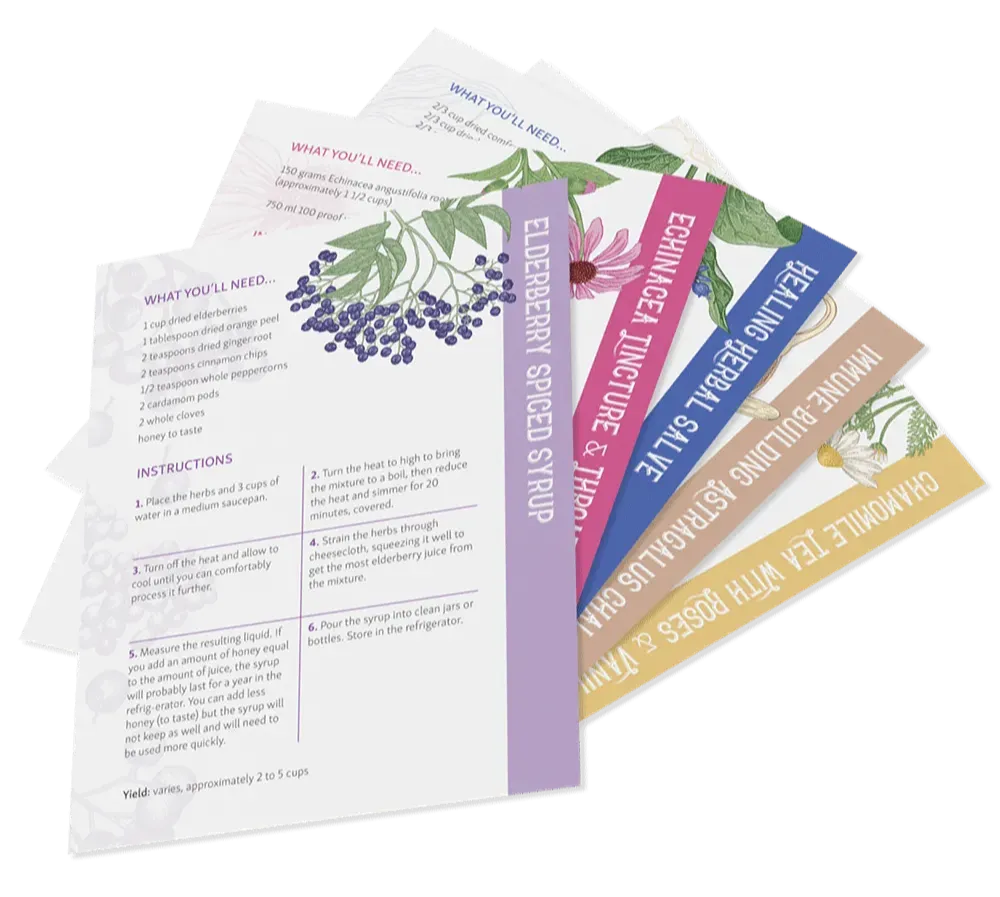
Want to learn more about the benefits of other common herbs? Click the link in our bio to grab a free deck of our top 12 Herb Notes. You'll learn all about herbs like elderberry, chamomile, and more. This has been Herb Notes with me, Tara Ruth. Catch you next time.
Rowan Gallagher:
HerbMentor Radio is a 100% sustainably wildcrafted podcast, written and performed by Mimi Prunella Hernandez and Kimberly Gallagher with production and editing by me, Rowan Gallagher. Visit HerbMentorRadio.com to subscribe on your favorite podcast app and find out how you can be a part of HerbMentor, a community hub for herbalists that you have to see to believe. HerbMentor Radio is a production of LearningHerbs.com LLC. Thank you so much for listening.