Kimberly Gallagher:
You're listening to HerbMentor Radio by LearningHerbs.com. I'm Kimberly Gallagher.
Mimi Prunella Hernandez:
And I'm Mimi Prunella. In the coming months on the podcast, Kimberly and I will be walking listeners through the world of herbalism. By following the journey outlined in my book, National Geographic Herbal, our journey begins with chapter one, sensory herbalism. Our senses are teachers throughout the ages. People have connected with plants through sight and touch, taste and smell and even sound. Herbalism is a sensory experience.
Kimberly Gallagher:
And this feels like the perfect doorway into today's conversation. We truly cannot imagine a better guest to help us unveil the herbal sensory experience than Kat Maier. Kat is the author of Energetic Herbalism, winner of the Gold Medal Nautilus Book Award for Ecological and Healing Arts and founder of Sacred Plant Traditions, a Center for Herbal Studies in Charlottesville, Virginia. In clinical practice for over 30 years, she is a founding member of Botanica Mobile Clinic, a nonprofit dedicated to providing accessible herbal medicine to local communities.
She began her study of plants as a Peace Corps volunteer, and her training as a physician's assistant allows her to weave the language of biomedicine into her practice of traditional energetic herbalism. As a passionate steward of the plants, Kat has also served as president of the United Plant Savers and was the recipient of the organization's first Medicinal Plant Conservation Award. Kat, welcome to HerbMentor Radio.
Kat Maier:
Thank you so much, Kimberly and Mimi. What a pleasure. I'm really looking forward to this.
Kimberly Gallagher:
Me too. I'm excited to have you here. For listeners who might be newer to this language, what do you mean when you say energetic herbalism?
Kat Maier:
Yeah, that's a great question. It takes a while to really feel into it. And ever since the book and traveling and teaching, the simplest answer is it's herbalism that works with our vitality and vitality, chi, prana. All of these systems, Ayurveda, Chinese, Unani Tibb, all of these traditional systems. When I say indigenous, indigenous just means indigenary, it's of the land. There's not a land mass on the planet that doesn't have indigenous. It was the first that were there.
And how they would learn their medicine is they would be watching. They would be watching nature and then how to move energy. So more than anything, it's, okay, here I have a certain level of vitality. How do I keep that vital force flowing? That's it. Is there tension? Is it stagnation and too dry? Dryness brings wind and we can get into all the different landscapes. But essentially, energetic herbalism is just trying to get the energy to where it wants to be in our body.
And that could be moving it quicker. It could be slowing it down. It's really working with our inner landscape. And it's a little more nuanced, but I think it really simplifies it that pre chi and prana and orenda from Iroquois, Ashe, West African, every medicine works with movement and movement of energy. So I don't know if that's a simple answer. It's taken me a while because a lot of times I get into the tissue states, but it's like, no, let's just get the energy moving. It's the vibe. How's the vibe?
How are you feeling? Where's the energy? Where is it too much, too little? And then how do we work with our beloved plants to either enhance or slow it down and open the way for it?
Kimberly Gallagher:
Yeah, because our vitality really is like everything. So if we can keep that energy flowing, it's so good. And that's a beautiful way to look at how the herbs can help us.
Kat Maier:
Yeah, absolutely.
Mimi Prunella Hernandez:
I love what you're saying, Kat, about the vibe. And I'd love to delve into your book, Energetic Herbalism. One of my favorites is chapter two. I feel like chapter two talks about how we can sense that vibe, and it explores relationship, relationship through the senses. And you write about the senses as our guide. And even as I read chapter two, when I was reading through it, I really found myself out in the woods really slowing down and tuning into my senses.
So I wonder what does it truly mean to be in sensory relationship with the plants? Can you give us an example of that?
Kat Maier:
Many. Let's see. So I'll start where most people think about senses. It's the sight. First, being aware, observing, watching the relationship of the plants with each other. So you see, well, who grows with this mushroom? Who grows with this trillium? Who are its neighbors? Who are its community? So the first is the visual. And this is more in the wild because we want to understand what the nature is.
Karen Sanders is a teacher of mine and she's Choctaw and she says, "Plant families aren't the botanical. The families are of who grows together." And I totally love that. It's like the Ginseng, the Golden Seal, the Eastern Woodland, they're a family. So one of the first senses is, well, who likes to grow together? And especially if I want to replicate this and have this grow at my garden or backyard, how do I recreate that? And then, the sense of smell.
Everybody always thinks of the sense of smell and the aromatics and now with forest bathing. And so funny, we need a whole science and a field to tell us what we've known forever, but it is kind of nice to know that the cytokines and certain chemicals go off, but we know that the scents that are very, very subtle. And that's why I love teachers who have plant walks and say, "Please don't wear perfumes. Please don't wear certain scents," because they're so overpowering because walking through the woods is very subtle.
But when you get really nuanced, you can really see, "Oh my gosh, there's a sassafras." You can smell it before you even come and brew it, and that takes a while. Flavor, obviously, we want to say ID, ID, ID before you put anything in your mouth, but that flavor is such a signature of what the medicine is. And so, we know about bitter receptors. And the beautiful thing about bitters is they will really help us stay away from a plant. You take a bitter plant and you never think, "Oh, I'm going to sit down. I'm going to really have a whole ... some of these. I'm going to love this."
But if we have something sweet, if we have a root, if we have that sweet Sicily, if we have the osmopaisa, it's the anise. It's like, "Oh, they're triggers." They're in some ways markers of how much we can eat, because the flavor sweet is building. And so how beautiful that we are able to have a lot of sweet. Whereas bitter, they have a whole other energetic. You don't need many bitters. Maybe somebody would sit down to a cup of motherwort in those hardcore bitter lovers. But I know, I was going to say, I know I'm talking to one.
Mimi Prunella Hernandez:
That is me.
Kat Maier:
I know her enough. I know her enough.
Mimi Prunella Hernandez:
I drink motherwort out of my Wonder Woman glass.
Kat Maier:
She's hail and hardy, that girl. Hail and hardy. So it's those flavors. It's the spicy, the pungent. In my book, I go into the five seasons of five phase. And so just for an example, we're coming into ... If you're going into fall, so you're leaving the late autumn and you've had lots of food and we're coming into fall. And if you live in a temperature zone and it's a little cooler. So let's get moving.
Let's get things moving before we go into a deeper, deeper, cold winter. Like you want to get ahead. The seasonal living is for that season, but it's also preparatory, which I think is mind-blowing. It's absolutely mind-blowing. Then, we have this system to say, all right, you're coming into this. Let's clear lungs and large intestine, which is autumn in Chinese. So you don't go into the winter, the cold damp winter with phlegm. Let's do some cleansing. Let's do some clearing.
So that got me away a little bit from the senses. But the other thing I want to say with that, it's the taste and the scent. And with the sight, it's also what's called the doctrine of signatures. And this was, what was it? 1600, 1700 doctrine in Europe that the plant has medicine for the body part that it looks like. And it's a signature. And so the signature has been taken from Vierta and other brilliant plant lovers. It's archetypal.
So sometimes when we come upon something, when we get this impression, it's like, "Oh my gosh, I'm standing in front of this tree and this impression comes." That also is archetypal. And I don't know if we're going to be talking about wide angle, but also how to sense in a whole other way with our heart, this sensory ... Our organ is a heart of perception, but for the most part with the herbs, and they haven't changed, right?
I mean, time has been, time has been time. This does not change. And I had the great honor of being at University of Virginia, and in Charlottesville at a rare book library. And I am sitting there with an original Culpepper and then this original Gerard herbal. And you go to asthma and the formula is the same. Our landscape is the same. The flavors are the same. It's, let's clear, let's move. And so that's why it's so exciting.
And that sensuality, we trust our senses and the senses hopefully won't be changing and the plants are the same. So that carries that lineage.
Kimberly Gallagher:
Beautiful. Yeah. We can trust our bodies and our intuition because we co-evolved with the plants to be able to sense and experience them and learn about what might be helpful for us just through these common senses that we have. So, beautiful, beautiful.
Kat Maier:
Yeah, absolutely. Absolutely.
Kimberly Gallagher:
In your book, you also write about elemental qualities like warmth and moisture, tone and movement. And I wonder if you could explain a little bit about that for people who might be just beginning to study herbs and what are those theoretical elements of qualities and what ... Yeah.
Kat Maier:
I'm sorry.
Kimberly Gallagher:
No, that's fine. Go for it-
Kat Maier:
Well, I'm thinking of beginners. And maybe Mimi, maybe Kimberly, you had the grace of learning energetics before you learned herbalism, if you will. I didn't. I never knew echinacea was cold. And so we were giving it for colds and flus. And it's a cold medicine. It clears toxic heat. It's for hot conditions. And so, when I learned that, it was like 20 years of teaching, how do I wind that up? So for beginners, it's so exciting to start studying the medicine and also really understand what the energetic is.
And most herbals now, the word is out, people are getting that energetics is ... Mimi's book is fabulous this way. More and more books are really having part of that materia medica of the energetics, really, really important. And so for example, moving, a moving plant is oftentimes the pungent or the spicy. They have volatile oils or there's activity there, right? You go out in your garden, you bruise rosemary and you can't but help take that deep breath.
Your body was instantly moved and it can be that simple. And so when you learn the patterns and when you learn basic languages, you may not need a book. You may go out and you may smell a plant. And again, I'll say one more time, don't put anything in your mouth, you don't know. But there's a lot of wild mints, the lamiums and you bruise them and you smell them. It's like, "Oh, this is minty. Oh, I bet this has movement here." And so that's what you would use for, say, stagnation, say for diabetes, hypothyroid, sluggish tissues.
You want to bring movement there for depression. Sometimes I work with depression simply with stimulating herbs, the rosemary, the thyme, bringing oxygenation to the brain, bringing circulation. So often depression, it's cold, you're just kind of curling up. And what do you want to do? You want to bring sun, you want to bring warmth. And so that's movement and tension. We have our relaxing herbs and things that'll release.
And then with tone, tissue tone, this is a little more obtuse because we have the hot, cold, damp, dry, but then there's the tissue state of tense or too relaxed. And so, we all know tension and we bring in the relaxing herbs, but sometimes there's tissues that are too relaxed. And Jim McDonald has given us a great word because when we hear the word relaxed, that's where we all want to do ... but he talks about lax tissues and lax tissues are unable to hold on to whatever fluid.
So they can be bedwetted. It literally is leaking fluids. It can be heavy menses. It can be bedwetting. It can be vasculature. Elders have a lot of bruising. Their tissues are too lax. So how do we help reinstate the integrity of that tissue state?
Kimberly Gallagher:
Mimi, I'm so enjoying this conversation with Kat. I'm so grateful that you brought her on as a guest for the podcast. She's wonderful. And I love that she's talking about these concepts of sensory herbalism and energetics and how easy it is to use our intuition to really match herbs to the kinds of things that we might be dealing with in our bodies. And it makes me think about this course that we have on our membership site by jim mcdonald. So we have a membership site called HerbMentor.
And in the course library, there's a course by jim mcdonald all about energetics and how you can take these concepts that Kat is talking about a little bit deeper.
Mimi Prunella Hernandez:
I love dabbling in those courses. I have spent some time listening to jim's course and it's fabulous. I'm also really enjoying right now The Joy of Herbal Skincare. It's really sensory based. The whole class is about how to use your senses to pamper yourself and really soothe and attend to your skin. So it's such a beautiful course. And the forums, [HerbMentor] are something I'm enjoying because I'm able to get in there and respond to member questions and talk about herbs and what we're all doing at home.
One of the things I'm really looking forward to is a community meetup that we have in the works, Kimberly and myself on this very topic that we're discussing today, which is sensory herbalism. We're going to talk about energetics. We really encourage the HerbMentor community members to come and bring their questions. And it's just such an interactive way to explore these topics more in depth.
Kimberly Gallagher:
Yeah. We have a beautiful community on our membership site. And one of the things that I love is that HerbMentor is this hub for all kinds of students who are learning about herbs. So students are on from all different schools and all different places in the world, really. And so the forums are this active place where people are talking to each other and learning together. And the meetups provide this moment where we can all get together and share in person and learn from each other.
So the meetups are being really exciting and we would love to welcome you into our community. So we always offer a special deal for our podcast listeners. So check that deal out and come and join us on HerbMentor. We would love to see you there.
Mimi Prunella Hernandez:
And now, let's get back to Kat Maier.
Kimberly Gallagher:
Yes, I'm excited to hear the next part of the podcast.
Kat Maier:
Does that answer-
Kimberly Gallagher:
Yes. Yeah, that was really great. And it just comes back again to this kind of intuitive sense of things. If something is too lax, how do we tone it up? And if something is feeling like it's heavy, then how do we move it? And how can the herbs pertain to that? Yeah.
Kat Maier:
Yeah. And it's intuitive. And the one thing I wanted to say though, is also to watch the patterns because you wouldn't think bedwetting would be too relaxed or whatever that would be. So for beginning herbalists, it's so exciting to begin not looking at the pathology, but looking at, well, what's the energetic so that you don't need 10 different herbs? It'll really help make your formulas a lot more elegant. So that's what I wanted to say. And I'll stop being so excited.
Mimi Prunella Hernandez:
You're great. No, I love this. I love this conversation of patterns because sometimes I think that what we're really doing as herbalists is matching the patterns that we see in plants with the patterns we see in people. And you spoke a lot about some of those patterns, the depression and the laxity, but I wonder, because you also speak about how our own elemental nature and for someone just looking at someone new or even looking at ourselves, how do we start to observe our own patterns and our own imbalances? Where do you start? What do you look at?
Kat Maier:
Right. Well, that's a great question. Well, in the beginning, you just keep it very simple and you ask, do I run hot or cold? And am I dry or am I damp? Am I too tense or am I leaky? And leaky is kind of strange, but we all kind of know that. People that have recurrent vaginal infections, it's fluids. It literally is. Of course it might be a virus or a bacteria. I am definitely not trying to simplify it in this way, but these are our patterns.
And so when you understand that dryness ... I love it when people come and they're like, "Well, I have five things wrong. I have joint pain, I'm constipated, dry vaginal tissue, and maybe something else." And I'm like, "Well, no, that's not five things. That's one. Creaky joints, cracking joints is a sign of dryness. Constipation is a sign of dryness. And so we're empowering our community, our clients, and even ourselves to really understand, "Oh, I just need to moisten. I need to get a little juicier. I need to bring in oils. I need demulcents." And for those that are beginning, demulcents are herbs that are mucilaginous.
You make a tea, they're a little slimy, and there's yummy ways to work with them. But you begin to become observant of, well, how do I run? What are my patterns? What are sort of my patterns of allergies? And I can send you maybe to a season. So it's keeping it very, very simple. And a lot of times when I ask clients, "Well, do you run hot or cold?" They don't know. So I have to say, "Well, do you wear a sweater when everybody else is in a T-shirt?" Because we're so distracted and it's not a judgment.
It's a tough, tough world, 2026. It's intense and we know where we are and we're so grateful, but it's hard. So sometimes it takes that coaxing of, I guess ... And here's the other beautiful thing of nature. It is an and/also world. It's not an either/or because I can be dry and then also have some phlegm or stagnation. So that's where it gets into a little more nuanced, but start with that feeling of yourself that bothers you the most.
Start with the most aggravating symptom, if you will, and work with that one. So if you run too hot, you know ... and this isn't even menopausal flashes, this is just, "I'm always running hot and I'm always flushed and I'm always bothered." Well, then start looking up cooling herbs, your violet, chickweed. Stay away from ... I mean, ashwagandha is really warming and everybody is throwing ashwagandha into their mixes and smoothies.
And maybe it's too warming for you. So when you learn the energetics, you can then better tailor the few herbs that you might start working with.
Kimberly Gallagher:
Yeah. So good. Yeah. Well, I just want to pick up on, you were saying how 2026 we're so ... It's a big time in the world. And I was thinking about the botanical sanctuary that you have and just the idea of walking through that sanctuary. And I wonder if you could talk a little bit about what a botanical sanctuary means to you and maybe take us on a little imaginary walk through your botanical sanctuary and describe some of the senses that we might experience along the way.
Kat Maier:
Lovely, because it's February and rainy outside. So thank you for the invitation. And Mimi, just join in. Mimi has been here many times, so it's always been an honor when she comes to teach. So the first thing I want to say is I'm downtown Charlottesville. My house is larger than my land, and I'm really gifted with this big, beautiful home. And one of the first things I did ... Well, the first thing, I think permaculture is missing a step, and this is part of sanctuary. I'm not getting too off.
I love permaculture. I have many graduates and I've taught classes here, but the first step that I think is missing is they don't ask the land. We go in with these permaculture designs and we want a swale here and we want this here. We want the forest through here. But the first thing is like, well, what do you want and what's been here and who was here first? And even inhabitants. So the first year here, we did nothing. I put a few hostas in because four 20-year-olds lived here and it literally was the most famous party house in Charlottesville.
So of course I get it. So we did clearing and we listened. And so, it's small. I don't want people to think, "Oh, you need that 10 acres in the country to start a sanctuary." Sanctuaries are on balconies. I mean, if you live in an urban area and you have a balcony, you can plant goldenseal, you can plant ginseng. There's all kinds of ways. I don't want folks to feel like I need to own land because ownership is bizarre anyway, but renting, I mean, I have taken plants with me. I've left furniture behind, but I've taken plants.
So what we did was we slowly, after the first year, took all the lawn out, using the permaculture, and I just slowly began planting trees. So in the front yard, we have witch hazel, we have huckleberry. Elderberry is all around because elderberry grows prolifically, and it's a beautiful hedge. I'm not a huge fan of fences, but it is urban. So we have elderberry all around.
And so in the front is shady. So a lot of my woodlands are up there. So in the front yard under the catalpa, which takes tons of water. So you have to watch, "Oh, are there big trees? Do I want a water loving plant near a big tree that's really going to take all of that?" So in the front, we have our wild ginger and our goldenseal and ginseng and black cohosh, and we have the eastern woodland herbs up front. And then, it kind of turned the corner as well, but we lost a mulberry.
So that shade disappeared. So now, I have meadow. I have a lot of Joe-Pye-weed, of course, goldenrod, and that's really becoming my meadow. Now again, I have a very small plot, but it's astonishing. I really want to encourage people. It doesn't matter. We have a multitude of species. In the back under the magnolia, back by the classroom, we have more ginseng, goldenseal. Goldenseal takes over. Well, goldenseal is endangered not because it's hard to grow. It's because of use and loss of habitat.
My giveaway are the goldenseals. We're breaking up the roots, the babies. Plant goldenseal, give it some love, give it some good compost and give it shade. And you will be able to harvest more than you need goldenseal for your family or your community. So there's all kinds of medicinals. And then, there's all kinds of invasives, if you will. I love violet. And when we were doing our mutual aid work and sending medicine to LA, I could not find any violet leaf on the market.
What better herb for dry lungs and cough and the heart and the heartache and the heartbreak is violet and we wanted to put violet leaf into our formulas. It's just not a commercial herb. So now I have it in its little space because it will crawl and violet is intense to harvest and dry. So we have an eclectic group of folks around here. I love ground ivy. I use ground ivy an awful lot, in sinus formulas. What else? We have pleurisy root. I mean, I'm not going to go through the inventory.
Mimi Prunella Hernandez:
I love it. I have ... I mean, I've stayed at Kat's a couple of times because I've taught at the school there, the Sacred Plant Traditions. And I mean, passionflower growing out the guestroom window. I just won't forget the first time I arrived to your home, just seeing a front yard of goldenseal. It's like, what? This lady is growing goldenseal in her front yard. And you can almost see downtown from your yard. I mean, it's just right there. You can walk downtown.
And so that always gave me great hope that anyone with a small space can be a sanctuary dreamer. And then, you planted that seed in me back then. I was a dreamer for a long time. And I love what you said about that first step of actualizing to really listen to what the land has to offer or what the land is asking for. I think right now in springtime, a lot of us are getting excited about our garden planning, about what we're going to do with our yards this year.
So that's just such an important message to take your time and listen to the land, because we're talking about being in relationships.
Kat Maier:
Absolutely.
Mimi Prunella Hernandez:
Thank you for that, that important reminder. And as you were talking about walking through your sanctuary, I would love to shift to walking through ... I mean, we could do this in the sanctuary, but also just walking into the woods. I remember that we were at a conference together. We were both teaching at this conference and I was just walking to my class and you were getting started with an interactive workshop and you had this whole group of students behind you and you had your arms spread.
And as you were walking into the woods, you were talking about don't look directly, look peripherally. And I always wish I could just jump into that group because I was like, "What is she doing?" And so really, I hope you can tell me a little bit about that. You were talking about the wide angle or something to this effect. And the students who came back from that were like, they were seeing things that they had never seen in the woods. So I would love to hear more about this.
Kat Maier:
Yeah, thank you, Mimi. I feel if I have one proud teaching in herbalism, I think it has to be wide angle vision. And so wide angle vision essentially is hunters, trackers, Tom Brown. If any of our listeners have been to Tom Brown School, they've gone through wide angle vision. And so what Mimi is saying is essentially you hold your hands outstretched and you wiggle your fingers and then you slowly move your arms to the side.
And when you no longer see your wiggling fingers, you drop down into that state because literally because you followed your fingers, you now are in peripheral vision. It's that simple. You have to go back, you have to reinstate it. And what peripheral vision, what wide angle vision does is it drops you into parasympathetic. Because sympathomimetic, that's the adrenergic, we're focusing, we're looking for that cedar wax wing, we're looking for that fungus, we're looking for that saying.
We're in that mode. Wide angle allows you to take in that feather that's coming in over here while you're looking over there. And not only is it the vision, but it's your hearing and it's your smelling because when you're in your heart center, you're wired. You're fully where creator wanted us to be. We're sensing, we're feeling a little sensual, parasympathetic, rest, digest, have sex, leisure. So wide angle vision, you don't even need a bottle of bitters. I mean, this is what bitters do, right?
I mean, I don't have to tell you that bitters put you into parasympathetic. That's why we're always hitting our bitters. Just let me chill. Let me draw. Let me get into this place. Okay, now I can bring food in. Now I can do this huge, amazing activity. And so, the wide angle is for walking through the woods, for really perceiving, for hearing. Again, that's why trackers, Tom Brown is the master. I have a dear friend who has a wilderness school. He just kind of lives in it and he has had fox just come up, brush up against him because it's our way of invisibility.
We know the Toroid form. We know our heart. We know we are a part of everything. When you are so mastered in the heart, you merge and there's this profound merging that happens from this place. And so when I teach how to sit with a plant, dropping into wide angle, get out of your head, the merging. Don't say, "Oh, this plant is good for lymphatics." A plant will never tell you that. And if you're hearing that on a plant journey, it's okay. You're beginning, you're sort of putting yourself into that journey.
It's going to be, "I am a river." It's going to be a whole other language. So I totally love wide angle vision. When I taught this a long time ago at the women's ... Deb Soule beautiful Deb Soule of Avena Botanicals, she came up to me afterwards. She said, "Oh my goodness, Kat, that's how I garden." Because if you've been to her garden, it's a pollinator garden. So she has to be super still to see the hummingbirds, to feel the pollinators, to see who's going into that hawthorn hedge behind her.
So it's just an ecstatic state that we don't need entheogens or harsh chemicals or ... We don't have to take anything. This is who we are and it is about practice. And I have been in airports and forgotten and dropped down. And I'm like, "Oh, does it matter?" Sometimes when I'm in the heart state, so much less matters and then so much more matters because it's who we really are. And so that's how we want to walk through the woods.
It's how do we get out of it without listening to a podcast? I totally love podcasts and I love this podcast. But you know what I'm saying? You all will be the first to say, okay, take us out and go practice wide angle. But the last thing I'll say is it's funny because I've gone and I've YouTubed it to figure out what's a good example. And there are these funny Germans who are very doctrined.
And then, there's Alabama hunters or something. Maybe I'll make my own. I don't know. I'm sure there's some that are out there. It's very, very simple. And it's just such ... Especially now as we're stepping into this world where we really, really need to discern truth from non-truth, and safety. And so how ... our heart is constantly perceiving safety, which is why we walk into a party and we're like, no, I think I need to leave this, or we walk into a store and we find ourselves leaving.
We're already there. But as we develop this tool and this skill that we can drop in really quickly, I need to really gauge what's happening around me. How do I move through this? And it doesn't mean I leave, but it's like, "Oh, my Spidey senses are up. All right, let me be a little more alone."
Mimi Prunella Hernandez:
Yeah, it's a whole different sensory experience.
Kat Maier:
Absolutely.
Mimi Prunella Hernandez:
We went into this conversation talking about sight and sound and hearing and smelling. And now we're here, this is a whole different type of sensory awareness. And I love where we're going here because when you hear plants, I think of chickweed. I've heard chickweed giggling and that's not like hearing a branch snap or hearing black cohosh rattle. It's a giggle. It's something else.
Kat Maier:
Yes. Yeah.
Mimi Prunella Hernandez:
It's a different kind of sensory experience. And I love that you're bringing that up today.
Kat Maier:
Yeah. Well, thank you for the question. It's our body as the organ of perception, that whole endocrine system. It's the heart, but it relates to the whole endocrine system.
Kimberly Gallagher:
I think I first learned about that peripheral vision from Jon Young at Wilderness Awareness School. He was one of Tom Brown's students and he talked about it as owl eyes and just opening that peripheral vision as you walk through the woods. And yeah, he was a master tracker and you see all different things and you experience the woods in a whole different way when you're in that kind of vision. And I think you don't set off as many bird alarms. We're not walking in as this human with a purpose, but we're walking in as part of the forest.
Kat Maier:
Absolutely. And my friend who was telling me about the fox, his teacher was Jon.
Kimberly Gallagher:
Okay.
Kat Maier:
And so he would bring Jon to these mountains here to teach others.
Kimberly Gallagher:
Beautiful.
Kat Maier:
Thank you for that mycelial something.
Kimberly Gallagher:
Yeah. Jon Young is a dear friend from way back.
Mimi Prunella Hernandez:
Small world.
Kimberly Gallagher:
Right.
Mimi Prunella Hernandez:
I would love to shift because our listeners love to hear about herbs. And one of the-
Kat Maier:
Right. That's right.
Mimi Prunella Hernandez:
One of the herbs that we share in our books that's in my Sensory Herbalism chapter. And also, there's a materia medica in Energetic Herbalism. There's what, like 25 or 24 plants.
Kat Maier:
25.
Mimi Prunella Hernandez:
That you really go in depth. And one of them I think would be beautiful because we had Maria on a previous podcast, Maria Noel Groves, saying the praises of marshmallow root. So I think our listeners are intrigued about marshmallow root, and it's probably a great lesson to hear about marshmallow root from the sensory experience and how that translates into how we use marshmallow root in herbal medicine.
So I wonder if you could tell us a little bit about marshmallow root from your perception and from your little bit sensory wise and herbal medicine wise.
Kat Maier:
Sure. Of course. Yeah. And I'm loving marshmallow because slippery elm is on the endangered list. And so growing up 40, 50 years ago in herbalism, we would go to slippery elm a lot and now, I'm so grateful to have marshmallow. So I mentioned the word demulcent earlier, and marshmallow is a queen of demulcents. And what makes plants demulcent other than who they are is something called mucopolysaccharides. And that means many sugars, polysaccharides, many, many sugars.
And so when sugars give off their medicine, they really prefer to be in water. Alcohol menstruum, making a tincture, I mean a vinegar will. These plants are so generous, but marshmallow is a plant that I prefer working in a water soluble menstruum or having the water be that menstruum. And so I want to start with the leaf and the flower, because if anybody has grown marshmallow, they're stunning, they're beautiful, they're tall.
Last thing you want to do is dig up that root and they don't move quickly for me anyway. So it's like, "Oh my God, I don't want to harvest the root." Well, and I will if I have to, but the leaf and the flower, but primarily the leaf are profoundly demulcent. I have a student who has taken marshmallow leaf to arthritis, osteoarthritis, incredible joint pain, and really added it to formulas with great success because it's nutritive, it's moistening, and it really has what's called yin in Chinese medicine.
It's the fluids and it makes things flow. So I love the leaf in teas because most of the time we hear marshmallow root. And then the root, this is one herb. Don't worry ... I mean, the hard thing beginning is, well, dose, nobody ever talks about dosage. It's hard. And then all these exceptions, but don't worry about it. I made hot marshmallow root tea for a long time before somebody taught me. You want to steep it in cold water.
So I had great hot tea. And then somebody along the line said, no, marshmallow loves to be steeped overnight in cold water and then it really gives up its qualities and you will, you'll feel this tactile ... It'll be kind of slimy. So that's a little hard to drink cold, so you can warm it up. Then you can add it to other teas. And I have used this often for IBS, irritable bowel, pregnancy and GERD, pregnancy, a lot of times heartburn, they've never had heartburn, but what can I use safely during pregnancy?
My go to is always slippery elm because it's a food and I love marshmallow for heat. So it's cooling and moistening. So whenever you have that dry, kind of dry and cold, it'll warm up and it'll also cool heat. Marshmallow is interesting. It is cooling, but I also feel it's kind of neutral. So you can add ginger to it if you even want to warm it up more. And ginger and marshmallow will make just such a lovely, lovely nutritive for moistening, whether it's lungs, dry lungs.
We sent a lot of marshmallow leaf to LA for the lungs, for the dryness. So that was really wonderful to have that.
Mimi Prunella Hernandez:
Such a softness.
Kat Maier:
Absolutely. Absolutely. And so stunning. You know that flower, which is why it's so hard to harvest.
Mimi Prunella Hernandez:
Those flowers are so beautiful. They look like little pinwheels and just I like to put them on salad every now and then.
Kat Maier:
Yeah, absolutely.
Mimi Prunella Hernandez:
They're edible.
Kat Maier:
And there's the little wild mallows that I don't think they're in the same family. It's a wild food. Maybe you two would know this, but they're called cheesets. And they are a mallow, but they grow in sidewalks. They're weedy and they have the same flower. And it was those that were cooked as a wild food, which turned sweet, which was the origin of the marshmallows. Yeah, so the story goes.
Kimberly Gallagher:
I know in my Herb Fairies books, we have a ... Rosalee made a recipe for homemade marshmallows using the root of the marshmallow plant to add to the recipe. So I love that we are kind of coming to the end here with marshmallow because I recently did a vision quest and marshmallow came as my plant ally for my vision quest. And the plant came and then I was thinking like, why marshmallow? And then I realized my intention for the quest was like, how can I wield my soft, loving magic for the thriving of the whole earth?
And I was like, Oh my gosh, marshmallow, of course marshmallow," because she's so soft and so beautiful and delicate and yet such powerful medicine for all of us. So what a beautiful plant to bring in.
Kat Maier:
That's beautiful. Thank you for sharing that. And yet she's so strong and tall.
Kimberly Gallagher:
Right. Right.
Kat Maier:
She has all these qualities, you see the plant and it's stunning and striking and still has that softness. And so the sovereignty and having softness within that, how beautiful.
Kimberly Gallagher:
I know. I was so honored. I was like, yay.
Mimi Prunella Hernandez:
I love that for you.
Kimberly Gallagher:
I loved marshmallow coming up every year in my garden, like "Oh, just such a beautiful, beautiful ally." So yeah, grateful to have her come even closer. Yeah. Yeah. Well, Kat, thank you so much for joining us today.
Kat Maier:
A pleasure. It's so fun. It's so fun. Thank you.
Kimberly Gallagher:
Yeah. Yeah. Just talking about sensory herbalism just feels like turning to the heart of why so many of us were drawn to plants and just so grateful for you sharing your message with us. And for listeners who want to know more about your work and your book, where should we send them?
Kat Maier:
So let's see, I would go to Thrift Books. You can come to my website as well, and supporting local bookstores, supporting libraries. I mean, I want to sell books, but the more that you ask your library to have it, then other people may find it. But my website is SacredPlantTraditions.com. I'm not a big social media. I do communicate with my beloveds and my community, mostly through my newsletter. So you can go to the website at the bottom, sign up for the newsletter.
And so, I will sell the book and also local bookstores, I love to support them. But then the other ... I'm not teaching that much. Thank you, and there's that great medallion. I realize Mimi has a primer book because I sent Mimi the book early to read it to do a review. So it's like here we have-
Mimi Prunella Hernandez:
I've got the preview. [inaudible 00:49:59]
Kat Maier:
But the one thing I do want to take a minute, I've been working with Lorna Mauney-Brodek and Christina Gibson and Leo. And we've created this Herbal Mutual Aid Directory. And I just want to give a little shout-out because it's free, it's volunteer, it's a work in progress. And we have a Google map of all the free clinics, all the distro centers, all the self-care. And when Hurricane Helene happened, as Mimi knows, I said to Lorna, who is my shero in Mutual Aid, herbalista.org, we can't keep reinventing the wheel.
So this website is a place that tells you how to make labels, how to do formulas, how to support. Okay, if you want to go to Minneapolis, here are the wishlists, here are how to make a label so that we're not constantly visiting this. And we've had a tremendous influx. So it's a bit lean. We don't have a website yet, but if you go to BotanicaMobileClinic.org, and that's our free clinic. And I'm not selling anything, that's the best way to find the Mutual Aid Directory.
And so I'd say start with a map and you see the map and you can see we have tons of places on the East Coast from Helene and from ... And then we have some in LA, some in Texas, and then in Minneapolis. And the one thing I'll say is what's really important for us to understand is Minneapolis took a while to get addresses because of the surveillance and because of safety. So as we move forward as herbalism, reaching out, really thinking of safety and really thinking about how do we support?
And maybe it's rent money, maybe they don't need elderberry syrup for a couple of months. Maybe they need rent money and things like that. So we're just really learning how to become skilled and triage. And it's very, very exciting because this is finally our systems. This is what we want to create.
Kimberly Gallagher:
Beautiful. Thank you for sharing about that. Thank you.
Mimi Prunella Hernandez:
So many ways for herbalists to show up today.
Kat Maier:
Absolutely.
Mimi Prunella Hernandez:
We're so grateful to have you here and sharing your experience with us and with our listeners. And I do want to thank all of our listeners for being here with us as well. I do want to invite you all to join us again next month as we step into the next chapter, Kitchen Herbalism. And we'll explore the aromatic beauty of oregano from Mediterranean herbal perspectives and culinary ways centered in Greece with our guest, Patricia Kyritsi Howell. And yes, so much excitement going on here at HerbMentor Radio. This was Kimberly and Mimi, with Kat Maier. What a beautiful conversation. Thank you very much.
Kat Maier:
Thank you both. Thank you all. Thank you, listeners. We're all in this together.
Kimberly Gallagher:
We are. We are.
Kat Maier:
Yeah. Absolutely.
Kimberly Gallagher:
All right.
Kat Maier:
Thank you.
Kimberly Gallagher:
Until next time, keep learning, keep growing, and keep cultivating your relationship with the plants. Thank you so much for joining us on HerbMentor Radio and stick around for an Herb Note.
Tara Ruth:
Welcome to Herb Notes. I'm Tara Ruth with LearningHerbs. Sage, Salvia officinalis, is a familiar garden plant with a long history as both a culinary staple and a revered herbal ally. Let's dive into three gifts of sage. One, sage for stagnant digestion. Sage is a classic digestive stimulant, especially helpful when digestion feels sluggish, heavy, or stagnant. Its aromatic, slightly bitter nature, helps awaken digestive fire, reduce gas and bloating, and support healthy movement throughout the digestive tract.
Sage is particularly well-suited for rich meals and can be easily enjoyed by cooking with it or sipping it as a simple tea. Two, sage for sore throats. Sage has long been cherished for soothing sore throats and supporting oral and upper respiratory health. Its antimicrobial and astringent qualities help calm irritation, tighten tissues and reduce inflammation. Sage tea or a sage gargle is an effective remedy for scratchy throats, hoarseness, and mild infections.
Three, sage for memory and cognition. Sage has a well-earned reputation as a tonic for the brain. Traditionally used to support memory, focus, and mental clarity. Sage helps sharpen cognition. Its stimulating yet grounding nature makes it a beloved ally for studying and maintaining cognitive vitality over time. And just a few contraindications to keep in mind. Sage is generally considered safe for most people. However, large amounts are contraindicated during pregnancy.
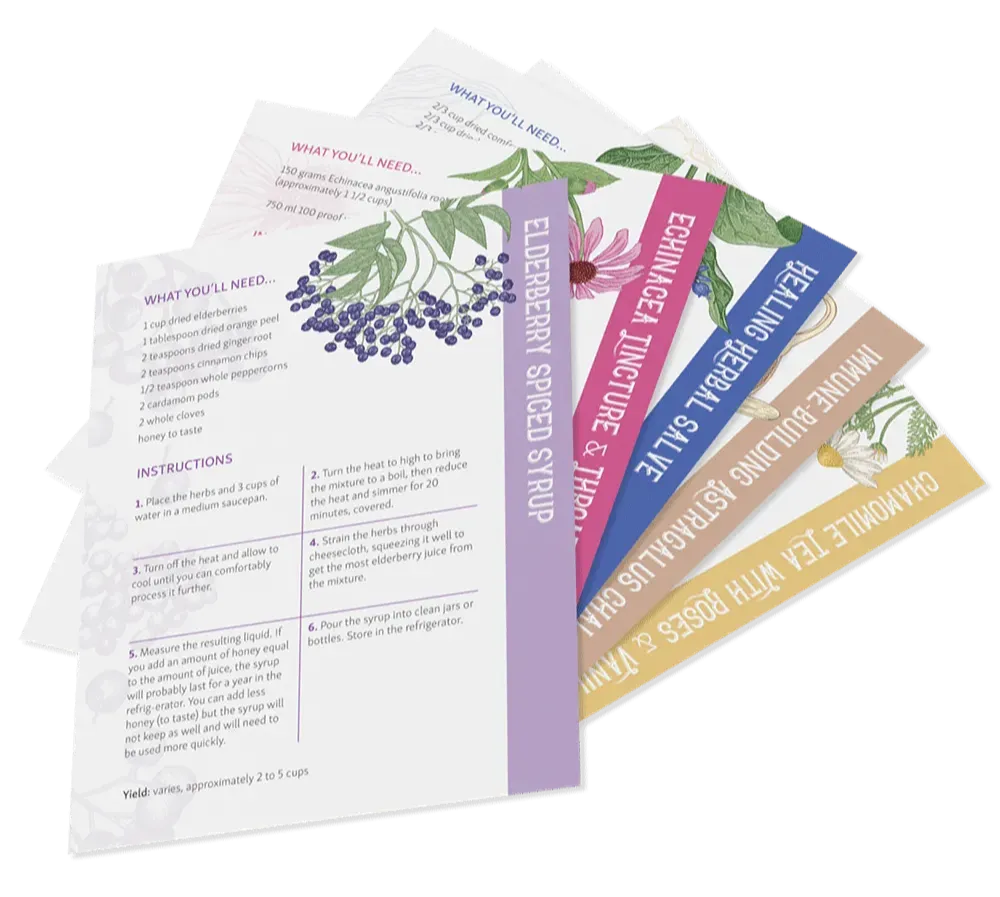
Sage can also reduce the flow of breast milk and should be avoided during lactation unless you're preparing to wean. Want to learn more about the benefits of other common herbs? Visit HerbNotes.cards to grab a deck of our top 12 Herb Notes. You learn all about herbs like elderberry, chamomile, and more. This has been Herb Notes with me, Tara Ruth. Catch you next time.
Rowan Gallagher:
HerbMentor Radio is a 100% sustainably wildcrafted podcast, written and performed by Mimi Prunella Hernandez and Kimberly Gallagher, with production and editing by me, Rowan Gallagher. Visit HerbMentorRadio.com to subscribe on your favorite podcast app and find out how you can be a part of HerbMentor, a community hub for herbalists that you have to see to believe. HerbMentor Radio is a production of LearningHerbs.com LLC. Thank you so much for listening.