Kimberly Gallagher:
You're listening to HerbMentor Radio by LearningHerbs. I'm Kimberly Gallagher.
Mimi Prunella Hernandez:
And I'm Mimi Prunella. You're joining us as we continue walking through the world of herbalism, following the path outlined in my book, National Geographic Herbal. This month, we step into chapter two, Kitchen Herbalism. To step into an herbalist kitchen is to be invited by a familiar embrace of aroma and taste. The kitchen represents that sacred space where food and medicine are handed down from generation to generation.
Kimberly Gallagher:
Oh my gosh. We truly could not imagine a better guest to guide us into the heart of kitchen herbalism than Patricia Kyritsi Howell. Patricia Kyritsi Howell is an Appalachian herbalist and director of the BotanoLogos School of Herbal Studies in North Georgia. She is the author of the newly updated edition of Medicinal Plants of the Southern Appalachians and co-owner of Wild Crete Travel, leading small group tours focused on herbs and traditional foods on the Greek Island of Crete. Inspired by her Greek heritage and years of exploring the mountain village of Kritsa, Patricia brings an insider's understanding of Cretan plants, cuisine, and traditions to her work. Patricia, welcome to HerbMentor Radio.
Patricia Kyritsi Howell:
Thanks. Happy to be here.
Kimberly Gallagher:
Oh, so glad to have you. Mimi just shared that quote about the herbalist kitchen being a sacred space of aroma and memory. I'd love to begin in Greece. Can you walk us into a Cretan kitchen where you felt that familiar embrace? Tell us about the herbs and the smells, what's on the stove. Who would we find in that kitchen?
Patricia Kyritsi Howell:
Well, there's a lot of kitchens on Crete. I have a lot of friends who live in very small villages in Greece and Crete, and most of them in the mountains. I had a home there for about 20 years and was able to learn from a lot of village cooks, women that I know. My friend Arjura is probably one of my big inspirations. Her parents were shepherds up in the mountains. And so, in the summers, they lived up there following the flocks around. And she told me that at night, her father would cut a bunch of fresh thyme and stuff it into this kind of pillow. And that's what the children slept on was this big pillow of thyme. And I've gone foraging with her many times.
She's a phenomenal cook, but very traditional Cretan. Almost every other day, she, like most village women, makes a big pot of dolmades, the stuffed grape leaves because that's one of the main foods that they eat often with drinks in the evening. So, there's always the smell of oregano and thyme. And then she has her own olive trees. So, she has these big containers of olive oil. I think that it's some really crazy amount of olive oil that each person imbibes each year on Crete. And to contrast it with an Italian kitchen, it's not very garlic oriented. So, it's really aromatic plants are really the center.
Everyone drinks a lot of sage tea with lemon and honey, especially in the winter or if you live near the water because it's so damp there. So, even if you go into a little taverna that's by a harbor or something, there'll be a bunch of fishermen in there drinking big pots of sage tea. And what we know about sage as an herb is that it's kind of drying and it breaks up mucus and congestion. And so, when you're in a damp climate along the water and it's winter, you're more prone to getting that internal dampness. So, it's really interesting if you have a background in herbal energetics to see how the traditions align with that so beautifully with... Nobody's measuring anything or diagnosing or dosing.
It's just like, this is what you do when you're by the water. You drink sage tea, that kind of amazing.
Kimberly Gallagher:
Yeah. These traditions develop for a reason, right?
Patricia Kyritsi Howell:
Yeah, yeah. Just a self-healing with the plants that they have. And people eat a lot of grilled meats, so there's often a grill outside with olive branches burning. They don't really have forests like we have here. So, most people, when they cook meat, they use the cuttings from olive trees. So, when they prune the olives in the winter, then you'll see trucks coming through the village, pickup trucks with big piles of olive branches in the back, and then dropping them off in front of people's houses. And one time I was showing some friends of mine a picture of my house here, and at that time I lived in a house that I heated it with wood.
And so, on the porch, there was this huge stack of wood, the winter supply. And my friends who were looking at it in the village, it's like they were staring at it and going, "Oh, look at this, look at this." And I thought, well, my house is nice, but it's not that exciting. And then I realized that what they were freaking out about was wood this big, because that's just unheard of there. I mean, even if an olive tree falls over, maybe it's this big, but people heating their houses or cooking with wood, they're just using cuttings off of olive trees.
Kimberly Gallagher:
Wow. They must have to have huge piles.
Patricia Kyritsi Howell:
Well, you cannot believe how many olive trees there are in Crete. It's their main export. There's more olives trees than people on Crete. And they've been cultivating olives there since 3000 BCE. So, it's a pretty integral part of the landscape and it's integrated in all these different ways into everyday life.
Mimi Prunella Hernandez:
That sounds really amazing. In fact, I've never seen an olive tree in person, but I just got back... Okay. Of all places, I just met one this past weekend in Las Vegas.
Patricia Kyritsi Howell:
Oh, gosh.
Mimi Prunella Hernandez:
I was in Las Vegas for a conference and I was standing outside the Venetian, the giant hotel and casino. And I looked out to the little lawn beside the area and I was like, "Are those olive trees?" And it made sense because it's the Venetian. They're trying to, I guess, mimic the Mediterranean regions. And so, I went, I got a close look. It was indeed. I looked at the leaves, the bark, everything. I'm like, "Oh, olive." So, one of these days, I'm going to follow you on one of these trips because you do take students to Greece, don't you?
Patricia Kyritsi Howell:
I do. I have a tour coming up in May. I have a plant and food centered tour to the Greek island of Crete. Yep.
Mimi Prunella Hernandez:
Wow, that sounds amazing.
Patricia Kyritsi Howell:
For a couple more people to come, actually. Two spaces just...
Kimberly Gallagher:
Hey, two more, Mimi. We can jump on.
Patricia Kyritsi Howell:
Yeah. It's a business trip, right?
Mimi Prunella Hernandez:
Live from Greece.
Patricia Kyritsi Howell:
That's the great thing about being an herbalist. You can justify just about anything.
Kimberly Gallagher:
It's true. It's true.
Mimi Prunella Hernandez:
I love that visceral experience that you're bringing up about the aromatics and delivering the olive branches and olive branches on the fire. I can hear it when you walk us through it. I can hear it and I could smell it and I can just see it. So, just thanks for walking us through that.
Patricia Kyritsi Howell:
Sure. Yeah. I mean, and when you're on Crete, especially if it's warm, not so much in the cold of winter, there are so many aromatic plants growing everywhere that it's like the air is sage and oregano and thyme and rosemary. And I mean, it's in the air all the time. So, sometimes I have some essential oils from a man I know there who distills them, and I'll put a few drops in my diffuser and just kind of close my eyes and feel transported back there.
Kimberly Gallagher:
Go to Crete.
Patricia Kyritsi Howell:
Yeah. Yeah.
Mimi Prunella Hernandez:
I love that tip.
Kimberly Gallagher:
So, what role do those herbs play in the Greek food ways for health, not just flavor?
Patricia Kyritsi Howell:
Yeah. I mean, there are very few dishes in traditional cuisine that don't have a pretty generous amount of aromatics. And one of the things that's interesting, and as I spent more and more time on Crete as an adult herbalist, what I found, because I would be looking for the herbalists, where are the herbalists? And what I found living in a small village is that different women would have their specialty. This would be the person who makes a cough tea, and this is somebody else who has a really good formula for a tea for upset stomachs. And somebody else infuses St. John's wort oil and makes the salve that everybody uses.
So, it's kind of like it's dispersed in the community. There's not any one person that's an expert, but they don't really make a line between food and medicine. If you're sick, you eat certain dishes. So, fish soup is one with kind of a clear lemon broth. I mean, there's something that they make in the spring that is kind of like a tonic really that is... It's called Aginares à la Polita which means artichoke city-style. And in Crete, whenever they talk about city, they're talking about Istanbul or Constantinople because so many people came from there to Crete. In fact, people in my family live there lived in Turkey and in Istanbul for many years. And so, it's fresh artichoke hearts.
In Greece, they don't eat the leaves at all. They only eat the hearts. They throw everything else away. But it's the artichoke hearts and new potatoes and some spring carrots and a lot of fresh dill, which is also, that's a big herb in their cooking as well. And then sort of a lemon olive oil thickened sauce with it. So, it's kind of like a cross between a stew and a soup. But in the spring, it's kind of like here in the Appalachians, people talk about sassafras as a spring tonic. People here go out and collect sassafras roots and boil them up in the spring to kind of clear the liver after a heavier diet in the winter.
And that's kind of how the Aginares à la Polita is used in Crete as just sort of a light food. And then of course, the other thing that goes on in Greece is that everybody fasts for 40 days before Easter or Pascha. But when they say fast, it means they're just not having any animal products or dairy products or oil, olive oil. So, they do that for 40 days. And then at midnight, the night before Easter, all hell breaks loose because everybody just...
Kimberly Gallagher:
Time to eat.
Patricia Kyritsi Howell:
Everybody starts feasting. Yeah. Yeah. And then the Easter feast, that's where they do lamb on the spit and things like that. Yeah.
Kimberly Gallagher:
Oh my gosh. That just sounds so good.
Mimi Prunella Hernandez:
It sounds healthy. I mean, just it sounds like especially the fasting and the aromatics and the olive oil. I mean, that's why the Mediterranean diet is so-
Patricia Kyritsi Howell:
Exactly.
Mimi Prunella Hernandez:
... so touted around the world for its health giving benefits. I love it. Thank you for sharing that with us. Yeah. One of the herbs I've heard you mention is oregano. I know we both feature oregano in our books, mine's in chapter two, my kitchen herbalist chapter features oregano pretty strongly. And here in the States, most of us buy it at the grocery store, it's dried, it's grown sometimes, I have it in my container garden. I have it in the spiral garden here, but in Greece, one of the things I can't get past is this image in my mind of it growing wild. Does it actually grow wild?
Patricia Kyritsi Howell:
You know how like around here you see mullein growing by the roadsides? That's how oregano is on Crete. And interestingly, I mean, there's like six different species that grow on Crete, but they're all kind of shrubby and almost all of the aromatic plants like thyme, oregano, marjoram, rosemary, which is not... All of them are, they're perennials and they all have woody stems. So, they're like shrubs as opposed to like how people grow them here where it's this kind of tender annual. And the oregano is harvested when it's in flower and they favor the flowers over the leaves. They collect both, but it has one of the species Origanum onites, which is the most common one.
It has a pretty good-sized flower stalk with lots of flowers on the end. So, you get a lot of flowers when you harvest it and it blooms in April and May. So, every year when I go, I collect a bunch of it. And then it's so dry there that unlike where I live in the Southern Appalachians where we have about a hundred inches of rain a year and you can't get anything to dry without heat. There you can just lay oregano out and within two days... I've done it in hotel rooms. If I have a balcony on my hotel room, I'll just take a towel from the bathroom and lay it out and put all my oregano there and then let it dry. And it usually just takes a little while and then I bring it back into the country.
Mimi Prunella Hernandez:
Oregano blossoms. Here, I'm always trying to keep my oregano from bolting because then it's over. But next time I'm going to really savor those flowers and try them. They sound like more delicate. Of course, our oregano is nothing like what we're going to find in Greece, right?
Patricia Kyritsi Howell:
I was just going to break you the bad news to you that Mediterranean sun is just... It concentrates those volatile oils so intensely. I mean, when you go to the store and buy some oregano and then you have some that was wild, there's just no comparison. There's so many more notes in it of the air. And that's true of thyme as well and marjoram. So, it is a treat. But didn't I just send you some recently?
Mimi Prunella Hernandez:
I've had oregano from you. I'm always excited to get it. We've already gone through it. It did not last long. We love oregano here, but I am so fortunate that when Patricia comes home from Greece, I usually get a little sample of oregano. Oh, lucky you. Wild oregano. So, it's peak. It's like definitely more potent and super aromatic and just beautiful.
Patricia Kyritsi Howell:
Yeah. And so, when you make a tea out of it though, it is a little harsh. I mean, as a culinary herb, it's a little more diluted with things, but when you infuse it does have kind of a bitter overtone. So, a lot of people there drink marjoram tea instead because it doesn't have that edge to it. So, for colds or things like that, people will usually choose the Origanum majorana as an infusion over oregano.
Mimi Prunella Hernandez:
I had never thought to make oregano infusion. Have you, Kimberly?
Kimberly Gallagher:
No.
Mimi Prunella Hernandez:
Have you ever had oregano tea? That sounds so medicinal and good. It's like you got to reframe your brain a little bit because oregano, I associate so much with certain foods and dishes. So, it'd be interesting to try a tea out of it and see how that feels in my body.
Patricia Kyritsi Howell:
Yeah.
Kimberly Gallagher:
Yeah.
Patricia Kyritsi Howell:
Or infusing it in honey, doing like a solar infusion with it. That is something when I lived there more, when I'd spend months at a time there, I would always make some infused honeys with fresh herbs that I picked. Sage is also really common there. It's everywhere, Salvia triloba, and it's also pretty acrid.
Kimberly Gallagher:
What a great place to make honeys with all of the aromatics concentrated like that. That's so smart. Can you bring the honeys back home?
Patricia Kyritsi Howell:
Very carefully. Yeah, I do, because I just get an empty water, a plastic water bottle. And after I've infused it in glass, then I pour it into the plastic and seal it and then put it in a Ziploc bag and put it in my suitcase and hope for the best.
Kimberly Gallagher:
Nice. Bring those herbs home in the honey.
Patricia Kyritsi Howell:
The main honey that people make there is thyme honey. And so, when you go by... And thyme grows along the sea. It's a seashore plant primarily. And it's almost like a little bonsai because it's so woody. The stems, the stem will be this big around and woody with bark on it.
Kimberly Gallagher:
Wow.
Patricia Kyritsi Howell:
And so, beekeepers take their hives down and put them there when it's blooming, and then they sell thyme honey specifically. Yeah.
Mimi Prunella Hernandez:
Thyme seaside honey. Oh my goodness. Yeah. It's no wonder you keep going back. I know.
Kimberly Gallagher:
Yeah. Here, students often learn about oregano as antimicrobial and find it in a oil supplement bottle. Does that happen in Crete or...
Patricia Kyritsi Howell:
Not really. I mean, there are shops that sell manufactured herb products, but it's not commonly used. I mean, like the oregano oil thing that goes on here, I've never seen that in Crete. Nobody does that. And they don't really use a lot of tinctures either. Everything is pretty much teas or foods or honeys, and tinctures are rare to see those anywhere. But they also...
Kimberly Gallagher:
So, the kitchen medicine's really the thing?
Patricia Kyritsi Howell:
Yeah. There's no separation, which between food and medicine, which I think is the way it was, has been traditionally, is for there to be that firm line between those things. And you definitely see that. But I'll just tell you a story. When I first started going to Greece regularly, and there's so many plants there, there's so many endemics on Crete. And so, I would pick six plants that I didn't know what they were, and I would tie a string around them. And then when I went into the village to run errands, I would just carry it with me. And the women in the village would be like, "What are you doing with that plant? It's for goats." Or they'd go, "Do you have a headache?"
And I'd say, no. And they'd go, "Well, why do you have that one?" And it was like they would teach me about the plants because they were wondering what I was going to do with these herbs. Why was I carrying them around? And I realized this is a great way to get people to talk to me about herbs. And a friend of mine who's an anthropologist, she said, "You should say to people, if you have an herb, you should say, I'm going to take this home and make it for a headache, just make up something that you're going to do with it, and then they'll correct you because people like to correct you. So, you could just make up anything like, I'm going to go home and put this on this rash I have."
And then they'd go, "A rash? No, that's not for a rash." And so, I'd be like, "What is it for?" Writing it all down.
Kimberly Gallagher:
Oh my gosh.
Patricia Kyritsi Howell:
That's so great. That was my herb school, Crete.
Kimberly Gallagher:
One of our goals at LearningHerbs is to have an herbalist in every home. And I think it just sounds like everybody on Crete is an herbalist to some degree.
Patricia Kyritsi Howell:
I mean, in some of the bigger cities, yeah, there's been a real break from that more agriculturally oriented life. But on Crete, there's an area of Crete that's very touristic, but the majority of it is small villages that are still living pretty much like they have for a long time. Amazing. Yeah.
Kimberly Gallagher:
Wow. Mimi, I'm really enjoying this conversation with Patricia. I love the way she's talking about how on Crete they're bringing all of these beautiful aromatic herbs into their diets and how there's no separation really between food and medicine. It's all happening in the kitchen. And it makes me think about a couple of courses that we have on HerbMentor, our membership site. There's KP Khalsa's Culinary Herbalism and Todd Caldecott's Food as Medicine. So, these are two full-blown courses where you can learn about how to bring herbs into your kitchen for your health and wellbeing. Yeah, the library's so full of amazing resources.
Mimi Prunella Hernandez:
I love it, Kimberly, and I'm so excited to make some oregano-infused honey. I know that there's herb-infused honey recipes at HerbMentor. We're going to chat about herb-infused honeys in our forums. We do have community meetups that I'm engaged in. Kimberly and I get together, and we have one coming up, May 13, where we'll talk about kitchen herbalism. We'll talk about our love for some of these herbs that Patricia brought up, and we'll talk about our experiments with making herb-infused honeys. So, I am just so excited.
Kimberly Gallagher:
So, we'd love for you to join us on HerbMentor. We have a special offer for all of our podcast listeners. So, go ahead and click that link and check out the special offer for HerbMentor for this month, and we'd love to welcome you as part of our community.
Mimi Prunella Hernandez:
Sounds great. Well, let's get back to Patricia and see what else she has to teach us about aromatic herbs of Greece and native plants of Appalachia. Well, it sounds like the Mediterranean region, just this big center of activity, especially when it comes to all these aromatic plants that we've been talking about. I imagine there's just such a network of traditional harvesters to academics to researchers and maybe even commercial growers because maybe not everything's wildcrafted, I imagine, because they probably export a lot of this. I mean, this is where a lot of our herbs and spices come from.
So, I'm wondering, from your perspective, have you gotten a chance to see, in terms of the cultivation and preservation and research, what's exciting, what's important, what's going on right now in Greece?
Patricia Kyritsi Howell:
Yeah. Well, first of all, just to do a little historic reference, Crete has been trading in aromatic herbs since the time of the Minoan. So, there's documentation in Egypt of aromatic herbs being brought there, which were made into infused oils, and some of them were used in embalming and in religious rituals. So, they can see where there's notes about this shipment of thyme came in, this shipment of oregano came in. So, this has been going on for a long time. Probably I would say in the last maybe 15 years, maybe there has been a lot of pressure on wild plants there. It started to be an issue with certain plants.
And as a result, there are now people who are cultivating aromatics specifically for the tea market and for the spice market, but that's a pretty new thing there really. And it has a lot to do with the fact that there was so much for so long that nobody thought about it. And because all of them are really hearty perennials, you can go out and cut a bunch of oregano and it'll all come back again. I'm just trying to think in terms of medicinals, I don't really know. I can't think of any medicinal roots that are used there. So, that is a place where plant populations tend to get more decimated is if the thing that we're interested in is the roots.
So, when it's just the aerial parts, it's a little easier to over-harvest to some degree. But the other thing that intersects with this is that Crete also, like the Appalachians has a, and actually more than the Appalachians, has a real strong tradition of eating wild greens, foraging for wild greens, Horta, which is where we get our word horticulture is from people collecting wild greens or moving the plants closer to where they lived so they didn't have to go so far to find them. And Horta is still probably the most common food that people eat on Crete.
I remember going, I had a friend who, her family, they were potato farmers and they invited me to lunch on Sunday and there was a big table set and there were about 12 people there, her family, but then there was four men who were probably in their 30s who were working, who were planting potatoes because it was potato planting time. So, they all came in for lunch. And on the table, there was a dish of potatoes, there was green beans with tomatoes and bread and some cheese. And then there was this plate that was this big, like what we would think of for a turkey platter, and it was just mounded with cooked greens with olive oil and lemon on it.
And then there was this one little plate with a few pieces of chicken on it. And so, when everything went around the table, because all the food there is served family style, even in a restaurant. And these big guys, they would take a little piece of chicken, but when that Horta plate came by, they were stacking it like mounds of it on their plate and just eating it.
Mimi Prunella Hernandez:
Wow.
Patricia Kyritsi Howell:
And that was what they were looking for was the Horta. They didn't care about meat. And that is the true Mediterranean diet, meat is a condiment and vegetables are the main thing that people eat.
Kimberly Gallagher:
Wow. That seems like a teaching right there.
Patricia Kyritsi Howell:
I noticed it.
Kimberly Gallagher:
Just pull that out.
Patricia Kyritsi Howell:
I noticed it and I was like, "Wow, nobody's interested in the chicken." The reverse would be here. People would be having a big serving of meat, like a meat and three that we have here in the south or meat with three little servings of vegetables. But...
Kimberly Gallagher:
Meat as a condiment. It's perfect.
Mimi Prunella Hernandez:
I think when you...
Patricia Kyritsi Howell:
Go ahead.
Mimi Prunella Hernandez:
I think when you said that they go out and harvest the wild greens, and that's the biggest thing at the dinner table. Kimberly and I were both really our eyes wide open. That's an herbalist dream. They must have the best digestion with all the bitter greens and the aromatic plants. I just think it sounds so wonderful.
Patricia Kyritsi Howell:
There was actually some research done because there's this one village that was right above the village I lived in. The village is called Crusta, and it's very small. And for some reason in Crusta, all these children that came from that village were like math wizards. They just had phenomenal skills with math. And so, somebody was doing a PhD dissertation and they went there to try to figure out what's the deal with Crusta? They barely have electricity. So, why is this happening? And their conclusion was, and this was based on some compounds that they researched, that the brain changes when you have these high amounts of wild greens.
And then they speculated that that was also a big leap in human evolution is when people started eating lots of cooked greens. And the standard story is that it would be that meat was the thing that neolithic people feasted on, and that's what made them strong. And what this thesis came back with was no, something about the brain changes when someone's eating vast quantities of wild greens.
Kimberly Gallagher:
Wow, I'm going to go get some more nettles.
Patricia Kyritsi Howell:
Yeah.
Kimberly Gallagher:
Yeah. Keep those coming into the diet right now.
Patricia Kyritsi Howell:
Yeah. And there are people now on Crete who are cultivating greens for the market because it's a lot. I mean, if any of you've gone out foraging, it's a lot of work to go and get enough because you have a bag of greens this big and you cook them and you have this much.
Mimi Prunella Hernandez:
Exactly.
Patricia Kyritsi Howell:
Exactly.
Kimberly Gallagher:
Yeah. How many did they have to cook to make that huge plate for the table?
Patricia Kyritsi Howell:
My friend Caterina, she goes out two or three days a week and she has a burlap bag and she fills it. But they pick, maybe there'll be eight or nine different plants. They don't separate them. And most of them are like little basil rosettes of things in the aster family that they just collect them when they first come up in the spring.
Kimberly Gallagher:
Wow.
Patricia Kyritsi Howell:
Yeah. Yeah.
Mimi Prunella Hernandez:
And that develops the palette so well. Over here, we have our lettuce and our romaine, iceberg, and we just don't have such an evolved palette like that where we can taste... I mean, I'm thinking aster greens. There's got to be some flavors in there that we're not familiar with so much.
Patricia Kyritsi Howell:
Yeah. Kind of like there's a really common daisy that's called the Corona Daisy there that it's kind of like our oxeye daisy, but it's a yellow flower. But you can collect the leaves of oxeye daisies in the spring when they first come up. And it's very similar, kind of chrysanthemum-like leaves. But they do balance bitters with sweet herbs, things like that. So, it's palatable.
Mimi Prunella Hernandez:
Sounds so amazing. So, I have, Patricia and I go way back. I've been to her house a few times, her herbalist homestead there. And when I visited your home, I do remember sitting... We had a beautiful dinner. I was sitting in the area where your books were, and I had on one side all these Greek Mediterranean cookbooks. And then on the other side, all these Appalachian plant books. And somehow flipping through, I was like sumac, this plant sumac kept showing up in both of them.
And so, I was wondering if that's an herb that you have experience with and have you experienced sumac from both a Mediterranean angle and an Appalachian angle? What would be the variety of ways they're used in the respective cultures?
Patricia Kyritsi Howell:
I don't know anyone in Appalachia who uses the dried berries in cooking. I've never seen that. The most common thing, and I found this when I was researching my book on Appalachian herbs, is that they were used to make shumac, which was a black dye for shoes, I mean, for polishing shoes. So, if you take those ripe red berries, they're kind of furry and you grind them up and mix them with a fat, then that's what people used to polish their boots.
Kimberly Gallagher:
Oh, interesting.
Patricia Kyritsi Howell:
Yeah. Yeah. Find a need and fill it. So, I don't know that it's the same use at all. I mean, sumac lemonade, that was one of the ones I learned very early on. If you take the ripe red tops of sumac and just infuse it in water for a short amount of time, it's like drinking lemonade. It has that flavor. I'm not from Appalachia. I've lived here about 30 some years now, but even the people that I know who've lived here their whole lives, they don't use it in cooking at all. Whereas on Crete, it is used, not a whole lot, because it's really a little more of a Middle Eastern spice. And on Crete, Crete is like 138 miles long.
And the Eastern end of it, their cuisine is very Turkish oriented because the Turks occupied Crete for quite a few years, 450 years. And then the Italians, the Venetians were there for three or 400 years as well. So, the western part of the island, all of their traditional foods have kind of an Italian sort of flavor. They use basil in their cooking, and they do a lot of pastas and things like that. In Eastern Crete, it's much more like you would find in a Turkish kitchen, although you don't say that to anybody on Crete because the Turks and the Greeks have a very historic, still active, pretty rough relationship between the two countries.
Kimberly Gallagher:
Oh, okay.
Patricia Kyritsi Howell:
Yeah. My grandfather was born in Greece, and if you mentioned anything about Turkey, he would spit on the ground.
Kimberly Gallagher:
Oh, wow.
Patricia Kyritsi Howell:
Turks.
Kimberly Gallagher:
Animosity.
Patricia Kyritsi Howell:
Yeah. Yeah. I mean, there were horrific things that happened between those two countries and people didn't forget. But when they do use it's usually on breads. They use it, sprinkle the dried. And it's, again, much stronger than what we have here. So, it's got a really strong lemony tart taste. I really love it. And then they make the spice blend called Za'atar, which is sumac with oregano, salt, and sesame seeds, and they're all kind of ground together. And then that's used mostly on breads as well.
Mimi Prunella Hernandez:
I'm a huge fan and I love sumac. I've tried the lemonade, the standard around here in the late summer. And this year I did decide to grind some up and thought, "Oh, let's just grind it up and sprinkle it on my food." So many seeds. Those seeds are so hard. I didn't even think about straining those out. We had this beautiful chicken dish that I sprinkled, and then we're eating chicken. It's like crunch, and it hurts. So, now I know I tried again, and it's all about the fine, sifting out those seeds, big lesson, but the flavor, the flavor was just so tart and so vibrant. So, I really enjoyed that experimenting.
Patricia Kyritsi Howell:
And the colder it gets, the stronger the flavor with it. So, the ascorbic acid content, if there's been a frost or two, that's the ideal time to pick sumac berries because if you taste them before there's been the first few frosts and then you taste them after, it's like the other plant that that happens with is rose hips. Rose hips have a much stronger ascorbic acid content after it's gotten cold.
Kimberly Gallagher:
Do they get the frosting on Crete?
Patricia Kyritsi Howell:
Oh yeah, they have snow. Yeah.
Kimberly Gallagher:
Okay.
Mimi Prunella Hernandez:
Oh, okay.
Kimberly Gallagher:
I always think of Crete as warm summery.
Patricia Kyritsi Howell:
The beach. The beach. When I take people to Greece, I have to do all this educating. It's like, don't just bring sundresses and a bathing suit and you need a hat and you need a warm coat because the whole interior of Crete is mountainous. So, if you're in the mountains at all, it can be pretty cold there at night, even in the spring, down to like 40 or something at night. Yeah. Sorry to ruin your fantasy.
Kimberly Gallagher:
Burst my bubble.
Patricia Kyritsi Howell:
Fantasy. I know. I mean, really, I do have to say to people, this is not like a beach vacation. We're going to be in the woods. We're going to be...
Kimberly Gallagher:
We're going to be in the mountains.
Patricia Kyritsi Howell:
Yeah, yeah. Dress accordingly.
Kimberly Gallagher:
Yeah. Well, we've spent a lot of time talking about Crete, and I know you also just updated the Medicinal Plants of the Appalachians, which has been such a gift to herbalists. And I'm curious what inspired you to release this beautiful new edition and what feels important to you about preserving the Appalachian plant knowledge?
Patricia Kyritsi Howell:
Sure. Oh, yeah. Mimi's holding up the original edition.
Mimi Prunella Hernandez:
Second edition. Okay. The big difference though, I can't see the whole thing, but the new one...
Kimberly Gallagher:
The size.
Mimi Prunella Hernandez:
I'm sorry. The new one is heavy and it's really big. It's a big book and it's got all these colorful images in it-
Patricia Kyritsi Howell:
Oh, beautiful.
Mimi Prunella Hernandez:
... which the first one doesn't have, but this book, I am in Appalachia and this book is, I think every herbalist in Appalachia has this book. It's such a beautiful resource. I take this one out because of the pictures. So, now I go out to my creekside and I literally just get on the ground and I'm like flipping through just right here in my book on the ground. And it's just so much fun, so much information, such a treasure. I'm glad you have a second edition.
Patricia Kyritsi Howell:
Thank you. Well, I had a friend who I met when I first moved here. Her name was Linda Anderson. I mean, she's still here. She's in her 80s now and her family had been here for generations. She grew all her own food, had her whole life, her family had her whole life, and she planted by the moon, she canned everything. And when we became friends and she found out what I did for my work, as an herbalist, she said one of her life's great sorrows was that nobody in her family ever took the time to teach her about the herbs that grew around here because they made things with them and she was given herbs as a child. But then when that generation was gone, it was like nobody in her family knew anything about it.
And it's interesting because you hear that story a lot around here that people, as they became a little more affluent and they had more resources, that they considered herbs to be poor people's medicine and they wanted to go to the doctor and they wanted to get medicine, real medicine. So, anyway, what inspired me to write the book is I was like, Linda needs to know this. So, in the introduction to both editions, I cite her as my inspiration. And I wrote it for someone who didn't know anything about herbs, who like, what would Linda Anderson need to know? And I pictured her sitting there every time I sat down to work on the book.
But when I wrote the first edition, which I wrote it in 2004, self-publishing was not as developed as it is now. And there was really no way to have a book self-published with a lot of color photos in the United States. It just wasn't being done. So, I did it without photos, but I put a key in there for each plant so that the book by Steven Foster and James Duke, the Medicinal Plants of the, what is it called? Mimi. It's the Medicinal Plant...
Mimi Prunella Hernandez:
Yeah, the Eastern-
Patricia Kyritsi Howell:
Eastern.
Mimi Prunella Hernandez:
... United States.
Patricia Kyritsi Howell:
Yeah.
Mimi Prunella Hernandez:
Yeah.
Patricia Kyritsi Howell:
So, that I put the page number for each plant in my book so that if you had that book, you could look at the picture and then you could look at my book.
Kimberly Gallagher:
Brilliant.
Patricia Kyritsi Howell:
So, it was kind of like a poor girl's workaround, but I really wanted to do it with pictures. And then I don't know if this happened to any of you out there listening to this, but one of the things that happened for me during COVID was, if it's not the end of the world and the world goes on, what do I want to do? It's like I had my wishlist, my post COVID wishlist, and mine was to redo my book with pictures and make it into the book that I really wanted to write. So, when COVID was over, that's what I started working on is collecting, going through my photos. And you know what? The majority of the pictures in the book are mine, photos I took, and they're all iPhone 14 photos, which is awesome.
When I started working with the book designer and she wanted to see photos, I was like, "Well, I don't know if these will work." And I sent her some and she's like, "Yeah, no, these are perfect." And I mean, I'm sure lots of your listeners are... Yeah. Yeah, that's a good bloodroot photo.
Kimberly Gallagher:
Glorious.
Patricia Kyritsi Howell:
Anyway, so it's kind of funny that to me that that's the low tech thing that I did for the book. And also both books are slightly different because the conservation issues about some of the plants have changed over the years. Plants that in the early 2000s seemed like everyone should know about this. Now I don't feel good about telling people about how to use them or identify them.
So, I did drop about four plants and replace them with some other ones because that's the sacred duty of herbalists is if you're going to teach people about these plants and how to find them and how to use them, you also have to make sure that they truly understand how to collect them in a way that doesn't destroy the plant populations. And I feel like that's part of our sacred duty as herbalists is to make sure that that message...
Kimberly Gallagher:
Mm-hmm. Definitely. Yeah, that's so well said, our sacred duty. Yes.
Mimi Prunella Hernandez:
Especially with your book, Patricia, they're all native, they're all wild, they're all medicinal Appalachian plants. And Appalachia is such a region of diversity and a region where many of our herbs are used around the world. We've got the ginseng and the goldenseal and the black cohosh. And a lot of those herbs, the bloodroot, this is our backyard and we treasure those herbs. So, I'm so grateful for your work here and for your conscientious effort with your new edition.
Patricia Kyritsi Howell:
Thank you, Mimi.
Kimberly Gallagher:
Yeah. I'm so glad you had the opportunity to redo and put the pictures in.
Patricia Kyritsi Howell:
Now I'm done. Don't ask me anything. Just look in the book. That's how I feel about it now. Yeah. But the plants in my book, you brought up a good point, Mimi, is that they're all endemic. I mean, they're native to this either to... They're only found in Southern Appalachian or they're native to North America. So, there's some other wonderful herbals out there about plants of this region, but they have plantain and dandelion and things like that. Part of my research for the book was like, what would've been here 400 years ago and only use those plants because those European interlopers didn't get in my book.
Kimberly Gallagher:
Very nice.
Patricia Kyritsi Howell:
As an interloper myself.
Kimberly Gallagher:
Oh my gosh. I love your story about the pictures. This is a total sidetrack. I love the author, Gene Stratton Porter. Do you know that author? She's an Indiana author and she wrote these beautiful nature studies of the moths in the Limberlost Forest in Indiana. And she would do all these really amazing photos of the moths. And the people, I don't know, the publishers came and they were like, "We want to see your dark room because your photos are so amazing." She was totally horrified because she was developing them in her bathtub, doing her own photography. So, you're part of this tradition of female nature writers who just do the photography.
Patricia Kyritsi Howell:
Get it done. Get it done.
Kimberly Gallagher:
Get it done the way we can.
Patricia Kyritsi Howell:
I did self-publish both of my books as well. I mean, I know Mimi, you've had a good experience with your books, but I know a lot of people who have not had good experiences with working with publishers, and it can go a lot of different directions. But when I wrote the first edition, the University of Georgia wanted to see the manuscript and they were thinking of publishing it, but they wanted to make so many changes that I took it back because I didn't feel it would be authentic with all the cautionary things they wanted to put in there.
And I'm very passionate about encouraging other herbalists to document what they're learning, what they know about plants, because herbalism is not static. It's a living tradition. And each generation who interacts with the plants adds their contribution to it. Mimi, with your background in your family to overlay all of that, what you know about the plants of this region is so rich. And we all transform it slightly and then hand it to the next person.
Mimi Prunella Hernandez:
And all of that just really circles along with preserving kitchen traditions because you have this authority, this authenticity around bringing education around Southern Appalachian plants. And then you're also studying these food ways in Crete and bringing students to that region. And really it's the same thing. It's showing people these traditions, it's showing people the history, it's bringing plants to people, and you do that so well. And it's inspired me along the way. And you're doing it so internationally now too. So, I'm really just so grateful to know you and have you on our show and bring this to our listeners because this is such beautiful work that you're doing. We're so happy.
Patricia Kyritsi Howell:
Thank you, Mimi. Thank you, Mimi. Oh, yeah. Oregano for the world, oregano for everybody. Put everything in there, put it on everything.
Kimberly Gallagher:
For sure. Patricia, thank you so much for taking us from the Greek Hillsides to the Southern Mountains and into the aromatic heart of the kitchen today. For listeners who want to know more about your work, your updated book, or your tours, where shall we send them?
Patricia Kyritsi Howell:
They can visit my website, which is wildhealingherbs.com. [Update: patriciakyritsihowell.com]
Kimberly Gallagher:
All right. Go sign up for those Crete trips. There's two spots left.
Patricia Kyritsi Howell:
May the first week of May. Yeah. I'd love to have a couple more herbalists there to help me eat all the food we're going to be cooking and eating.
Mimi Prunella Hernandez:
Oh my goodness.
Patricia Kyritsi Howell:
And someday, Mimi will come and that'll really make my day.
Mimi Prunella Hernandez:
Mm-hmm, mm-hmm. And thank you to all of our listeners for being here with us. We do want to give you a heads-up for next month as we continue along the herbal path with chapter three, Apothecary Herbalism. Next month, we'll feature special guest Mary Colvin, author of the The Herbalist's Guide: How to Build and Use Your Own Apothecary.
Kimberly Gallagher:
Looking forward to that one. Until next time, keep learning, keep growing, and keep cultivating your relationship with the plants. Thank you so much for joining us on HerbMentor Radio, and don't forget to stick around for an Herb Note.
Sorrel Hartford:
Hi, everyone, and welcome to Herb Notes. My name is Sorrel Hartford. I'm an herbalist with LearningHerbs, and I'm delighted to be the new steward of Herb Notes since our podcaster, Tara Ruth, has moved on to her new adventure. Today on Herb Notes, we will be talking about sweet, sweet fennel. Beloved as an aromatic herb and vegetable, fennel has a long history of medicinal and culinary use all over the world. Let's dig into three medicinal uses of fennel. One, fennel for digestive health. Fennel is perhaps best known for its support of the digestive system. Its aromatic oils are antispasmodic and can relieve muscle cramps and symptoms of IBS.
Fennel can move along slow digestion that leads to constipation and abdominal bloating. In Ayurveda, fennel is considered one of the best herbs for strengthening digestive fire and with the capacity to convert food into energy. I always remember one of my favorite parts of going out to eat when I was a child was going to an Indian restaurant and getting the little dish of fennel candies after the meal. It wasn't until recently that I learned that that is for digestion that is an herbal medicine right there at the end of your meal. Two, fennel for the lungs. With its antispasmodic and expectorant properties, fennel is a strong ally for the respiratory system.
A tea or a syrup made from the seeds can make coughing more productive and can relieve hoarseness, asthma, chest congestion, and even shortness of breath. Three, fennel for kidney and bladder health. The diuretic and anti-inflammatory properties of fennel help support healthy kidney, bladder, and urinary functions. Fennel promotes detoxification of these systems through its ability to combat infection and its stimulation of urination allows the kidney and bladder to function more efficiently. Here are some considerations about harvesting fennel. Fennel grows wild across Mediterranean climates, and it's sometimes found as a naturalized garden escapee in hot places around the world.
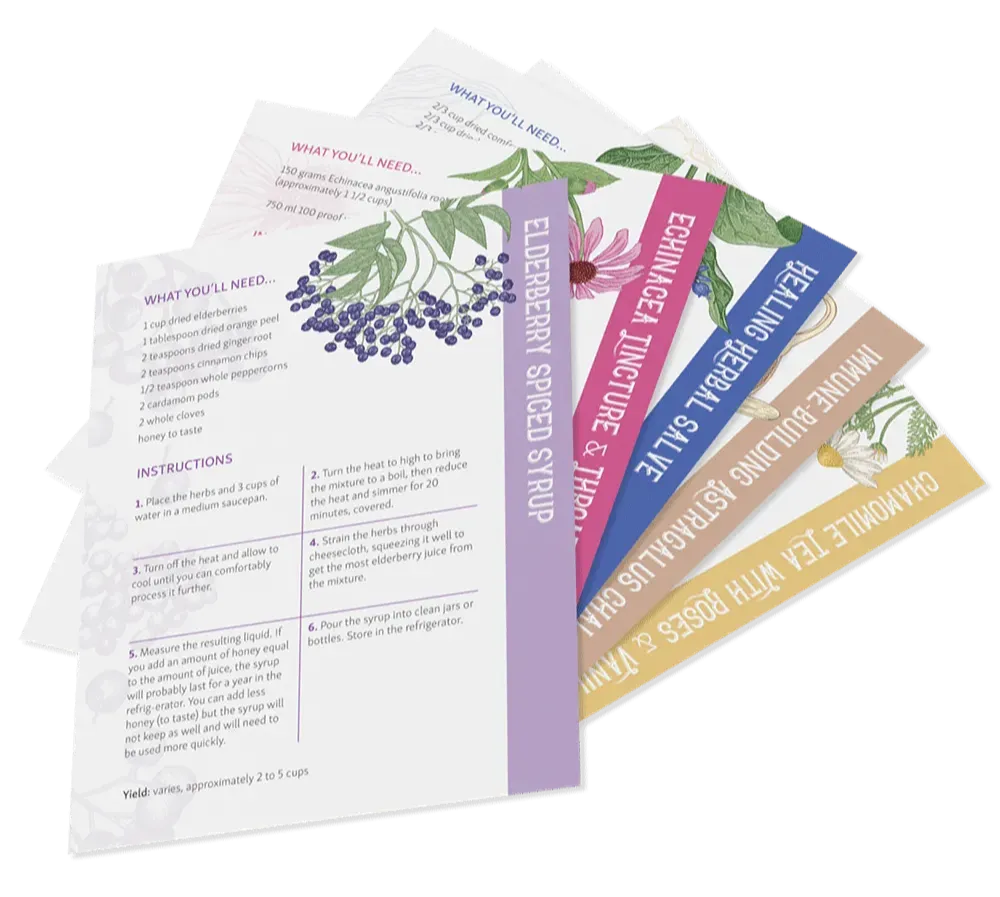
Wildcrafters are cautioned to be extra careful when harvesting fennel in the wild due to its similar appearance to some poisonous plants in the carrot family. Always consult a guidebook or a local plant person when identifying plants that you plan to consume. Want to learn more about the benefits of other common herbs? Visit herbnotes.cards to grab a free deck of our top 12 Herb Notes. This has been Herb Notes with me, Sorrel Hartford. Catch you next time.
Rowan Gallagher:
HerbMentor Radio is a 100% sustainably wildcrafted podcast, written and performed by Mimi Prunella Hernandez and Kimberly Gallagher, with production and editing by me, Rowan Gallagher. Visit HerbMentorRadio.com to subscribe on your favorite podcast app and find out how you can be a part of HerbMentor, a community hub for herbalists that you have to see to believe. HerbMentor Radio is a production of LearningHerbs.com LLC. Thank you so much for listening.