Kimberly Gallagher:
You're listening to HerbMentor Radio by LearningHerbs. I'm Kimberly Gallagher.
Mimi Prunella Hernandez:
And I'm Mimi Prunella. We're continuing our journey through the world of herbalism, following the path outlined in my book, National Geographic Herbal. And this month we step into chapter three, Apothecary Herbalism. Herbalists take great pride in honing their medicine making skills and assembling their herbal crafts into forms that can be easily dispensed for those in need. An herbal apothecary can range from a single pantry to an inviting storefront.
Kimberly Gallagher:
And we are so excited to welcome Mary Colvin to guide us into this deeply practical and meaningful aspect of herbalism. Mary Colvin is a Registered Herbalist, mentor, formulator, and herbal educator with over 17 years of experience in the herbal community and she is the author of The Herbalist Guide: How to Build and Use Your Own Apothecary. She is the founder of Ancestral Herbology located in Wakeman, Ohio, one of the formulators for Sprigs Life and the host of Herbology Talk Podcast. Mary stewards woodlands, prairie land and wetlands, which are home to hundreds of medicinal plants that she studies, connects to and sustainably harvests from. Mary, welcome to HerbMentor Radio.
Mary Colvin:
Oh, thank you so much for having me. It's a pleasure being here.
Kimberly Gallagher:
Hi. So good. Yeah. Go ahead, Mimi.
Mimi Prunella Hernandez:
Hi, Mary. It's so great having you here and I'm so happy that we get to share you with our listeners. I would love to begin with your book and I have it.
Mary Colvin:
Sure.
Mimi Prunella Hernandez:
I have it here.
Mary Colvin:
Yay.
Mimi Prunella Hernandez:
The Herbalist Guide. The Herbalist Guide: How to Build and Use Your Own Apothecary. And it's-
Mary Colvin:
Yes.
Mimi Prunella Hernandez:
Skyhorse Publishing. And I've read this book cover to cover. In fact, I wrote a forward for it.
Mary Colvin:
Yes, you did.
Mimi Prunella Hernandez:
It's a book that I often recommend for students who are learning apothecary building skills and medicine making skills. And it just feels so approachable. It feels so grounded in real practice. I'm curious, who did you write this book for? What were you seeing either in your clients or in the herbal community that made you feel like this was the book that you need to exist right now?
Mary Colvin:
Well, I really wanted this for beginner to intermediate students and mainly for those that chose to study at home. I've had the opportunity to learn in both a two-year class setting as well as self-study myself. And I really found that there's different needs for those self-study students. Number one, I've found that people [who] study at home just don't have the guidance that you would in a structured classroom. So I wanted to provide that guidance and give them that step-by-step training. The second thing is, is that there's just so much information out there and there's so many great books in herbalism. But the problem is when they're first beginning and getting started, you don't know where to go, what to learn first. So you become overwhelmed really quick. So I wanted to help them and not become overwhelmed by giving them those steps. Third, one of the things that self-study students are really good at is reading and going to those, maybe the webinars, watching things, but they're doing a lot of reading.
They're not doing a lot of experimenting. They're not getting that firsthand knowledge. And I really wanted to include that in my book and that's why I included the exercises, all the hands-on training exercises that are in there. And they're not just making formulas and making herbal preparations. It's really helping you to understand the information that's given as well. And then finally, I've always had students come up to me and said, "What books do you recommend for beginners?" And I really never knew what to say because there's so many again, but you have to be familiar with every single one and I didn't want to give them a list of 10 different books that they have to go get. So now I get to say, "Start here." Because I have all the steps to step them through. They have the exercises to work with the herbs and then there's also resources in there.
Kimberly Gallagher:
Wow. It sounds like such a fantastic resource. I love that you include the hands-on part. That's been so important at LearningHerbs too, is to get people out and harvesting things and bringing them in and making things. And as you say, that's when you really begin to learn, is when you start-
Mary Colvin:
Absolutely.
Kimberly Gallagher:
Yeah, hands on making things and bringing it into your kitchen and into your body. So yeah, that's really beautiful. I've got to get my hands on this book.
Mary Colvin:
Oh, thank you.
Kimberly Gallagher:
I don't have a copy yet. Yeah. So how about, let's just kind of step into the apothecary itself. Can you walk us into your space and tell us about how it feels to be in there? What do you see and smell and how do you relate to that place as a place of practice, not just storage?
Mary Colvin:
Oh, for sure. When I have my clients first walk in, because I do have a separate area when we built the house that I wanted to have just devoted to my business. And so when they walk in, they come in, see the calming colors. I have teal and lavender and some blue and then there might be some calming scents. I might have right before they come in some essential oil of lavender going or chamomile just so they have something nice to smell. Or sometimes I am actively using my apothecary so it can smell of many different types of herbs, but I really try not to do any garlic oil before they come in; it just permeates the whole place. But yeah, so there's different herbal blends too I might use that they can smell. When you look off to the right, when you come in, there's a small table and some really comfortable high back chairs that they can sit at.
And this is where I see my clients and we hold the consultations. And when you look to the left, there's a very cozy little corner with a bookshelf and it has about... I think, it's over 150 books. I know it's probably more than that because I keep purchasing books. So there's that. And then there's a wing back chair, really cozy area with the little ottoman. It's a fuzzy white ottoman that they sit in and I crochet. So I have a crochet blanket sitting there. So if anybody wanted to cover up and read, they could do that. There's a lamp on a little table sitting beside that with some books also. And when you look directly ahead, then I have my kitchen area and in front of that is an island. It's like a turquoise island. And I usually reserve that for seasonal decorations or things that make me happy.
Right now I have a little girl gnome. It has a white pigtail with pink ribbons and it has a little floral dress on and I love gnomes. So that makes me smile when I see it. And then next to it is a pink Gerber daisy. And on the other side I have some purple tulips and then some purple pink and white hyacinth in a pot because it's Easter. So they had a lot of those for sale at the store and I'm like, "I have to have those." And then I have some of my Sprigs Life displayed on there if my clients want to look at those too. The cupboards are kind of like reminiscent of bark, in that color and I really love bringing the outside in.
So I wanted that feeling also when they came in and I have in all the cupboards. The lazy Susan has all of my tinctures and they're alphabetized. I have above that in the corner cabinet are all of my tea cups and teapots and herbal blends that I want to put together, some infusions. I have a floral essence cabinet and then I have another cabinet that might have some essential oils and the beeswax and things to make cosmetics and different herbal preparations. And then below are like the alcohol and the menstruum that I need and the pots and pans. So I have a place for everything in there.
Kimberly Gallagher:
Wow.
Mary Colvin:
And then I have two rooms that are off of the main room and one is the walk-in closet where I have all my herbs and my business items as well. And then I have a full bathroom here for the clients to use. So that's just kind of a walkthrough of my apothecary.
For me, it's definitely not a place of storage. It is my office, not just my apothecary. And I feel that it's for me a contemplation spot, a place for me to be creative and for me to relax too. I do my writing here. I do my creating formulas here. So this is my spot in the home to get away. And for my clients, I really feel it's a place of safety, a place that they can be heard. And also I never rush my clients so they have time to sit down and discuss things and put their custom formulas together so they're not rushed out of here. So it's a place for them to unwind as well.
Kimberly Gallagher:
Wow. I can just really feel it. Your description is amazing. It's like I felt like I just was walking-
Mary Colvin:
Thank you.
Kimberly Gallagher:
Into this beautiful place. To be held and oh yeah, thank you for that description.
Mimi Prunella Hernandez:
Yeah, Mary, you are-
Mary Colvin:
Absolutely.
Mimi Prunella Hernandez:
Living the herbalist dream there and it's so visceral with everything from the fuzzy ottoman to the purple hyacinth and the smells of lavender. I'm squeezed in here into my small house. I've got apothecary in the cabinets, apothecary on every shelf in every room. My husband cannot wait for me to like get my she shed so I could take all my herbal stuff out there and all my teapots-
Mary Colvin:
Yes.
Mimi Prunella Hernandez:
And teacups. But I love that. I love that you really gave me a vision to dream on and I love that your clients have just such a beautiful space to feel safe and take in the herbs. But for many listeners, I imagine, especially beginners, the whole idea of even building an apothecary must feel really overwhelming, like maybe they feel like they need to build everything at once and I'm sure it didn't take... I'm sure you didn't jump right to this dream apothecary just like that. You probably had to progress-
Mary Colvin:
Absolutely not.
Mimi Prunella Hernandez:
Toward that. How would you guide students in building their apothecary in a way that feels practical and meaningful, where to begin and how do they know what's enough and just where to go.
Mary Colvin:
First I got to say that every apothecary is going to be different for everybody. It's never going to be the same. And it can be meaningful different ways to different people too. So I first guide my students to kind of build it according to their specific needs. Maybe they're just wanting a small space for their family, to be able to take care of their family. Maybe they are looking at being a clinical herbalist. Then they might want to start slow and start building and adding on to that. But it's really specific to their needs, the plants that they have growing around them as well. And then also how much time do they have to put into it? And like you said, not everybody can just build it all at once. And trust me, I have not. It's taken me years to get to this part too.
When I first started 17, 18 years ago, something like that, I was in my dining room. I had a little shelf that I started. So this has been years in the making and this has been my dream as well and I just have a lovely husband that's helped me find that dream basically, but. So when I'm talking about the plants, what kind of plants around you are, I'm speaking about biodiversity and the first place that they want to take a look at is what is growing around you. What do you want to connect with? Which herbs do you want to have in your apothecary? I also start off in the book just saying, if you write down all the different types of healthful situations that you might have, that might come up that you would want to turn to herbs for, that might be a good starting place also to determine what herbs you want to have and what type of herbal preparations that you want to have.
But the next thing for me is sustainability too. So when you're talking about a meaningful way, for me, sustainability means a lot. It's part of me and I have nine acres here and there's a lot of herbs that are at risk here as well and you know because you have a botanical sanctuary there too, but I want to protect them. I have invasive plants here, so I want to help the ecosystem as well. So determining what herbs I have in my apothecary is going to be different depending on the area, but I might want to use more of the invasive plants because I want to slow their spread or I don't want to use so much of the herbs that are at risk. I might want to find alternative herbs or maybe grow them in my own garden, not take them from the wild. So sustainability is something for me that's meaningful.
The other thing, you talked about practicality and I think that's a really good thing to consider when you're making your own and putting your own apothecary together. Let's take Solomon's seal, for example. Is it practical to spend $100 a pound every time you use it or is it more practical to try growing it yourself if you have the space? So finances is something that you want to consider. The other is convenience too. So do you want to prepare, is it more practical to have all the herbal formulas already prepared and all you have to do is grab them or is that something that you want to do on the go when you need them and put them together at that time? One of the reasons why I have so many tinctures and then I also have bulk herbs is because I want that choice and do I want something that's already prepared or do I want to turn around and make it in an infusion or decoction or of that sort?
So I think everybody's goal for their own apothecary is going to be different as well like we talked about and I was just telling Mimi the other day, and I don't remember if you remember me telling you this, but she is so good at taking what she forages and turning it into this beautiful plate and this beautiful cuisine and she's so talented in that way. That's not my thing. I'm talented at crocheting and I'm talented at creating gardens and creating formulas, but I just want to be able to take what I forage and throw it in some salad or a smoothie and I'm good. You turn it into this masterpiece, right?
Mimi Prunella Hernandez:
Aw.
Mary Colvin:
It's not that you're better or I'm better at herbalism, we just have a different focus within herbalism and that's the beauty of being an herbalist, I think. And so what you find is your focus and your passion is going to be different than somebody else and that's okay. And your apothecary is going to appeal to that as well.
Kimberly Gallagher:
Oh yeah, that makes so much sense. And we don't have to do everything as herbalists, right? Follow our own inspiration and bring that into our practice and into how we create our space. And I really hear in what you're sharing, like how your values are really tied into the apothecary that you've created. And I loved in the description, there's plenty of time for them to settle in and feel comfortable and it just clearly reflects your desire to really nourish and nurture the people that come in to you right from the moment they step into that apothecary. And then as you start talking about the plants and your desire to be sustainable in your practice and really use the herbs that are growing around you. And yeah, so I love that we're just giving people permission to dream into what are your values and how is that going to be reflected in the apothecary that you create and what are you creating the apothecary for? Is it for your family? Is it for friends? Is it for your community? And yeah. So beautiful thoughts about what to think about as you're getting started and I wonder-
Mary Colvin:
I think-
Kimberly Gallagher:
Oh, go ahead.
Mary Colvin:
Sorry.
Kimberly Gallagher:
Yeah, go ahead.
Mary Colvin:
I thought it was funny. Part of that question is when is it enough? I don't think it's ever enough. And I think we're always going to be adding, right? Things change too as time goes on. Your needs change and your finances might change and you might add some different herbs into it. So I think the word enough and complete are two different things. So I think that your apothecary is complete when it can sustain your needs, right? And you could do that with five herbs, you could do that with 100 herbs, right? It doesn't matter, but you're always going to find a new herb that you're interested in learning more about. I haven't been able to stop doing that. I don't know about you, but there's always, gosh, even just walking out in the woods, I always find a different plant that I'm like, how did I miss this and what is this?
And I don't know the name and now I'm driven and I have to find out what it is and find out more information about it. But yeah, so I think complete and enough are two different things. I think it's enough when you decide, but it's going to change. So is it really enough with what you have completed at the time, I guess?
Kimberly Gallagher:
Yes. One of the things I love about herbalism is it's just an endless arena for learning, right? We're continually finding new things and learning about new plants and learning more about the plants that we already know and love and yeah. So it's like we're in a continual learning profession.
Mimi Prunella Hernandez:
It is so true. I feel like the more we learn about plants, the more we know our herbalism, the more challenges we have to learn more. It's like a constant evolution.
Kimberly Gallagher:
Wow. Mimi, I'm really enjoying this conversation with Mary. She's such a wealth of knowledge and she seems like such a beautiful mentor for people who are starting out and it really makes me think about HerbMentor, all the things that she's saying. This is our membership site at LearningHerbs. It's a place where we gather as a community to learn about all different herbal things and it just hits so many of the things that Mary was talking about.
Mimi Prunella Hernandez:
I agree, Kimberly. I think it's just such a beautiful place for aspiring herbalists and for people who want to learn more about herbs, there's different voices there, there's different teachers, challenges for those hands-on experiences, mentoring, you can learn with Kimberly, you can learn with Mimi. We have different meetups, just so much going on there to guide that herbal experience.
Kimberly Gallagher:
Yeah. And as a community, we study one herb per month and take a deep dive into that herb. So as we're talking about all the different ways that one single herb can help you, we take that deep dive into the herbs and then you can really follow your inspiration. And that's one of the things Mary is really talking about in this interview too, like what's lighting you up and what are your values as an herbalist? And so you can choose a course from our course library that's going to inspire you in that moment and go down that path. And then if you have questions along the way, we have a whole forum where you can ask the question that's coming up and Mimi's on there and I'm on there and our friend Li is also on answering your questions so you have a place to get guidance anytime you need it.
Mimi Prunella Hernandez:
It's such an interactive experience and there's always a deal going on. For those of you listening today on the podcast, you can head over to our YouTube page and look for the show notes, look for the link to the discount in the description.
Kimberly Gallagher:
Now I think we should get back to our conversation with Mary.
Mimi Prunella Hernandez:
Yeah. Let's get back to Mary Colvin, everyone. And you've been doing this work for a long time, Mary. It sounds like you're giving us a glimpse of how things have evolved for your practice and your apothecary. And I love this concept of like moving toward simplicity or moving toward complexity or something else entirely. How do you balance this with the plants, with your day-to-day life, how do you advise students in their pursuit of herbalism and building their apothecary?
Mary Colvin:
Yeah. And this is a really great question. So I have to think about when I first started and I went to the two-year schooling when I first started and they taught us in a way where they had their own formulas. So I learned how to take care of this situation with this formula. That's how I began my studies. When I was done and we had to learn, like we had to memorize, I'm not going to say we had to know because we didn't have time to experiment with them really, but we had to memorize 100 different herbs and know their binomials and their actions and identify them. But when I got back and I wanted to start my apothecary, it was, okay, I need to have all his formulas for when these situations come up and I need to make all these tinctures. And I was by no means an expert at herbal preparations at that time, but what I realized when I started doing my own self-study afterwards, my apothecary started evolving and it was no longer an herb for this situation.
I learned about energetics and I started making formulas for the individuals that come instead. So you're talking about simplicity and complexity and I think that my apothecary has both. I talked about those individual herbs and the tinctures, the simple tinctures that I have. So you can easily reach for a simple and just grab one herb, right, and that's the simplicity of herbalism too, but you could also be a little more complex and put together your own formulas based on the individual. And I do that with my clients, creating custom formulations and I do that for the mass production with Sprigs Life also for the public. So understanding both is part of developing my apothecary and it has evolved over time for sure. And we were talking about, it started off in my dining room and eventually I was able to build a house into it, but it was simple to begin with I think and it's become more complex, but it can also offer the simplicity if that makes sense.
Mimi Prunella Hernandez:
I love how you said that, that most people are building their apothecary into their house and you're like, "I'm building my house into my apothecary." That is the dream.
Mary Colvin:
Yeah.
Mimi Prunella Hernandez:
The dream continues.
Mary Colvin:
We originally had to move. So I took over... He wasn't too happy, but at our other house we had the garage and behind there was an old workshop that they used to work on cars with and had the car lift and everything and it had a separate entrance to it. So I told him, I needed to take over that and "your tools need to get out of there and put them in the garage because I need that as my office." So we did that and he was so good about it, but we built a bathroom onto there and we made that into my office and that was going to be it. But then we had a natural gas pipeline come through and it was like a 36-inch diameter pipeline and it took out my orchard and it was 300 feet from the house. And I said, "I'm not living here. I can't. I can't do it."
And so we went looking and we couldn't find a spot that had like a mother-in-law suite or a she shed, that had a separate building, right, that I could have my office in. And we're getting older and we didn't want two floors, but I definitely wanted some land and we just came upon this and because we couldn't find a house with what we wanted, we had to build. And luckily that was before COVID and before the prices were skyrocketing and-
Mimi Prunella Hernandez:
Yes. Yes.
Mary Colvin:
I was-
Kimberly Gallagher:
Good timing.
Mimi Prunella Hernandez:
Yes.
Mary Colvin:
Very good timing because I got to spend COVID here on the nine acres with the woods and be here with the plants. And so yes, this is my dream and I hope everybody can get to their dream of what they see their own apothecary become. Yeah.
Kimberly Gallagher:
We're wishing that for all of you again out there.
Mary Colvin:
Absolutely.
Kimberly Gallagher:
Yeah. May you have your herbal apothecary dream.
Mimi Prunella Hernandez:
Yes, I love those.
Kimberly Gallagher:
Yes. And as you're advising people as they're going through this process, can you talk a little bit more about how you help them learn through experience and not just intellectually and kind of I'm curious about your journey with beginning to formulate and how you help people learn to do that, to put the herbs together in a way that will help somebody and do you help them find different teachers or mentors or community? Just yeah, what's your mentoring process?
Mary Colvin:
Well, when I first start off, I say the first thing that they really need to do, obviously if they're reading about the plants, they need to connect to the plants and they need to experience the plants too. Interesting that you asked about the formulating, I am writing my next book. It is about formulating and the skills that they're going to need. But for right now, I try to let my students know that they got to start there. They got to start with the plants because I think plants are the best teachers, aren't they? I mean, they really are. And when I connect to plants, I can use all of my senses. We call that organoleptics and I'm using sight and hearing and taste and feeling them and just sitting with the plant, right, and what's around the plant, what kind of an environment is the plant in?
And I have all these journals that I use and one of them is like their locations on the property or where I find them. Another one could be me sitting down tasting it and feeling where it goes in my body and writing down what kind of medicinal actions I think that that herb has. With this type of connection, I'm building relationship with the plant as well. And this is one where when you connect to a plant and you have experience with them, you don't have to go look up the plant all the time and look up what does it do, what parts or what is the taste like again, what are the energetics? You're going to know and you need to trust that information. And when somebody says, "Well, I've never heard this plant do that." I trust the information I get so I know that that plant does that and I'm trying to share some of my experiences with other people as well.
Kimberly Gallagher:
Beautiful. Yeah. Yeah. We kind of forget sometimes in all of the scientific information that's out there that we have these fingers and this nose and these ways of experiencing. We taste things, we take it into our body and yeah, that's all trustworthy information, right?
Mary Colvin:
And of course I research the herbs and I think everybody-
Kimberly Gallagher:
Yes.
Mary Colvin:
Needs to research the herbs too and don't just taste-
Kimberly Gallagher:
Of course.
Mary Colvin:
Without knowing if it's edible or if it's safe. But I do experiment with them too. And I think everybody needs... To gain experience, they need to experiment with herbs and not just the different types of herbal preparations, but maybe I'll bring back Solomon's seal and I've done some testing and experimenting on my own where I'm like, okay, I want to try with 75% alcohol. I want to try with 50% alcohol.
And so the different percentage of the alcohol content may be fresh or dried. Are you experimenting making a tincture with both of those? You can read that lemon balm is best when used fresh, but have you tried it dried? Have you actually felt what it does in your body? Because I haven't seen much of a difference. So these are things that through your experience you know and you don't have to question. And that's what's great about developing a relationship with them.
Mimi Prunella Hernandez:
I really love that you're encouraging a relationship with plants. To really observe an image of you out in the woods with your journals, really in this process of observation and just the way you bring the sensory experience, not only to your relationship with plants but to your apothecary. We're big fans of the herbal sensory experience here. We recently did a podcast with Kat Maier back in, I think that aired in March and it's just such a beautiful way to know herbs. Even, you mentioned the energetics of herbalism. So I really love that you're bringing all that in. And I wanted to like maybe switch gears a little bit because one thing I know about you because you served as a board member on the American Herbalist Guild Board of Directors and when you served, you were such a staunch advocate for self-study, for students who self-study and for providing tools for students who self-study.
Not all students have access to herbal education right in their neighborhoods. Not everyone has the funding or the time for a formal education process. And I know your book too is somewhat geared to that audience, people who are in the process of self-study. So I was hoping you can take us a little bit through that process or just a little bit of maybe encouragement for those herbalists who are in that process of self-study right now, maybe a little validation.
Mary Colvin:
Yeah. Yeah, I appreciate that too. But I like to encourage my students to see different types of teachers too and different mentors, not just, I'm not looking just for you to learn from me or just from a school. I'd like to see like a variety. And I really, when you're looking for mentors too, I really hope that you can find one that you connect with because there's so many different types of herbalists out there and you want to be free and you want to be able to be free to be the type of herbalist you want to be, not necessarily what that mentor is expecting you to be. So I do encourage goal setting for my clients as well, or not just my clients, but my students as well to decide on what type of herbalist they want to be as well as what kind of apothecary they want to create, but where do they see themselves in five years and what type of training would they like to see?
And that's kind of how I gravitate toward that. And you remember I did a webinar called Navigating the Study of Herbalism and that's kind of a lot of where that came from too. So I really encourage them to find, even go to herbal conferences, some different herbal conferences around the area and meet other herbalists, find some different passions within herbalism and find those mentors. But I think it's just a matter of finding different resources too, not just those books as you're self-studying. You just have to find a variety of different trainings, whether it's webinars or maybe you want to take a course. I actually took a course in nutritional therapy and just wanted to add that as a background to what I do as a clinical herbalist. But you might want to learn a little bit more about Traditional Chinese Medicine or traditional Ayurvedic medicine, wherever your passions take you.
And you'll find those teachers, you'll find those other herbalists at some of those conferences or symposiums. And I just think feeling like you're part of a community and becoming that community is a big part of your journey in learning herbalism. So I encourage interaction as well.
Kimberly Gallagher:
So good.
Mimi Prunella Hernandez:
Right.
Kimberly Gallagher:
Yeah. Yeah. And with all of the information that's out there now, not all of it is super grounded information. So I wonder, do you work with people on discernment? How do you help them figure out what to use, how to trust?
Mary Colvin:
So, this is a big deal to me because before my book was published, I was told to go on TikTok and I knew nothing about TikTok. And I was like, "I'm not dancing, okay?" But I get on there, they're like, "Just be yourself." And I started a training and herbalism series where I was just trying to talk them through some of those steps before my book was published too. And I went from zero to 35,000 followers in a very short amount of time. And it was a lot of people that are just getting into herbalism. And I talked about that guidance and I think that social media is a big part. The reason why it's so popular is because people are looking for that guidance, but unfortunately it could come from people who are not experienced or it might come from some AI books that they're researching.
So I was a little appalled when I first got on TikTok and I saw all the misinformation and the over dramatization of certain actions of plants. And I really thought in order for people to find trusted information and that discernment, I really need to put some research guidelines together. And I did that and I put those in my book. It really helps you to see red flags. Just like when you go to Amazon and you see all these beautiful books and they look like great herbal remedy books, but if you do follow those research guidelines, you start researching that person, "Oh, everything comes up the book. I can't find any other information about this person," or you really can't find that it's a real person at all. That's probably an AI book. And they would know that if they followed some of those research guidelines, because what did they say? There is 82% of herbal remedy books on Amazon are AI right now. That is huge.
Mimi Prunella Hernandez:
Wow.
Mary Colvin:
That is huge.
Mimi Prunella Hernandez:
Oh, my gosh.
Mary Colvin:
And that's a little concerning, especially people who are just learning, getting into herbalism. So what if they find conflicting information also? How do you go about that? You have to go through those research guidelines and research that person, research that school, research the herb that they're talking about. So it does come down to research, but knowing how to find trusted resources. And so I think that's one of the things. The other discernment that I think is through those connections too, like I said, we were talking about working with plants and you wouldn't have to look up that plant all the time if you have that experience and you've connected to the plant. So that's another way to discern. And I found some things out from plants just based on my experiences and my connections that you don't necessarily find in books or you don't necessarily find elsewhere.
And like I said, I was trying to share that, but I had one person that mentioned about my book that they loved that I wasn't regurgitating information out there. And that really, that meant a lot to me because that was my experience. I wasn't copying and pasting from other studies or from other websites or this was specifically my experience, but I also encourage people to go get their own experience, don't just necessarily go by mine. And so that's another way to discern information too.
Kimberly Gallagher:
Yeah. Does it match with what you're finding in your own body and in your own life?
Mary Colvin:
Absolutely.
Kimberly Gallagher:
Yeah.
Mary Colvin:
Absolutely.
Kimberly Gallagher:
I love that.
Mimi Prunella Hernandez:
I love that too. So let's look at the other side of this. So let's say, okay, we've built our apothecary. It's constantly evolving. It's there. We've got my shelves here and my cabinets here and I feel equipped. Now what's the advice here? How do you encourage people to engage with their apothecary? Because you don't just build it and walk away. We need to be in a relationship with it as almost like a living resource. How do we engage? What's the plan here?
Mary Colvin:
So I look at plants as living beings. So obviously my apothecary is full of living beings and I really dislike when people say, "I use this plant for this condition or I use this plant." I just feel so disrespectful to me. And I like to say more I'm working with this plant. I really strive hard to say I'm working with this plant. But what we're saying is I'm developing a relationship with this plant, right? Just with your friends, if you don't reach out and you don't text and you don't call, you don't invite them to things. So you can start a relationship with somebody, but if you don't sustain it, if you don't actively stay involved, then you're not going to sustain that relationship. And I think it's the same with herbs. And so you have to keep going back to that herb as well and bringing it into your life and working with it as part of building that relationship with the apothecary and the plants. I think it's just consistent use and finding new ways to work with them too.
Kimberly Gallagher:
Every year they come back and it's like, "Oh, what are we going to do with calendula this year?" And-
Mary Colvin:
Absolutely.
Mimi Prunella Hernandez:
Yes. Smart advice. That's really smart advice. Yes. Or even noticing if you've made too much.
Mary Colvin:
Yes.
Mimi Prunella Hernandez:
Maybe you made half a gallon, was like way over poured and next time you're going to make a small pint and that will get you through the year, so.
Mary Colvin:
Yeah. I suggest start small until you know how much you know you're going to be utilizing with your family, friends, or for the public, whatever your needs are, you will get better at deciding how much you need.
Mimi Prunella Hernandez:
Estimating.
Mary Colvin:
Yeah. I got to say that my knees hurt after I am sitting on the ground picking the violets and going on for [inaudible 00:42:50]. I mean, because I know how much has to be in my apothecary. So I set out and I put aside time to get that amount here and work with it. Yeah.
Kimberly Gallagher:
Sometimes I love the harvesting so much that I'll just be out there like, "Yay, I'm picking herbs."
Mary Colvin:
Oh, yeah.
Kimberly Gallagher:
It's so fun. And then you come home and you're like, "Oh my God."
Mimi Prunella Hernandez:
Oh, my God.
Kimberly Gallagher:
"I got to process all this. What was I thinking?"
Mimi Prunella Hernandez:
Or growing. I've got piles of peppermint, piles of [inaudible 00:43:23]. What am I going to do?
Kimberly Gallagher:
One of the hazards, being an herbalist.
Mimi Prunella Hernandez:
I need more recipes.
Mary Colvin:
Sure.
Kimberly Gallagher:
It's motivation to try something new.
Mary Colvin:
Yes, it is. It is. Yeah.
Mimi Prunella Hernandez:
I love that you brought up violets because that is such a favorite for so many people. Herbalists and non-herbalists alike. Violets are something that people recognize. They're in our yards. They draw us in. Violets are in your book. Violets are in both of my books, such a common... But I believe we probably work with violets in different ways because I come into the kitchen and I do also make a salve, but I'm more on the culinary side of violets and on the everyday let's drink it and let's make syrups and make pretty things with it. I'd be really curious how you work with violets and if it's in your book, something that we might go run and open to that section.
Mary Colvin:
Oh, yes. I do have some formulas in there with violets as well. But one of those when I came to this land and we built and moved in, in the winter. So come spring I saw this carpet of purple and white and then in the woods there was yellow and I'm like, "I've got to see what this is." They were all violets.
Mimi Prunella Hernandez:
Ooh.
Mary Colvin:
I have so many beautiful violets. So I sit down and there was this huge patch in one area. So I just literally plop down with my basket and I'm picking... I do the flowers for some color. I like to make the syrup. I like to make jam when I have the time to do that.
Mimi Prunella Hernandez:
Ooh.
Mary Colvin:
But I make a lot of homemade jams throughout the year with my gardens and that too. But if I had the time, I'll do that. But I really pick most of it to make a fresh leaf and flower tincture. So I like to include both parts and-
Mimi Prunella Hernandez:
Okay.
Mary Colvin:
Then I will make with just the flowers, I do flower essences and I use them separately. The white and the blue flower are used separately for different emotions. The white is to bring harmony to that worrier. So I'll make a flower essence with the white flower of the violet for that and it kind of helps them to stay in the now and enjoy the blessings that are happening right now. The blue violet I use to help release anger and kind of sweeten the sour and anger disposition for somebody and kind of just bring peace to them. It helps lift their spirit as well.
So I'll make my flower essences and then I have to have plenty of dried flowers and leaves and you have to make sure that you let them dry completely before you put them in the jar and seal it because they will mold because of that mucilage content in there. It's in both the flowers and the leaves. So make sure it's dried thoroughly, but you just don't know what it smells like when you open that up come winter and the smell of those flowers, which is why I like to include the flowers with it too. But I love making different infusions. One of my favorites is mixing it with either lavender or rose along with nettle.
Kimberly Gallagher:
Wow.
Mary Colvin:
Yeah. I love the flavor. Rose I love, especially with nettle too, but throw in that violet and it's just wonderful, a support for the emotional heart as well as it can have expectorant action. It can help relieve some inflammation and tension too. So there's a respiratory formula in my book where I combine it with the marshmallow leaves and flowers, not the root and I'm making the infusion. So I have the leaves and flowers of both the violet and the marshmallow plant, and then I have elderflowers in there. So that works more as a respiratory, especially for those dry coughs or the irritated coughs that you have too. So there's so many different ways.
I mean, I do make the oil. I have to have the oil. There's been times where I've broken out in hives or swelling of any sort, I use the oil for. I will combine it in different formulas too, but I like to put it with my cosmetics, making my lip balms with the violet oil. I'll put it with some of my face creams as well to bring down inflammation and kind of soothe any kind of irritated skin. I love it for tension headaches, so that's a great one. I'll use the tincture for that. So I think of it as a nervine as well. It's not like a strong, strong nervine, but it does have some nervine actions as well as antispasmodic actions too and definitely anti-inflammatory and I call it antiphlogistic. So I learned that from Dr. Christopher. So that's like an old, old term, the antiphlogistic, because I hate saying anti-inflammatory because it can mean so many different things, but yeah. So it is antiphlogistic as well.
Mimi Prunella Hernandez:
I can just see you out there in your lawn with the violets-
Kimberly Gallagher:
With all the violets.
Mimi Prunella Hernandez:
Putting the leaves and the flowers and you're probably, such a probably joyous day for you violet harvesting.
Mary Colvin:
Oh, just to be out there amongst and in the environment. Absolutely. Yeah.
Kimberly Gallagher:
I love how this speaks to also just like how few plants you really need to know, like the depth of all the different things that violet can help us with and yeah, just hearing that list. "Well, I use the tincture for this and I use the oils." And yeah, it's amazing what we can do with just one plant. Like oh, bring it in all these ways.
Mary Colvin:
Absolutely.
Kimberly Gallagher:
So-
Mary Colvin:
Yeah. And just like my book has like 35 different herbs and you could easily... And I'm helping the reader to create their apothecary. If they follow every one of the exercises and the formulas that are in there, they'll have one ready, but they'll know how to use it too. But that's 35 herbs, but you can have an apothecary with 10 herbs. You can have it with five. It's not how many you have, it's how many you know well and be able to work with those plants for different situations.
Kimberly Gallagher:
Beautiful.
Mimi Prunella Hernandez:
I love that. It's not how many you have. It's how many you know well.
Kimberly Gallagher:
All about the relationships. Yeah. All right.
Mimi Prunella Hernandez:
Well-
Mary Colvin:
I've stunned you all. Okay.
Mimi Prunella Hernandez:
It is so deep, but there's so much to violet that I was taking notes over here, lymphatic, the soothing mucilage.
Mary Colvin:
Oh, for sure. I forgot to say that. Yeah.
Mimi Prunella Hernandez:
These colorful petals and lung health and heart health and your infusions and just opening that jar and smelling the sweet aromas. I'm excited about violets.
Mary Colvin:
Yeah. Great. You have plenty of them down there, don't you?
Mimi Prunella Hernandez:
I wouldn't say I have like a whole... The way you described that was just like a carpet of this violet purple, but I do have some great patches for sure. Yes, yes. I love working with violets too and the kids love plucking violets too. Often this is one where you can kind of get the kids on task.
Mary Colvin:
You know what's funny is I did have a neighbor come up to me and they had at that time, it was when we roughly moved in. Shortly after there was a young family that moved in next door and she came to me and she says, "Ugh, kids are coughing so bad, what can I do for them?" And she was really wanting to learn about herbalism too. And I first asked what kind of cough because there's many different kinds and to pick the right herb, you got to have the right one to match the energetics. And she said it was a very dry cough. Their wheezing is really dry. And I was like, okay. They were blooming at the time. So I told her to take the kids with them and actually pick the violets and the flowers and the leaves. And then I told her to make a tea with it.
And that can be something that the kids can help you with and start teaching them a little bit of herbalism. And she did and she was so glad the kids loved the flavor and their coughs were soothed. And yeah, they were able to cough some of that up and it was a great experience for them. Yeah.
Mimi Prunella Hernandez:
That is-
Kimberly Gallagher:
Oh, so good.
Mimi Prunella Hernandez:
So sweet.
Kimberly Gallagher:
Yeah. When the kids like the taste of the medicine, that's-
Mary Colvin:
Oh, yeah.
Kimberly Gallagher:
A game changer, right?
Mary Colvin:
Yes.
Kimberly Gallagher:
Yeah. I know when we were doing, we making Herb Fairies, we took the violet flowers and candied them.
Mary Colvin:
Yes.
Kimberly Gallagher:
Just dipping them-
Mimi Prunella Hernandez:
Ooh.
Kimberly Gallagher:
In the egg white and the sugar. So my kids always loved violets just because they were this beautiful little candy that they could make, so.
Mary Colvin:
And I just got to say that I had all of those Herb Fairies for my children when they were younger.
Kimberly Gallagher:
Oh, how exciting.
Mary Colvin:
And they absolutely loved it. So I had to let you know that. Yes.
Kimberly Gallagher:
Oh beautiful. Yay. Well, as we're kind of coming to a close here, I just wonder if you had someone who was just right at the beginning of their herbal journey, what would be your first piece of guidance? And you have a beginner herbalist series and what might help them take that step in?
Mary Colvin:
First I'd say get my book because that will help step you through. The second thing is connect with those plants. Don't just read about them. You have to connect with them and gain some experience. And I say that because the Beginner Herbalist series is going to be starting online and that's starting June 4th and that's going to go through September. It is using my book as the textbook, but I go way beyond what's in the book because I was limited on so many words. You know that, don't you know that Mimi? But you can't put everything you want in there.
One of the things that we talk about is connecting. There's a week about that, but they're going to gain experience with that too. I talk about botany, which I wasn't able to really put in there and I talk about the plant families. I talk about safety with herbs. So this is more in depth course. And of course you have the guidance with me right there. I'm there to ask your questions. I can help answer and help guide you a little further. So that's coming up. If you want or somebody wants to sign up for that, spaces are available.
Kimberly Gallagher:
Beautiful. Beautiful. I love that first step. Just get in relationship with the plants, go out and touch them, smell them, bring them into your kitchen, have an experience making something with them. Yeah. And just continue to build it over time, one simple thing at a time. That's been definitely a mantra for us at LearningHerbs.
Mary Colvin:
It is. Take your time.
Kimberly Gallagher:
Bring one thing in, keep it simple, follow your inspiration. So yeah, I love what you're bringing there.
Mimi Prunella Hernandez:
Yes.
Kimberly Gallagher:
Thank you so much.
Mimi Prunella Hernandez:
That mentorship and that guidance is so important. It just sounds like it could be such a fruitful summer experience.
Kimberly Gallagher:
Yeah.
Mary Colvin:
Yeah.
Kimberly Gallagher:
Yeah. Thank you so much for that offering and bringing that-
Mary Colvin:
You're welcome.
Kimberly Gallagher:
To the world.
Mary Colvin:
And so if somebody is wanting to go to sign up for that Beginner Herbalist series, they can go to my ancestralherbology.com. And there I have my events page that they can find more information about that Beginner Herbalist series and how to register for it. But I also have my blog when I have time to put something on there, there'll be some there, but I have a backlog of all of the different blogs that I've done. And then there's a contact page. There's also a more training page that they can go to, which takes them to a different website where it's all about training and resources and then of course information about my book if they're interested.
Kimberly Gallagher:
Oh.
Mary Colvin:
Yeah.
Kimberly Gallagher:
Yeah. Wonderful. And we'll have all that in the show notes too.
Mary Colvin:
Thank you.
Kimberly Gallagher:
So you can go back and find that website and connect more with Mary. So yeah, Mary, thank you so much for inviting us into the apothecary and sharing all this grounded and really practical wisdom that you've gathered over these years.
Mary Colvin:
Thank you. It's been wonderful.
Kimberly Gallagher:
Yeah. Yeah.
Mary Colvin:
I love talking with you.
Mimi Prunella Hernandez:
Yes. Thank you so much, Mary. And for our listeners, join us next month. We'll be continuing along the herbal path. Next month is garden herbalism, so.
Kimberly Gallagher:
Ooh, I'm excited.
Mimi Prunella Hernandez:
We're so excited to step from the kitchen into the apothecary and then out to the garden. So yeah, we're really excited about this. And so thank you again and we'll be looking forward to updates from you as your course comes together.
Mary Colvin:
Thank you so much.
Kimberly Gallagher:
Yeah. All right. Well, until next time, keep learning, keep growing and keep cultivating your relationship with the plants. Thank you for joining us on HerbMentor Radio and don't forget to stick around for an Herb Note.
Sorrel Hartford:
Welcome to Herb Notes. I'm Sorrel Hartford. Known for its sweet and bitter flavor, dill or anethum graveolens is a quiet, yet powerful medicinal ally in gardens and kitchens around the world. Let's dive into three medicinal uses of dill. One, dill for digestive functioning. Dill's minty anise-like aroma indicates that this culinary herb offers more than just flavor. It also functions as a carminative, helping to dispel gas, ease cramping, and promote healthy digestion. Dill is particularly safe and effective for addressing digestive issues in children and it has a long history of traditional use in alleviating infant colic. Two, dill for breastfeeding parents. Beyond its colic relieving properties, dill offers benefits for both infant health and postpartum wellness. As a galactagogue, dill can promote lactation and can increase milk production in nursing parents. So by consuming fresh dill, parents may simultaneously increase their milk flow and soothe their baby's colic thanks to dill's ability to ease infant gas.
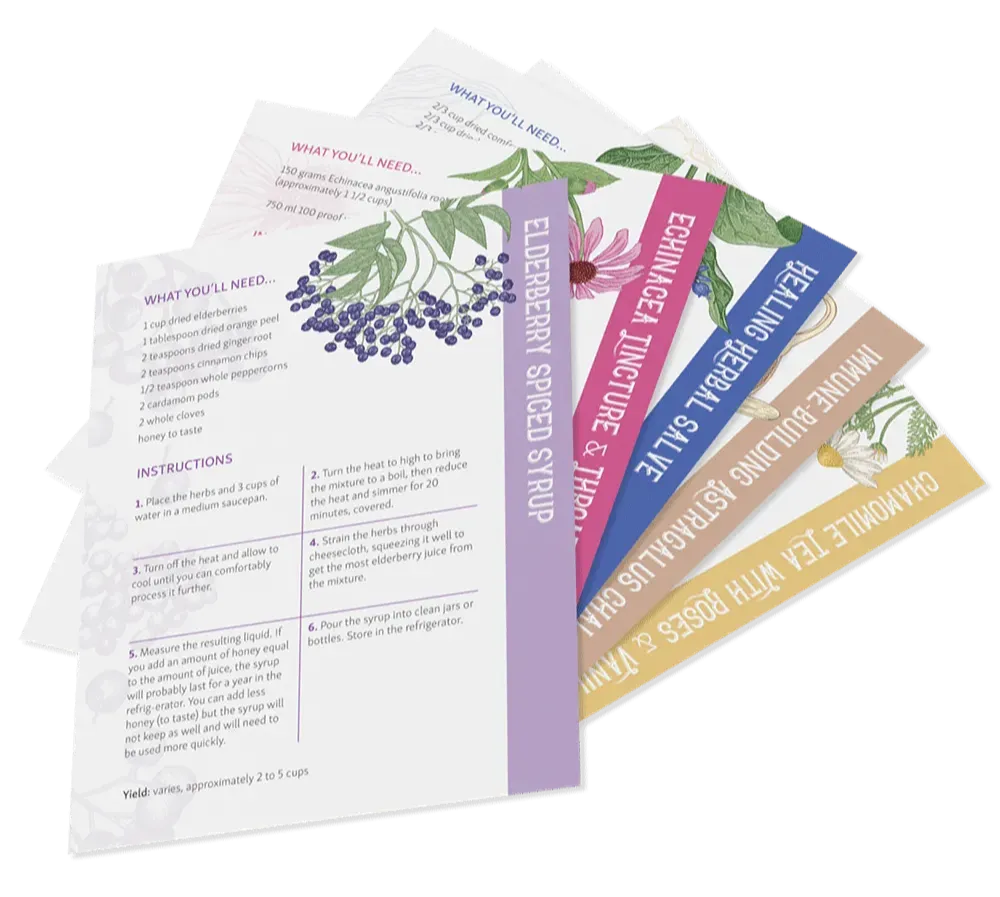
Three, dill for cholesterol and diabetes management. Dill can help balance blood sugar, making it a beneficial addition to diets aimed at reducing insulin resistance. Recent studies also suggest that dill can lower total cholesterol, LDL and triglycerides. This delicious herb may be a great addition to treatments for high cholesterol or type two diabetes. And just a couple of contraindications to keep in mind. Dill is generally recognized as safe for consumption by the FDA, although large doses should be avoided during pregnancy. It's uncommon, but some individuals have reported skin rashes from handling fresh dill. This is likely due to sensitivities and phytochemicals present in the carrot family. Want to learn more about the benefits of other common herbs? Visit HerbNotes.cards and grab a free deck of our top 12 Herb Notes. You can learn all about herbs like elderberry, chamomile, and more. This has been Herb Notes with me, Sorrel Hartford. Catch you next time.
Rowan Gallagher:
HerbMentor Radio is a 100% sustainably wild crafted podcast, written and performed by Mimi Prunella Hernandez and Kimberly Gallagher with production and editing by me, Rowan Gallagher. Visit HerbMentorRadio.com to subscribe on your favorite podcast app and find out how you can be a part of HerbMentor, a community hub for herbalists that you have to see to believe. HerbMentor Radio is a production of LearningHerbs.com LLC. Thank you so much for listening.