Hi everyone and welcome to Herb Notes.
My name is Sorrel Hartford. I am an herbalist with Learning Herbs and I'm so excited today to be talking about holy basil.
Its Sanskrit name, Tulsi, means "beyond compare." That's not a casual name for a plant. For over 3,000 years, Ayurveda has honored holy basil as a sacred elixir of life, and the more you know about it, the more that reputation makes sense.
Let's explore three remarkable uses for holy basil.
1. Holy basil for stress and the nervous system
Holy basil is classified as an adaptogen, a category of herbs that helps the body handle stress in wide-reaching ways.
Adaptogens work by supporting the HPA axis—that's the system at the center of how our bodies respond to stress. Rather than acting like a sedative or a stimulant, adaptogens help the body find its own balance.
Holy basil supports embodiment by connecting the mind and the body, helping settle cognition back into the present moment. This is something we can all certainly benefit from.
2. Holy basil for cognitive health
Have you ever had one of those days where you're technically doing things, but your mind feels like it's somewhere else entirely?
Holy basil has something to offer here, too. It's a cerebral stimulant recommended for people experiencing mental fog, cloudy thinking, poor memory, or difficulty with attention.
3. Holy basil for immune support
Holy basil is also a remarkable ally for the immune system. It works as an immunomodulator, meaning that it doesn't simply stimulate immunity—it helps regulate and strengthen it.
This is an important distinction, especially for people dealing with chronic conditions like allergies or asthma.
Holy basil can be taken both to prevent upper respiratory infections and to support the body through active ones. As an expectorant, it also supports the lungs in clearing mucus, making it useful for bronchitis and pulmonary weakness.
How to use holy basil:
It's a great tea. You can use the fresh or dried herb, about 1 teaspoon per 8 ounces of water. You can also tincture it using either fresh or dried herb. I usually do about a 1:2 herb-to-alcohol ratio.
Holy basil is a wonderfully safe herb with a long history of daily use. That said, there are a couple of contraindications to keep in mind.
First: fertility. Holy basil may have an anti-fertility effect, and couples wishing to conceive, as well as pregnant people, should avoid using it medicinally.
Second: blood sugar. If you are managing diabetes with insulin, holy basil's blood-sugar-lowering effects may require adjustments to your insulin dosage. Always check in with your healthcare provider if you are trying to use it medicinally.
Now that you've learned a little bit about the health benefits of holy basil, you might be wondering how you can learn more about the medicinal properties of other common plants.
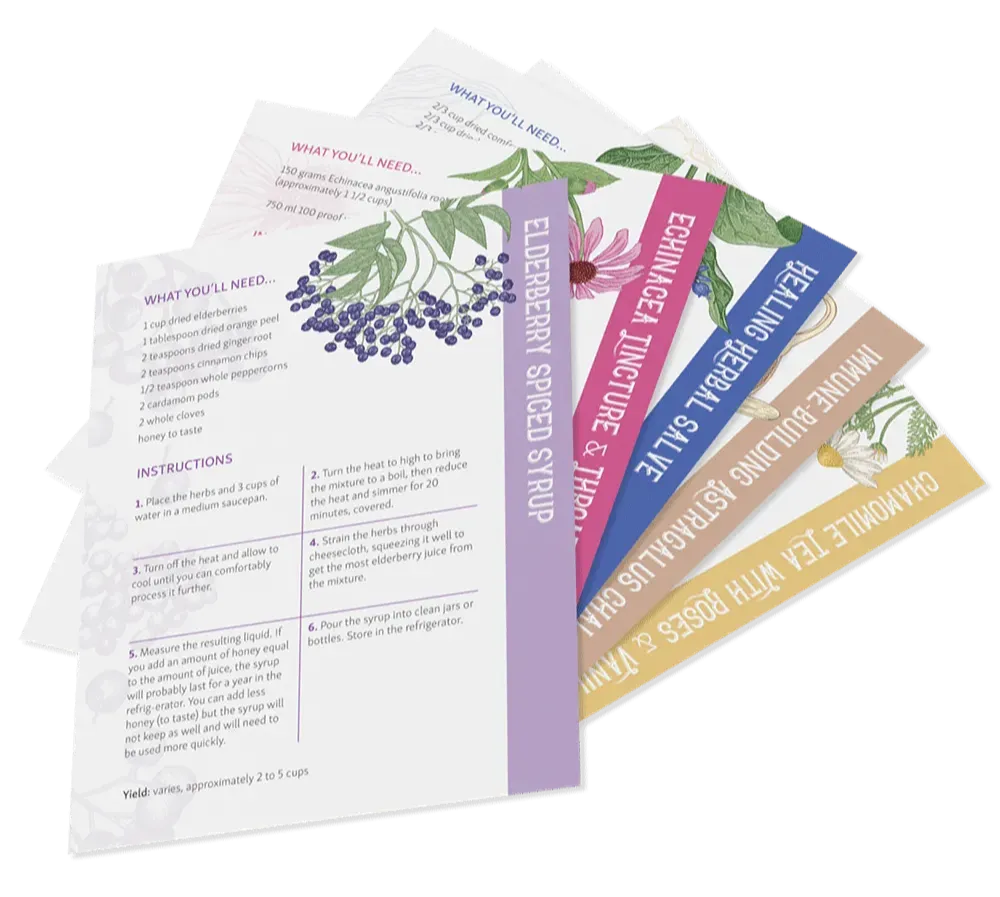
An easy way to do that is to check out our Top 12 Herb Notes Cards. You can get these for free at the link in the show notes.
Thanks for being here.
This has been Herb Notes with your host, Sorrel Hartford.