Kimberly Gallagher:
You're listening to HerbMentor Radio by LearningHerbs. I'm Kimberly Gallagher.
Mimi Prunella Hernandez:
And I'm Mimi Prunella, and we continue our journey through National Geographic Herbal this month. We enter chapter seven: Garden Herbalism. Most any gardener will admit that gardening is as much about personal growth as it is about botanical bounty. The moment a seed is placed in the ground, a caregiver is born.
Kimberly Gallagher:
I love that. Today, we are joined by Brandon Ruiz, a community herbalist, educator, urban farmer, and author whose work beautifully bridges gardening, foraging, culture and community. For many years, Brandon was the curator of Yucayeke Farms and the founder of the Charlotte Herbal Accessibility Project where he expanded access to herbal knowledge, culturally meaningful foods and medicinal plants through community-based education and urban agriculture. He recently relocated to Philadelphia where he now works with the Norris Square Neighborhood Project, supporting food cultivation, herbalism, youth programming, public art, and the celebration of Puerto Rican culture in North Philadelphia. His newest book, How to Forage for Medicinal Plants Without Dying, helps beginners safely and confidently build relationships with the medicinal plants growing all around them. Brandon's work is deeply informed by his Puerto Rican heritage and his passion for connecting people to plants, place and one another.
Brandon, it's so good to have you here. Welcome to HerbMentor Radio.
Mimi Prunella Hernandez:
Yay, Brandon.
Brandon Ruiz:
Thank you so much. I'm so excited to be here with you all.
Kimberly Gallagher:
Oh, so good. Well, I'm curious, when you hear the phrase garden herbalism, what does that mean to you? Some herbalists are drawn to the wild places, some are drawn to the apothecary, some to clinical practice, and some just keep coming back to the garden. So, I'm just curious, like what kinds of relationships become possible when we tend to plants over time rather than just foraging or just working with them in the kitchen?
Brandon Ruiz:
Yeah, I feel like gardens for me and over my time having a garden and going to people's gardens, creating gardens are such a place of intersection in life because they have to do with our food. You invite someone over to see your garden. You give things from your garden. You grow your herbs in your garden. There's so many ways that it intersects and the cultivation of food, of plant medicine, whatever it might be, I think... I know, is an act and a way of participating and taking medicine in its own self. I think that cultivating plants, we don't always have to ingest them. Sometimes, it's sitting in your garden or being around the plants and connecting in whatever way that a lot of times even bridges the physical into the spiritual. You know?
Kimberly Gallagher:
Mm-hmm.
Brandon Ruiz:
And I think sometimes that can seem a little out there for someone. But even culturally and even as humans, someone gives you roses and there's something with that action that comes that. You're not drinking rose tea. You didn't have rose jam, which both sound great, but you're physically getting roses or you are around them in a garden and something to that effect, and there's medicine that comes with that. So, for me, garden herbalism is just bringing everything together, the accessibility of it, the closeness and intimacy of cultivating your own food and herbs and a lot comes through also building community with that, I feel.
Mimi Prunella Hernandez:
I love that. I love the whole aspect of relationship there and bringing community together. I've just loved tending to my gardens here. At first, I started in the kitchen, and I didn't really have access to gardens. So, I really appreciate the meaningful work you're doing because you're bringing people to gardens who might not have that accessibility, and I just think that's such beautiful work.
Brandon Ruiz:
Thank you.
Mimi Prunella Hernandez:
Yeah, I'm thinking about opening that door to bringing people to my garden. So, I'll be hitting you up after the show for some advice. But I also would love to explore your roots somewhat because you are a Puerto Rican man, and you've probably spent so much time in those beautiful gardens. It's probably a true paradise there with different foods and different culture and different vibes. So, I wonder, because we love to go on these little imaginary tours here on HerbMentor Radio. Our listeners love when our guests take us into their lives and show us something, maybe a plant memory connected by your Puerto Rican roots that stayed with you. What did you smell and what was growing there and maybe a little bit about the senses you experienced and what meaning was attached to that memory? Could you do that for us?
Brandon Ruiz:
Yeah, definitely. Definitely. The place that... and I've definitely been to a lot of beautiful places in Puerto Rico, and the first out of them especially... because I grew up in... I'm a member of the Puerto Rican diaspora, so I was not born on the island. I was born in Florida. I was raised outside of Florida, then moving into Charlotte, North Carolina. So, my connection was more along the lines of when we would travel to see family, visiting for holidays, and over the years as I got older, I also made the intentions... I do want to go back. And going there, I would always stay with my grandparents, my abuelos on my mom's side. They live in Guaynabo and a little more rural part of that city going further back into another town called Bayamón, and they have this hillside that feels bigger than it really is because it's a hill, and you just walk up it and down and all over the place.
And every time I go, even when... I was there a week ago, and I was just like... I don't really say anything. I'm just like, "I'm going up the hill. I'm going to wander and I'll look at plants," and what I really love about herbalism or just even working with plants, especially looking at my family members is that when they do it, it's not as much of them saying, "I'm an herbalist," or anything like that. It's just the knowledge that they have. They grew up with it. They were raised doing it. So, in that area of their home, I think the first place that comes to me is just really that property. They have this nice little house, this porch covered in a lot of different plants, some palms, some ferns and things like that.
My abuela is a very good gardener in random objects, I feel like sometimes. There's either an old... I believe it might be a can of beans or something. It's very large, and it's opened up with the bottom that the roots have already grown through, and there's a plant that in Puerto Rico is called poleo. It's in the Verbenaceae family, and it has this really amazing aroma that is reminiscent of lavender and lemon and very floral, and it's this big woody stem of a plant that comes out of not even a foot-diameter pot that's just so abundant, four or five feet tall. I actually got to pick some and take some seeds with me when I left the other week. So, that's a very common tea at home for cold and flu, digestion, nausea and anything like that.
Another really common herb that she keeps right by the house along the wall on the ground is a plant that a lot of people know as culantro. In Puerto Rico, it's known as recao, and it's the main ingredient, a very common ingredient in Puerto Rican cooking. We use it in sofrito, which usually includes sweet peppers and onions and garlic and other spices, and the aroma is really just a very strong cilantro. It's like cilantro, but something else, a little more to it, and they're not botanically related, but it's interesting just to see how the smell is so similar but so different, too. So, she grows that there along the wall on the opposite side of the, not really a driveway. There's a big fence, and then you go in. You start to go up into the hill.
They usually plant a myriad of different fruits and vegetables and sometimes... They're getting older, so it's a little hard to go out and tend to some squash or something. But they've got these coconut trees that... Last year when I spent time there for a few months, I probably cut open 100, 200 coconuts. They were so abundant.
Mimi Prunella Hernandez:
Wow.
Brandon Ruiz:
We were only drinking coconut water. We were drinking coconut water. We were giving gallons to the neighbors. The coconuts and just the... I feel like there isn't, but there is an aroma to coconut. It's very nostalgic and just the flavor, cutting coconuts, and my abuelos sitting in their rocking chairs while I'm in the sun just hacking and hacking and getting the meat out and being like, "These are older, so we'll make milk." And I like to get them active in the kitchen when I'm there because sometimes they're in there every day, and I'm like, "We should make coconut oil." They're like, "Okay, I guess," or [inaudible 00:10:20]. Whatever the case might be.
So, yeah, that hill and going up, there's two other plants that they have a lot of. One of them is a bush of achiote, which is sometimes known as annatto. It's a seasoning, a dye. It's the inspiration for Sazón packets, which have Red 40 and originally the manner of how we're dyeing a lot of our rice and our dishes and their yellowish red color comes from achiote. And then to the side of that, there are about three or four guanábana or soursop trees.
Mimi Prunella Hernandez:
My favorite.
Brandon Ruiz:
Yeah. So, so good. Really, really abundant, and they're one of my favorite medicines. When I use fresh guanábana leaf, when it's dry, it's really great too, but something about the aroma of the fresh leaf is very floral. It's very musky in this really interesting way, and I really love it because it really helps me get to sleep. It keeps me asleep. I sleep pretty well when I'm there regardless, but it's a really great nervine and just a combination of those smells are really what come up for me when I think of just being in a place that's very comfortable. It's very relaxed. I'm around my family. I think at first, it was funny to me and almost this anxiousness of like I'm going to go up on the hill and probably come back with a bag and be like, "What is it?" But they're into that. I would come down with passion fruit or some avocados that I found that fell or a sprouted coconut, which is completely different than just a regular one with water. The inside is so spongy and delicious. So, yeah, now I'm on a rabbit hole going into that space.
Kimberly Gallagher:
I think all our listeners are going to want to visit your grandparents. Amazing. Oh my gosh, all of those scents. Thank you for those beautiful descriptions because you really transported us to your place. I can see the hillside, and yeah, just imagine you going and gathering those fresh avocados and cracking coconuts. It's such a cute description.
Mimi Prunella Hernandez:
It feels so colorful, too. I can see the colorfulness, and I think what gets me the most here, like chokes me up a little in my heart, is the inspiration your grandparents have brought to your life. But now that you're an older man and you come back that you're bringing inspiration back into their life, and this is this full circle type of thing. [Spanish 00:13:00].
Brandon Ruiz:
[Spanish 00:13:00]. So sweet. Yeah, the other thing sticking out to me, which I feel like the noise, like the sounds. We're near a road, so there's usually some cars going down the hill, but it's like a farm, and they don't mean it for it to be a farm, but there's four dogs, many roosters and chickens, a cat. I think that's actually it. It just feels like more than that sometimes and the alarm clock of the roosters in the morning and the clucking and them trying to get on the porch and then getting spooked and be like... going off and the chickens will be outside and the hawk, which is called a guaraguao, will fly over and my abuelo will see the hawk, and he knows they're trying to hunt the chickens. So, he'll be in the porch or he'll be somewhere, and out of nowhere, you'll just hear him go... Like he's making this call to scare off the hawk from coming and eating his chickens. It's just a lot of noise, and surprisingly-
Mimi Prunella Hernandez:
I love that.
Brandon Ruiz:
... I think in comparison to somewhere like where I'm at now where there's trains and cars and honking, it's not as stressful noise. Maybe if it's what wakes me up, and I'm like, "Oh, I really wish I could go back to sleep, but this is not going to stop." But in the moment it's soothing. It's relaxing in some way to hear it all.
Mimi Prunella Hernandez:
And I don't know. Every time I've been to Latin America, there's always music somewhere in the background. So, it's always in the streets and blaring from the kitchen.
Brandon Ruiz:
The cars coming down the hill and the salsa. There's a perpetual Reggaeton beat. So, almost in the forest, there's a like a (singing)-
Mimi Prunella Hernandez:
Yes.
Brandon Ruiz:
... and it passes by and then goes back down.
Kimberly Gallagher:
Oh my gosh, that just added a whole nother layer. The colorfulness of the plants and then the smells and the sounds. It's so rich, so rich, and it sounds like you are connected to your grandparents in your home, and then you've brought this beautiful inspiration to the communities that you've spent time in here in the US and done these urban garden projects and herbal education in Charlotte, and now you've made this leap to Philadelphia and the Norris Square Neighborhood Project, and I'm curious, like what inspired that move and what excites you about bringing your experience to this new community? And can you give us a little bit of a sense of the Philly vibe that's maybe a little bit different than the Puerto Rican vibe that you just described?
Brandon Ruiz:
For sure. A few years back, I lived in New York City, and that was an experience, and going back and having so much of a root, especially in Charlotte, North Carolina, which is really not that big of a place. In context for the state, there's a lot going on. There's a lot of things to do. But moving to Philly has been really great. I mean, it's been three weeks only if that, and I was gone for nine of them to Puerto Rico, so I'm still really settling in. I visited here plenty for work. My partner lives here and was also a motivating factor for me coming, and I did a workshop at Norris Square last year on Caribbean medicine-making. So, I believe we made some tinctures. We made some herbal baths. We made teas, a couple other things over the course of about three hours.
And I stayed in touch with the executive director, and earlier this year, she had reached out to me of, "Let's talk on collaboration," and it was more, "Well, what if you came in and were a deeper part of things?" So, it is currently as a temporary thing for about three months for maternity leave for somebody, but there's goals for something a lot longer and different forms of collaboration. So, in the position that I'm in, they offered me as the garden manager. So, the project encompasses a few blocks in North Philly near Norris Square Park, hence the name Norris Square Neighborhood Project. There is Las Parcelas, which is a beautiful space of murals, cultural events. They have a traditional kitchen, a traditional Puerto Rican casita that's actually being renovated right now, a community garden plot from locals called Campesinas, and they grow a lot of different things there. An orchard put in by Philadelphia Orchard Project of different fruit trees and perennials. There's chickens, a lot of art, a lot of programming.
Across from that, there's Colobó, which is the African cultural garden. So, it reflects the African roots of Puerto Rico's culture with traditional huts that were built, Afro-Puerto Rican plants reflecting that background, art, so many different things, and while I collaborate with those, the three I really manage are El Batey. Batey is a Taino word for basically a space that is like a ceremonial space. So, traditionally, there's song or dance or whatever ceremony happens in that space, and that is an homage to our indigenous roots. There's what's called a bohío. It's like a smaller traditional hut and a beautiful, not necessarily a spiral garden, but it's like a circular space and then a bunch of beds radiate outward. So, this amazing design where... This is like another one of the sensory-
Mimi Prunella Hernandez:
That sounds amazing. Yes.
Brandon Ruiz:
Close your eyes and come with-
Mimi Prunella Hernandez:
They're all in Philly, huh?
Brandon Ruiz:
Yeah. Yeah, in North Philly. This El Batey, the goal is to reflect these indigenous roots, so a lot of different crops are cultivated there. We have tobacco growing, yuca. I planted some of our traditional beans, a lot of different vegetables. Another one I run is the La Paz, which is a relaxing space. There's instruments that have been built in, chairs, just like a green space amongst a lot of concrete as they all are, and then the third, Raíces. It's a center that is especially for the Raíces youth program that a coworker of mine runs. So, in that area, also growing a lot of herbs, a lot of food. Today was actually the first test run for the youth farm stand. So, the youth organized their own farm stand. They harvest things they've been growing and we've all collectively been growing, sell the veggies, herbs, handful of other things.
Yeah, it's really, really amazing, and I think that being in a place where culturally... You do see a shift in culture through what happens in a lot of big cities I think nowadays, whether through gentrification or different, like housing being built. But in that area, it is very, very Puerto Rican. It's almost like referring to my abuelos' home. The music going by, the flags everywhere, all the tíos, the uncles outside drinking, and it's just a lot of really beautiful... Yeah, it's a beautiful space to be in, and I'm going along a few weeks now, skipping down the road. I'm like, "Hey, good morning." I'm like, "Good morning to everybody," which I think is also part of doing that. I'm growing in this community, but though I might live in a different area of Philly, I'm actively part of this. We're providing food. We're doing whatever.
So, I want to meet people. I want to talk, and even in the short amount of time, this week was my first full-time week on my own without training, and it's just been really fulfilling and a really beautiful time to just connect with people, the plants. Iris Brown, who is the head and the last living member of Grupo Motivo, which founded a lot of this. She showed me pictures the other day of one of the large oak trees as probably about a six-foot tree and how it was concrete and nothing there before. It's really beautiful. If you have or even the listeners have the chance just to look up Norris Square Neighborhood Project and just see photos of how amazing the space within about two or three blocks, all of these different cultural spaces. Yeah, it's really great.
Kimberly Gallagher:
Mimi, maybe we should meet up there.
Mimi Prunella Hernandez:
Yes.
Kimberly Gallagher:
Sounds like a magical wonderland.
Mimi Prunella Hernandez:
It does. It does. It just sounds so rich with community and a lot of the vibe that you just described on the island right there in North Philly.
Kimberly Gallagher:
Oh, wow. Mimi, this is such a great conversation with Brandon. What a magical being out there in those gardens, making it happen for his community. I really love that his description of tulsi and his parents growing the tulsi in their gardens, and I just wanted to take a moment here to mention that on HerbMentor, we have all these monographs that take a deep dive into these different plants, and if you were inspired by what Brandon was sharing, you might want to think about joining us on HerbMentor. We have a special price for our podcast listeners, and you could take a deep dive into the tulsi monograph and learn a little bit more about how you could use it.
Mimi Prunella Hernandez:
Absolutely. HerbMentor is my herbal playground, Kimberly. If our listeners love growing herbs or learning about medicinal plants or sharing foraging adventures, we'd love to have you join us there. We have meetups where we talk about these for gardening or making things in our kitchen. We have communities where we get to share our foraging adventures and practical lessons and just a lot of exchange happening there in that collaborative community just to help us grow our confidence around working with herbs, around getting to know herbs around us. So, you can find a special promotion to join at HerbMentorRadio.com, and we hope to see you in one of these meetups.
Kimberly Gallagher:
Yeah, it would be really wonderful to have you join our community, and if you are feeling really inspired about gardening, we also have a whole course on how to grow an herb garden called Cultivating Wellness, and you can do that at your own pace, which is one of the wonderful things about HerbMentor is there's so many resources there, and you can pursue what you're interested in, in the moment that you're interested, and it can really fit into your busy life because you can do it self-paced, and that's one of my favorite courses that really brings people into getting their hands dirty and getting out there and growing the plants, and yeah. I'm so excited to hear more about what Brandon has to say about gardening.
Mimi Prunella Hernandez:
I can't wait to get back to Brandon and his new book and his many adventures in Philly.
Kimberly Gallagher:
Yes, let's do it.
Mimi Prunella Hernandez:
You have these stories, and you're meeting people, and people are coming out and probably connecting with their food or maybe plants they haven't seen since childhood. What's that like? What's it like to work where you're conserving and preserving plant culture and food culture? That just sounds so fun.
Brandon Ruiz:
It's amazing. Yeah, especially the connection that it has to my own background. So, the passion that's behind it is not just like we grow these because she said that they're whatever. It's like, no, we need to grow these, and I come back, of course, as TSA's most wanted with all of these seeds and cuttings and all these things that I brought back telling Iris like, "I brought some of this, and I'm going to start these seeds." And just to continue to expand on that and the people there, the people who come for programming, who live in the neighborhood, there's just a lot of, like a deep connection into having those things grow there or having access to getting seeds or putting some pots within your windowsill or outside on your porch because we collaborate with a lot of other amazing organizations and companies like Truelove Seeds, which grows a lot of culturally relevant seeds in Philadelphia, or right outside of Philadelphia.
So, yeah, just seeing the connection, making the connection and being personally passionate about it in that way is very fulfilling, and I think a lot of people are very nourished just being in the space and being in the proximity.
Mimi Prunella Hernandez:
Yeah, because I know my mother is Colombiana and her favorite food is yuca, and I imagine if she saw yuca in your garden, she would probably just cry. She would probably be so happy. I need to plant her some because...
Brandon Ruiz:
Yeah, it's important. Food is a mirror deeper into identity. You know?
Mimi Prunella Hernandez:
Mm-hmm.
Brandon Ruiz:
So, when people see something or they go by the fence, there was this elder that walked by, and I said, "We have gandules or pigeon peas growing." And he said, "Is that a gandul plant?" And I said, "Yeah." And he said, "Oh, the leaves are very powerful for blood sugar. We take the leaves, and you drink that tea, and it helps lower the blood sugar before we had pills, before we had all this other stuff." And it was a funny interaction and very sweet because I could tell he's very passionate and there was some conversion of the sentence that started to be like, "Oh, I think this is a Bible verse." And then it was about 10 minutes of Bible verses and lessons about how the Lord gave us these plants and for our medicine and this and Adam and the snake and the Eve, and I was like, "Oh, wow. Okay, we're really in it."
Mimi Prunella Hernandez:
Wow.
Brandon Ruiz:
And then he just like, "Anyway, have a great day, and I'll see you around." I was like, "Okay, you too." So, any form of the interaction, just connecting with people and listening. I'm a big listener. I like to hear people tell their stories, or I like to ask prompts and questions that maybe they're not contextually there, but for folks who are just walking down the street and taking their time, or Norris Square Park is right there and people are sitting. They're relaxing. They're not always moving around going places. We have a senior center that's nearby with a lot of Puerto Rican elders as well, and they're outside, and we're bringing produce to them, and I have goals to be more involved over there and just talk and listen and collaborate more.
Kimberly Gallagher:
Oh, I love this whole way that the plants are bringing the people together and bringing the stories and just weaving those connections. I think that's one of their gifts is to bring us together. So, so great to hear. I'm curious about tulsi. I know a lot of our listeners are excited about this plant, and it's one that maybe you have a relationship with, and I wonder if you could share a little bit about that plant and just what stories might come up around it.
Brandon Ruiz:
Yeah. Tulsi really connects me with my mom. Living away from my parents' home in Charlotte and then even living with them, I would grow herbs in their garden. What they call it? It's like a satellite garden. I come over, and it's like, "I'm going to work on the garden and leave." And one of the big things that for them was also very approachable was tulsi, because I would plant it. The plants were huge. They self-seed. They come back. It's very low management and both of my parents really loved that for that because I started the garden when I was younger and in high school at one point, and I was like, "I'll put stinging nettle." And my mom was like, "Why do the plants outside hurt? What is that? Is there a weed that stings?" I'm like, "No, it's okay. It's used for things. It does sting, but you can cook it out."
She was like, "I want to be able to reach the tomatoes." I was like, "Okay, let me adjust and maybe this is the last year for nettle, and we'll do something a little easier." So, the smell is what really caught her, too, just being able to smell that. You know how woody tulsi gets?
Kimberly Gallagher:
Mm-hmm.
Brandon Ruiz:
And this is the kapoor tulsi, so the very floral, like temperate. I've grown some others, and they're great for medicine, like the vana tulsi that's a little more thicker leaf among a couple others, but that variety, it's just we... I think it might've been last year actually. I was telling my dad because he goes outside, and he's got a very like, "Get it done, this, that, whatever. Let's go harvest, and the tulsi. It'll be quick. You snip it and whatever," and we were out there for an hour and a half just snipping, and I'm like, "No, you got to make sure you're not getting the really woody stems, but you want to make sure you get the flowers and look if the leaves are whatever." And by the end of last year, they had about seven gallon Ziploc bags of tulsi in their cabinet.
Kimberly Gallagher:
Wow.
Brandon Ruiz:
And they've really made a habit out of wanting to take it, noticing that there is a significant change in how they sleep, how they relax their mind at the end of the day, getting home from work and being like, "Okay, I do this, whatever, I have dinner, and then I drink my tulsi tea, and I relax." They would make iced tulsi. And prior to that, I did grow a lot of tulsi in general. It was one of the things that in my prime of the Charlotte Herbal Accessibility Project, growing in different parts of Charlotte, I had a space where I had a lot of room, like 40-foot rows, and I put tulsi all the way down. I'd never had that much tulsi in my life. I didn't even know. I had to call people on a regular basis.
Once the summer and the peak of the season, I was like, "Please come. Bring a trash bag because it will bounce back, and you'll need to do it again in a month," and it's been a very approachable... People seem to just take... There's not as much of this like, "Well, what do I do with it?" It's like, "Well, it smells good. I'm going to try to make tea with it, or we'll make a glyceride and try that or we'll make a tincture in another form." So, it's definitely been a nice plant to bridge people into plant medicine, my immediate family, but also anybody who's had the chance to smell it and indulge in it.
Mimi Prunella Hernandez:
Yeah, love that. Yeah, my husband's the same way as your parents. He didn't really have a lot of herbal experience before I met him, and that's like the herb out in our garden, all the same reasons keeps coming back. Now, he's pretty much stewards the holy basil on his own. He makes his own infusions every night, his own infused honeys. It's like just so nice to see these relationships blossom with people and plants. I think holy basil or tulsi is just such a great gateway herb to the garden and to the herbal charm.
Brandon Ruiz:
Yeah, and it's very accessible. I've given a lot of people the seeds because I'm never short of it. I think I saw some in my bag of seeds today when I was looking at some stuff for work, and it's not even this deeper process. I'm like, "Sprinkle some over the garden in your soil at the beginning of the year, water it, forget about it, and then you will have a lot come up." And then at one point you'll be like, "Who do I give this to?" There's so much.
Kimberly Gallagher:
I love that. I tried growing it one year, and it didn't take here, so now I'm going to have to try getting some seeds to see if I can get it to go in the Northwest up here.
Brandon Ruiz:
Awesome.
Kimberly Gallagher:
But I love tulsi. I'm drinking tulsi rose right now.
Mimi Prunella Hernandez:
Sweet.
Kimberly Gallagher:
Thank you for that.
Mimi Prunella Hernandez:
So, let's switch directions a little bit because I have your book, How to Forage for Medicinal Plants Without Dying. I love it. It's an absolute beginner's guide to identifying 32 healing wild herbs, and I want to mention a little magic here because I received this book the same day that I was making mimosa medicine. So, I had just baskets of the flower, which is on the cover here and just such a beautiful book. So many actual photos and traditional uses and how to harvest, how to process, some of the benefits of each herb, and again, really accessible, really easy to recognize plants. So, congratulations. I'm super, super proud of you.
Brandon Ruiz:
Thank you.
Mimi Prunella Hernandez:
I love how it feels. It's pocket-size, too. You could put it in your backpack and just stick it in your pocket and go for a walk and check it out. Everyone loves pictures, so I love it. It's so wonderful. Congratulations.
Brandon Ruiz:
Thank you. I appreciate that. Yeah, the size is definitely one thing I was really excited about of how, like maybe not every pocket, but it's not a whole thing you want to pull out in the forest. It gets easy. It's very portable.
Mimi Prunella Hernandez:
And I had to chuckle, too, because why "without dying"? Nobody wants to die when they're foraging plants, but what made you think of that? What made you include that little caveat in there?
Brandon Ruiz:
The Without Dying, I think, is really a... and also through with Storey Publishing in that title, I feel like Without Dying, it just makes it more approachable. I think the humor lightens up the unfamiliarity that some people have or the intimidation that people get from the idea of getting food from somewhere and being the person to identify and make sure it's the correct thing or food or medicine, whatever it might be, and it also speaks to... I think it starts a process for me or even talking with other people about how we look at the herbs or the plants or the things that we put a lot of trust into a lot of systems for. With herbal medicine, there is its own world of distributors and places where we're getting them. But even with food, which I think our plant medicine and our food are very interconnected in that way and sometimes exactly the same, is where we have this faith in a system that our food system, which is in my personal opinion not the greatest and not the best setup.
We have faith that this thing that comes from across the world that has gone through so many hands and so many processes and whatnot, which is a miracle in and of itself, but also how we might just be okay with that in comparison to building a deeper relationship with how to identify something, how to consume it, and the amazing part that it is in front of you, abundant in many instances, and a lot of times something that you've already seen before. A lot of the plants feature in the book are these "weeds" that are just so abundant. You find it in the cracks in the sidewalk or you find it... Maybe it's outside of your house. I've noticed a very... And I think a lot of other people that I've talked with have noticed this, too. Sometimes, you read about something or you learn about a plant or something is brought into your orbit, and then it shows up in this really weird way.
The one story that I always think of with that was blue vervain, and I had been to a spot where I had been many times. There was passiflora. There was wild lettuce, a lot of other things that I was looking at and just familiarizing myself with the space in Charlotte in this forest, and then I remember reading something about it and just learning about tension and the musculoskeletal system and the nervous system. I was like, "Wow, this sounds really great." I think the thing I remember reading was like for people who make lists. I was like, "I make lists, and I make too many lists and my Notes app is confusing now." And I was like, "That would be great." And I go back out a few days later, and it's everywhere, and I'm like, my brain and my eyes were just not configured to look for, to see.
It was almost this logistical and then almost psycho-spiritual of like, "You were here and now you're here. You weren't here and now you're here. How did you get here?" So, I think that it's also unveiling something of the things that are immediately around us that we might not have even noticed or not been aware of. "Oh, I have so much of that. There is a lot of plantain leaf at my home," or "There is a lot of mugwort growing here." So, yeah, I think it's the approachable aspect, especially of making it more humorous. It can be scary. It can be intimidating, but it's hopefully, and I do think a good guide to make that more approachable and make it more comfortable.
Mimi Prunella Hernandez:
Yeah, I like that. I appreciate that because I feel like we're always over-cautionary. We have to be overcautionary when we talk about wildcrafting, but it gets too serious, and I love that you put some humor in it.
Kimberly Gallagher:
Yeah, that's something we've been doing for centuries as humans, just remembering, like this is in our DNA to go out and gather our food. We know how to do this. It's in our bodies, right?
Brandon Ruiz:
Yeah. It's a very interesting point. I keep thinking of my parents because I've spent a lot of time of just getting these concepts into their heads or whatever the case might be, and it's interesting because I think historically, especially with communities who have migrated from, I will say especially, but definitely not only because there are... I mean, everybody. There's this interesting generational timeframe of, like I'm 29. My generation and my parents', and this separation where I'll talk with somebody. They say, "Oh, well, my grandmother always used to do that or my whoever used to do that." And when people move, they carry a lot with them, but they also leave a lot behind, and I think the familiarity with different things or looking at the natural world, especially in tropical places, especially in places where people are a little more in touch with and immediately surrounded by the land as part of their lifestyle. It just goes out the window.
So, it's weird to see. A lot of people I talk to, it's like we're in this little snippet of time where our ancestors for sure, but even just our immediate family a generation or two back know about these things. And then for some reason, we have a lot of other stuff going on in the world around us, and we disconnect. So, it's cool to bridge the gap.
Kimberly Gallagher:
Yeah, for sure. Bring people back to their roots. We can do this. It's safe. Well, one of the things you emphasized in the book is this idea of setting an intention before harvesting a plant, and I wonder if you could tell us a little bit more about that practice and why that's an important part of responsible foraging and how it might change our relationship between the harvester and the plant when we take the time to set an intention.
Brandon Ruiz:
Yeah. Setting an intention for me can look like different things. I feel like it's connected in a spiritual aspect and then a physical aspect. The spiritual aspect for me is that I believe, especially when I'm picking something that I might make into something for myself or somebody else, that's a line of communication that I should have with that plant. I'm like, "I'm picking you for this," or "I'm wanting to use you for this purpose or help with this cough or help this person, and they're healing." That's also a tradition I think in a lot of different parts of the world of having that interaction with the plant, which is a living... and it's a being. So, it's definitely the intention of what I'm wanting to do with it and make this medicine and turn it into this or wanting to help the community, whatever it might be.
The physical aspect is funny because I had to almost be focused. You have to have an intention because when I would first start to learn how to identify different things, I would say, "Oh my God, I found this pine resin, and then I found this mugwort growing and there were black walnuts, and I'll use the hulls." And at the same time, it's wonderful, and I gather these things, whatever else, and then I go home, and then I have work, and then I have to do something else on the computer, and then I have my whole day, and then I come home tired. And two days later, everything has molded and decomposed in my fridge or on the counter. So, the intention to say, "I go into the woods, and I want to make... " I try not to go into the forest or just anywhere to pick something with an expectation.
What I find, I find. If I don't find it, it's okay. I went for a walk in the woods regardless if I don't come out with something I was looking for. And if it's black walnut, I say, "Okay, I'm going to make this black walnut tincture tonight. I have the time. I have the alcohol, and I'm not going to run around looking for the alcohol or whatever it is. I have the jar." It's just being intentional with the action of the medicine that I want to make because a lot of times, like I said, I find myself caught up in life, and it does get hard. It's like getting those greens that are put in the most inconvenient part of the fridge and then three days later, they're decomposing. I'm like, "I guess I'll go out to get food because I'm neglecting my vegetables."
So, same with neglecting the herbs. It's like if I'm going to take this life and take the energy or what could be food for an animal or what could stay and decompose and feed the soil, I want to be intentional with it, make sure I'm creating something, and I'm almost holding myself accountable for what it is that I'm taking.
Kimberly Gallagher:
I love that. Yeah. It's a way to honor the life that you're taking. I'm bringing this part of this live being home with me and want to honor it by actually doing something with it. Yeah, it's so important, I think, as we're developing our relationship with plants to have this reciprocal way of being with them and the honoring. And I know as a young herbalist, it was just so exciting to gather things. You just gather, gather, gather because the gathering feels so good, and then you get home, and you're like, "Oh my gosh, I got to make a lot of things here. I'm going to use all of this or get my dehydrator going or whatever." So, they need to remember the next phase as we're going in. So, yeah, beautifully said.
Brandon Ruiz:
Am I prepared? Am I going to make whatever? And I'm sure all of my roommates over my time learning this can agree. Know what you're going to do with it. There have been mulberries for a week. They're not even edible anymore. They're starting to ferment, and I'm like, "I promise I actually was going to make vinegar. So, you know what? [inaudible 00:44:46]." And I think also a part of it is the notion of doing that and taking and taking and wanting to do stuff, it feels more extractive, and it feels more like very transactional. I want to do this, and I want to make whatever, and that's that, and then I don't even use it. So, I like the notion of especially stewarding as you're foraging, especially when you're working with native plants and even when you're working with "invasive plants," that is a form of stewarding because you're stewarding an ecosystem all over the world.
And even the lands that we're on, regardless of where we are, humans have been stewarding plants for a very long time and human intervention and working with and interacting with a forest is what keeps forests alive. This sort of "only new within the past 500 years on this continent, in so many places" notion that nature is best if we don't touch it, and we keep it "wild," in quotations, and where does that come from? And I like to challenge that, especially in education when we're going out in places and saying, "We can unvine this plant from somewhere else around a native plant. We can let these native plants go to seed, have a relationship with that patch, come back in the fall, spread the seeds, germinate them and come back and plant them and build a deeper relationship," which is also fun, I mean for me, and I'm sure a lot of people, gardening in the forest and coming back and seeing the growth of something that you've put in somewhere.
And I've been blessed to be able to... Charlotte is a very green city. There's a lot of really big parks. I used to live by one called Nevin Park, which is a couple hundred acres connected to another nature preserve with rivers and some things that I will see in Western North Carolina that I don't even really see in that area that are growing there and to be able to go to those places and see, over a couple years, blue cohosh, groundnuts, stoneroot, allspice bush in abundance and all of these things that are just really cool to see a 15 to 20-minute walk out into a busy intersection near this industrial area of Charlotte. So, the stewarding part is very important to me and I think is a better way to build a deeper connection, too.
Mimi Prunella Hernandez:
Yeah, I'm really seeing the synergy with the stewardship, the cultivation, the foraging, and they really all swirl together with the intention that you have around nature. I love that you just mentioned ground nut because it's one of my favorite wild plants around here. So, I actually decided to put some in my garden this year because I really want to see it up close, and I want to be able to harvest it without disturbing the riversides or disturbing wild places. So, I wonder if you see that manifesting in your world somehow, bringing native or bringing wild plants into your garden area maybe as a way to get to know them better or build a relationship with them.
Brandon Ruiz:
Yeah, for sure. Especially I think the intro into that is where a lot of gardeners will grow native flowers, like pollinator flowers and milkweed. The El Batey, that spot where we grow a lot of the indigenous Caribbean plants is abundant in milkweed, and it's in this area that is where the yuca goes and whatnot, but I'm not taking it. I want to see milkweed. I want to see butterflies coming in. So, letting that happen, but also actively bridging that. When I was starting and running the Charlotte Herbal Accessibility Project, we had a really cool garden. It was on East 36th Street on the east side of Charlotte and in that garden, while we had a lot of full sun, and there are plenty of natives that also like full sun. There are a lot of natives that love shade or partial shade, and we had this beautiful mulberry tree that covered probably a quarter of the garden on the backside.
So, I started to get things that wanted shade and very little sun that would be growing in the woods and planting them in beds in that area and integrating them in and gradually they drop their seed, and they start coming up somewhere else and now we have sunchokes or Jerusalem artichokes coming up everywhere and another native food, and I think also in that way, it's like the land remembers that way. The foods and the traditional... not even foods, but just plants that have always grown there. So, helping continue that process, I think, is another aspect of being a steward of land for sure.
Mimi Prunella Hernandez:
The land remembers it that way. That is so beautiful.
Brandon Ruiz:
Thanks.
Mimi Prunella Hernandez:
Thank you.
Kimberly Gallagher:
So, Brandon, you've spent all these years teaching people how to recognize and use medicinal plants, and I just wonder, is there one particular plant that you just wish every person could confidently identify and forage? And if they could all figure that out by the end of this week, what would that one plant be?
Brandon Ruiz:
Oh, man, I'm trying to think. It's funny moving places because it's almost like I skip through ecosystems. You know?
Kimberly Gallagher:
Mm-hmm. Mm-hmm.
Brandon Ruiz:
I am in the South, and then I come up here, and then I go to Puerto Rico, and then I come back. So, my brain is like this accumulation of so many different things. For being where I am now, rooted in the place that I am now, there is a lot, and if anyone listening or even you all have been to Philly, New York, there's a lot of mugwort everywhere, and I know it's considered. It's definitely not native. It spreads rapidly with thousands and thousands of seeds on an annual basis. It grows in the concrete. There's probably a plant within 30 feet of this apartment somewhere. I saw a bunch today. It's just so abundant and while I always also advise picking something that's growing in an old lawn or has possibly some chemicals or some trash there, being mindful of that.
Mugwort is really dynamic. It's very powerful. It's had such a spiritual connection to cultures for thousands of years as this medicine associated with the moon, with sleep. It's bitter, and I think that is also a really big thing that is funny. I'm not sure if y'all have ever heard this perspective that a medicine sometimes will grow somewhere where it's really needed.
Kimberly Gallagher:
Yeah.
Brandon Ruiz:
And I think culturally, so to speak, within the United States or whatever the case might be, we are very averse to and neglect the necessity for bitter as a flavor, for bitters in our diet. I'm drinking, what we call, cundeamor, or bitter melon, leaf tea.
Mimi Prunella Hernandez:
Right.
Kimberly Gallagher:
Okay.
Brandon Ruiz:
And I'm keeping a straight face because I'm just like, "I'm used to it now," but sometimes I'll drink and just think, and it's like I'm not suffering. It's great, but remember, get your taste buds to remember because we want salty, and we want sweet and sometimes we want sour or whatever else, but bitter is such a powerful flavor that our gut, which is connected to our nervous system in so many ways and our brain and so many different parts of our wellbeing that I think bitters are just so important. So, for that reason, I definitely think of mugwort being one where identifying it, knowing a good place to be able to pick it. Or maybe we see it in a flower and when it goes to seed, you collect some and put it into a little pot for yourself and grow it over the next season, which would probably not be looked well upon for people who are being advocates for native plants. So, maybe more of the idea of helping the ecosystems by actively harvesting it in a place where that is safe to do so... it makes sense to do so.
Mimi Prunella Hernandez:
As long as it's in a pot.
Brandon Ruiz:
Exactly. Yeah, and don't let it go to seed and just make that medicine. So, I think mugwort, and it's funny because I didn't really think about this. I just went off the top with that question, and I just see it everywhere. In conversation, in the gardens, it's everywhere, and I'll find myself rubbing it while I'm talking. There's a bush next to me. I'm like... So, yeah.
Mimi Prunella Hernandez:
Yeah. I mean, just the smell of it, the aroma, just having that... such a warm aroma, a little stimulating and relaxing at the same time. It's also really good for... induces dreams and imagination and love. So, you could put some under your pillow.
Brandon Ruiz:
Yeah, exactly, as a tea, or I know some people will make a smudge stick for burning it or smoking it. There's so many ways to ingest it. It's used for moxibustion, for instance, traditional Chinese medicine. I think it's just such a worldwide thing and even plants in that family like the Artemisia genus or even a similarly related, the Ambrosia, which some people will call back and forth. In Latin America, we call it altamisa, and it's really a tropical ragweed, but sometimes the name will be combined, and it's very powerful. It's an amazing plant. It smells really great, and it's around so many people.
Kimberly Gallagher:
Yeah, it's abundant here, too, in the Northwest. I mean, everywhere you walk, you see mugwort along the trails here in Port Townsend. Yeah, got a stand pretty high now in my garden. So, yeah, love that mugwort. It's great for helping the other medicines get into our bodies, too, like making a mugwort cottonwood salve that helps the cottonwood get deeper into our tissues, I think. So, I like that.
Brandon Ruiz:
Oh, I like that. Yeah, I know I've seen people make an oil, especially just because it's warming, and it's stimulating and moving and even as a balm for cramping or for pains especially. It's very dynamic.
Mimi Prunella Hernandez:
Yeah. I'm really enjoying our interview. We have talked about so many plants. This is such a rich experience with you, Brandon. Starting to wind down, but before we do, I want to ask you, I want to take us back to your garden this summer right now and talk about what are you looking forward to harvesting next from your garden?
Brandon Ruiz:
Let's see. I'm actively creating a garden at my home. So, I'm excited to grow some things there. I do have the recao, the culantro seedlings that I-
Mimi Prunella Hernandez:
Exciting.
Brandon Ruiz:
... put a bunch. They're very small. They're basal, a couple leaves growing out at the time. So, you need a lot. So, I think I have six maybe just to do as much as possible. I would say definitely that and then the spaces that I'm managing especially... I have, I feel like, a very good connection with El Batey, that specific spot for the youth programs, as well as for other purposes we're growing. I mean, there's a lot of vegetables. There's eggplant, tomatoes. There's a lot of marigolds everywhere that I think the youth had planted intentionally, but also if you plant marigolds once, you just have them everywhere the next year. I would say as a food, gandules or pigeon peas, which are a more difficult thing to grow or see growing in the Northeast. And even in the South, I had found a variety that grew really well, and it's just a big staple for Caribbean and Puerto Rican food especially.
And then I think the plant that is really calling to me is the tobacco. There's a lot of tobacco that was grown in that garden last year, and I remember seeing it, and it was at the point where it was blooming and the leaves were starting to dry, and I was just visiting, but I was like, "So, what happens when it starts to wilt more?" And if y'all have ever grown tobacco, it produces a lot of seeds. They're very tiny. They spread everywhere. So, the garden is covered in tobacco seedlings, and I'm adopting every single one. I'm giving people trays of little transplanted ones. We cleaned a wall side of maybe about 25 feet of a lot of just randomness and little things that were coming up as evening primrose and stuff, which we want flowers, but I intentionally planted many tobacco along that wall.
That way, they would bloom in this wall of these beautiful pink flowers, and it's a very sacred plant culturally in the Caribbean and Puerto Rican culture. It also embodies a lot of history of the tobacco industry that has evolved over time, and it's still very richly preserved, and it's just a very powerful plant. So, I'm looking forward to connecting more with that and seeing in what way that comes up for sure.
Kimberly Gallagher:
Beautiful. My housemate was just gifted with a couple of tobacco starts, and we were thinking, "Okay, where are we going to put them in the garden?" And we're thinking of this one bed, and we've got so many deer in Port Townsend, and I'm like, "I wonder if the deer are going to eat the tobacco." I don't know. They come up with all kinds of... Yeah, they didn't eat my marshmallow plant for eight years, and then they decided, "Oh, this year, we're going to eat marshmallow." So, I'm always hesitant at any of the beds that the deer can get into, but we're going to find a good spot for it. So, I love that you brought that one in.
Mimi Prunella Hernandez:
Tobacco's so... I mean, it can be so ornamental, too. It's so beautiful. I mean, it grows so big and those flowers are just gorgeous.
Brandon Ruiz:
Yeah. I'm a nerd for the different species. Especially there's the Nicotiana rustica, which is the wild one that has a lot of time like yellow blooms. The leaves are a little different. I've inadvertently started to collect tobacco seeds, and I think that's also why I was like, "No, it's about time that I grow it and have a relationship with it." I have a variety from New Orleans. I believe it's pronounced and called Perique tobacco, P-E-R-I-Q-U-E. It, as they all are, has been used by indigenous people traditionally. It was very cherished by the French variety that was just very rich in its flavor. I had someone here gift me a Lenape variety of tobacco. I have one from Puerto Rico. I have one a friend brought me from Peru, one I got in Ecuador. I have one from Mexico. So, I have this little tobacco stash in an old tobacco cigar box where they're all just labeled and one day maybe I'll have space to grow them all, but In the meantime, just something cool.
Mimi Prunella Hernandez:
That is so neat.
Brandon Ruiz:
Blossoms-
Mimi Prunella Hernandez:
Amazing.
Kimberly Gallagher:
Tobacco from around the world-
Mimi Prunella Hernandez:
I love that.
Kimberly Gallagher:
... be a whole garden in itself.
Brandon Ruiz:
Yeah, the world tobacco garden.
Kimberly Gallagher:
Well, Brandon, I feel like you've brought us into so much of your world with all of the gardening projects and your new book, and is there anything else you want to tell our listeners about what you're up to that you're excited about and can you let them know how to learn more about what you're doing and how they might want to be able to interact with you?
Brandon Ruiz:
For sure. Yeah. With my new book and now being based in the Northeast, in Philadelphia, I also make my way into New York a lot. So, I'm hoping to do a lot more in-person workshops in the Northeast. I know I'll be doing an event in this fall, November 1st at the Brooklyn FAM Festival, making lots of herbal oils open to the public. Brooklyn, yeah, F-A-M, FAM Festival. I have online courses that I continue to do on a regular basis on Caribbean herbal medicine, on other sometimes one-off workshops. Most of my work that I do and finding out about what I have going on, you can find through my Instagram, which is Yucayeke Farms, Y-U-C-A-Y-E-K-E, F-A-R-M-S. I'm also have been working over the past year on the PR Herbalism, the Puerto Rican herbalism gathering, which I started as a digital endeavor with my friend, Denise Ruiz, related by spirit, not by blood, but coincidentally had the same last name.
And we did that online last fall, and we were doing the first one in person in Mayagüez, Puerto Rico in August 15th and 16th, and you can find more details I believe at prherbalism.com or also through @prherbalism on Instagram.
Kimberly Gallagher:
Wonderful, and we'll be sure and get those into the show notes for you all so you can access that.
Mimi Prunella Hernandez:
All that important work, all that wisdom, and he's still in his 20s, ladies and gentlemen.
Kimberly Gallagher:
Oh my gosh.
Mimi Prunella Hernandez:
We are going to be seeing so much more of Brandon. He's a wise old soul in a young man expression right now. So, yeah, so sweet. I'm so proud of you, and I am in awe of you and your work and everything you do for community-
Brandon Ruiz:
Thank you. I really appreciate that.
Mimi Prunella Hernandez:
... and for the plants.
Kimberly Gallagher:
Yeah.
Brandon Ruiz:
Thank you, and it is an honor, and it's so funny to... I was thinking about it, I think, yesterday about when I first met you, and you were teaching when I was taking CoryPine's course at the Blue Ridge School of Herbal Medicine and full circle and being able to be like this on here and talking with you about these things. So, thank you so much for having me. Great honor.
Mimi Prunella Hernandez:
I would love that.
Brandon Ruiz:
And you, Kimberly, thank you so much.
Kimberly Gallagher:
This is so beautiful. Mimi's bringing all these wonderful people onto the podcast, and I'm so happy to meet you also.
Brandon Ruiz:
Yeah, I've seen some really amazing stuff.
Kimberly Gallagher:
Yeah. Yeah. Well, Brandon, thank you so much for joining us today for sharing your stories and your gardens and your vision for community herbalism. It's just been a delight and a pleasure to have you on the podcast.
Brandon Ruiz:
Thank you. Delighted as well.
Mimi Prunella Hernandez:
And thank you to all of our listeners for being here with us today. Join us next month as we continue our journey as we enter the realm of weedy herbalism.
Kimberly Gallagher:
Until next time, keep learning, keep growing, and keep cultivating your relationship with the plants. Thank you for joining us on HerbMentor Radio and don't forget to stick around for an Herb Note.
Sorrel Hartford:
Hi, everyone, and welcome to Herb Notes. My name is Sorrel Hartford. I am an herbalist with LearningHerbs, and I'm so excited today to be talking about holy basil. Its Sanskrit name tulsi means beyond compare. That's not a casual name for a plant. For over 3,000 years, Ayurveda has honored holy basil as a sacred elixir of life, and the more you know about it, the more that reputation makes sense. Let's explore three remarkable uses for holy basil.
One, holy basil for stress and the nervous system. Holy basil is classified as an adaptogen, a category of herbs that helps the body handle stress in wide-reaching ways. Adaptogens work by supporting the HPA axis. That's the system at the center of how our bodies respond to stress. Rather than acting like a sedative or a stimulant, adaptogens help the body to find its own balance. It supports embodiment by connecting the mind and the body by settling cognition back into the present moment.This is something we can all certainly benefit from.
Two, holy basil for cognitive health. Have you ever had one of those days where you're technically doing things, but your mind feels like it's somewhere else entirely? Holy basil has something to offer here, too. It's a cerebral stimulant recommended for people experiencing mental fog or cloudy thinking or poor memory or difficulty with attention.
Three, holy basil for immune support. Holy basil is also a remarkable ally for the immune system. It works as an immunomodulator, meaning that it doesn't simply stimulate immunity, but it helps regulate and strengthen it. This is an important distinction, especially for people dealing with chronic conditions like allergies or asthma. Holy basil can be taken both to prevent upper respiratory infections and to support the body through active ones. As an expectorant, it also supports the lungs in clearing mucus, making it useful for bronchitis and for pulmonary weakness.
How to use holy basil. It's a great tea. You can use the fresh or dried herb about one teaspoon per eight ounces of water, or you can tincture it also fresh or dry herb. I usually do about 1:2 herb-to-alcohol ratio. Holy basil is a wonderfully safe herb with a long history of daily use. That said, there are a couple of contraindications to keep in mind. First, fertility. Holy basil may have an anti-fertility effect, and couples wishing to conceive and pregnant people should avoid using it medicinally.
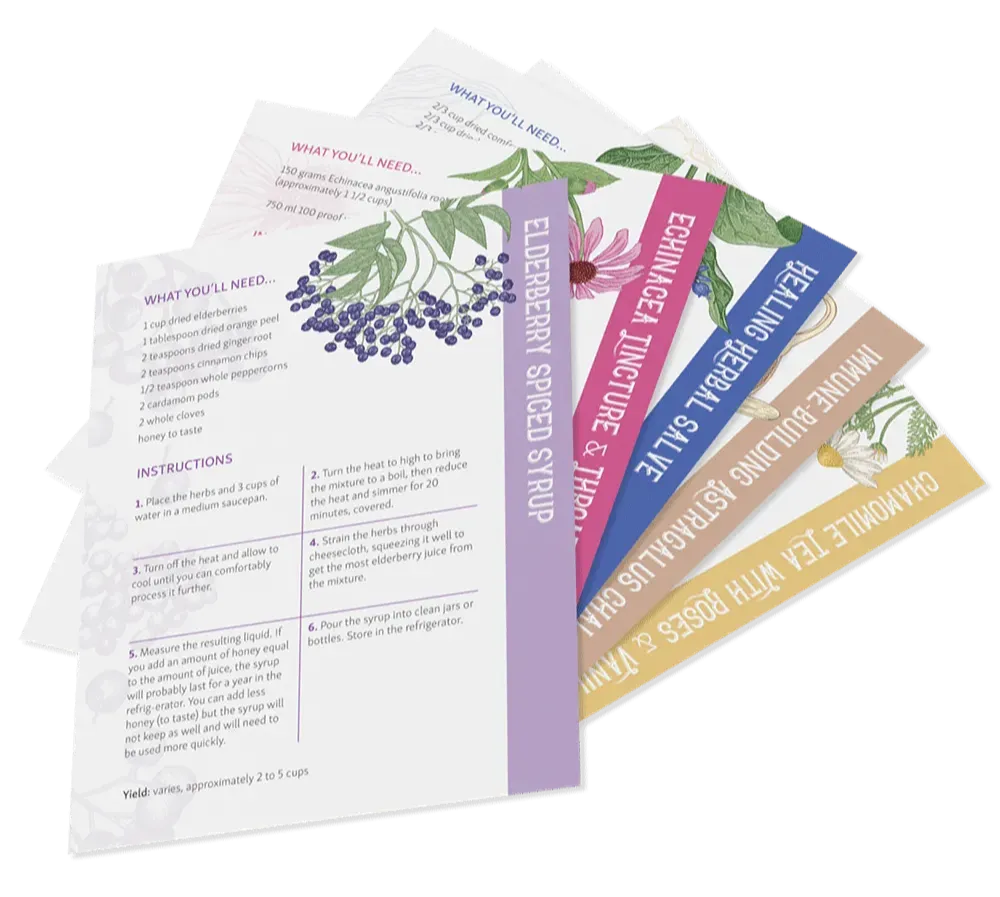
Blood sugar. If you are managing diabetes with insulin, holy basil's blood sugar-lowering effects may require adjustments to your insulin dosage. Always check in with your healthcare provider if you are trying to use it medicinally. Now that you've learned a little bit about the health benefits of holy basil, you might be wondering how you can learn more about the medicinal properties of other common plants. Well, an easy way to do that is to check out our top 12 Herb Notes cards. You can get these for free at the link in the notes. Thanks for being here. This has been Herb Notes with your host, Sorrel Hartford.
Rowan Gallagher:
HerbMentor Radio is a 100% sustainably wild-crafted podcast written and performed by Mimi Prunella Hernandez and Kimberly Gallagher, with production and editing by me, Rowan Gallagher. Visit HerbMentorRadio.com to subscribe on your favorite podcast app and find out how you can be a part of HerbMentor, a community hub for herbalists that you have to see to believe. HerbMentor Radio is a production of LearningHerbs.com, LLC. Thank you so much for listening.