Kimberly Gallagher:
You're listening to HerbMentor Radio by LearningHerbs. I'm Kimberly Gallagher.
Mimi Prunella Hernandez:
And I'm Mimi Prunella, and we continue our journey through my book, National Geographic Herbal this month. We enter chapter six, Weedy Herbalism, Friend or Foe: The Subjective Value of a Weed is in the Eye of the Beholder. And herbalists have shifted this perspective into a love affair with weeds. After all, a weedwise herbalist finds a treasure trove of free food and medicine and a patch of unruly volunteers.
Kimberly Gallagher:
And today we are so delighted to welcome someone who helps us see not only the plants around us, but the stories that they carry. Heather Wood Buzzard first sprouted roots as a wildcrafter while digging dandelions for dollars before studying Southern folk medicine with renowned fourth generation herbalist Phyllis Light. Today, she is an accomplished herbal educator, health writer, and storyteller whose work focuses on the intersection of traditional herbalism and narrative medicine. Heather is passionate about weaving together medicinal plants and therapeutic writing, helping people understand that healing often happens through both herbs and stories. Heather also co-authored National Geographic Backyard Guide to Edible Wild Plants with our own Mimi Prunella.
Mimi Prunella Hernandez:
Yay.
Kimberly Gallagher:
And she currently stewards land in Appalachia while working on a collection of wildcrafting vignettes and a guide for practitioners titled Narrative Herbal Medicine: Weaving Words and Healing Herbs. Heather, welcome to HerbMentor Radio.
Heather Wood Buzzard:
Thank you so much, Kimberly. Gosh, thank you guys for having me. It's so good to be with you again, Mimi, and to share this space and literally get to talk about my favorite subject, which is weeds, and interspersed with some plant poetry and words and things in there. It sounds like a perfect afternoon.
Kimberly Gallagher:
Beautiful. Well, I'd love to start out with the National Geographic Backyard Guide to Wild Edible Plants, which you co-authored. One thing I really love about this book is that it encourages people to start with the plants that are right outside their doors rather than heading off in search of something rare and exotic. For someone who's new to edible wild plants, why should they start with the backyard? What are the benefits of learning these common, abundant, easily recognizable plants in your own landscape before venturing further afield?
Heather Wood Buzzard:
Well, that is a wonderful question, and it's really why Mimi and I put this book together. It's one of the reasons we were so inspired and felt so passionate about kind of platforming the underdog, if you will. I think that there's a way culturally in which weeds have been kind of pigeonholed into this weeds are not sexy thing. And in fact, they really are some of the most sexy, beautiful, abundant, prolific, generous things that are, I mean, the most obvious appeal is yes, they're literally right outside our door in our backyard. And there's a train of thought about how what is growing nearest to you is the best medicine for you. And I think that that is kind of a folk epithet and it has a lot of wisdom to it in this day and age when we can source almost every herb, including all of the most exotic ones, all of the most hard to access plant parts when we can source those in a day or two or three from everywhere in the world.
We can source sandalwood and we can source saffron and we can source everything. And that's all well and good. And those herbs have their place as we know. But then when we go into our yards, which right now is the summertime and everything is just popping and we've got our nettles, and our raspberry leaf, and our ground ivy, and our daylilies, we realize that maybe we don't need to source all of these exotic plants from exotic other locations that aren't necessarily so much ours. And the weeds in our yards give us this opportunity. They give us an opportunity, a gift to come into relationship with them on a more daily basis, on a very real level. I just about 20 minutes ago, I was harvesting blackberries from the corner of our yard. And I just appreciate so much how foraging and picking wild things with your hands and your own garden and your own yard can be a meditation, how it feels like this 30-second way. It doesn't have to be a long sit down 10-day Vipassana meditation, but it's like a 30-second way of connecting and plugging into what is growing.
And to do this act of foraging that is something that my ancestors would recognize me doing, to have 30 seconds of just being in my body and kind of connecting with these living beings, these entities that are there no matter where I go. I think it's just so magical. It's like decadent. How luxurious it is to be able to pick blackberries in your yard or where you park your car. And then just now when I was picking the blackberries, actually, I kind of reached into the patch mindlessly without really thinking about it. And always when this happens, I feel like it's instant karma from the plants because I got a little nettle sting! I got a little nettle just that I didn't see, but the little tips of the Urtica dioica out there just got me on the tips of my fingers. And I got zapped. And what a great reminder that slow down, Heather. Take a breath. You're picking blackberries. You can spend 30 seconds mindfully picking blackberries. And that is priceless.
Kimberly Gallagher:
Yeah. They teach us every moment that we're with them, right? Being in relationship with the plants and being out with them. And yeah, you talk about the sting. Are there any other kinds of safety things that people should be thinking about as they're newly foraging and wildcrafting safety and stewardship considerations that you would like to highlight?
Heather Wood Buzzard:
Absolutely. Safety is something that Mimi and I took really seriously in the writing of the book. It's a big undertaking and it's a big honor to be in this educational space of we're not recommending, we're not suggesting go out in your yard and treat it like a buffet, but we are offering information about how to properly identify plants. There's so many rules of thumb from you always want to have maybe three sources of ID before, positive sources of ID before, you actually begin to ingest a plant. That could be a local forager, a local herbalist who you go on a plant walk with, plus two different guidebooks. Of course, we do have info in the book about how to use the internet and not use the internet when it comes to plant ID. There are some of the apps that are better than others, and we do have those kind of listed in our resources list, but it is a new day and age of plant identification.
And it is now, I feel, more important than ever to take safety extremely seriously beyond the identification piece into paying attention to where you're harvesting from. Is it a roadside? Are you downstream from a power plant? Are you near a waste factory? Where are you harvesting from? And really taking into account all of those different considerations. And then of course there is the sustainable wildcrafting, conscious, ethical harvesting piece that Mimi and I really try to focus on and hammer home in the book. Because it's such a big part of why we choose to talk about weeds and why we choose to, even when we're dealing with weeds, to only take a part of a stand or to really focus on before you harvest something, sometimes even slipping the script from a taking mindset into a giving mindset, like a reciprocity. And even a, what can I offer these plants that have offered so much to me? Can I sit with them? Can I sing them a song? Can I draw them a drawing? Can I write them a poem?
It doesn't have to be woo-woo. It can be, it doesn't have to be, but just inviting that reciprocity. Always of course checking at risk lists, checking UPS, the United Plant Savers at Risk list, checking the various European equivalents before harvesting a plant and really just asking yourself a series of questions in preparation for any particular harvest.
Kimberly Gallagher:
Yeah, thank you.
Mimi Prunella Hernandez:
Right. Yeah, you spoke so beautifully to all of that because we spent so much time just putting our heads together. What are the values we're going to portray here? How do we choose the herbs? We want the abundant herbs. We want the recognizable herbs. And by the way, I mean, just hi, Heather! It's so good to be with you here! We're co-authors. It's so awesome. I feel like we're having a little reunion, so this is so much fun. One of the things that I keep hearing back from our readers is how they love the way the book is organized. And I know you and I put so much thought into how are we going to lay this out? And we organized it in terms of roots and leaves. We decided to showcase flowers in a different chapter and fruits in a different chapter.
And I think maybe part of this is because people are drawn to different parts of plants, that maybe they also have different culinary aspects to them that make them kind of organize better into a chapter. So I wonder if you can help our readers understand why we made this format and maybe why do you think that was a cool thing to do?
Heather Wood Buzzard:
Yeah. It's an interesting editorial choice and very conscious and intentional on our part, I think. And hi, Mimi! This is a reunion. I am so proud of the work that we've put out into the world and how people are appreciating it. And actually this is tangential, but one of the things that I notice about the feedback that we're getting is children really love this book. Obviously it's an adult level backyard guide, but I think because of-
Mimi Prunella Hernandez:
I think it's the pictures, right?
Heather Wood Buzzard:
I think it's so colorful. And there are so many herbs in here that children are drawn to. I just opened up to honeysuckle and there's all these very familiar constants in our world, in our backyard, in our trailside snacks. And so I know a lot of two-year-olds, nine-year-olds who have really gotten into our book, which think is great.
Kimberly Gallagher:
I love that.
Heather Wood Buzzard:
It's a fabulous place to start. But to circle back to how we organized the book, obviously we're faced with, we could do seasonality, we could do area of the country. There's so many different ways to parse it out. But I was reflecting on this earlier, and I think that in a way, choosing to organize it by plant part is also choosing to organize it seasonally because it helps our reader to attune to a certain rhythm. And also provokes, I think, this ability to start paying attention to and recognizing patterns in plants.
And this is really important when it comes to botany and plant families, but even just the initial thinking of grouping things together, which helps us to start to wrap our brain around how the plant world is organized and how botany and nomenclature is organized. Like in the roots chapter, for instance, maybe these roots of dandelion and burdock have some things in common. We start noticing this pattern. We are harvesting them in the late fall or early winter. They're really starchy. They're inulin containing. They're these wonderful digestive bitters. And then we can connect that to, oh, in the fall, sometimes our digestion gets a little bit more sluggish as our blood draws into our core. And then in the spring, we're in a new chapter here, we're maybe going into flowers. We start looking for these tender, more delicate little floral parts to harvest.
And perhaps some of these are aromatic, maybe like the lemon balm, and they just bring so much joy to the spring season. Or perhaps they are lawn weeds like chickweed or cleavers, which are both these excellent lymphatic tonics and these get our lymph activated after the long winter. So I think the magic here is that the grouping and the patterns helps our brain to kind of attune to the seasonality and the rhythm of the plant world, which is a big part of foraging.
Kimberly Gallagher:
Yeah. So much of a part of being an herbalist is sinking into those rhythms, the seasonal rhythms, the rhythms of nature, slowing down to the rhythm of the earth. So I love that you brought the rhythm in.
Mimi Prunella Hernandez:
Right. I remember when we were writing about the seeds and the nuts and just feeling like we were in for the winter, having a cup of oak, like a cup of acorn, roasted acorn tea. And just like it really brought you in. It was just such a cozy feel the whole time we were working on that chapter.
Heather Wood Buzzard:
We were hibernating and writing.
Mimi Prunella Hernandez:
You are living it.
Heather Wood Buzzard:
Yeah. We were hibernating bears and writing about the stores that we'd brought in for the winter.
Mimi Prunella Hernandez:
Yes. So beautiful.
Heather Wood Buzzard:
Very much so.
Kimberly Gallagher:
Well, I'm imagining that a lot of the plants were easy to categorize that way. And surely there were some that just refused to cooperate with your organization system. I'm curious if there are some that, if you'll pardon the pun, kind of cross-pollinated between sections. And I'm wondering what you do with plants that seem determined to belong everywhere at once. And can you tell the listeners how you worked with that issue? And were there some favorite examples from the book that kind of moved between sections?
Heather Wood Buzzard:
We had a number of wildcard plants that refused to be pigeonholed. And I feel like plants as a whole though, it was a great macro lesson. Plants can't be pigeonholed into anything. They're always going to be very resistant against being molded into this, I'm a substitute for this drug, or I'm an analog for this other plant. They're so complex and nuanced just to the very core in how they affect different people and different constitutions differently at different times. And so with our wildcard plants, we decided to call these the superstars.
And these were the plants that we actually kicked the book off with. And we call these the superstars because we couldn't fit them into just how do you put dandelion in the roots chapter without talking about the leaves and the flowers? How do you put, where do you put... What else do we have in there? Daylily.
Kimberly Gallagher:
Cattails.
Heather Wood Buzzard:
Cattail.
Mimi Prunella Hernandez:
Prickly pear.
Heather Wood Buzzard:
So these are our superstars. Yeah, prickly pear, where there's just so many uses and so many different useful parts of the plant, useful and edible, that we just couldn't control ourselves. So the superstar chapter kicks off with these beautiful fried daylily buds. And then we go in to talk about, actually all of the plants that in the superstars section enjoy the privilege of having an expanded writeup. So we got to talk about them a lot more with American Lotus, and cattail, and dandelion, and nettle and the obvious herbal choices, but then all these others that we just found had too many uses to really go into one chapter. Yeah.
Kimberly Gallagher:
I love that they got superstars status.
Mimi Prunella Hernandez:
Yeah.
Kimberly Gallagher:
Perfect.
Heather Wood Buzzard:
Yeah. And kudzu is a great example of a superstar because how do you even start with kudzu? I mean, I remember making one of my first kudzu ventures was making a kudzu quiche when I was in college. And we talk about kudzu frittata in the book, but basically using the leaves as baked with kale chips or the very, very young tender leaves in a salad. And then you're going to have the root as starch in maybe a fried dish or a pudding and then medicinal uses with alcohol withdrawal. And then we're going to turn in, we're going to use the kudzu flowers, which are these gorgeous clusters and then smell like grape Kool-Aid, like grape jello. There's a recipe for kudzu jelly in the book. And so using it then as a salad garnish, as an edible salad garnish as well, it doesn't stop there.
You can use your kudzu vines for baskets or fiber or paper. And so how are you supposed to squeeze all of that into a one-page writeup?
Kimberly Gallagher:
Yeah, right. Beautiful.
Heather Wood Buzzard:
And that's just kudzu.
Mimi Prunella Hernandez:
Right.
Kimberly Gallagher:
Right.
Mimi Prunella Hernandez:
And we are lucky. Well, I don't know. Lucky, unlucky. That's like a herbalist perspective right there. I can literally walk across the street and be in kudzu. Thank goodness it's not on this side of the street yet.
Heather Wood Buzzard:
It might come over. It would only take a few days to grow across the road probably.
Mimi Prunella Hernandez:
I know, right?
Heather Wood Buzzard:
Yeah.
Kimberly Gallagher:
It's coming your way.
Heather Wood Buzzard:
Stay on your side of the street, kudzu boundaries.
Mimi Prunella Hernandez:
Please, we have a hard line there.
Heather Wood Buzzard:
Yeah.
Mimi Prunella Hernandez:
So Heather, I love your storytelling and I love the way you can bring the reader into the moment. And one of the things we love to do and our listeners love here at HerbMentor Radio is we'd like to invite our guests to take us on a little journey back into a plant memory and just take us along to a little adventure where you may have tasted a wild edible plant for the first time. And maybe it was delicious, maybe it was terrible, but we want to experience one of these moments through your eyes and your nose and your taste buds and maybe little imagination play here.
Heather Wood Buzzard:
So hard for me to choose on this one. I mean, there's a running list, but let's go for passionflower. Let's talk about maypop because when I think back to one of my most primal plant, edible plant memories, it's all passionflower. It was probably when I was about eight or nine years old. And I remember I must have had some type of argument with my parents or my sister. I had some sort of dispute. Who knows what it was about? But I packed my backpack and I put a book in it and I put a water bottle and maybe I packed some snacks, but doubtful. And probably my teddy bear, my stuffed horse, and then I booked it out the door.
And so the field next to our house was where I went on my runaway adventure. And I remember getting there, it was probably about a 30-second walk to the field. And I remember putting my backpack down and maybe it was late summer, early fall. So it was strawish, kind of hay on the ground and all of these tendrils of maypop, of passionflower vines, just all just thickly creating a carpet, like a mat on the ground. And these huge, big green, ripe, juicy, maybe it was earlier in the summer, these were ripe and juicy passionflowers or passion fruits rather. But huge, big, ripe, juicy, mango-sized, beautifully verdant passion fruit. And I decided that this was going to be my survival food. I was going to sleep in the field and I was going to eat the passion fruit and that's what I was going to do.
And so I sat there and I remember digging my thumb into one of the passion fruits and just ripping it open. And you've seen the inside of a passion fruit. It's like frog's eyes or frog's jelly. It's like tadpoles almost. It's like this goo, this icky mucilaginous goo with the hard little black seeds inside, like jelly, like eggs and tapioca almost. And the texture, the taste was completely amazing. I don't know how many passion fruits I ate that afternoon, but it was my survival food. And so sweet, so tangy, so tart, and sweet, and delicious, and amazing. What a great survival food. I was not doing badly for myself. And to this day, the circle round aspect of this story is after my big running away from home and I ate my passion fruit. And who knows, maybe I fall asleep in the field. I probably returned home in about 30 minutes after eating my passion fruit.
But I had a moment a few years ago where I think my nine-year-old, he's now nine, but my son Cedar and I had gotten into a tussle about something. He probably wanted more pudding and I wouldn't allow it. We got into a tussle. I'm like, "Mom's taking a break." I go outside, I run away. I do my runaway thing and mom is taking a break. And I sit down and I look around me and I am surrounded by passionflower, surrounded by passionflower vines. And this time it was the flower, which if you've not seen a passionflower blossom, just please Google one right now because they're the most electrifying sort of purple explosive situations. And I just found myself sitting in a bed of passionflower and passion fruit. And I had this moment that was like, wow, they're here for me. Everything I need, the thing that I need to have as home base, it's always here for me in a field that's probably not too far away.
And passionflower has been one of those intimate plants for me that's like, we have a relationship. I don't know what to call it, but I think anyone who's listening to this, you reflect on a plant that you know that you have a connection with. And it's almost like might be otherworldly. Who knows? Maybe it's strictly scientific. Maybe it's how the phytochemicals interact with your biology. Maybe it's a little more on a different plane than that. But when we have these connections with plants, there's so much magic in there.
Kimberly Gallagher:
Well, Mimi, I am really loving this conversation with Heather. That story about her running away and eating the passion fruit was so, so dear. I love thinking of her out in the field and being with those wild plants. And it makes me think about our membership site, HerbMentor. We have a course on there called Wildcrafters Toolkit, which will take all of you that are listening a little bit deeper if you're interested in wildcrafting, being out with those wild plants and learning how to harvest sustainably and just getting tips on what kind of toolkit you might put together for yourself before you go out.
Heather talked about her little backpack with her teddy bear and what other things might you want to take besides your teddy bear when you go wildcrafting? So yeah, so HerbMentor is our membership site and Mimi and I are both on there answering member questions and doing meetups and all kinds of things. So yeah, we really would love to welcome you all onto that community platform.
Mimi Prunella Hernandez:
And I love our theme today, Kimberly. And Heather's going to be telling more stories about working with dandelions, about working with wild plants in the backyard. And if you love your dandelions as much as we do, I think HerbMentor community is a place for you. So we're more than just classes. We're a collaborative learning community. We learn how to identify wild plants, how to harvest herbs with confidence, how to make tinctures and teas and infused oils and just the herbal basics.
And so if you're just getting started or if you've been studying herbs for years, there's a place for you here at HerbMentor. So just head over to herbmentorradio.com to grab that special discount and become a part of this real beautiful learning herbal community.
Kimberly Gallagher:
Yes. And next week, Mimi and I are going to get on and do a meetup that goes deeper into weedy herbalism. So if you're listening to this just after it comes out, it'll be next week. But if not, when you're listening to it in the future, you can go back and listen to that meetup if you want to go deeper on this particular topic with Mimi and I. So it's fun to get to come on with our members and learn as a community and really learn from the other members that are on as well. And yeah, just to be able to take these deep dives into different topics.
And yeah, we're going to be on and teaching more and more and we would just love to have you be part of our collaborative learning community on HerbMentor. It's just a place for all of us who are excited about dandelions and also all of the other plants and their beautiful ways that they can be helpful for us as we navigate these kind of challenging lives sometimes.
Mimi Prunella Hernandez:
Absolutely. And let's get back to our deep dive with Heather Wood Buzzard and weedy herbalism.
Kimberly Gallagher:
Oh, I can't wait to hear what she says next.
Wow, I love that story so much. And that takeaway of the plants are just there for us. Those ones that we have relationships with, they tend to come right when we need them.
Mimi Prunella Hernandez:
I love that in both of these scenarios, they were right in your backyard, like right out.
Heather Wood Buzzard:
Quite literally.
Mimi Prunella Hernandez:
And I think that's one of the reasons we do encourage people to get to know their backyard because that's ultimately who becomes your friends. Those are where the relationships are, the ones right outside your door that are there when you walk by. And I think so many people walk down their driveway, go to their mailbox and don't even recognize that there's so many different plants from here to there. Hopefully, right?
Heather Wood Buzzard:
Hopefully. If they haven't sprayed all the dandelions. Yeah.
Mimi Prunella Hernandez:
Oh my gosh. Yeah.
Heather Wood Buzzard:
I think too about what plants my son Cedar will think about when he is an adult. And he's been wildcrafting with me since he was in the womb, but he has been obsessed with sour grass, with Oxalis, wood sorrel, for quite some time now. And he'll eat it everywhere we go. I mean, he'll just grab big handfuls of it and it's like this is dinner, lunch and a snack. And he has established his own relationship with it, which I just find so beautiful and fascinating. And I love that I've...I mean, obviously as a child of an herbalist, I don't expect him to go around foraging because you always sort of sometimes can go in a different vein than your parents. But he's developed his own thing with Oxalis and it's always around. It's so friendly. It's something he can teach other kids about and it tastes great.
Kimberly Gallagher:
Yeah. Yeah. I remember when I was taking Hailey, my daughter, around to various colleges and she was looking for her plant friends. She was like, "I could go to this college if I can find plantain and dandelion." When we dropped her off, there was this medicinal herb garden across the street from her dorm. And we dropped her off on this bench underneath a rowan tree and her brother's name is Rowan. So it was like she was still held by her brother as we drove away. So yeah, the kids really do develop that relationship so quickly when they're just surrounded by that growing up. It's like these plants are their friends and their allies. It's so, so beautiful.
Mimi Prunella Hernandez:
It is so beautiful when it spans the generations. I remember I recently went to visit my mom and my daughter came to visit too. And we went for a walk and my daughter was teaching my mom about nettles and how good it would be for her. Now my mom's harvesting nettles from her little walks and bringing home to make soup and sending us pictures. And it was just so sweet.
Kimberly Gallagher:
So sweet.
Mimi Prunella Hernandez:
And I was just being able to be an observer there. Yeah.
Heather Wood Buzzard:
Wow.
Kimberly Gallagher:
Beautiful. Yeah. And talking about this weedy herbalism in the plants that are between your door and your mailbox. We used to have this cherry tree outside of our door and we would go out to our driveway and there was a burdock plant that was growing under the cherry tree and we loved our burdock. But the kids would get the burrs in their hair as they went to the car. And we never really thought about like, "Oh, we could actually maybe take this burdock out so we don't have to spend this time taking the burs out of Hailey's hair." She remembers that little connection with the burdock plant. So one thing I love about your work, Heather, is just the way that you bring the stories in with the plants and noticing how the plants are connected to the people and the culture and all of those pieces that story bring in.
And I wonder what do weeds reveal about people and culture and the stories we tell ourselves? And why do you think it is that? So many plants that herbalists just treasure and love are the plants that others try the hardest to eliminate. I'm sure most people would've dug that burdock right out. We don't want this anywhere near us. And yet as herbalists, we were like, "Oh my gosh, burdock, we have to have that under our cherry tree."
Heather Wood Buzzard:
Totally. I have a similar burdock story actually in that I have a burdock in between my door right here and my car. And it's the biggest one. It's the biggest burdock plant that I've ever seen growing sort of right in the middle of the walking pathway. And my story in my head about it is because our dog, our late dog, Burdock, the dog, died. He passed away in the fall and he was old, he was 11 or 12, and he was a big Bernese Mountain Dog. And he lived far beyond his lifespan. And I had raised him eating like Juliette de Baïracli Levy style with raw meat and raw milk and slippery elm bark and honey. And he was my wildcrafting dog with me for a decade. And so he passed away in the fall. And then in the spring, this massive burdock just sprung up. And I was like, "Oh, it's you." It was really special.
Kimberly Gallagher:
Amazing.
Heather Wood Buzzard:
And so we have these relationships with weeds, with the plants that are so familiar to us outside our door. And I think that there is so much beautiful symbiosis and metaphor in them being weeds, both literally and figuratively. A tenet of this weedy herbalism is that herbalism itself, just like the weeds, is universal. It's accessible to all. Anyone can be an herbalist. I'm such a big advocate for expanding that definition of who is an herbalist. Just like weeds are expanding the definition of what is medicine really. Is an herbalist someone who sprinkles cinnamon on their apple slices? Is an herbalist someone who drinks coffee? Coffee is an herb. It's a culturally accepted herb that we drink regularly. Is an herbalist someone who drinks beer, hops?
It's just interesting to play with this definition of what is a weed, what is medicine? Who is an herbalist? There is a quote by Thoreau who said, "In wildness is the preservation of the world." And then Wendell Berry responded to that saying, "In human culture is the preservation of wildness." And so I think about in the spirit of curiosity, of asking questions, not expecting answers, but having more questions than answers. How do we preserve this wildness of weeds that seems so critical to not only the preservation of human culture, but the preservation of the world?
And I think one answer to this inquiry is to come into relationship with weeds, is to come into relationship with weeds in your kitchen, in your first aid kit, in your medicine cabinet. If we think about the term of eco grief that is not new, but newer and the loss of the wild that is causing this phenomenon, we have to really consider wildness and the element of weediness and wildness in both our medicine, what we're taking in as medicine and as food and ourselves. I think there's very interesting conversations being had about things being denatured, humans being sort of denatured, food being denatured, medicine being denatured. And if we think about how by nature we are wild, we are hungry, we are resourceful foragers. By nature, we're connected to the planet by weeds, almost like an umbilical cord, I like to think of it.
We're connected to the earth by these tendrils, by these passionflower vines, by the blackberries in our yard. And I think eating weeds and knowing what you can come into a relationship with in your yard is a way of attuning to that renaturing, if you will, or rewilding and sort of honoring that.
Kimberly Gallagher:
Yes. Rewilding is so important. Just re-weaving ourselves in with the natural world seems like an important project right now. I love that the weeds are a doorway for us.
Mimi Prunella Hernandez:
And it really-
Heather Wood Buzzard:
Yeah. I was thinking even about the example of honey in how the medicine that grows around us or is made around us works better in us, is more effective in us because it's growing in the same conditions that we're growing in. We see an example in honey with the story of allergies, and allergenic reactions, and seasonal concerns and pollen and local honey and that sort of example. But I think that there's a lot that weeds have to say about being sort of the right combination of factors for us because we're both growing in the same environment. Weeds are sort of this underdog and there's always kind of a special enthusiasm that herbalists or maybe people in general have for the underdog because in a way herbalists are sort of an underdog.
We sometimes have sort of an underdog role in healthcare or in the larger landscape. And I think we can connect to weeds on a certain level because weeds are that underdog as well. We've been sort of conditioned in certain ways to look to beautiful grasses and ornamentals and sculpture and structure. And the weeds have this unappreciated underdog value that is sometimes overlooked.
Mimi Prunella Hernandez:
We are weeds as herbalists is what you're saying.
Heather Wood Buzzard:
Right?
Mimi Prunella Hernandez:
We are the weeds and we shall persist.
Heather Wood Buzzard:
We are the dandelions.
Mimi Prunella Hernandez:
Aren't we? And it's really one of the reasons that I have loved our collaboration. I think just different plants bring different things to the table. You and I complemented each other in so many unique and different ways. And I just really love your wildness. You talk about wildness, but I really think you embody that. I always see you in the woods. This is my image of Heather, right? Even though side by side, we're on our laptops right?
Heather Wood Buzzard:
I'm really just on my Macbook, though.
Mimi Prunella Hernandez:
I'm like, Heather is out. She's this woody, gritty, herbalist, barefoot with her fingers in the dirt and just really living this woodland type of survival, persistent lifestyle. I love it. And teaching and just being communing with the woods and with the nature around you. And in some ways I've learned so much from you and your Appalachian, very Appalachian roots in terms of your herbalism and the experiences you've had with Phyllis Light and the Southern Appalachian Mountains.
One of the things I've loved about collaborating with you is learning different things about different herbs too and different weeds. Obviously we were constantly through both our projects, because Heather also was my writing partner on National Geographic Herbal as well as co-author on Backyard Guide to Edible Wild Plants. We're always looking at each other's writing. We're always comparing notes. We're always like, "Oh, really? I didn't know." I had so many aha moments when you would bring something to the table.
And for example, one of them is I always now am always looking for the daylily. I never ever looked at daylily like that. They're all over around here. They're all over the sides of the roads or in the ditches. I'm just like, who knew that all parts of the daylily are edible? And I love the stories you tell about stuffing them and preparing them. How beautiful to bring these to the table. And so I was hoping you could share a little bit with our listeners about the daylily because I think it's such a recognizable plant because it's something that I'm always learning to work with these days now that I've picked that one up from you.
Heather Wood Buzzard:
Well, Mimi, I got you something.
Mimi Prunella Hernandez:
Oh, are they stuffed? What'd you do with them? Are they-
Heather Wood Buzzard:
They're not. It's just a bowl of them.
Mimi Prunella Hernandez:
They're ready. They're ready.
Heather Wood Buzzard:
But they're so ready. They're ready to be stuffed. I harvested these a few hours ago and they're still kind of nice and snappy. So this right here-
Mimi Prunella Hernandez:
Yeah, snappy.
Heather Wood Buzzard:
Yeah, they're snappy. These are the shoots. It's late June right now, so they're everywhere. They're lining the roadsides here. But with these, in this state, I would take the crisp shoots and saute them like asparagus and butter, or I will just crunch them like a celery or with a ranch dip, some kind of dip or a dandelion dip. I have a really good recipe for that. And daylily shoots dipped in dandelion dip. That's like mecca. But yes, this is a bowl of daylily flowers, the open flowers and the shoots, and the whole thing is edible. And I remember my mother making petit fours as a child, these little cakes with the little icing and dyeing them with beets to make them pink and spirulina to make sort of turquoise ones. And then the orange ones, the orange frosting, she dyed with daylilies. And that was sort of my first encounter with daylilies.
But one fun fact that I learned while we were writing the book actually was that they are so revered and so valued in some cultures that they're even used as a breast milk substitute. It's a good National Geographic sort of herbal fact. They have been a moniker and nickname for daylilies since the Tang Dynasty in China has been the mother herbs. So they're like this revered sort of maternal presence in herbalism, in some cultures that might just look like a very nondescript weed or a pretty flower to some people. And to us, it's like a total panacea. They are amazingly mucilaginous, so excellent for cooling the tissues, for digestion. They can be cooked, they can be eaten fresh. We have a couple favorite recipes in the book. We have a recipe for the sauteed daylily buds, and they can also be stuffed, almost like a stuffed squash blossom.
You can stuff your daylilies with goat cheese, make a really fabulous, fancy appetizer to impress all of your friends. And then the leaves also, before they get too fibrous, it's one of the plants that you want to really watch in all the seasons, fall through spring and summer to make sure you're getting the roots in the fall. Can be eaten like potatoes or even pickled. And then watch that same stand. Keep an eye on it because those early spring tender leaves is what you'll want to get as soon as those come back around. And then the shoots in the late spring, early summer, and then finally the flowers. And they are just everywhere. There's a lot more info, of course, about them in the book because they're not a true lily, but very easy to recognize, very, very easily accessible. And I'm so glad to have brought these more into your life, Mimi. You have brought so much to my world.
Mimi Prunella Hernandez:
Aw.
Kimberly Gallagher:
That's so exciting because as I was walking down the road a few months ago, there was a neighbor who had a box of daylily tubers outside. So I brought them home and put them in my garden. So now I know I'll get to harvest the flowers and stuff though.
Mimi Prunella Hernandez:
Nice. It's exciting. You bet.
Kimberly Gallagher:
Yay. I'm so glad that I get to learn from both of you.
Mimi Prunella Hernandez:
Yes.
Heather Wood Buzzard:
Aw.
Mimi Prunella Hernandez:
Yay.
Heather Wood Buzzard:
Well, this is dinner. This is what I'm doing after this. This is dinner right here. It's my floral dinner.
Kimberly Gallagher:
So in the spirit of learning from each other, I'm curious, Heather, if there was a plant or something that you learned about from Mimi that you remember that you're like, "Oh, you turned me onto this one."
Heather Wood Buzzard:
How long do we have? I mean, just worlds, just worlds of ideas, plant uses, ways of thinking about things. One really concrete one-liner is Mimi's cream of weeds recipe. Being someone who loves a good pun, I appreciate the name. And it's like she gave me, it's like you gave me this name for this thing that I was making, but I didn't have a name for Mimi. And all of a sudden I'm like, "Oh, I've been making this. It's Mimi's cream of weeds, but now I have a label for it." And it's basically all the edible weeds in your backyard and some cream in such... It's the best way to get your greens in and get your minerals in.
But really Mimi's background and ability and generosity to share her intergenerational stories. I'll never forget even editing, but now reading the stirring the chocolate story with your, I think it was your grandmother, Mimi. Yeah, stirring the chocolate as a child and the true cinnamon and the type of cacao and all of these different nuances. I've just learned so much. And I think really what resounds is it all happens in the kitchen for you, Mimi. That's the cornerstone. And it's around the kitchen table, the hearth and the chopping together. And we're sitting on the porch and we're creating this preparation. And it's all slow and it's all happening. And it's the merger of story and science, which is really where Mimi and I meet because that is a big core tenant of my work is the story way of knowing things is just as important as the scientific way of knowing things. And both of those are not mutually exclusive. They live together in the same world.
And so it all just happens in the kitchen, on the kitchen table, in the porch for you. And for me, it all happens on the page. I love the words aspect of putting our books together, putting your nat-geo herbal together, and then putting together our backyard guide. For me, the beauty of the meeting of herbs and words is that's where it's at for me. Besides out wildcrafting in the woods, which is where I've been for a good decade. Now I'm more focused on the page and going back to my writerly roots. But that means that we are a great combo because we've got the kitchen, we've got the woods, we've got the words on the page, and that is really kind of the synergy of these books.
Mimi Prunella Hernandez:
So beautiful. I'm loving that. And thank you. Yeah, just so honored to hear all of that from you.
Heather Wood Buzzard:
I'm honored to be able to bring you these daylilies. I wish I could pass them.
Mimi Prunella Hernandez:
Thank you. I mean, you're only an hour up the road.
Heather Wood Buzzard:
I'll be over for dinner. Let me just stuff them.
Mimi Prunella Hernandez:
We'll send Kimberly some pictures later.
Kimberly Gallagher:
Yeah. I don't know. Yeah, I'd have a long flight to get to the two of you.
Heather Wood Buzzard:
Sorry. They might be a little wilted by then.
Kimberly Gallagher:
By the time I get there.
Mimi Prunella Hernandez:
I do love that you have lilies up there to grow, Kimberly, because so many times we have these different bioregions and we did really work at putting different bioregions in the book and really representing North America as a whole. So that was a lot of fun with this project too. And a little out of our comfort zone. Sometimes we had to go exploring outside our region to find the best, the culturally exalted weeds of different areas. But that was so much fun.
So Heather, you also are, I want to just kind of fast-forward to right now your current projects. I do want to end on dandelions because I really want our listeners to have the take home dandelion inspiration. That's kind of one of my goals when our listeners leave today's show. But first of all, I do want to visit this concept of these wildcrafting vignettes. And I know you mentioned earlier that in that story where you were reaching through the blackberry vine and how the nettle sting really slowed you down and helped you notice, what has gathering plants taught you about presence and observation? And are there particular moments in the field that continue to shape what you're doing today in reference to these wildcrafting vignettes?
Heather Wood Buzzard:
Yeah. I think from a spiritual deep ecology perspective, wildcrafting as a way of re-weaving you into your land and into your life, having it be a place of creativity instead of just a place of consumption; creativity and reciprocity. There's a beautiful quote from Eaglesong who says that the only caveat that she gives to people who are about to partake in wild food is that it may produce wild thoughts.
Mimi Prunella Hernandez:
We love that.
Heather Wood Buzzard:
Yeah, I thought that was great. And of course there's the well-known saying by Frank Cook who says, "Eat something wild every day," which is what I try to really take to heart. There are so many lessons that I think are specifically acutely encoded in the place of the wild and lessons that cannot be learned in a garden just by definition, by virtue of this plant is growing naturally. Why is it growing there? Why did it choose this spot? Why is it thriving or not thriving? Why has it chosen this little biosphere, this little ecosphere and microbiome to be its home in the midst of our whole planet? What conditions made it just right? And how is it its best and sort of weediest version of itself there? In terms of attention too, I've found that gathering mushrooms specifically is a very all-consuming experience because I have found that I can almost take sort of chanterelles maybe or morels as an example.
I sort of attune my vision and I've trained myself, I've trained my eyes to be looking only for chanterelles, or I've trained my eyes to scan. You scan the environment and you look only for morels. And it's sort of this almost meditative mindfulness, like brain training, vision training exercise. It's super weird and sort of inexplicable. There are so many moments in the field and wildcrafting that shape my work today, but I would say the big standouts are all the mistakes that I made and the things that I wish I had done differently. I think plant lust is a really interesting concept when you see the green wall and then it changes from the green wall into like, "Oh, this is a farmer's market. This is a grocery store. This is an apothecary. What can I harvest and use?"
And then sometimes that can turn into overwhelm and taking too much or not having the right preparation or processing tools, which can end up in you're losing a batch of something or you don't have room in your dehydrator for something because you bit off more than you can chew. Or maybe I got to something too late and I was beat to my harvest by the bears. That has actually happened to me quite a number of times. And so I think it's really the human error and the over enthusiasm that shapes a lot of us because it slows you down and creates that intention and awareness before there's any harvest of any kind of like, what am I going to do with it? Do I have a plan? Do I need this much? Who else is going to come after me? All those sorts of questions.
Mimi Prunella Hernandez:
I think that even in our introduction of the book, we talk about the importance of just sitting with the landscape and getting to know the landscape around you before even seeking out any plants. Just that it's okay to just observe and be in that place of noticing what's around you without really taking action. I think that's one of the beautiful aspects of building relationship with the bioregion around you, with your backyard, with what are to become your plant allies and the weeds around you.
Heather Wood Buzzard:
Yeah. What do we say in the book, Mimi? Can we quote ourselves? We say-
Kimberly Gallagher:
You totally can.
Heather Wood Buzzard:
... the goal of backyard foraging is to appreciate, not to satiate.
Kimberly Gallagher:
Yes. Got goosebumps.
Heather Wood Buzzard:
From the...
Kimberly Gallagher:
I love that. So good when you can quote yourself. Yes. Well, I love this whole conversation about just slowing down and really appreciating and taking in the plants that are around us. So Mimi mentioned wanting to talk about dandelions and I really think our LearningHerbs community has this kind of love affair with dandelions. That's our logo. It's one of the plants that really got John into herbalism. And so I wonder if we can talk a little bit about dandelions. At the beginning, I read in your intro that you started your herbal journey digging dandelions for dollars. And I wonder if you can tell us a little bit about that story, who was buying the dandelions, what were they being used for? And why do you think dandelions capture the imagination of so many of us? It's such a common lawn weed and yet got so many gifts for us. So yeah.
Heather Wood Buzzard:
They've really become a mascot of herbalism, haven't they? They've really become our cheerleader and our underdog mascot because of their ubiquitousness. They are everywhere. And to me, and I think to a lot of us, that's a sign. That is a sign that they're everywhere for a reason. For me, I think about how many dandelions there are on every lawn in America. And then you think about how many people just in this country have sluggish livers or need a digestive boost. And for me, it's just like, it couldn't be more obvious in so many ways. What we need is out there if we choose not to destroy it. And so dandelion is like the people's herb. It's a generous herb. It gives of itself. And it's not fancy. It's not a special snowflake. It's just sort of there. And I don't mean there and that it's there for the taking, but I do think its presence does give you pause if you're in tune with your intuition because you're having to consider environmental factors.
Am I in a park? Am I downriver from whatever is? Is this dandelion root acting as a bioremediator that has a high chemical uptake? Or what other potential factors are there to consider, right? Can't just be there's a dandelion, so I'm going to pluck it. But dandelion is a wonderful example of a wild food that is more nutritious, more medicinal, has more of all of these benefits that we have come to call medicine than even its cultivated variety because you can go into whole foods now and buy cultivated dandelion and have dandelion greens for your dinner. But there are quite a few good pieces of scientific literature that advocate for the wild plants or the wild varieties of certain species, including chickweed, dandelion, dock, mallow, nasturtium, and Oxalis. The wild varieties of all of these are found to be higher in fiber, in protein, in vitamins A and K and calcium and iron than pale or any other store-bought green.
And that's the case with dandelion, especially the wild dandelion greens have more iron, riboflavin and vitamin E than any cultivated green. And even the differential between the dandelions in the store that are cultivated in the dandelions that are growing wild in our yards is stark because those yard dandelions have to be fierce. They have to fight harder to live. They don't get everything given to them. Their struggle makes them tougher, which is of course the most beautiful metaphor that applies to everything in life. And it increases their production of these phytochemicals and will sometimes make them more bitter. And that is a good thing when it comes to medicine, when it comes to those constituents, those constituent profiles. So my dandelion story is digging dandelions for dollars.
When I started making a living as a wildcrafter, I had less than zero idea what I was doing. I had never really dug up anything in my life. I had a shovel and I was very enthusiastic. And I was living on top a 500 acre mountain at the time and managing it as a retreat center and teaching wild foods classes and plant walks. And it was a land trust. So all this protected 500 acres in Appalachia in one of the most biodiverse regions in the world. And I started to wildcraft professionally, whatever that means. Really it's a time honored job here in Appalachia, mostly with woodland roots.
And my version of it was I had a buyer who wanted five pounds of dried dandelion root. And so we had a contract and this was a particular buyer who was making herbal root blends, I think coffee substitute blends like dandelion chicory and that kind of typical roasted root coffee substitute blend. And I was probably 23 years old and I said, "Five pounds of dandelion root dried? Easy. I got you. I'll see you next week." And so I dug, and I dug, and I dug and I had different fields that I had access to and I had different wild zones. And I broke my shovel multiple times even before I got to the burdock digging. This was just the dandelion. I broke myself. I broke my spirit. I broke the shovel. I broke everything.
Kimberly Gallagher:
They're tough.
Heather Wood Buzzard:
And then I take... Oh, it's so tough. I mean, I just had no... it's the phase of life where you're just experimenting. And so I take bags, and bags, and bags of all this dandelion home and I do the processing. And of course, all of the non-root plant material I took and I made medicine with or I cooked and I cooked down the leaves and I made vinegars. I used it all. I made sure that I was going to use it all and do my due diligence. And I spent hours, and hours, and hours washing these filthy roots and chopping the dandelions. And at the time, my dehydrator system was actually a very old-fashioned incubator, like an egg incubator. And it had these trays that you would pull out. And so I would put my single layer of my dande root slices on the trays. And gosh, I probably harvested, I probably dug up 20 plus pounds of dandelion and I was like, "I've got this. This is my harvest. I'm done. Job is done."
And eventually pulling that dried dandelion root out of the dehydrator and putting it all together, putting it on a scale, and the scale is 14 ounces. And this is a full two days of work. I was like, "Oh no, this is not good. Maybe I'm in the wrong profession." And it was just a great, great lesson for me in biting off more than I could chew and in what I really need to be doing in the herb world. And I went back out there and I did my plant meditation and I got my five pounds of dried dandelion root, and it was a wonderful teacher, a wonderful humble, and excellent exercise in humility and the humility of the dandelion. But dandelion is always teaching. It was teaching me that it was not going to take a day or two days. It's going to take a week for my five pounds of dandelion.
Kimberly Gallagher:
Wow.
Heather Wood Buzzard:
And yeah, there's a lot of lessons in there. I fought hard. I fought hard like the dandelion and got it done. But it was not an easy task. It was not an easy task. That led to many, many years of other jobs where I was really harvesting one plant at a time and really getting thick as thieves with one plant for days, or weeks, or months on end for different herbal companies, for different brokers. And it was literally just me picking red clover in a field usually with a baby on my back for a long, long time. And a totally different phase of life than I'm in now and totally hard and full of sweat and amazing. Lots of lessons from the red clover, from the St. John's wort, from the reishi and the sumac, and of course the dandelion. And all of those stories, all of those stories of wildcrafting are what composed the wildcrafting vignettes storybook.
Kimberly Gallagher:
I'm excited to read it.
Mimi Prunella Hernandez:
Yeah, you have so many beautiful stories. You really take us out there to the wild and young Heather with the baby on her back digging and breaking shovels. I love it. It's a reality check too. It's such a charmed life, but we have our challenges and our adventures along the way for sure.
Heather Wood Buzzard:
Yeah. It takes the romance out of it after a while. It's a very... I mean, Instagram herbalism is lovely, don't get me wrong. But being a "professional wildcrafter" is like your car is full of dirt and your legs are covered in burdock and you've got bears after you and all the rest of it.
Mimi Prunella Hernandez:
Yeah, there's definitely a messy side to herbalism. Yeah. Well, we know you have several projects underway. We know you have more stories to share. We wish we had all the time. But for our listeners who are curious about you and your work and want to follow up, where can they find you?
Heather Wood Buzzard:
So I can be found at heatherwoodbuzzard.com, just my full name. I've got an upcoming book about the intersection of narrative medicine, which is what my graduate degree is in herbal medicine and how words and herbs kind of merge and herbs can, inotropic specifically can influence our cognition and the stories we tell others and ourselves and all the fascinating implications of that. So that book is forthcoming. And in the meantime, I spend a lot of time at Herbal Academy doing work in the herbarium there. And @heatherwoodbuzzard is my Instagram. And otherwise I'm out in the field getting stung by nettles.
Kimberly Gallagher:
Aw, so beautiful. Well, Heather, thank you so, so much for joining us today and sharing all of your stories and your wisdom and your unique perspective on weeds and wildcrafting and all of the plants that are growing around us. So it's just delightful to get to talk with you.
Heather Wood Buzzard:
It's such a pleasure and such an honor to be here, especially as a mom who raised her kid playing Wildcraft! This feels really, really sweet. Really, really appreciative of the massive amount of work that you both have done in the herbal world and to make it so much more accessible than it ever has been really.
Kimberly Gallagher:
Yeah, such good work.
Mimi Prunella Hernandez:
Thank you. Thank you both. And thank you to all of our listeners for being here with us today. Join us next month when we come back to HerbMentor Radio and we journey through and step into the world of woodland herbalism.
Kimberly Gallagher:
Can't wait.
Heather Wood Buzzard:
Exciting.
Kimberly Gallagher:
Until next time, keep learning, keep growing and keep cultivating your relationship with the plants. Thank you for joining us on HerbMentor Radio. And don't forget to stick around for an Herb Note.
Sorrel Hartford:
Hi and welcome to Herb Notes. I’m Sorrel Hartford.
Let’s start with a bit of sensory imagination here.
It is a warm summer evening and you are enjoying a cold IPA. You know that bitter taste? If you know that taste you have already met one of herbalism's most fascinating relaxing herbs. Hops or Humulus lupulus. Can you say that three times fast? While hops are famous for giving beer its signature bitter flavor, herbalists have been turning to hops for centuries to support relaxation, sleep, and healthy digestion.
The medicine comes from the female plant’s papery green cones called strobiles. These are coated in a golden resin known as lupulin – that's where many of hop’s beneficial compounds are found.
Let’s explore three medicinal uses for hops...
First, relaxation and sleep.
Hops is what herbalists call a bitter relaxing nervine – an herb that calms the nervous system while also supporting digestion. It especially useful for people who feel restless or overheated or unable to settle at bedtime.
Modern research backs up this traditional use with studies showing hops can reduce stress, anxiety, and even improve sleep quality. If a bitter tea isn’t your thing, dried hops can also be tucked into a sleep pillow or added to a relaxing evening bath.
Second is digestive support.
There's a reason that hoppy beer has traditionally been enjoyed alongside food. As a classic bitter herb, hops stimulates digestive juices and bile which helps the body digest fats and ease that sluggish heavy feeling after meals.
It is particular helpful when digestive discomfort is tied to stress. It can ease cramping and bloating and tension in the gut.
Because hops are quite bitter, many herbalists prefer using it as a tincture than a daily tea.
And third: hops for hormonal balance.
Hops contains gentle plant compounds called phytoestrogens that interact with estrogen receptors in the body. This has made it valued herb for supporting people through menopause, particularly for reducing hot flashes.
It has also been used traditionally to ease menstrual cramps, thanks to its relaxing effect on smooth muscles.
Hops are a really wonderful herb. But they are powerful medicine. So let’s talk about contraindications. Hops can enhance the effect of sedative medications. So they shouldn’t be used at therapeutic doses along with sleep medications or antidepressants.
It is also best to consult your healthcare provider before using hops during pregnancy, or if you have a tendency toward depression or low mood.
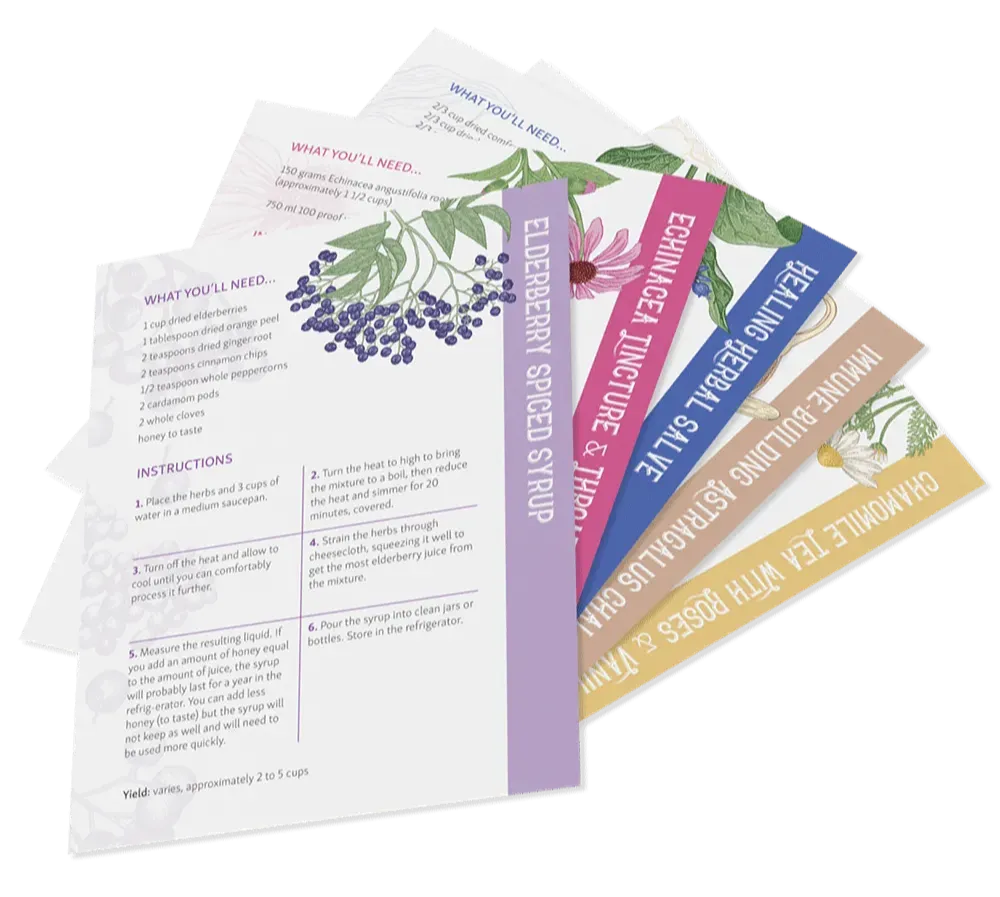
If you’d like to learn more about other herbs like hops, you can download our free Herb Notes Flash Cards, where you will discover the medicinal benefits of our twelve favorite common herbs, including elderberry, dandelion, and many more.
Thanks for being here, I will see you next time on Herb Notes!
Rowan Gallagher:
HerbMentor Radio is a 100% sustainably wildcrafted podcast written and performed by Mimi Prunella Hernandez and Kimberly Gallagher with production and editing by me, Rowan Gallagher. Visit herbmentorradio.com to subscribe on your favorite podcast app and find out how you can be a part of HerbMentor, a community hub for herbalists that you have to see to believe. HerbMentor Radio is a production of Learningherbs.com, LLC. Thank you so much for listening.