Hi everyone and welcome to Herb Notes, I'm Sorrel Hartford.
Long before elecampane had a Latin name, it had legends. Some said that elves lived beneath its enormous leaves. Others said the plant grew from the tears of Helen of Troy while she wept as she was carried away from her homeland. Whatever the origin story, this herb earned its mythology. It grows up to ten feet tall, with leaves nearly two feet long and a crown of golden, daisy-like flowers that bees find irresistible.
Elecampane or Inula helenium has been used medicinally for over two thousand years. The warming, moving, and stimulating medicine lives in its roots.
Let's explore three medicinal uses of these roots:
First, elecampane for congested coughs.
Elecampane is western herbalism's most recognized remedy for the cold, heavy, stuck kind of cough – a chest full of thick mucus that won't move or the kind that lingers for weeks in winter. It works as a stimulating expectorant, which means it doesn't suppress the cough. It actually strengthens your cough reflex, helping your body to clear that stagnant material from the airways.
The root is also very antimicrobial. It has been proven to eliminate MRSA and tuberculosis. It moves mucus along, while fighting the bacteria and viruses that are living in it.
Second is elecampane for slow, cold digestion.
Elecampane's respiratory reputation tends to overshadow its digestive work, but the patterns it addresses energetically look similar: sluggish appetite, food that sits heavily in the stomach, excess gas, a thick white tongue coating. Herbalists call this pattern cold and damp digestion. Elecampane's three-part flavor profile – pungent, bitter, and sweet – addresses this issue from all directions at once. It warms, it stimulates, and it nourishes this type of digestion.
Third is elecampane for the gut microbiome.
The fresh root of elecampane contains up to 30 percent inulin by weight – one of the highest concentrations in the plant world. Inulin passes through your upper digestive tract undigested and when it reaches the colon, the bacteria living there can feed on it. That makes elecampane a prebiotic: it doesn't supply new bacteria, but it nourishes the community that is already present in your gut. It also slows down sugar absorption, which is helpful for people managing blood glucose levels.
A quick note on safety: elecampane is considered a safe herb, but a few things are worth knowing.
If you're pregnant, most contemporary herbalists recommend avoiding it out of precaution, as it may have uterine-stimulating effects.
If you have known sensitivities to plants in the Asteraceae family – this includes ragweed, chamomile, echinacea – start cautiously, as contact dermatitis is possible.
And start with a lower dose, as large amounts can cause nausea.
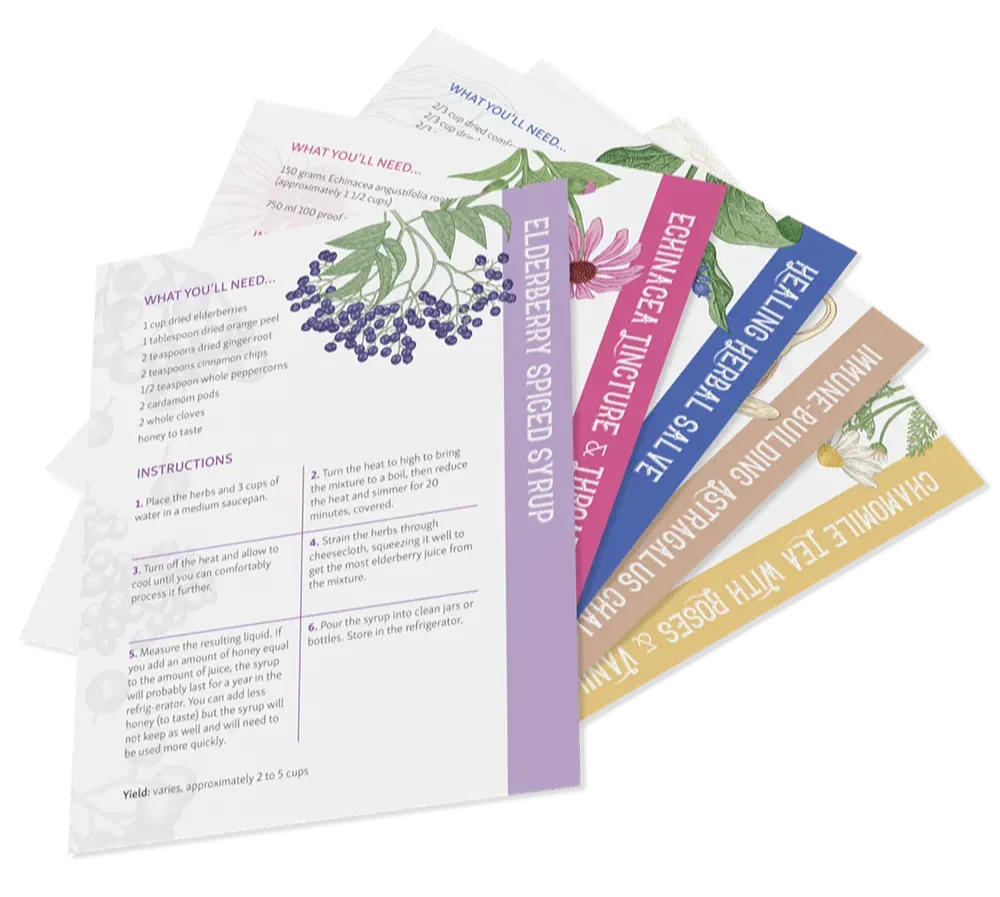
If you'd like to know more about other herbs like elecampane, download our free Herb Notes flashcards, where you'll discover the medicinal benefits of twelve of our favorite herbs, including elderberry, dandelion, and many more.
Thanks for being here.
This has been Herb Notes with your host, Sorrel Hartford.