Mimi Prunella Hernandez:
Welcome listeners. You're listening to HerbMentor Radio by learningherbs.com. I'm Mimi Prunella, and today we're stepping into a conversation that's a little different, and this is one I'm really excited about. If you've spent any time in the HerbMentor community or listening to us here at the podcast, you already know Kimberly Gallagher, and she's been our guide and teacher here at HerbMentor community for so long. In fact, she's the founder of the whole thing, with John Gallagher. But today she's joining me as a guest, and this is along aside someone whose work beautifully compliments her own. This is herbalist, dream worker, and author, Lauren Morgan. Together, they've created this brand new LearningHerbs course called Rhythms and Relationships. This is a course that explores something many herbalists eventually discover that herbalism isn't only about learning plants, it's about learning how to be in relationship with the seasons, with our bodies, with the moon, with our dreams, communities, and ultimately, of course, with the plants.
Kimberly Gallagher is the co-founder of LearningHerbs and HerbMentor, where for years she's helped thousands of people build joyful practical relationships with medicinal plants through everyday herbalism and community learning. Lauren Morgan is a community herbalist and author of Seasonal Herbalism, host of the Herbs and Dreams Podcast, founder of Herbs and Dreams, and former adjunct faculty member at Bastyr University. Her work blends herbalism, dream work, Earth-based spirituality, and deep relationship with the living world.
Kimberly and Lauren, welcome. Welcome to HerbMentor Radio Podcast.
Kimberly Gallagher:
Thank you, Mimi. It's so good to be here and so funny to not be co-hosting with you, and to be in this role of being interviewed today. So I'm excited. Yeah.
Lauren Morgan:
Yeah. And I feel honored for many reasons to be here, but one of which is to be here with you two, Kimberly and Mimi, my herbal wise woman elders. It is a true treasure and honor to be at the table with you, and to be having this conversation with you. And I think from my heart to yours, I just want to start by giving thanks to both of you for your walk, and for all the ways that you have carried herbalism and carried these ways of healing and relationship with the plants. And so I walk behind you, your footsteps, and I give great thanks for that. And so truly my honor to be here with you both. Thank you.
Mimi Prunella Hernandez:
That's beautiful. I don't know about you, Kimberly, but I just got the biggest heart giggle being called an elder, and I love it and I'm receiving that. Thank you.
Lauren Morgan:
Good. Good job.
Mimi Prunella Hernandez:
And I am here. I love holding space for this conversation. So Kimberly, you just relax. You come on in when you feel called to. I've got some questions for you. We're going to shake some things up. And we're going to start with Lauren because I believe that some of our listeners aren't familiar with Lauren's work yet, might be meeting you for the first time here. And so I'd love to begin with your story. And I know your herbalism has this really deep meaning around dreams and intuition and relationship with the natural world. I want to hear a little bit about how that path unfolded, and maybe an experience that shaped that way that you practice herbalism today.
Lauren Morgan:
Yeah, I would love to. So I was that kid, and I'm guessing that many listeners can relate to this. If you're interested in herbs, this is often the case that I was that kid who played potions as a kid. I was mixing plants together and making mud potions. I stole my parents' jars from their kitchen and I was making medicine, but I didn't have any context, cognitive context for what I was doing. What I was doing was just acting out this kind of inherent inborn in wired impulse that was in me, that this was who I am, why I came here. But I didn't have any grownups or adults or structures or really culture around me that told me that being an herbalist or a plant healer, or even that the Earth was alive and that I could talk to her. I didn't have any grownups around me that were modeling that to me. And so in a way, it was hard. It was challenging to have that dissonance between what I was experiencing in my inner world, and what I was being modeled outside of me as possible.
And so it wasn't until the age of 20, I'm now 39, when I met my first herbal teacher who is a beautiful woman named Molly Langdon, who's practicing herbalism up in Bellingham, where I saw outside of me this expression of the wise woman, of the herbalist, of the plant healer. And it completely rocked my world, opened my mind, opened my heart, un-damned my soul, allowed all of this energy that was within me to express and open and find its way of being in the world. And it was so healing on so many levels. Any of us that have practiced herbalism can attest to that, that yes, what we're doing, we're practicing herbalism is we're making medicine and we're harvesting the plants and we're taking these preparations and that is healing. But the healing that the plants bring into our lives is so much deeper than that.
The best way that I've found to describe it is that the path of herbalism re-weaves our souls. It re-weaves us into connection with the world around us, with the Earth beneath us, with the plants and with all of life. And so yeah, learning herbalism, meeting herbalism at the ripe age of 20 really had that effect on me and it changed the course of my life completely.
I turned my life 180 and went to Bastyr University where I got a degree in herbal sciences. And pretty much since then, I graduated from Bastyr in 2010, and pretty much since then I've been on this path of both learning and remembering and teaching and sharing what it is that I've gathered along the way. And I'm really at this point now where it feels like my job, my duty to life and to future generations is to give back that which has been given to me. That which Molly gave to me, that which I got from Bastyr of how it is that we can walk in this way of relationship with the land as alive, with the plants as not only alive, but these incredible teachers, elders, healers that we get to have these incredibly magical relationships with, and co-create and share these beautiful healing experiences with others and with our communities.
They were my first healer, really, the plants were. They were my first healer and first awakener. And so within that walk, I also was called to or picked up by, courted by the dreams. And so I started learning about dream work and what I now call dream weaving pretty much at the same time that I started learning about herbalism. And they too kind of became this great awakener and healer and opener. And I, for many years would hold my classes as my herb classes and my dream circles and they would be separate, and both would be powerful and beautiful and hold space for lots of healing and awakening and remembering.
But I had this kind of light bulb moment, this was about five years ago, where I was tracking within myself this kind of impulse of looking outside of myself. I was looking for teachers or books or thinkers that were bridging the two together, the plants and the dreams. I was like, "Why isn't anybody talking about this? Why isn't anybody talking about how the plants come and teach us in our dreams, and how our dreams are helping those of us who are working as healers, and how the Earth is dreaming all of it?" And the light bulb moment was really like, "Oh, I think it's because that's my job, that's my piece to bring." And so I started merging them together and I'm at a point now where it's been a few years where I don't separate them. And it's the herbs and dreams, it's the dream weaving, it's the communion and the connection with the dream of the Earth. It's that she is alive, she is connecting with us, informing us, instructing us, teaching us, helping us.
And those of us that are herbalists, that are plant healers, that is a part of our destiny path because that's what we're doing, that's what we're walking. And so because of that, the dreams are helping us help more by bringing us deeper connection and communion with the plants. And so I'm so passionate about it, and just really in a feeling of giving back for all that they've both given to me.
Mimi Prunella Hernandez:
I hear so much there. I mean, I can feel that passion. It's a calling. It sounds like it found you in many different ways that you've been able to weave together into this beautiful tapestry that's today and right now. And I just am so looking forward to seeing how this all expresses itself in the coming months with Kimberly. Kimberly, I get this synergy between the two of you here. I know that you've probably known each other for quite a while. I've heard Kimberly talking about you and the Rhythms and Relationships. So I wanted to just get a little story from Kimberly. What's this friendship about? What did you recognize in each other that made you think, "Hey, let's create something together?"
Kimberly Gallagher:
Yeah, I love to talk about our friendship. We just connected. I think early on, we have mutual friends who said, "You two should know each other." So I think I called Lauren up and she was like, "Yeah, come on out to my land. Let's walk." And it was just when her first child was a babe in arms, and so we're walking around her acreage with her carrying this little one and talking about being moms. And that was sort of the heart of our first connection was being moms and being herbalists and being on the land, and how much we cared for that whole journey of really raising our kids in this way that was connected to the Earth and connected to the plants. And I think we started to connect even more during the time of covid actually, because that time kind of made me want to connect even more... Earth.
I was like, "What is going on? This is a really weird time. And I feel like I really need to be listening deeply to the Earth." And Lauren has done some of Joanna Macy's work and the Work That Reconnects. And so our mutual friends again were like, "Hey, call up Lauren." And so we talked and we're like, "Let's start a little group to listen deeply right now and ask our questions of Mama Earth." And so we started this little group, we called it Children of Gaia, and we would meet around the fire and ask our questions that were bubbling up and then go have these sits on Lauren's land, and just listen to the land and then bring the wisdom back to the circle. And so we've always connected around this deep love for the Earth and this desire to deepen our connection and our relationship with the Earth, and be learning from the Earth and from the plants.
And so I think it was what, maybe two or three years ago where you called me up and you're like, "Kimberly, I've been having these dreams and I think we're supposed to do something together. And I was wondering, do you want to do a course called A Feminine Way Into Herbalism?" And I was like, "Yes, I really do want to do that, but not now. I'm really super busy." And so we've been kind of sitting with this over the last couple of years, and then it was finally time this year like, "All right, we are going to do this. We're going to bring this course that came through the dreams, and was such a resonant yes in my body as soon as I heard the title." Of course, then we added the Rhythms and Relationships part to it as we started designing the course. But yeah, it was such a beautiful moment of both of us being so excited to create this new thing together.
Mimi Prunella Hernandez:
And of course it was seeded by a dream through the dream. I love the way that this is coming into manifestation. And I love the title. I mean, I love the feminine title too. I love this, Rhythms and Relationships. It just rolls off the tongue, and I think that's going to draw so many seekers in and so many dreamers in. And what are you hoping here that your students will experience, especially that maybe they won't get from a traditional herb course?
Kimberly Gallagher:
Do you want to answer that, Lauren?
Lauren Morgan:
Yeah, sure. I think our prayer, well, the larger prayer for our course, and I think this is true for both Kimberly and I in our walk, which is in part why we were brought together, is that this course helps to, well, that it helps the Earth and all of life, that it helps the web of life. And that it helps the human people within the web of life to be better, more helpful and responsible members of the web of life in that ecosystem. And the inner technologies of active, alive, breathing, conscious relationship is the best way that I have found in my walk to help facilitate that reconnection.
So our hope is that these beautiful students that take the class walk away from it knowing, feeling, believing, grounding into their bodies, their hearts, their minds, an understanding and a trust that they have the ability to be in relationship with the plants, that they see and know that the plants are not just these green growing things. They are beings, they are our kin, they are our elders, they are our teachers, and that that relationship that we have with them is alive. And that they know how to feed those relationships, they know how to deepen those relationships, and that in that, those relationships will help to expand and deepen the amount of healing that can flow through their herbal practices.
That has definitely been the case for me, that when I have deep relationship with these plants, not just cognitive, not just linear, not just, "Oh, I can tell you these medicinal action terms and I can tell you the body systems that they work on, and the conditions that they help treat," but really who these plants are as medicine beings, who do they help and how and why? And then it helps me as an herbalist, and that's always my hope for my students to be an even better matchmaker between person and plant, because I see that as our job. I really do see that as my job. I'm the matchmaker, and my part in that is to spend my time and do my due diligence in building these deep relationships with these plants. And then when I show up in front of a person, a community, a ceremony, a land, a moment, I can be a really effective matchmaker between what somebody's dealing with, what I'm dealing with, and which of these helper healing plants can help.
Because they really are the healers. And I know that that phrase gets tossed around a lot, and I know the three of us know this, but it's not a metaphor to say that the plants are the healers. It is very, very, very, very real. They are real beings with very real medicine. They have the power to heal, and they are the ones that do it. And so that was a bit of a tangent, but my hope is that the students that come through our course can feel that, really feel that grounded in their minds and in their bodies.
And then my other hope is that they feel empowered, empowered to go out and just do the thing. I think that there's a lot of, I know that I experienced this for myself, and I've seen this, I've tracked this in students over the years, that there can be this almost kind of veneer over herbalism or studying herbalism that can be really intimidating for people. Especially people whose ways of being and brains aren't so wired in a linear fashion, aren't so wired for what's traditional now, ways of studying and memorizing and whatnot. That I want them to know that these other ways of learning and of knowing and of experiencing the plants count to towards them being herbalists. And I want them to know that they have the right, we are giving them permission to grow medicine, to make medicine, to administer medicine to themselves and their families, and that the plants are here for them and that they can do it. That herbalism isn't off here just for special smart people. It's for all of us. It's the people's medicine. So that's our hope.
Mimi Prunella Hernandez:
I love being in that knowing and you're going to open so many hearts. And when people step into that knowing, it's really blissful. I recently had a long week of work and corporate, more office computer kind of stuff. I was like, that week ended and I was traveling, I was in Wisconsin and I found this sand prairie, and I've never seen so many wildflowers in my life. And I was just crying. I mean, I was crying and I was feeling so lucky and so blessed that I recognized at this space, that the plants are there with me.
I think a lot of people walk that path without even seeing the flowers. They might hear some birds or have a relaxing walk, but they don't hear the call of the plants. They don't hear what the plants are saying. They don't feel like they've got friends and community right there. I was the only one on that prairie that day, and I was just not alone by any means. I was holding hands with all of them and just feeling this sense of overwhelming gratitude for being able to sense that, for being able to be a part of that.
And so it's such a beautiful invitation that both of you're extending here to teach people to be in relationship with plants, and just the rhythm part too. I know Kimberly, in our work together, I'm always really touched when you bring rhythm into the conversation. I feel like really anytime you talk about herbalism or healing, you're always talking about the rhythms, even in the work we're planning right now for LearningHerbs and HerbMentor, it's all about rhythm, right?
Kimberly Gallagher:
Yes.
Mimi Prunella Hernandez:
And so can you tell us a little bit about what that rhythm, what it means to live rhythmically with the plants, with the herbs? How do we see and open our eyes to that rhythm?
Kimberly Gallagher:
Yeah, I think rhythm is so deep in our bones. Our ancestors were drumming around the fire and we just live and breathe rhythm. And the natural world is constantly in this rhythmic way of being. And I think the plants are a really beautiful connector point for people into this rhythmic kind of walk, because they go through rhythmic cycles that we can see and we can interact with. Most people here in the Northwest know this time of year in the summer is berry season and we're all out. I see my neighbors walking along the street picking the blackberries across the road, and we're gathering the blueberries. It's time for the U-pick farm. There's a time of the year when the plants produce the part that we're wanting to harvest. So we know that summer is berry season, and then if we start to go beyond those delicious fruits and we start to notice, oh my gosh, I really love these spring greens. They're so good for helping to move my lymph after the deep winter and all those heavy foods.
So I really start looking forward to getting the spring nettles and the cleavers and the chickweed, and getting that into my body when spring comes along. And then my kids at that time of year would really look forward to the dandelion season. It's time to go out and pick our dandelions. We got to make cookies and soda and all these things that become sort of these routines in your life. And those routines are the rhythms. And for me in my life, I really thrive on rhythms and I consciously put a lot of them into my daily practice, into my weekly practice so that I'm continually feeling that sense of rhythm. I also live in a place where there's a tidal rhythm. Here in Port Townsend I'm three sides surrounded by the ocean, so there are tides going up and down. So that's a rhythm in my area that we sort of walk around mostly not noticing, but it's there. It's there in the background and it's shaping things for us.
There's times where I can't take my dog to the beach and walk a certain way, because there's too much water. So just those pieces are all part of the rhythmic nature of the Earth. The moon is pulling on the water to make those tides. And so the moon and the sun, the sun coming up at different times in different seasons, those long summer days and the really long winter nights, those are part of the Earth rhythm.
And one of the things about Earth rhythm is it is so much slower than the rhythm that's happening in our modern culture. And I think we're all sort of feeling that dissonance between what's being asked of us, how much information is coming in and how much we need to process. And it can kind of take us out of that feeling of rhythm, and it can be quite disorienting. So when we put rhythms back into our lives, we start to come back into the pace that is more right for a human body, a member of this human animal species that we are. We're all part of this bigger Earth planet that moves in a rhythmic way. So connecting with the seasonal cycles of the plants, connecting with the moon cycles and all of these things that are naturally happening to the Earth around us, to ourselves, we start to come back into a more coherent way of being. And the plants are really a key connection point for us.
Mimi Prunella Hernandez:
I love that because our culture is so embedded in this productivity and speed and doing more and more, and checking checklists and to-do lists and AI and apps and reminders. And sometimes, I mean, that's what I love about also just getting out of that cycle. I mean, we need it to some degree, I guess, to get by, a lot of us do, but to be able to step out of that and have a relationship with the moon, to just gaze at the moon, to wake up slowly and realize what our dreams were just about, take that time in the morning to just go out. I mean, literally smell the roses. I mean, that's what I'm hearing here. It's more than a saying, right? It's more than just a slow cooking. It's just a whole different way of being. I love what this is offering, and I think it's a skill that needs to be embraced or a rhythm that needs to be embraced. I think people just aren't seeing it like they used to.
Kimberly Gallagher:
Yeah. Nature is not productive a hundred percent of the year. In the winter, all of the plant energy goes back into the roots, and the plants take a break from producing flowers and berries and all that stuff. And we just tend to keep going, keep going, keep producing all year round, and it's hard on our systems. So that idea of let's rest in the wintertime, let's slow down. And in spring, we naturally amp up and want to be out doing more things.
Mimi Prunella Hernandez:
And even I've been paying a lot of attention and actually studying quite a bit about circadian rhythms, and this is the day-to-day. We're so detached from the natural rhythms of light and dark. And I think this might play into some of Lauren's work perhaps with dreaming and intuition, and how the senses change between the light and the dark and night and day and through the seasons. And I think a lot of folks listening might be curious, might be a little skeptical about the dreams and the intuition, and how that plays out in reality in someone's day-to-day life. So I wonder if you can speak to that skepticism and how these ways of knowing can deepen our herbal practice, and our own personal healing path.
Lauren Morgan:
Yeah, I'd love to give it a try.
Mimi Prunella Hernandez:
Uh-huh.
Lauren Morgan:
Well, yeah, riding on that circadian rhythm piece that you brought in, many people, and I'm sure many listeners can relate to this, say that they don't dream. I don't dream or I don't remember my dreams. And what I say to that is that if you are sleeping, then you are dreaming. Dreaming is a naturally occurring biological function that happens in our brains, and the current kind of research in sleep and brain science, which by the way, readily admits even now that dreams still are somewhat of a mystery. We don't know exactly what they are. But what current research says and shows is that dreaming occurs at the end of every sleep cycle. And so sleep cycles are about 90 minutes. And so if you are sleeping and if you are entering into REM, then you are dreaming. And so you are dreaming four to seven times every night.
You have just developed a habit of forgetting. And that certainly happened to me. I didn't remember any dreams from the ages of 7 to 23, which is a big part of my story and kind of how the dreams got me back. And that's a story for another time. But it's not uncommon to develop a habit of forgetting, but they haven't gone anywhere. I'm here to tell you that. And they are incredibly responsive to your attention and to your intention. So if you just set the intention before bed, I am going to remember my dreams in the morning. If you're a prayerful person, make it a prayer. I'm a prayerful person. Please, please. Great spirit, help me, help me remember my dreams tonight. I want to have good, sweet, beautiful dreams, and I want to remember them when I wake up.
I have yet to meet a dreamer, a person who wanted to reclaim their ability to remember their dreams and hasn't, because they haven't gone anywhere. They're there. I like to remind people that dreams are simply your brain. Your dreaming is a relationship between your brain and your brain. It's you. They are you. They are of you. They are from you. They are in you. They are wired in you. Human beings are dreamers. It's something that our brains do. But because we live in a time where for kind of the first time over the past many hundreds of years, I would say global culture, meaning broad culture over the planet, does not centralize dreaming or regard dreaming as important.
It actually is unique this time that we're in for that reason. Definitely all Earth-based cultures that I've heard ever been exposed to, dreams play a central role in the culture and in community. And even in civilizations: Ancient Greece, Ancient Egypt, Ancient Rome, dreaming was central. It was centralized in the culture. And so because we live in a time where dreams aren't centralized, I like to call it a dream impoverished time, many of us, myself included, weren't raised with that knowing, with that reflection from the grownups around us, from the culture around us, from the structures around us that, "Hey, you're dreaming and maybe remember them. You should remember them." Next level would be like, they're important. Next level would be like, they reveal the secret wishes of your soul. They're here to help you along the path of your life. But any amount of those helps to turn on that remembering function within the brain, and then develop that as a habit over time.
And so they haven't gone anywhere. They are there and they are there to help you. And this is one where the skeptics can really be like, "Yeah, right, prove it." And what I can say to that is give it a try. Just give it a try. And you will discover that not only are they there to help you, but they are there to awaken you. They are there to expand you. They're there to reconnect to you. They're there to help remember you. They're there to help you help the world more. They are a superpower, really. And so the first gate, if you will, that I call it for modern minds who might have that skepticism, and weren't raised with a cherishment of dreams, the first gate to pass through is redeveloping or maybe developing for the first time a trust in the supportiveness of dreams.
It's a trust. And so that's an energy that needs to grow, to be regrown. I trust you. You're here to help me. And just like any trusting relationship, we need evidence to build that trust and that relationship. And so just give it a go and you can borrow my trust if you don't have the trust yet, because I have it in every cell of my being. I just, I know it. And so yeah.
And any herbalist, like Mimi, we were talking before we started recording, you were saying, "Oh, I've had some really amazing dreams about plants," and I'm not surprised to hear that. And any herbalist that I talk to will say that. And I'm not surprised because I know that it's real. I know that the plants are real. I know that your destiny, as I would call it, involves being an herbalist, being an herbal healer. And I know that the dreams are trying to help you along your destiny, and help you help the world. And so the plants are going to show up and help you in that helpfulness.
And it's so magical and so beautiful. So oftentimes when we're first turning towards our dreams, there can be, I don't know, a couple weeks, couple months, and this isn't always the case, but where there's a huge influx or return of dreaming, and that can be a little overwhelming. So I like to tell people just don't feed the overwhelm, just get through those few months. But then you build the evidence of like, whoa, not only is this helpful, but there's all these magical things that can happen too. So I also like to say, because this audience is an herbal audience, that from my perspective, from my experience, I have zero doubt that our herbal ancestors, our healing ancestors learned about the healing gifts of the plants from their dreams. They learned from their dreams and they learned from direct communication. I know it. I know it because I've experienced it.
And so those of us that are herbalists, I believe that we too have that wiring in our epigenetics. We come from plant people. We wouldn't be here if we didn't. So it's there, it's there and it's not anywhere else. It's here, it's in you. And it's just about shifting your attention and intention, and having somebody around you say, "Yes, this is a thing. I'm telling you now, yes, this is a thing."
Mimi Prunella Hernandez:
Yes to all of that. Yes to all of that. I know what really struck me is when you said that herbs can help. We know herbs can help. When you said that dreams can help you, I'm reminded of there's sometimes where I've been just frustrated, there's a problem that I can't get through, maybe a relationship, there's something that I just can't solve in the moment. And I'm just like, "You know what? Please dreams, just take care of it for me. Work it out. I'm going to work it out in my dreams." And it doesn't mean I have to wake up and remember the dream because sometimes I don't, but it's like I wake up, I'm like, well, somehow something happened or something shifted and I worked it out in a dream, I guess. Yeah, it's interesting.
Lauren Morgan:
It's real. Yeah. I'll just add, because it's the context of this course, that I'm at a point in my life where the dreams are my compass. They are my compass around what to do, what to choose, where to go, where to put my energy, simply. Carl Jung, the great Carl Jung said something to the effect of, "All day long, I have really great ideas, but it's those that come in my dreams that I act upon." And I agree with that. And I've been living my life in that way for a decade and a half now. And that is why Kimberly and I put all of this effort into this class, because it was so clear in my dreams. She just kept-
Mimi Prunella Hernandez:
Uh-huh.
Lauren Morgan:
She just kept coming and it was not a waking idea. I did not have this idea when I was awake. It came in my dreams. I think it was three times. And that's when I'm like, "Okay, fine. I will look at you. What do you want?" And what I have found is that when I am implementing those instructions that come from the dreams, that of course I'm vetting through my values, my ethics, my integrity, that the healing, the creativity that flows is more than I could have conjured from my own little intellect. So yeah, Rhythms and Relationships from my perspective was really born from the dreaming. That's why I trust it.
Mimi Prunella Hernandez:
So tell me, because now I'm really curious what we're going to do in this. I say what we're going to do because I am all about getting into this course. I just love, but I know coming from Kimberly, it's more than just a lecture. It's more than just taking notes and listening to a video. What is involved here? What are we going to do? Are we going to make things? Are we going to create things? How are we going to get all juicy with it? This is Kimberly, the author of Aphrodisiac Herbal. She's all about getting juicy and getting in with the herbs and the rhythms. So tell us what you have in mind for us, Kimberly.
Kimberly Gallagher:
Yeah, it's definitely going to be an experiential class. I mean, that's the whole thing, right? We just learn about herbs. We become closer to them. We develop our relationship and we have an experience with the plants. So each week, this is a seven-week course and we'll have a video for you with some beautiful footage and plant walks out on Lauren's land, on my land.
And then you're going to get a home play assignment and it's going to have a rhythm activity, where you're coming more into rhythm with the moon or you are thinking about your seasonal rhythms. We're going to have experiential ways to get connected to rhythm. And then you'll have a relationship activity every week, and a medicine making activity every week. And we say over and over again in the course that all of this is optional and follow your bliss. This course is not about you've got to get this all memorized and figured out, but it's about what is your heart calling you towards? What do you intuitively feel like "This is something that I need to go and do"?
So maybe one week you're going to go and you're going to sit with a plant that is new to you and just listen to that plant and develop your ability to really commune with that plant, to hear what that plant has to say, or you're going to go out and you're going to experience that plant with sensation. How do the leaves feel in your hands? How does the plant smell? How does it taste? Bring it into your body, into your senses. This is a very embodied art, herbalism. When we bring our sensual being to it, when we bring our intuition to it, when we sit quietly and are still long enough to actually start to hear what that plant might be wanting to communicate with us, we start to learn at a whole new level.
So we'll be offering these different activities. People will choose what they want to do each week, and then we'll come back together and we'll talk about it live. We're going to have a live class every week so we can check in with each other and be like, "What did you dream this week? Let's get our names together and find out new things about the plants. Maybe the plants are going to tell us all kinds of things that we didn't know or we didn't learn from the books." So it's an opportunity to learn together as a community and to really deepen our relationships with the rest of the cohort, with all of the plants that people become interested in.
And I said, you could go and do a plant sit with a plant that you don't know yet, but you could also sit with an ally that you've been working with for months and still sit with that plant and learn something new, or find a deeper connection with that plant. So that's what the course is all about. It's about finding those and deepening those relationships, and doing it in community so that we all get to play and learn together.
Mimi Prunella Hernandez:
I am so intrigued and inspired by possibilities here. One that comes up is how we can move through this kind of learning with a sense of family and community. This can be a very personal thing for someone. So I can see someone really wanting that to themselves and with you two as guides, and they're doing very personal work with the plants and surrounding them. But I also see this spectrum of people coming to this course as a family or as the community, or being able to bring what we learned personally back to our family and community. I wonder if you've had time to think about how that meshes into this type of offering.
Kimberly Gallagher:
Yeah, it's so central to this offering. And I see Lauren nodding and you probably have an answer too. We could go back and forth, but we actually did one module where I bring you into my kitchen and show you how I practice my herbalism in the kitchen. How do I bring the herbs into my family's diet? That's been the center point for my herbalism has been my family and my kitchen. And so I take you on a tour and show you my routines and my rhythms, my kitchen rhythms. And then we go to Lauren's and we go to her apothecary, and she has a whole wall of tinctures and different things that she makes to bring to her people and her community.
And so we learn these things for ourselves, but then like Lauren said, it's like our job to be the matchmaker, to really start to bring these herbs to our people, to those that we love and bring them out into our community. And help people to learn about the plants as well and to have their own connections so we can offer our healing, things that we've made, but we can also teach people how to make these things for themselves and how to develop their relationships with the plants.
So there's all different ways that you can bring what you've learned to others, and that's kind of a part of this whole herbalism journey. So yeah, what do you want to add to that, Lauren?
Lauren Morgan:
That was beautiful. Yeah, I would add that a prayer that we have within this course, especially in the module on community herbalism, is that we can inspire and empower and help plant more community herbalists in their communities around the world. And we talk a lot about that. We talk about bioregional herbalism and how each of us is in a different ecosystem. There's different plants that are growing where we grow. We talk about considering that those plants are there because the plants are there, the people are there, the medicine is there that we need. So these techniques of rhythms, relationships, and basic folk herbalism help to get you in touch with and in rhythm growing relationship with those plants that are growing where you grow, and how you can share those alliances with what people around you are dealing with.
Kimberly and I are both community-centered herbalists and we have really different practices. We have different communities. We're in different stages of life. We have different plants that grow around us. And so this expression of the community herbalists is going to be as different as there are communities and herbalists. But my very strong belief is that the current underneath all of these expressions of herbalism that I really value, and I'm wanting to centralize in this course is that there is the bedrock of Rhythms and Relationships. Rhythms and Relationships is underneath that. And so it might look this way for you and this way for you and this way for you, but that's what's underneath is that ability to be in relationship with the land where I live, the community where I live, the plants that are growing where I live, the people that are growing where I live.
And it doesn't need to be a lot. My book, Seasonal Herbalism, go through the four seasons and there's five plants every season. That's it. And you know what? That's enough. I tell that to my students. I could practice my community herbalism with just those 20 plants. I really, really could. I don't, I have other buddies, but we don't need to know 400 herbs. You need to know the plants that are growing where you grow, that are there to help you and your people and help you help your people. And so our hope is that we can, through modeling and sharing our expressions of that practice can inspire more to pop up around because we need it. We need it. The Earth needs it, the people need it. Herbalism is the people's medicine and we're passionate about that, about inspiring and awakening that.
Mimi Prunella Hernandez:
I love that. I love the idea too of doing this with my little friend circle together. It's like, "Hey, there's this Rhythms and Relationships and we're looking for something to do once a week. Let's get together and do these little experiences together." I think about how my daughter might love to do this with me. So bringing it and coming into this with family or with relationships with your circle of friends, I think would be such a fun way to do this and approach this.
Kimberly Gallagher:
I love that idea. Yes.
Lauren Morgan:
Can I add in that I feel like, Kimberly, that's something that your work just so has with Herb Fairies? I mean, I have a group here, Earth Daughters, which is for girls, and we work through the Herb Fairies books together every month. They guide us, and I love that that has just always been woven into your work and to LearningHerbs' work.
Kimberly Gallagher:
It's true. Even with writing the Aphrodisiac book, I brought together a group of people. We were experimenting with the herbs and sharing our stories with each other. So there's so much power in that, in bringing it into your community and your circles, because then you're going to be more apt to continue with the practices that you're learning too. Because you have other people who have a shared language around it, a shared passion, a shared excitement, and you can encourage each other even after the class is over, "Let's keep sharing our plant dreams and let's keep learning from the plants. And what did we learn this week?" And yeah, it just could be a whole continuation following the seven weeks.
Mimi Prunella Hernandez:
Well, my daughter's 30 years old and lives in another state, so I just see this as such a rich way for us to get together weekly and do these little experiences and compare notes. Recently, she asked me for the Herb Fairies because this isn't something that she grew up with. We did have the game, but I just learned that she was really all about fairies and still is. And I'm like, "The Herb Fairies." So they're never too old for the Herb Fairies.
Lauren Morgan:
They're so good. They're so good. Yeah, highly recommend.
Mimi Prunella Hernandez:
Yeah, she's going to love this. We're going to do this together, I'm pretty sure. And so it sounds like it was really fun to build this course. I mean, I could see the two of you already in my mind's eye of y'all just frolicking around the land. I mean, I know it was work, I'm sure it was, but I'm sure you just had a blast. I wonder along the way, if you could share a surprise that popped up along the way, or maybe something you learned along the way of putting this course together.
Kimberly Gallagher:
The first surprise that comes to my mind, maybe we can go back and forth with a few because I'm sure there are a lot, was that Lauren and I just had this inspiration and we planned it all out and we're like, "Okay, we're ready to start recording." And we were just going to do it on Zoom, talking with each other. And then my son Rowan is now doing the video work for LearningHerbs, and they were like, "Mom, I really think we need to record this class in person so that it's visually really beautiful. I can just see this possibility of this course being filmed live with you and Lauren." And so they kind of stepped in and brought this whole element that neither of us really imagined. And we went out to Lauren's land and she has this space that she calls her Dream Barn, and it's this beautiful, and she's sitting in it right now, this beautiful space with her apothecary and all of her herbal equipment.
And we were like, "Oh my gosh, Lauren, could we film the course in the Dream Barn?" And she was willing. She said, "That's not something I've ever done before, is allow somebody to shoot something in the Dream Barn, but it felt like the right thing." And so that whole experience, it was like when we stepped into filming this course, we started in ceremony. So we went out onto Lauren's land and we drummed and brought in the rhythm and connected with the Earth. And our whole way of doing this course was to listen deeply to the Earth, and to ask that the words that needed to be spoken right now in these times by our voices would come through as we were recording the course. So generally when I teach, I've said, "I really prepare. I have all these notes and I even practice over and over again so I get my words just right." And this was a totally different style for me, because we just did it in communion with the Earth.
So we started in ceremony and then we stepped into what I, as I look back on the filming as just outside of regular time, we were in the ceremonial time as we were recording and we were channeling what needed to come through. And we were just in this beautiful creative process in The Dream Barn, out on the land, here at my house. It was just really this magical way of slowing down into that Earth rhythm and that Earth time that I was talking about. And so when you step into this course, you're actually stepping, I think, through this portal into this slowed down time kind of walk that is going to help you to come out of the frenzy of modern day life and into this rhythm, this pace of the plants and of nature. And that in itself is going to be a transformative experience. So that was one surprise.
Mimi Prunella Hernandez:
Love that. Oh, that's so beautiful. I love that, that Kimberly dropped her script and was coming from the heart. Coming from the heart.
Kimberly Gallagher:
Coming from the ceremony.
Mimi Prunella Hernandez:
I really love that. I can't wait to listen to that.
Kimberly Gallagher:
Yeah. And I think we learned so much from each other going back and forth, talking about the plants. And we went out onto Lauren's land and talked about the cottonwood tree, over here at my nettle patch, and just seeing each other's places where we interact with our plants and our lands. And it was really beautiful just to witness each other in our spaces.
Mimi Prunella Hernandez:
It just fits so well with HerbMentor. I mean, we've done your dream apothecary. We've done your dream garden. We've got a Dream Barn now. We've got the actual dream your dream, weave your dream. I love it. I love this manifestation between the two of you.
Listen, what do we envision here with students you're drawing? Who's the ideal? I'm sure there's not an ideal student, but is this a beginner level? We don't need to know anything about herbs to be in this Rhythms and Relationships, right? Or what if we're advanced clinical herbalists? I am and I'm interested in this. So what are you thinking here in terms of who is going to show up for this course?
Lauren Morgan:
Yeah, I can speak to that. So I would say that there's two main camps. And the first is the beginner, the beginner whose heart is authentically called to take the steps on the path of herbalism and feels that resonance with holding those steps and their path in that context of relationship with the land, with the plants as beings, and really creating that as their bedrock. And woven into the class, there is a lot of the basics of folk herbalism. Every week we're giving you medicine making projects. We are weaving in and out of those basic bones of a folk herbal practice. So for brand new beginners who want to lay a solid foundation to launch their lifetime of knowing, learning, and loving herbalism, I would say this is just perfection. Because it will be infused into wherever you go next, whether your path is to become an advanced clinical herbalist or is to become a super pro medicine maker, wherever it is, you will have this woven into your foundation, this foundation of Relationships and Rhythms, which really is grounding and connective.
And then the other camp is practicing herbalists who are feeling that call, that resonance to kind of open or reveal or just create larger streams of potential for connection, for active alive, breathing relationship with the plants, who want to maybe have more experiences of plant communion and inviting the plants into their dreams. And what if I bring a little bit more intention into my medicine making, and what if I am having a heart-to-heart connection before I make medicine? What if I'm leaving offerings and sitting in dialogue before I harvest, wanting to weave that tapestry of relationship into an already existing structure? Then this will water that thirst because it really does, I would say, kind of infuse the magic that really just is that deep sense of heart connection that's actually experienced. So I would say those are the two that I think would really, really love this course.
Mimi Prunella Hernandez:
Which is a pretty large-
Kimberly Gallagher:
Group of-
Mimi Prunella Hernandez:
Yeah, yeah.
Kimberly Gallagher:
Anyone interested in plants and connecting with the Earth.
Mimi Prunella Hernandez:
Right. And you don't have to have the whole bunch of land to take this course because right away I'm thinking about my daughter who lives in town in a condo. Not all of us step right out to this beautiful homestead or Kimberly's dream kitchen.
Kimberly Gallagher:
It's true. It's true. And there are plants that grow all everywhere, even if we're in the city. My friends who live in Seattle are like, "There's so many beautiful parks where I go and I gather my herbs." And really the plants are so tenacious that they find their way into almost everywhere on the planet. So even if they're in sidewalk cracks, you can see those little dandelions coming up.
Mimi Prunella Hernandez:
That's right.
Kimberly Gallagher:
You can find them. They are there and they are just excited to connect with you. So you can also plant little planter boxes so that you can connect with the plants that way if you have a little deck, or even in your kitchen if you don't have an outside. So all kinds of ways to connect with the plants. And yeah, you don't need a big piece of land in order to be part of this course. For sure.
Mimi Prunella Hernandez:
And I want to circle back to something that came up earlier in the original dreaming of this opportunity, this Feminine Way Into Herbalism, of what has become Rhythms and Relationships. And I think that some people hear that phrase differently. What are you thinking about here? What does feminine mean in the context of Rhythms and Relationships?
Lauren Morgan:
I can speak to that if you'd like, Kimberly.
Kimberly Gallagher:
Yeah. I spoke to the last one. You go for it.
Lauren Morgan:
So something that I always hold as a prayer for myself, and I'll share this with students, is to try and cultivate within myself as an herbalist an equal parts yin and yang, and equal parts masculine and feminine. So for me, what that means is the masculine is my time at Bastyr and all of my book knowledge, and all of this really important safety and pharmacological and clinical data that I've learned and absorbed in and that I have at the ready. It's also those specific ways of studying like my plant identification skills and my knowledge of botany and plant morphology, and my knowing of the constituents in different plants and my knowing of their solubility in various menstruums and me knowing the safety of who to give what to when. And that's my masculine, that's my yang. And then my feminine, my yin is those other than linear, other than rational ways of knowing, experiencing and learning herbalism.
So it is my ability to be in relational connection and communion, to receive, perceive, and experience that conversation between the plants and I. It is me trusting my body and my body's instincts, my body's feelings, my body's senses, my impressions of how the plants make me feel, how they make my emotions move, my heart open, it's my physicality. It's also my dreaming that's very nonlinear, that way of learning from the plants and receiving support, teachings, healings from them in that way. So those are what I mean by A Feminine Way. It's those other than rational, other than linear ways of learning, perceiving, experiencing and knowing. And so I think for this course, we are really wanting to lift up. We're putting in the center these ways, and it's just one way to do it and it's the way that we're doing it. And I think the reason that we're doing it is because in my experience at least, I had a maybe overvalue on those kind of masculine ways of knowing.
And so part of my journey has been about bringing those feminine ways that I call feminine ways into equal balance so that it's both. And I think the best herbalists that I know have both. They have deep relationship and they're really fucking smart and it's both. And that's what makes this really dynamic duo. So that's why that phrase was really with me. And then I also, it felt really important to say A Feminine Way instead of the feminine way, because there's a gazillion ways and there's a gazillion feminine ways and there is no the way. And so it felt important to phrase it specifically like that. Here's an approach. Here's a feminine approach. If you want to really deepen into and explore and grow up those skills and you're valuing of them in these other than rational, other than linear ways, then this is an experience for that.
And it's also my belief and experience that this makes it really magical having that. It makes the practice really juicy, the practice of herbalism.
Mimi Prunella Hernandez:
Oh, you framed that so beautifully. What I see is just arms wide open, ready to embrace this path of learning. It's such a beautiful path to getting deeper with nature and the Earth and the plants and the dreams. And I love the way you described all of that for everyone. Well, tell me a little bit where we can find you, where our listeners can find your work, Lauren, and then we'll switch to Kimberly who can tell us a little bit about where we're going to find the juicy details about this course, and where we can go to sign up and read more about it. Let's start with that, Lauren.
Lauren Morgan:
Yeah, so The Dream Barn is out on the Olympic Peninsula of Washington State. And really up until, I would say this year, my work has been really focused in person and on my community, flesh and blood who's here. And the dreams have sent me out to do a video class. But if you're in or around the Olympic Peninsula, then I do an ongoing apprenticeship program. I have various circles that are going. So you can check out my website, which is herbsandreams.com. And I now have online membership through Herbs and Dreams, where you can learn the basics of dreaming practice. I have an awesome course that's called Herbal Dreamers, which I really love, is specifically my download love note to herbalists who are like, "Do you want to learn how to bridge dreams and herbs? Let me show you how." So that's there. And I just released a new one on Raising Up Dreamweavers, which is for tending to kids and helping keep that intact.
So herbsanddreams.com, there's a membership. And also my podcast, the Herbs and Dreams Podcast, which is on all major podcast streaming platforms, is loaded with lessons and interviews on the basics of a dream weaving practice, plant kinship, stories and tidbits. So that's where you can find me.
Mimi Prunella Hernandez:
Sounds beautiful. Kimberly, how about we learn about where we're going to find this course, where to find your work? And this one's going to be a little more obvious, but for people who are just tuning in, for our listeners who are just tuning in, maybe you haven't had a course yet at learningherbs.com, how do we get started?
Kimberly Gallagher:
Yeah, so definitely check out, our main website is learningherbs.com, and you can go there to get oriented to what we offer. And the link to sign up for this course will be in the show notes. I believe it will be join.learningherbs.com so that you can get there super easily. And you can go to that page and learn so much more about the course, and all of the different modules that we have planned for you and what's behind the course. And there'll be a registration button right there for you so you can go ahead and join us. And we have early bird pricing right now, so it's 10% off if you want to join right away. And if you're an HerbMentor member, there's a little bit more discount. So yeah, please go ahead and click that button and take a look at the landing page.
My friend Sarah actually designed this page and it is so beautiful. So it's definitely got the feel of the course, the feminine feel and the feel of stepping into this little portal with us into a slower pace.
Mimi Prunella Hernandez:
Well, thank you so much both of you. Lauren, Kimberly, this has been such a beautiful hour together. I love that this conversation reminds us that herbalism isn't just something that we study. It's something that we live. It's something that we can dream. It's a dream we can walk together, whether sharing with a friend or attending gardens or listening to our dreams or just paying closer attention to the plants around us. Relationship's always been the heart of herbalism.
And to everyone listening, if today's conversation resonated with you, be sure to check out Rhythm and Relationships, launching soon. You'll find this at learningherbs.com. Thank you for joining us at HerbMentor Radio, I'm Mimi Prunella. You can find me at Herbal & Home as I walk through this course myself. You'll all probably be posting about my experiences in relationship with plants. And until next time, keep learning, keep growing, and keep cultivating your relationship with the plants.
And don't forget to stick around for this month's Herb Note.
Sorrel Hartford:
Hi, and welcome to Herb Notes. I'm Sorrel Hartford.
There's probably lavender somewhere in your life right now. Maybe it's in a hand cream or in a plant by the front door that you've been smelling for years. What most people don't know is that instinctively relaxing herb is also one of the most clinically studied herbs in the world. Lavender or Lavandula angustifolia has been used as a healing herb for centuries across Europe and the Mediterranean, and it continues to hold up remarkably well under modern scientific study. Let's explore three medicinal uses of lavender.
First and perhaps most famous is its use for relaxation. Lavender is what herbalists call a relaxing nervine, an herb that calms the nervous system without sedating it into numbness. Extensive studies on lavender have shown its usefulness in easing anxiety, insomnia, and even depression. Its perhaps most striking study showed that a lavender oil preparation could be as effective as the top prescribed medication for adults diagnosed with generalized anxiety disorder.Herbalists often reach for lavender in cases of insomnia, but also when clients feel foggy or stuck in a stagnant depression that helps ease the mind's fixation on a specific painful memory or a specific grief.
Second is pain relief. This is where lavender surprises people most. Whether it's the severe pain of kidney stones, labor, post-surgical recovery or uterine cramps, lavender has been shown in multiple studies to be a powerful ally in decreasing discomfort. Researchers believe it works on several levels at once. It's analgesic and anti-inflammatory on its own, and its calming effect on the nervous system appears to reduce our overall perception of pain. That combination is why lavender works so well as an adjunct therapy alongside stronger pain medications. It doesn't totally replace them, but it really extends their reach.
Third is wound healing and infection. Lavender's antimicrobial and analgesic properties make it a super practical herb for everyday first aid. For minor burns, lavender essential oil diluted in a carrier oil decreases pain and supports tissue healing. Bug bites also respond to it. A diluted oil takes down the itch and inflammation very quickly. One clinical study showed that a formula containing lavender, clove, and Herb Robert can be effective for relieving earaches and infections. A small bottle of diluted essential oil for topical use is probably one of the most useful things you can add to your home practice.
A quick note on safety. Lavender is one of the safest herbs available, but a couple of things are worth knowing. If you're sourcing lavender for internal medicinal use, avoid florist-bought flowers, because they may have been grown with pesticides. You can always purchase from an herbal supplier or grow your own to ensure that they're pesticide free. And lavender essential oil is best used externally diluted in a carrier oil.
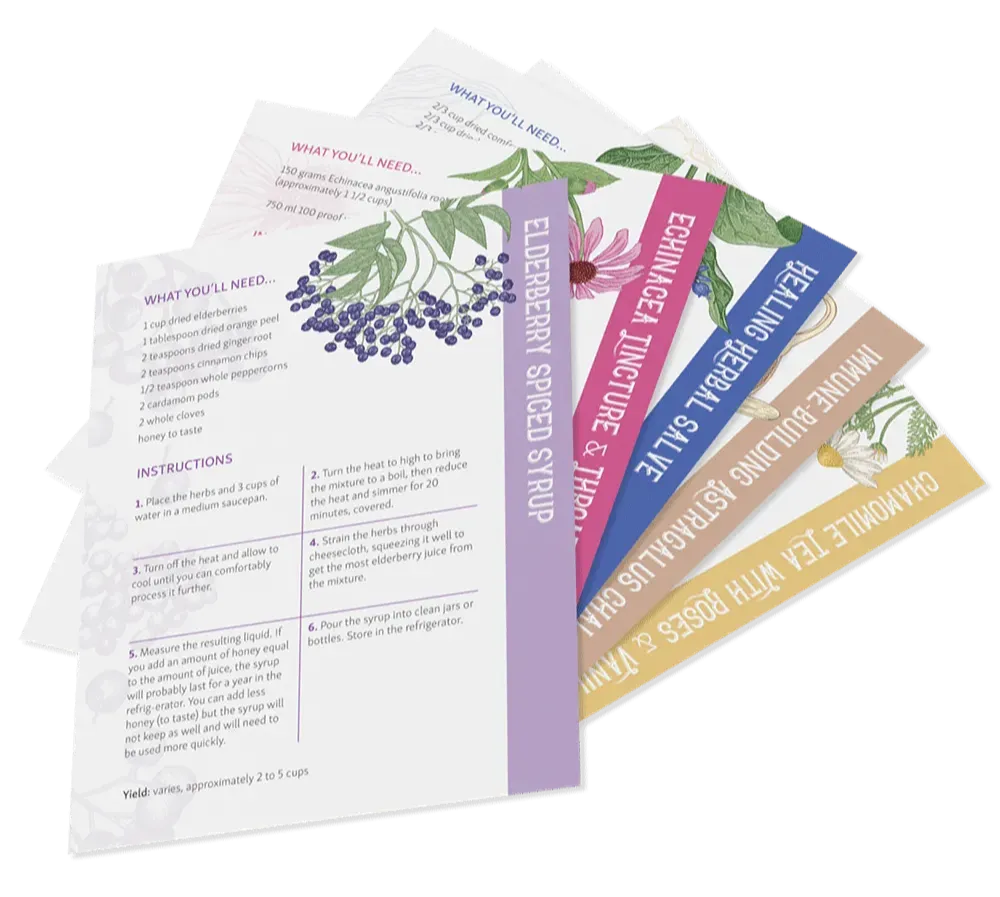
You should not consume essential oil unless you've consulted with a healthcare practitioner. It's generally not safe for internal use. If you'd like to learn more about herbs like lavender, you can download our free Herb Notes Flashcards where you'll discover the medicinal benefits of 12 of our favorite herbs, including elderberry, dandelion, and many more. Thank you for being here. This has been Herb Notes with your host, Sorrel Hartford. I'll see you next time.
Rowan Gallagher:
HerbMentor Radio is a 100% sustainably wild crafted podcast, written and performed by Mimi Prunella Hernandez and Kimberly Gallagher with production and editing by me, Rowan Gallagher. Visit herbmentorradio.com to subscribe on your favorite podcast app and find out how you can be a part of HerbMentor, a community hub for herbalists that you have to see to believe. HerbMentor Radio is a production of learningherbs.com LLC. Thank you so much for listening.