Botanical Beverages for the Menstrual Cycle
This article will empower you to connect with your body during the menstrual cycle, or moon cycle, and holistically ease its passage with botanical beverages. As is often the case with herbal medicine, these recipes will support your current state of health and address your particular needs.
Harnessing cycle-specific herbal allies is one of the easiest and most effective ways to take charge of your own menstrual health and wellness. This article will explore the preparation of botanical beverages for each phase of the menstrual cycle, as well as provide a brief history of the origins of the herbs and spices used, highlighting the importance of sourcing ingredients ethically.

Botanical Drinks for Each of the Four Cycle Phases
The recipes below are “kitchen medicine” and can be made from simple and readily available ingredients that do not require special preparation or trips.
Supporting the body with nourishing botanical beverages benefits the healthy functioning of the menstrual cycle by providing a balance of nutrients, minerals, and vitamins. These are key to promoting hormone production, supporting hormone detoxification, and strengthening the stress response, all of which can help with PMS, painful periods, other menstrual symptoms, and overall hormonal balance.
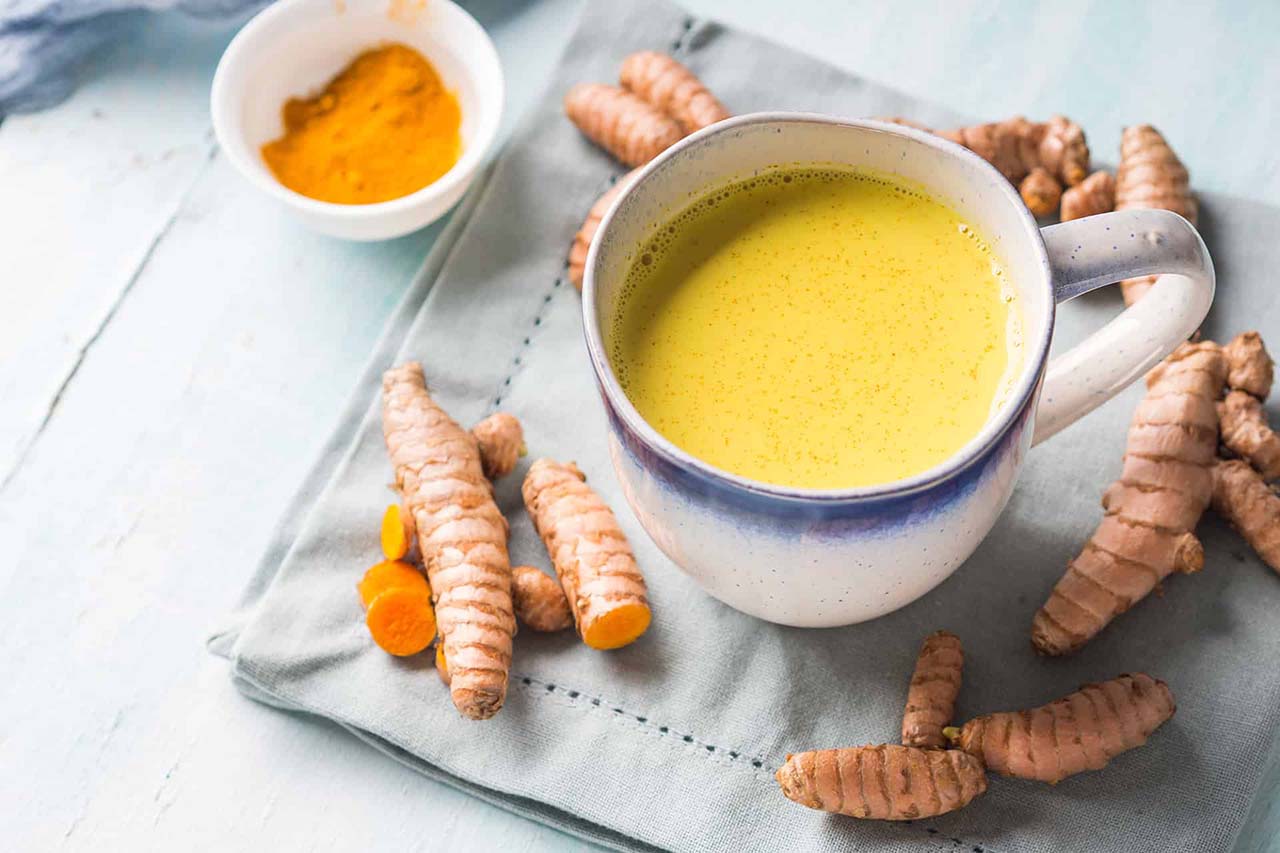
Menstrual Phase: Turmeric Ginger Cinnamon Milk
The menstrual phase (approximately days 1-5) begins with the first day of bleeding. Estrogen and progesterone drop to their lowest levels. This hormonal dip means that energy is low, so it is especially important to support the body with unprocessed nutrient-rich food.
Full of nourishing spices, known as “masala” in Hindi, this warming milk provides nutrients and comfort during the menstrual bleed. Allow non-essential tasks to fall aside as you cozy up with a cup to lower stress levels and quietly reflect on how your month has gone.
What you’ll need…
- 1 cup milk of choice (dairy, almond, coconut, cashew, oat)
- 1 tablespoon (about 1 inch) fresh ginger root, peeled and minced OR 1/4 teaspoon ground
- 1 tablespoon (about 1 inch) fresh turmeric root, peeled and minced OR 1/2 teaspoon ground
- 1 whole cinnamon stick OR 1/2 teaspoon ground
- 1 teaspoon coconut oil or ghee
- 1 pinch ground black pepper
- 1 tablespoon sweetener of choice (honey, maple syrup, coconut sugar, 5 to 10 drops stevia extract)
- 2 to 3 whole cardamom pods while boiling OR sprinkle of ground cardamom on top
- Add the milk and coconut oil or ghee to a small saucepan on medium heat. After a few minutes, whisk in the ginger, turmeric, cinnamon, black pepper, and whole cardamom pods, if using.
- Stir in the sweetener and bring it to a lower simmer for 5 to 10 minutes. If using honey, wait until after simmering to add in, so it doesn’t lose its medicinal properties.
- Strain into a cup or mug and sprinkle with ground cardamom, if desired.
- Best to drink when fresh, but leftovers can be stored in an airtight container in the refrigerator for 2 to 3 days. Reheat on the stovetop or microwave until hot.
Turmeric Benefits (Curcuma longa)
Turmeric has been used extensively in India, China, and Southeast Asia for thousands of years, both medically and ritually in Indigenous culture.1 The compound in turmeric that gives it its yellow hue is called curcumin. Curcumin has high levels of antioxidants and anti-inflammatory properties,2 supports the digestive system3, and helps ease menstrual cramping.4 It has also been shown to have antidepressant activity, including increasing serotonin and dopamine levels in brain tissues.5
A note on sourcing: while it is always important to do your research about where you source your herbs, it is especially essential when it comes to historically commodified spices. Try to buy from a local South Asian/Indian market or store in your area, as the spices are likely to be more ethically sourced, and you will be supporting business owners of color.
If you cannot access a local market, research online and do your best to buy from South Asian companies. For turmeric, a great place to start is Diaspora Co.,6 a spice company founded by a Queer female entrepreneur named Sana Javeri Kadri, looking to decolonize spice sales around the world.7
Ginger Root Benefits (Zingiber officinale)
An herb that likely originated from Southeast Asia, its use has been documented for at least 5,000 years, beginning in India and China, and in the Roman Empire around 2,000 years ago.8 Ginger is renowned for its warming and pain-relieving properties, particularly in alleviating symptoms of period pain such as menstrual cramps,9 and improving pelvic circulation,10 and reducing heavy menstrual bleeding.11
Cinnamon Benefits (Cinnamomum verum)
Another warming spice, cinnamon’s origins are in Sri Lanka (formerly known as Ceylon, another name for the spice), the Malabar coast of India, and Myanmar (Burma).12 Cinnamon helps reduce menstrual bleeding, cramping, pain, nausea, and vomiting associated with the menstrual cycle.13 Cinnamon has been used historically to reduce uterine bleeding in treating uterine fibroids.14
Benefits of Healthy Fats
Healthy fat is a key ingredient when using turmeric, which is fat-soluble, meaning that it dissolves in fat. Curcumin requires fat to be absorbed into the small intestine and blood, where it benefits the body most.15 Traditionally, this recipe was made with cow's milk, so there was no need for added fat. However, if making the beverage with dairy-free milk (other than coconut milk, which also has sufficient fat), be sure to add extra healthy fat, such as coconut oil or ghee.
Black Pepper Benefits (Piper nigrum)
This climbing vine is originally indigenous to Kerala, a province in southwest India.16 Now one of the world’s most commonly used spices, black pepper is a crucial ingredient when using turmeric as it is shown to increase the absorption of curcumin in turmeric by 154 percent.17
Cardamom Benefits (Elettaria cardamomum)
One of the oldest spices known to human history, the fruit of cardamom is native to forests in southern India, with large pods that contain the dried seeds.18 Cardamom has been shown to have anti-inflammatory and antioxidant activities.19 It’s also an herbal aphrodisiac.20
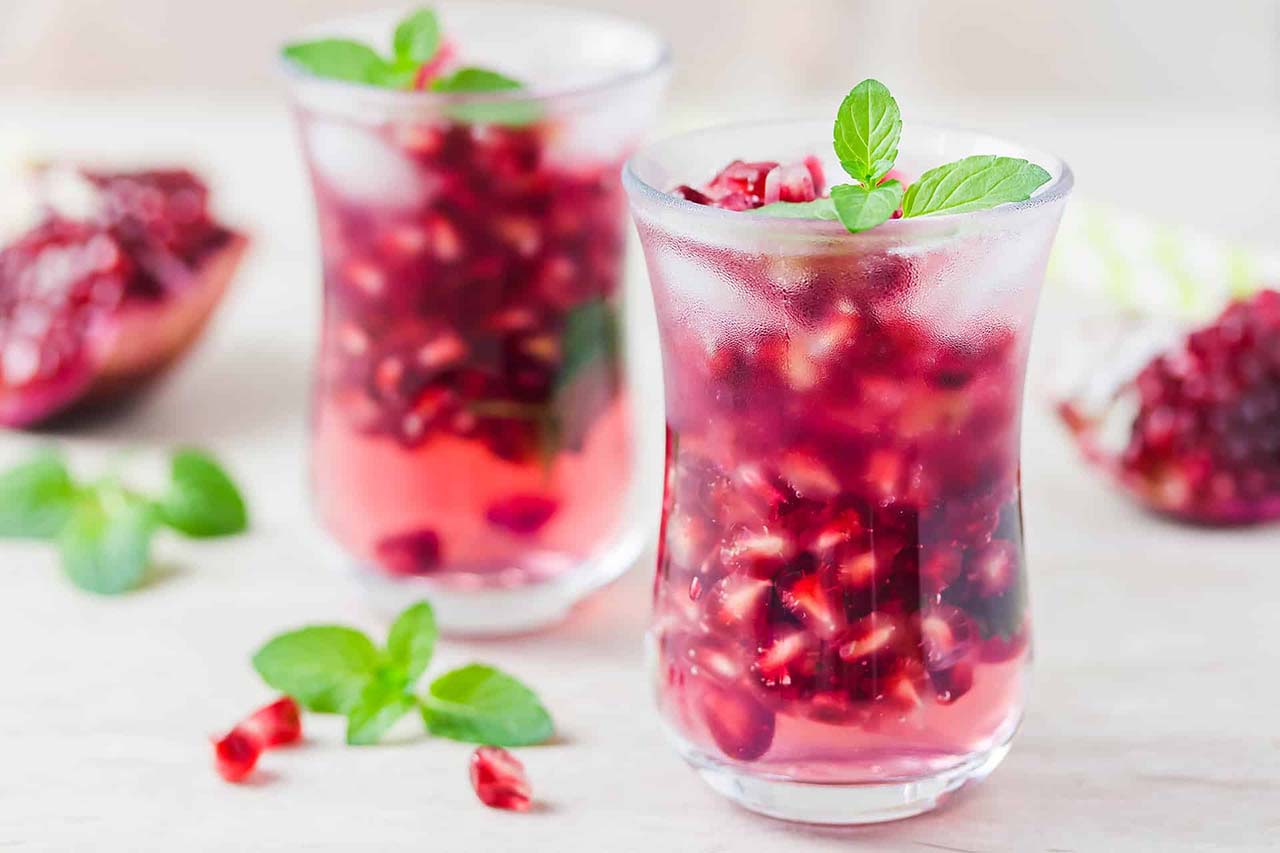
Follicular Phase: Hibiscus Pomegranate Lime Spritzer
In the follicular phase (approximately days 6-13), estrogen steadily increases, while progesterone flattens to a low level until ovulation. During this phase, the body prepares for a potential pregnancy. It is best to nourish our bodies with fresh and light foods, as our appetite may be naturally suppressed.21
This delicious spritzer is a beautiful addition to the follicular phase, when your body is craving bright flavors and light refreshment.
For the Pomegranate Lime Syrup
- Juice of 1 lime
- 1 cup pomegranate seeds + 1/4 cup water OR 1/2 cup pomegranate juice
- 1/4 cup honey or maple syrup
For the Hibiscus Tea
- 1 teaspoon dried hibiscus flowers or bagged hibiscus tea
- 1/2 to 1 cup just-boiled water (depending on desired strength)
For the Hibiscus Pomegranate Lime Spritzer
- 2 Tbsp. pomegranate lime simple syrup
- 1/2 cup hibiscus tea, brewed and cooled
- Sparkling water
- Ice (optional)
- Fresh lime slice (optional)
To make the syrup:
- Combine the lime juice, pomegranate seeds or juice, and honey or maple syrup in a medium saucepan over medium heat, stirring well for 3 minutes. If using pomegranate seeds, crush them into the mixture while stirring.
- Add the water and bring to a boil. As soon as the mixture boils, remove from the heat and let cool.
- Strain out any pomegranate seed remnants and refrigerate for up to 3 days.
To make the tea:
- Steep the hibiscus in just-boiled water, covered, for 5-10 minutes, depending on desired strength.
- Set aside to cool.
To make the spritzer:
- In a large glass, add 2 tablespoons of pomegranate lime syrup and 1/2 cup of brewed and cooled hibiscus tea.
- Add sparkling water to preference.
- Top with ice and a fresh lime slice, if desired.
Pomegranate Benefits (Punica granatum)
One of the world’s oldest known edible fruits, the 8,000-year history of the pomegranate begins in Iran. From there, it quickly spread to cultivation in the Mediterranean and beyond.22 Known for its heart-protective, blood pressure lowering, anti-inflammatory, and anticarcinogenic properties, pomegranate juice has higher antioxidant potential than red wine and green tea.23 Its naturally sweet and tangy taste makes it a great addition to herbal beverages during this time of the month.
Lime Benefits (Citrus × aurantiifolia)
While their precise origin is uncertain, limes are believed to have originated in Indonesia or Southeast Asia, and later transported to the Mediterranean.24 These antioxidant-rich fruits contain high levels of vitamin C,25 offering a great way to boost immunity during this phase of the cycle.26
Hibiscus Benefits (Hibiscus sabdariffa, H. rosa-sinensis)
Native to Africa,27 hibiscus has also been cultivated in Asia and the Pacific Islands for many years.28 Light, invigorating, and nourishing, hibiscus is known for its antioxidant and cholesterol-lowering effects,29 making it a beneficial herb for this time in your cycle.
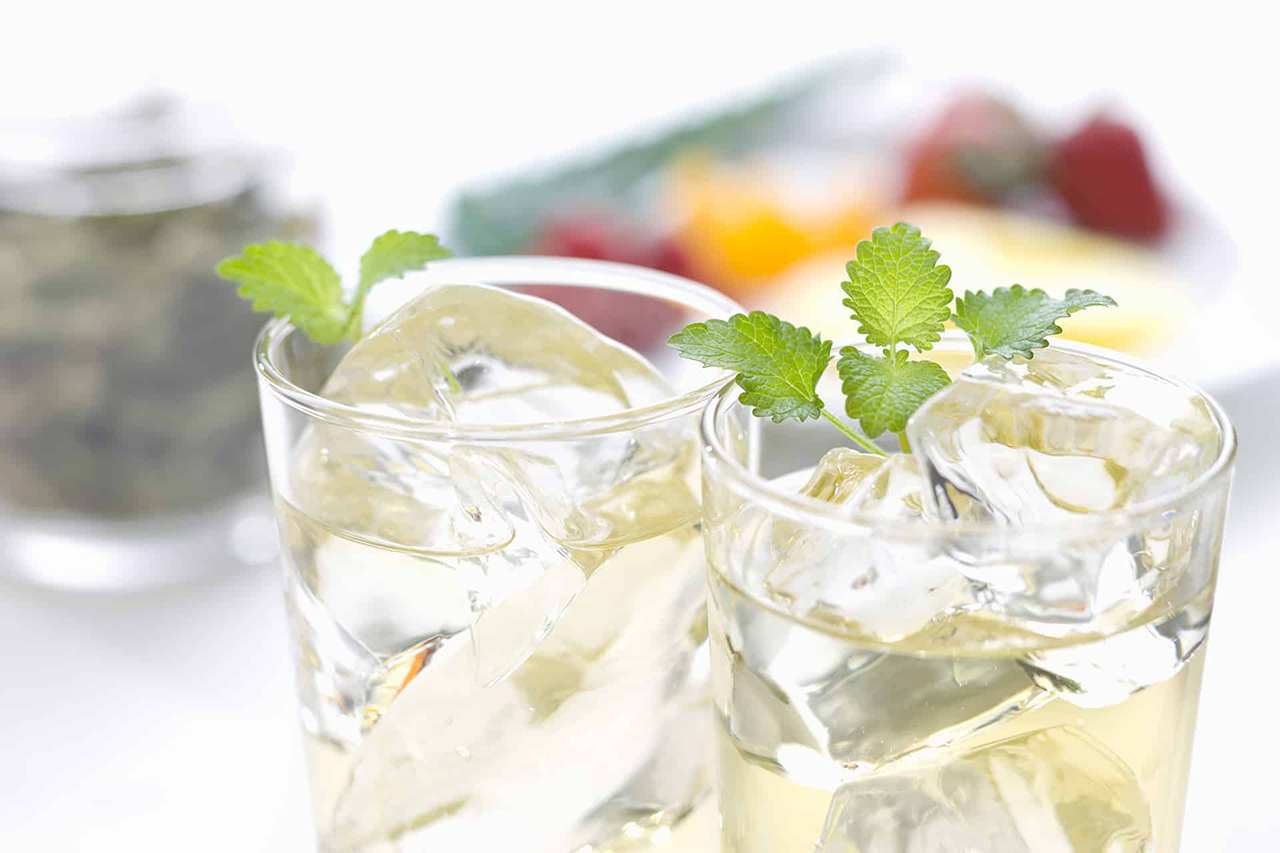
Ovulatory Phase: Citrus, Lemon Balm & Mint Tea
The ovulatory phase (approximately days 14-16) is the 1- to 2-day window when fertility is highest. Estrogen increases dramatically to its highest level, causing LH to peak, while a surge in progesterone stimulates a midcycle rise in FSH. As these hormones peak, we may be feeling at our best, with high energy levels. This is the best phase of the month to consume raw foods, which can help to detoxify excess estrogen.30
A fresh take on the classic mint lemonade, this version features lemon balm, adding a new herbal twist to a crowd favorite. Double or triple the batch to make some for everyone during this phase in your cycle, when your hormones may be encouraging you to be more social!
What you’ll need…
- Zest and juice of 1 medium lemon
- 1/4 cup (lightly packed) fresh lemon balm OR 2 bags lemon balm tea
- 1 to 2 tablespoons honey or maple syrup (depending on desired sweetness)
- 1/4 cup just-boiled water
- 1/4 cup cold water
- Ice (optional)
- Regular or sparkling water
- Mint leaves for garnish
- Lemon slices for garnish
- Put the lemon zest, lemon balm leaves or bagged tea, and honey or maple syrup in a saucepan.
- Add the just-boiled water and stir well, crushing the lemon balm leaves.
- Cover the mixture for 15 minutes to infuse. Let cool and strain.
- Combine the lemon juice and cold water in a glass.
- Add the strained lemon balm syrup to the glass.
- Add ice, if desired, and top off with regular or sparkling water.
- Garnish with mint leaves and lemon slices, and add more sweetener to taste.
Lemon Benefits (Citrus limon)
While the exact origin of the lemon is unknown, its roots lie in India, and citrus fruits have been cultivated in Southeast Asia and China for thousands of years. Historically used to treat common menstrual disorders and irregular menstruation,31 lemons are rich in vitamin C and nourishing B vitamins,32 which are vital for hormonal health.
Lemon Balm Benefits (Melissa officinalis)
Originating in Southern Europe, lemon balm is a nervine well-known for reducing stress, tension, restlessness, and irritability33 with antioxidant properties.34 It reduces the severity of PMS symptoms, and the ovulatory phase is an excellent time to begin to prepare for the possibility of these symptoms.35 Lemon balm can also reduce cramping, so this herb can be freely used throughout your cycle.36
Mint Benefits (Mentha)
Native to Eurasia, North America, southern Africa, and Australia, the mint family is a genus of 25 species of herbs, now found widely throughout the world. Known for its calming properties for anxiety in the mind and pain in the body, mint is also worth adding for its pleasant scent and taste and digestive properties.37

Luteal Phase: Maca & Ashwagandha Hot Chocolate
After ovulation comes the luteal phase (approximately days 17-28), in which estrogen decreases and then slowly rises as progesterone spikes. Abrupt changes in these hormones can lead to PMS symptoms and cravings. It is best to reduce caffeine and alcohol consumption as these substances can aggravate PMS and interfere with the absorption of essential vitamins and minerals.38 Nourishing herbal drinks offer a wonderful alternative to caffeinated sugary beverages, satisfying the craving while supporting the body.
As you near the end of your cycle and draw closer to your monthly bleed, satisfy your chocolate cravings with this delicious and wholesome variation on hot chocolate.
What you’ll need…
- 1 cup milk of choice (dairy, almond, coconut, cashew, oat)
- 1 teaspoon coconut oil or ghee
- 1 tablespoon cacao powder (preferably raw/organic) OR unsweetened cocoa powder
- 1 teaspoon maca powder
- 1/2 teaspoon ashwagandha powder OR 1 teaspoon ashwagandha tincture
- 1/2 teaspoon vanilla (optional)
- 1/4 teaspoon ground cinnamon (optional)
- 1 tablespoon collagen (optional, for extra creaminess)
- 1 tablespoon sweetener of choice (honey, maple syrup, coconut sugar, 5 to-10 drops stevia extract)
- Dash of ground cardamom
- In a small saucepan, whisk the milk with coconut oil or ghee over medium heat until boiling.
- Lower the heat to medium-low, whisk in the remaining ingredients (except cardamom), and simmer for 5 minutes. If using honey, wait until after simmering to add in, so it doesn’t lose its medicinal properties.
- Top with a sprinkle of ground cardamom and serve immediately. You can also make this in a bigger batch for the week ahead and reheat as needed. Leftovers will keep in the refrigerator for up to 3 to 4 days. Reheat on the stovetop or microwave until hot.
Maca Root Benefits (Lepidium meyenii)
A Peruvian root plant that grows exclusively at a specific altitude in the Andes, maca has been cultivated for more than 2,000 years by Quechua Indians of Peru’s central highlands. Known as an adaptogen, a natural substance that helps the body adapt to stress, maca improves mental acuity, physical stamina, improves memory, focus, and mood, increases fertility and libido, balances hormones, and protects bone health.39 Rich in essential amino acids, vitamins, iron, zinc, calcium, copper, manganese, potassium, iodine, magnesium, and more, maca is an excellent addition to this nourishing hot chocolate.40
A note on sourcing: maca is another herb that is often commodified. It is routinely bought at unfairly low prices from those who cultivate it in the central highlands of Peru and then resold at high prices, highly profiting the middleman companies. This article includes more information on responsible sourcing.41
Ashwagandha Benefits (Withania somnifera)
Revered in Ayurvedic and Unani medicine as a general restorative nervine and adaptogenic tonic, ashwagandha is renowned for improving energy, increasing longevity, protecting immunity, preventing disease, helping the body adapt to stress by maintaining healthy cortisol levels, and consequently regulating hormone balance.42
Cacao Benefits (Theobroma cacao)
Native to the Amazon basin, cacao has been used by Indigenous people in religious ceremonies and in trade for thousands of years. A healthy way to satisfy your chocolate craving while cutting down on sugar and caffeine, cacao is rich in magnesium, is anti-inflammatory and neuroprotective, enhances cognition and mood, and improves immune response, all while boosting mitochondrial function.43 Estimated to be the most significant source of dietary antioxidants in the western world, cacao is rich in flavonoids (with a higher flavonoid content than green tea or red wine), substances that protect the heart from heart disease and lower blood pressure.44
Again, while ethical sourcing is important for all herbs, it is especially essential for this plant, as it has been widely co-opted by the western world. I recommend Anima Mundi Herbals raw heirloom organic cacao.45

Accessible & Responsible Herbalism
These recipes include the historical origins and sourcing of the foods, herbs, and spices used. While many of these ingredients listed below are now commonplace on our grocery shelves, many of them carry painful histories of vilification and commodification. Just as it is essential to work with herbs in the appropriate ways for our health, it is equally important to know the history and literal roots of these sacred plants. Only when we learn, understand, and appreciate their origins, can we work with them more consciously and respectfully.
This is a vital step toward repairing the wounds that white supremacy, colonialism, and imperialism have inflicted on the Indigenous communities around the world who have been in relationship with plant medicine for thousands of years, and on the plants, herbs, and spices themselves. I encourage everyone to do their own research on cultural appropriation, both local and global, in the herbal community.
Want to make your own herbal remedies with confidence?
Many of the herbal beverages in this article begin with simple herbal preparations. In Herbal Basics, you'll learn how to make blend teas, make tinctures, and other foundational remedies at home with clear, step-by-step guidance and easy-to-find herbs. Herbal Basics is available inside HerbMentor, our online herbal education community for home herbalists.
Supporting Your Cycles
If your menstrual cycle is regular and pain-free, the herbal drinks will help to maintain that ease. If your cycles are irregular and you struggle with premenstrual syndrome (PMS) and/or painful periods, the herbs in these recipes will support the rebalancing of fluctuating hormones throughout each cycle. If you are dealing with serious health conditions, the drinks can work in tandem with existing treatments.
Please do your research about contraindications for these herbs for any health challenges you may be currently experiencing, and check with your doctor if you have any concerns about adding a new herb to your regular wellness routine.
These plant preparations will provide not only physical benefits, but will also offer an opportunity to practice ritual through the act of making the drinks, supporting the development of a conscious connection with the self beyond the physical realm. The menstrual cycle can be a portal to a source of deep inner knowledge. I have found that attending to my physical needs during my cycle can awaken a more profound inner knowing and sense of empowerment.
As Rosemary Gladstar writes in Herbal Healing for Women, “Herbs connect us to the heart of the earth and her ancient healing power...They help us restore the balance deep within us because the plants themselves embody wholeness. Herbs feed and nourish our entire systems and instill within our heart, the spirit of life and beauty.”46
Tapping into the “intelligence” of the menstrual cycle and responding to the needs of our bodies are acts of personal care. These practices can reduce symptoms and alleviate the dread of the menstrual cycle, and also allow us to appreciate the wisdom the body offers.
Footnotes

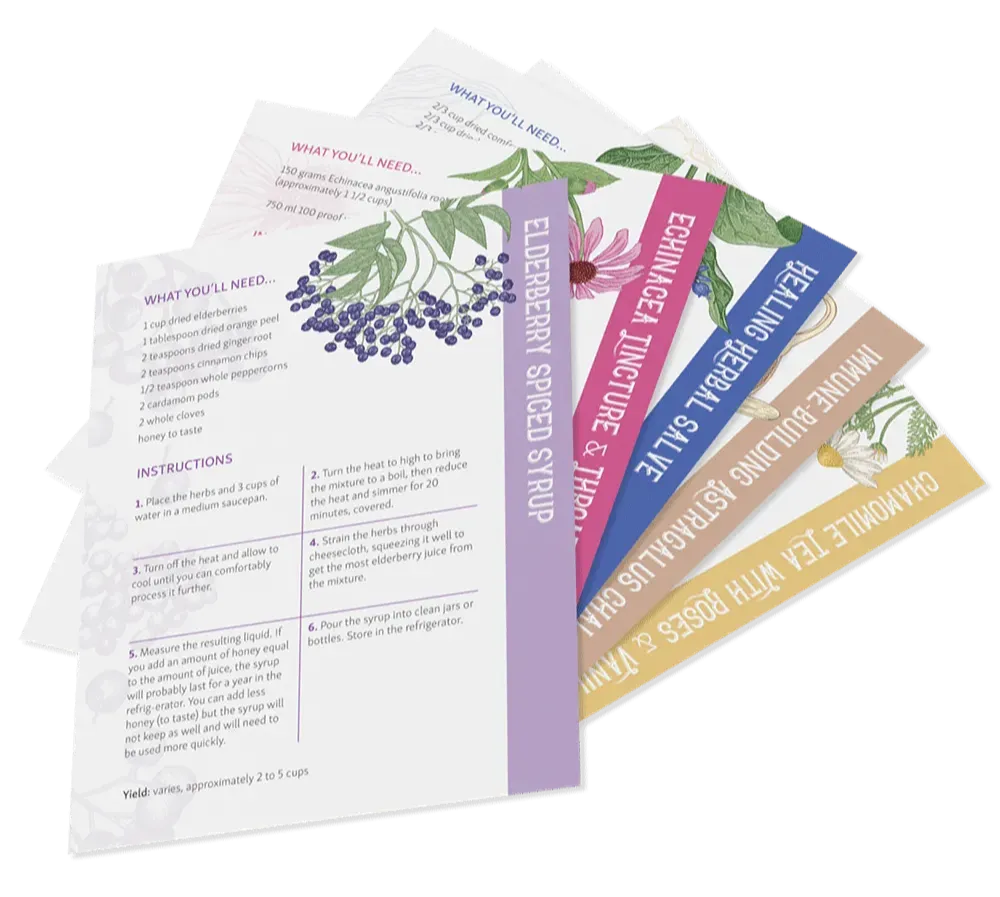
The Herbal Remedy Vault has all of our printable recipe cards...