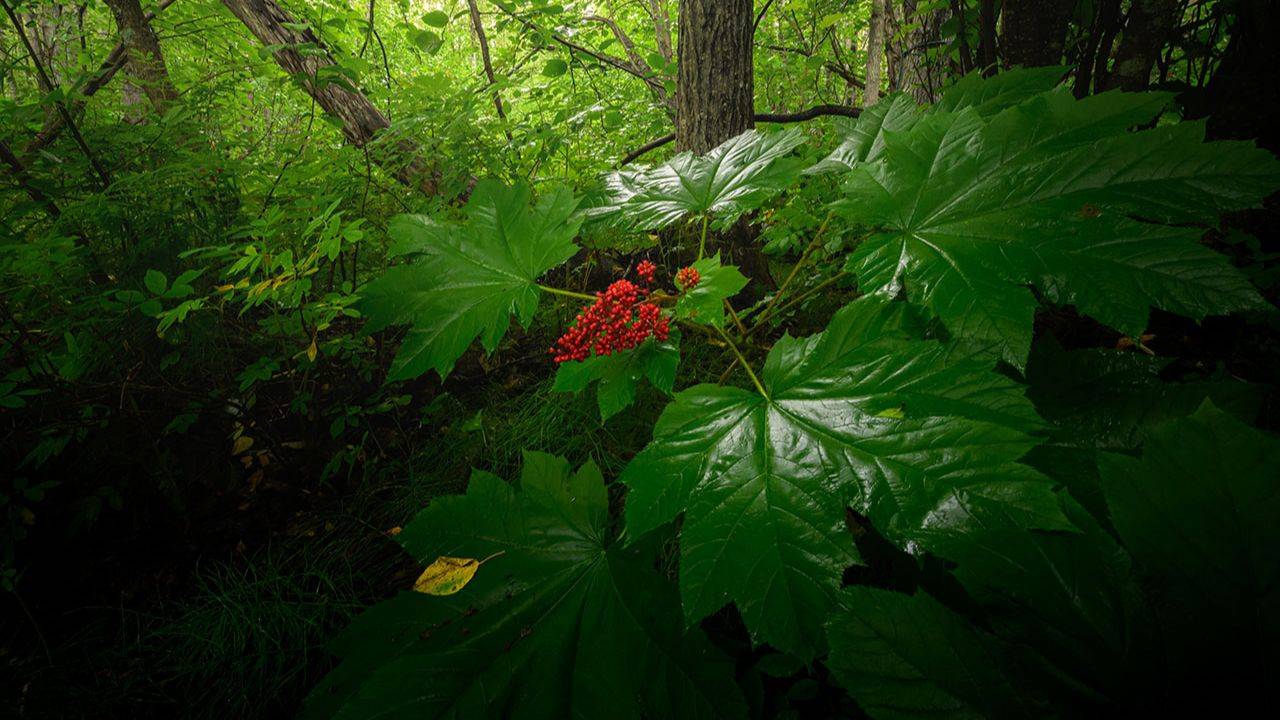
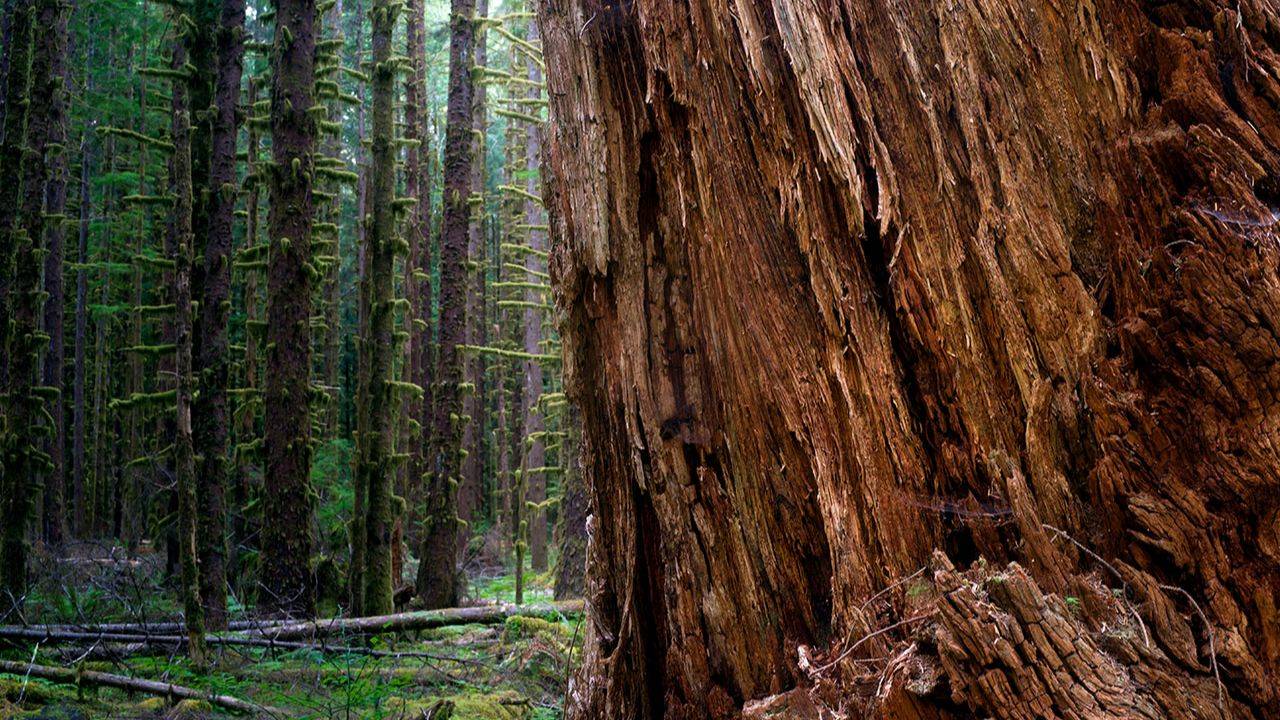
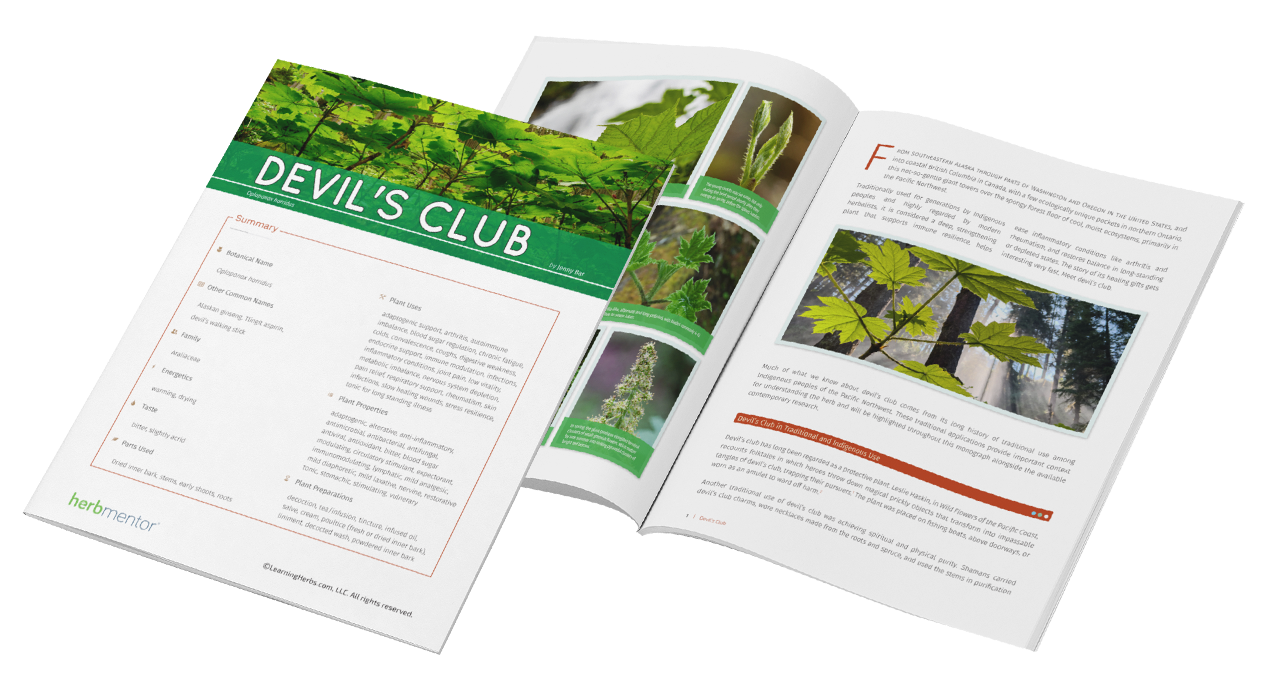
From southeastern Alaska through parts of Washington and Oregon in the United States, and into coastal British Columbia in Canada, with a few ecologically unique pockets in northern Ontario, this not-so-gentle giant towers over the spongy forest floor of cool, moist ecosystems, primarily in the Pacific Northwest.
Traditionally used for generations by Indigenous peoples and highly regarded by modern herbalists, it is considered a deep, strengthening plant that supports immune resilience, helps ease inflammatory conditions like arthritis and rheumatism, and restores balance in long-standing or depleted states. The story of its healing gifts gets interesting very fast. Meet devil’s club.
Devil’s Club Uses and Plant Profile Summary
-
Botanical Name: Oplopanax horridus
-
Other Common Names: Alaskan ginseng, Tlingit aspirin,
devil’s walking stick
-
Family: Araliaceae
-
Parts Used: Dried inner bark, stems, early shoots, roots
-
Energetics: warming, drying
-
Taste: bitter, slightly acrid
-
Plant Properties: adaptogenic, alterative, anti-inflammatory, antimicrobial, antibacterial, antifungal, antiviral, antioxidant, bitter, blood sugar modulating, circulatory stimulant, expectorant, immunomodulating, lymphatic, mild analgesic, mild diaphoretic, mild laxative, nervine, restorative tonic, stomachic, stimulating, vulnerary
-
Plant Uses: aptogenic support, arthritis, autoimmune imbalance, blood sugar regulation, chronic fatigue, colds, convalescence, coughs, digestive weakness, endocrine support, immune modulation, infections, inflammatory conditions, joint pain, low vitality, metabolic imbalance, nervous system depletion, pain relief, respiratory support, rheumatism, skin infections, slow healing wounds, stress resilience, tonic for long standing illness
-
Plant Preparations: decoction, tea/infusion, tincture, infused oil, salve, cream, poultice (fresh or dried inner bark), liniment, decocted wash, powdered inner bark
#block-1763760104645 { margin-top: 0px; margin-right: 0px; margin-bottom: 0px; margin-left: 0px; } #block-1763760104645 .block { border: 1px solid #f0f0f0; border-radius: 9px; background-color: #f8f8f8; padding: 0px; padding: 0px; padding-top: 15px; padding-right: 5px; padding-bottom: 15px; padding-left: 15px; } @media (min-width: 768px) { #block-1763760104645 { margin-top: 0px; margin-right: 0px; margin-bottom: 0px; margin-left: 0px; } #block-1763760104645 .block { padding: 0px; padding-top: 20px; padding-right: 20px; padding-bottom: 20px; padding-left: 20px; } } @media (max-width: 767px) { #block-1763760104645 { text-align: left; } } #block-1577982541036_0 .btn { margin-top: 1rem; } .awesomecontainer .row .block-type--accordion { align-self: flex-start; }
Want the Full Story on Devil's Club?
To continue reading this monograph and explore our full library of fully cited, in-depth herb profiles written by experienced and practicing herbalists, join HerbMentor, LearningHerbs’ online herbal education hub and welcoming community.
Join HerbMentor for just $1 and see how it can support your own herbal journey.
Written by Jenny Bar
Jenny is a graphic designer and writer at Learning Herbs, where her love of creativity meets her passion for home herbalism. She spends her days tending a flourishing herb and veggie garden, brewing remedies, and preserving seasonal harvests, all while wrangling a small tribe of children, some grown, some not quite there yet, and three unruly cats. Her love-filled home is as lively as her apothecary shelves, stocked with jars of teas, tinctures, and salves. Jenny's creativity is always in bloom, weaving family life, herbal traditions, and artistic passions into her work.
#block-1730158979472 { margin-top: 0px; margin-right: 0px; margin-bottom: 0px; margin-left: 0px; } #block-1730158979472 .block { border: 1px solid #ECF0F1; border-radius: 10px; background-color: #f8f8f8; padding: 0px; padding: 0px; padding: 0px; padding-top: 15px; padding-right: 15px; padding-bottom: 15px; padding-left: 15px; } @media (min-width: 768px) { #block-1730158979472 { margin-top: 0px; margin-right: 0px; margin-bottom: 0px; margin-left: 0px; } #block-1730158979472 .block { padding: 0px; padding: 0px; padding-top: 15px; padding-right: 15px; padding-bottom: 15px; padding-left: 15px; } } @media (max-width: 767px) { #block-1730158979472 { text-align: center; } } #block-1730158979472 .feature__image, [data-slick-id="1730158979472"] .feature__image { width: 100px; border-radius: 100px; } .authorfeature { display: flex; align-items: flex-start; position: relative; } .authorfeature__image-container { flex-shrink: 0; margin-right: 20px; } .authorfeature__image { max-width: 150px; height: auto; } .authorfeature__content { flex-grow: 1; } @media (max-width: 767px) { #block-1730158979472 .authorfeature { flex-direction: column; align-items: center; } #block-1730158979472 .authorfeature__image-container { margin-right: 0; } } .awesomecontainer .row .block-type--accordion { align-self: flex-start; }
The Herbal Remedy Vault has all of our printable recipe cards...
Enter The Vault