How to Make Medicinal Shiitake Broth
There's a step I never skip with shiitake mushrooms, no matter what dish I'm making. Before I sauté them, bake them, or fry them, I always simmer them first – and I never pour that broth away. The broth is the medicine.
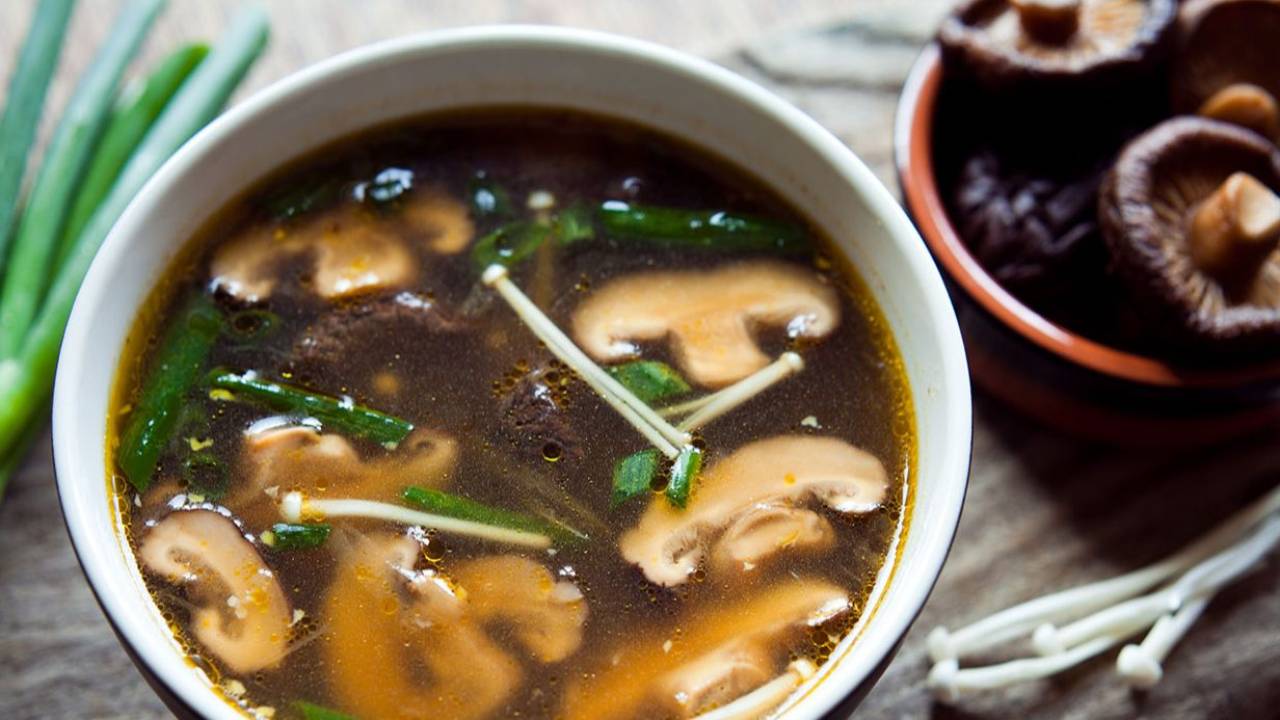
A pot of shiitakes simmering on my stove gives me two things. There are the mushrooms themselves, with their deep, woodsy flavor and firm, satisfying texture. I strain them out later to sauté with onions, add to a stir-fry, or chill and dress with a maple vinaigrette and sesame seeds. Then there is the mushroom broth, slowly transforming into a deep, creamy amber as the mushrooms simmer.
Shiitake broth is rich, deeply flavorful, and full of the compounds that have made shiitake a kitchen staple and a medicine cabinet fixture for centuries. This is slow kitchen herbalism at its most satisfying.
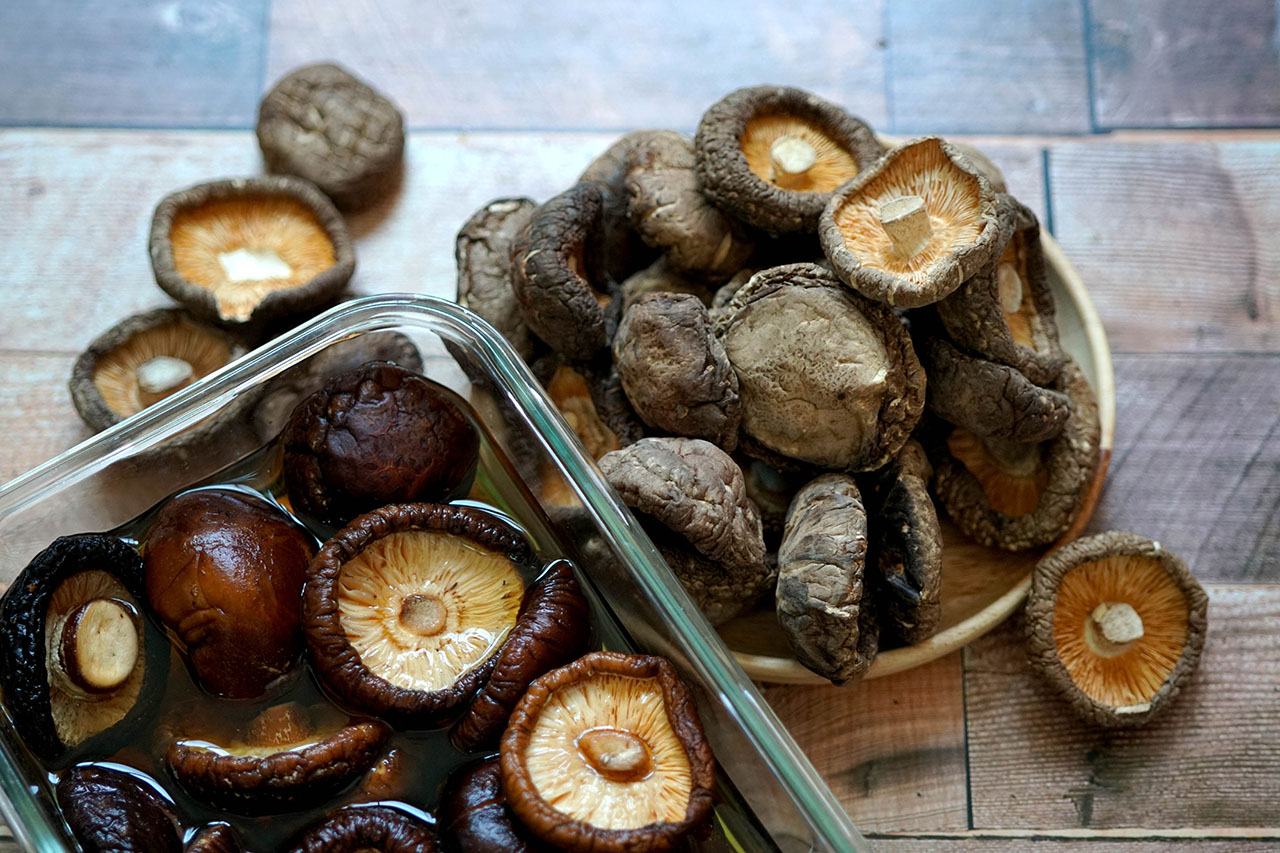
What Makes Shiitake So Special?
There are good reasons shiitake has followed people from the kitchen into the medicine cabinet. Shiitake mushrooms are among the most well-studied medicinal mushrooms in the world. Their complex polysaccharides, particularly beta glucans, have been studied for the ways they interact with the immune system — and the research points to strong immunomodulatory effects.. Beta glucans are recognized by receptors on cells of our innate immune system, influencing immune signaling and response.1
We often talk about immunity as if it were an army, always defending and attacking. I have never found that metaphor particularly satisfying. A healthy immune system doesn’t just attack: it recognizes, communicates, responds, and knows when enough is enough. When I think about shiitake, I find myself imagining immune function differently.
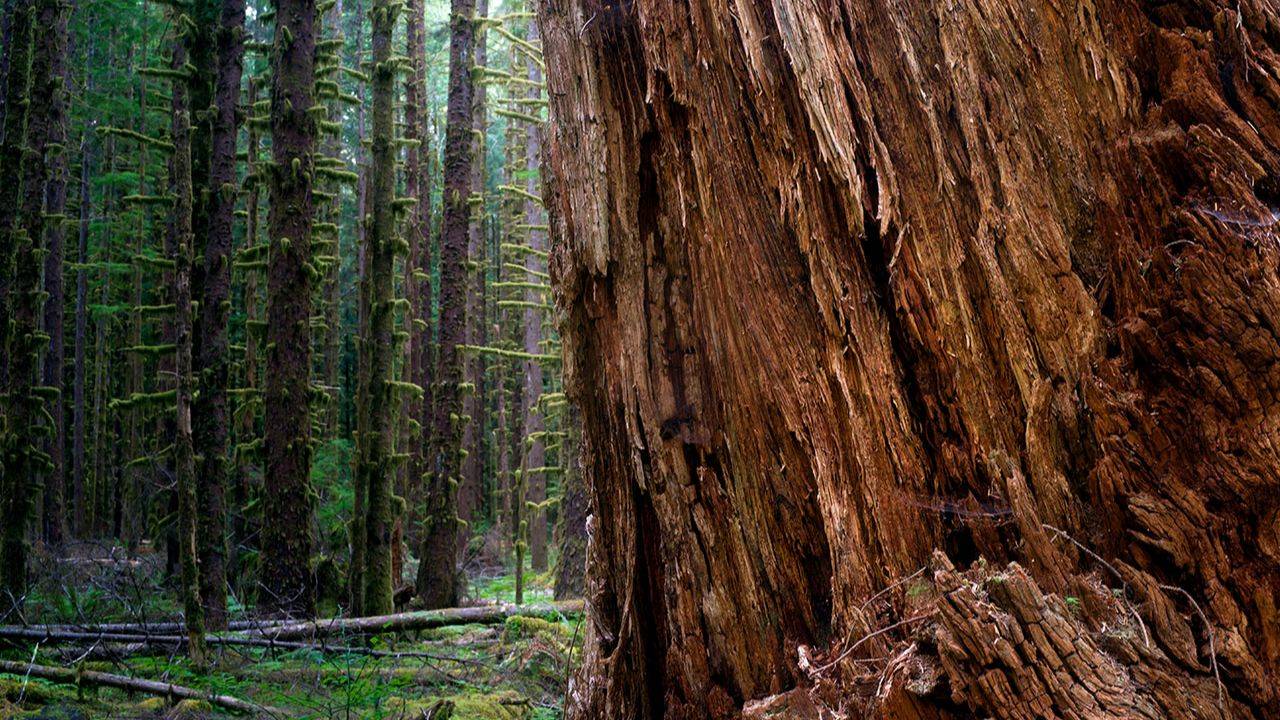
Beneath the bark, shiitake mycelium threads its way through hardwood, quietly engaged with everything around it. It responds to the world it inhabits while doing the ancient work of fungi, breaking down what has fallen and returning it to the living system around it. There is interaction here, and response, but also transformation and nourishment.
I like to imagine my own immune system with some of that same intelligence, less an army waiting for battle and more a living network paying attention. Traditional Chinese Medicine has understood this about shiitake for over a thousand years: these medicinal herbs and medicinal mushrooms support a body that is responsive and aware.
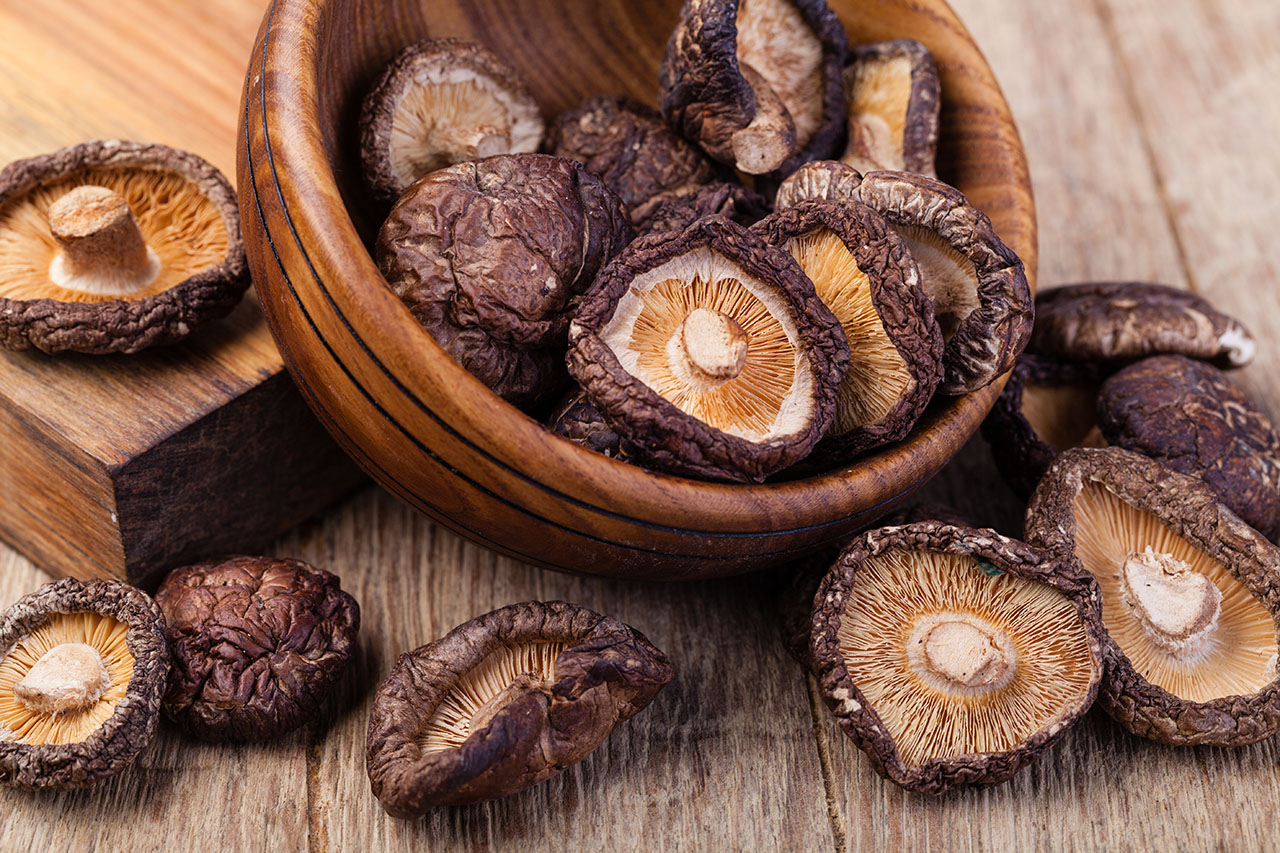
A Bonus Before You Cook: Sun-Drying Your Mushrooms
If you grow your own shiitakes (I grow mine on hardwood logs), this is a step worth knowing.
Mushroom growing is a slow practice. For much of the year, there is little to see. The logs rest in the moist shade while the real work happens inside them. Then the conditions become just right, and mushrooms begin pushing through the bark. Some flushes give me just enough for a meal, and every now and then the logs give me an astonishing abundance. If I cannot use them all right away, I dehydrate them to make dried shiitake mushrooms, or slice and freeze them for later. Either way, they eventually head for the pot before they reach my plate.
The shiitake's quiet responsiveness continues even after it emerges from the log. In sunlight, ultraviolet light transforms ergosterol in the mushroom into vitamin D2, a form of vitamin D our bodies can use.2 I love this part. The mushroom comes out of the deep, moist shade and the hidden work of decomposition into the open air and sunlight, where the light itself changes its chemistry.
So when I harvest my shiitakes, I let them lie lazily in the sun for a while before I bring them inside. Even if you're working with shiitakes from the store, you can set them out in direct sun for a few hours before using them. I think of it as another step in their journey, and I love that the poetry of it happens to be chemistry, too.
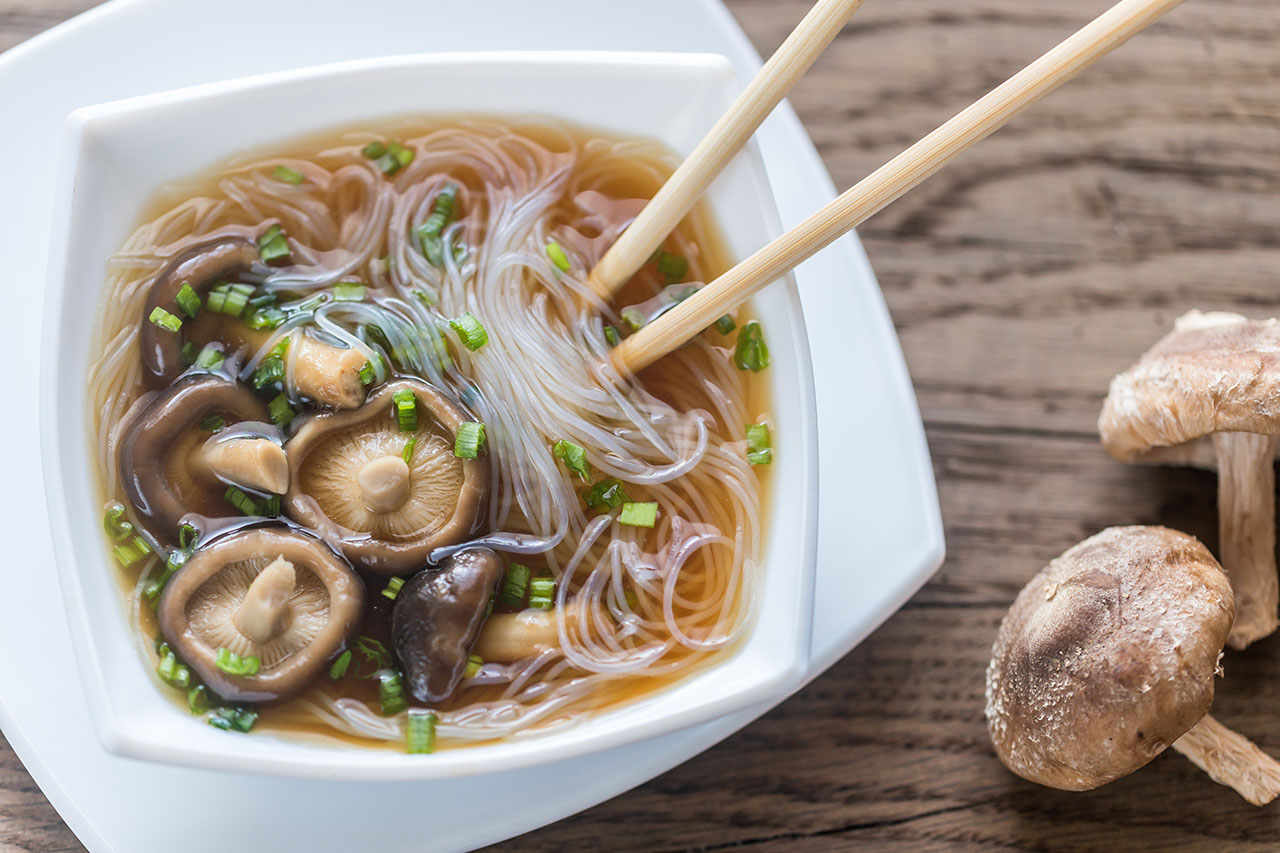
Shiitake Broth Recipe
My brain tends to shut down at the thought of complicated double extractions. I admire the work that goes into them, but I know myself. I'm drawn to something more elemental: mushrooms in water, a low flame, and time.
After spending seasons spreading itself through hardwood, then lying lazily in the sun, I see no reason to rush shiitake once it reaches my kitchen. I take this medicine slow.
What You'll Need...
- 2 generous handfuls of sliced shiitake mushrooms (fresh or dried both work beautifully, given time in the sun if possible)
- 1 gallon water
- Mushroom stems and tough stem ends – toss these in too, for flavor and medicine. Sort them out later if you like, but there's no reason not to let them join the pot.
Note: I rarely measure exactly. The rough ratio of a couple good handfuls of mushrooms to a gallon of water works well, and you can adjust to what you have.
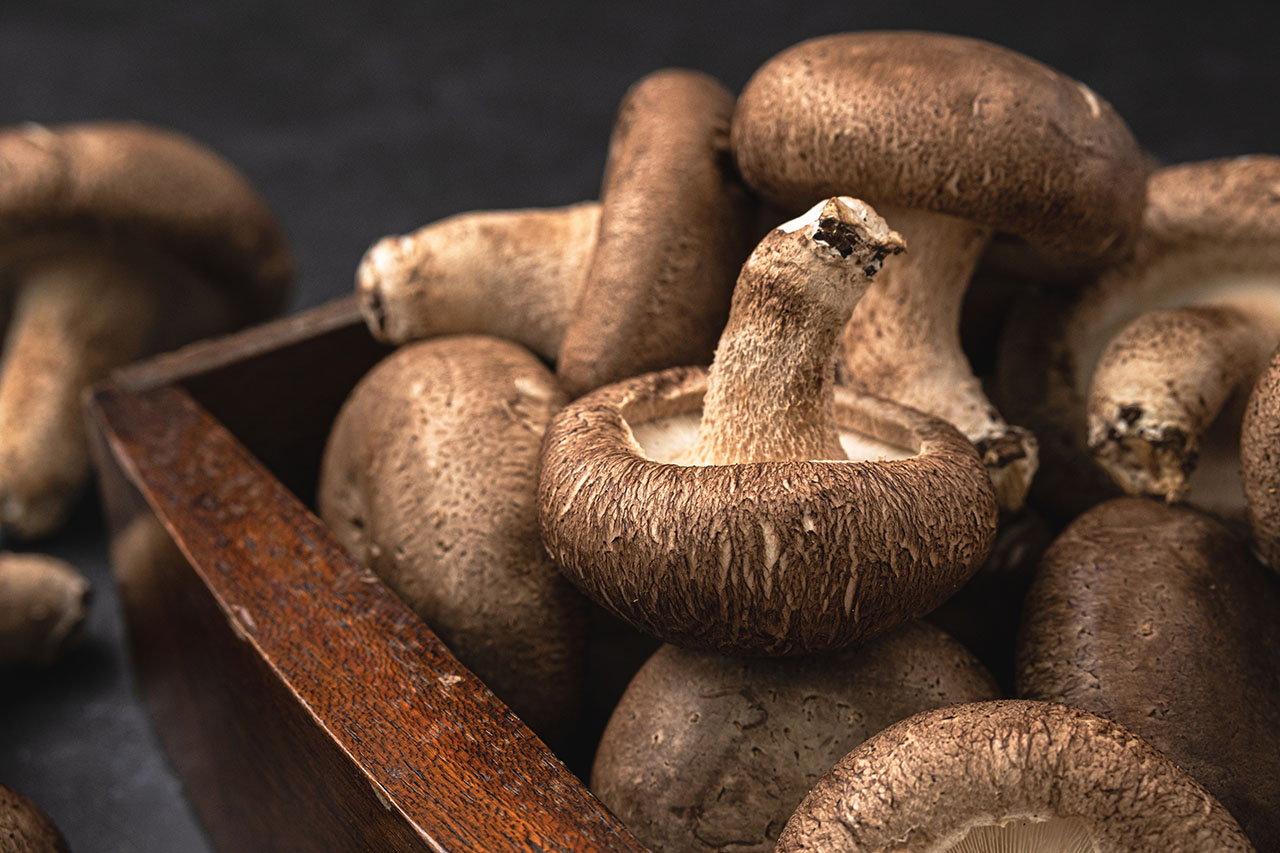
- Combine the shiitakes, mushroom stems, and water in a large stock pot.
- Bring just to a boil, then reduce the heat to a soft, gentle simmer.
- Simmer for at least 1 hour. Longer is better. You're looking for the liquid to reduce by about half, turning a deep, creamy amber – rich and deeply flavorful. A long, gentle simmer does more than give you tender mushrooms. Hot water also helps draw medicinal polysaccharides out of the mushrooms and into the healing broth.3
- Strain, setting the mushrooms aside for cooking. Season the broth lightly with sea salt if desired. The mushroom broth is ready.
Yield: approximately 2 quarts of broth
Want to Learn More About Food as Medicine?
Check out our Culinary Herbalism series on HerbMentor. In Culinary Herbalism, K.P. Khalsa dives into the wonders of working with simple culinary herbs for incredible health benefits. You can find Culinary Herbalism on HerbMentor, which is LearningHerbs’ online herbal education hub and community.
How to Use and Store Your Broth
As a cooking liquid: Use shiitake broth anywhere you'd use vegetable broth – in miso soup, bean cooking liquid, grain broth, or a base for any soup or stew. It works beautifully as a homemade rich vegetable broth substitute, or alongside chicken broth when you want something deeper and more complex. Add a spoonful of miso paste to a warm cup of this mushroom stock and you have a simple, nourishing miso soup in minutes.
As a daily remedy: Usually I let the extra broth cool and pour it into ice cube trays. Once frozen, I transfer the cubes to a container in the freezer. I often use one cube a day, dropping it into whatever I am already making. I have even been known to put one in my morning coffee, although you may not want to follow me there. But then again why not?
This is the kind of herbalism I return to again and again. The shiitake takes its time in the wood, in the sun, and on my stove. I eat the mushrooms and tuck the broth into the freezer for another day. Nothing wasted, nothing hurried. Later, I warm a cube in a little water and sip it slowly, savoring my remedy, my nourishment. Just a little deep medicine worked into the rhythm of ordinary life.
Here are some frequently asked questions about medicinal shiitake broth…
Can I use dried shiitake mushrooms instead of fresh ones?
Yes! Dried shiitake mushrooms work great for broth, and many herbalists prefer them. Drying concentrates the flavor and the medicinal compounds, and a long simmer rehydrates them fully while drawing their polysaccharides into the liquid. Use the same rough handful ratio and simmer low and slow.
What other medicinal mushrooms can I add to this broth?
Shiitake is an excellent starting point, but it's not the only medicinal fungi worth simmering. Dried reishi mushrooms bring a slightly bitter, deeply grounding quality long prized in Chinese medicine. Dried lion's mane mushrooms add a mild, seafood-like flavor and are studied for cognitive support. Dried cordyceps are another traditional favorite, particularly for energy and endurance. You can combine any of these with shiitake in the same pot for a more complex medicinal mushroom broth – simply simmer them together with the same low, slow method.
Can I use this mushroom broth as a substitute for chicken broth or bone broth?
It's a wonderful swap in many recipes. Shiitake broth has a savory, umami-rich depth that stands in for chicken stock or bone broth in soups, grains, and braises. It won't replicate the gelatin body of a long-simmered bone broth, but for flavor and immune-boosting properties, it's a worthy trade. For a richer result, you can combine shiitake broth with chicken broth or bone broth in equal parts.
What herbs and spices pair well with shiitake broth?
Shiitake broth is a welcoming base for many herbs and spices. Ginger root is a natural warming companion. Astragalus root is another excellent addition: a well-known immune-boosting herb in Chinese medicine, it simmers alongside mushrooms and is traditionally added to soups for long-term immune support. A few garlic cloves deepen the flavor and add their own medicinal value. For a more western herbal flavor, try sage leaves and a strip of lemon peel. Sea vegetables like kombu are also a traditional addition in Asian soups that enriches the mineral content of any healing broth.
How can I use this broth in everyday cooking?
The possibilities are wide. Use it as the liquid base for miso soup or miso broth, stir it into noodle soups and Asian soups in place of plain water or chicken stock, or use it as a ginger broth by adding a few slices of fresh ginger root to the pot while it simmers. A splash of soy sauce, a drizzle of sesame oil, and a handful of sliced green onions turn a cup of this broth into a quick, restorative bowl on its own. You can also use it to sauté vegetables – swap your usual coconut oil or sesame oil for a splash of the broth to braise spinach leaves or other greens with several garlic cloves and a few green onions for a simple, nourishing side dish.

Footnotes
The Herbal Remedy Vault has all of our printable recipe cards...