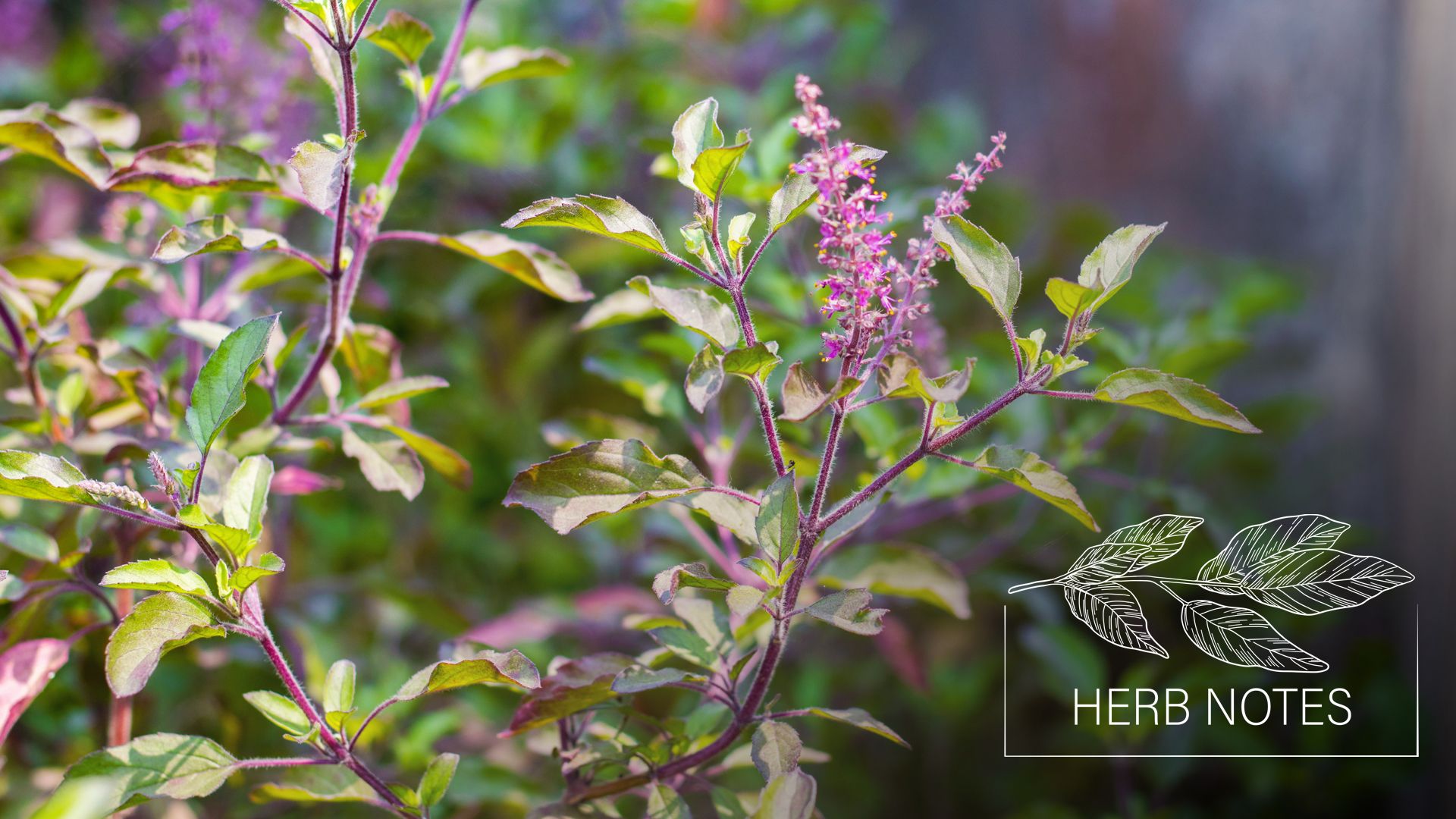
Herb Notes: The Benefits of Holy Basil
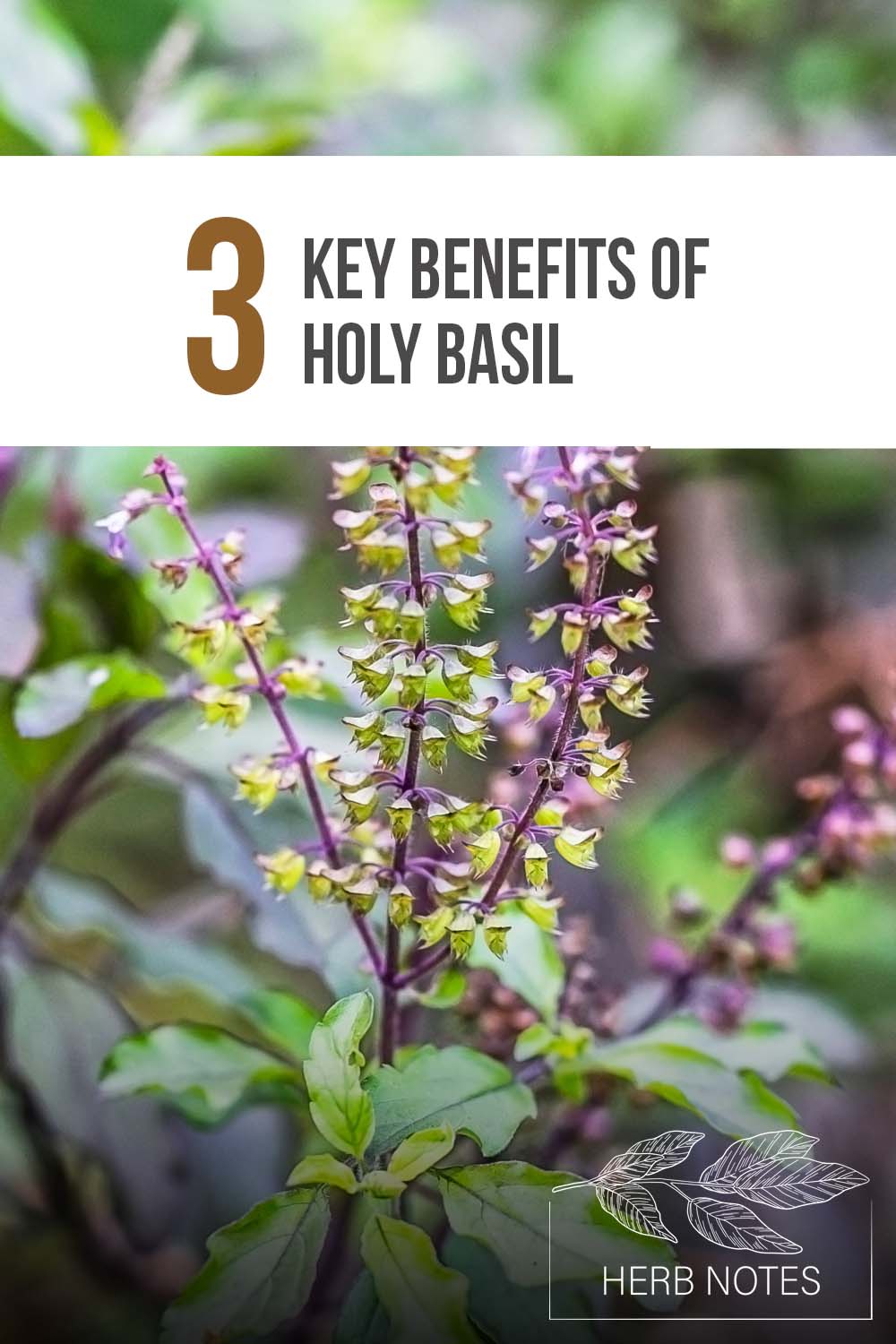
For over 3,000 years, holy basil (Ocimum tenuiflorum or Ocimum sanctum) has been one of India's most revered plants. Its Sanskrit name, tulsi, means "beyond compare." That's not a casual name for a plant. For over 3,000 years, Ayurveda has honored holy basil as a sacred elixir of life — and the more you know about it, the more that reputation makes sense.
Let's explore three remarkable uses of holy basil…
1. Holy basil for stress and the nervous system
Holy basil is classified as an adaptogen – a category of herbs that help the body handle stress in wide-reaching ways. Adaptogens work by supporting the system at the center of how our bodies respond to stress, called the HPA (hypothalamic-pituitary-adrenal) axis. Rather than acting like a sedative or a stimulant, adaptogens help the body find its own balance.
Clinical research backs this up, with a two-month study finding measurable improvements in anxiety, stress, and depression. What makes holy basil rare is the combination: it simultaneously calms and energizes the spirit, quells anxiety and grief, and brings clarity and focus to the mind.
That balancing quality is why so many herbalists reach for tulsi day after day, as a lifestyle tonic rather than a one-time remedy.
2. Holy basil for cognitive health
Have you ever had one of those days where you're technically doing things, but your mind feels like it's somewhere else entirely? You're gardening, but you're not really there. You're in a meeting, but lost in a spiral of future plans. Holy basil has something to offer here too.
Holy basil is a cerebral stimulant, recommended for people experiencing mental fog, cloudy thinking, poor memory, and difficulty with attention. It can be combined with other cognitive herbs like rosemary and ginkgo for even deeper support.
Holy basil supports embodiment by connecting the mind and body, and settling cognition back into the present moment — something we can all certainly benefit from!
3. Holy basil for immune support
Holy basil is also a remarkable ally for the immune system. It works as an immunomodulator, meaning it doesn't simply stimulate immunity, but it helps regulate and strengthen it. That's an important distinction, especially for people dealing with chronic conditions like allergies or asthma.
Holy basil can be taken both to prevent upper respiratory infections and to support the body through active ones. As an expectorant, it also supports the lungs in clearing mucus, making it useful for bronchitis and pulmonary weakness.
One study looked at a traditional Ayurvedic tea blend of five herbs – holy basil, ashwagandha, licorice, ginger, and cardamom – given to older adults with a history of recurrent colds and coughs. Regular consumption enhanced natural killer (NK) cell activity, greatly increasing the body's early immune response to infection.
Holy Basil Contraindications
Holy basil is a wonderfully safe herb with a long history of daily use. That said, there are a couple of considerations to keep in mind:
Fertility: Holy basil may have an anti-fertility effect on both men and women. Couples wishing to conceive and pregnant people should avoid using it medicinally.
Blood sugar: If you're managing diabetes with insulin, holy basil's blood sugar-lowering effects may require adjustments to your insulin dosage. Consistent, daily use is best so insulin levels can stay predictable. Always work with your health care provider.
Want to Learn More About Other Common Herbs' Benefits?
Now that you've learned a little bit about the health benefits of holy basil, you might be wondering how you can learn more about the medicinal properties of other common plants.
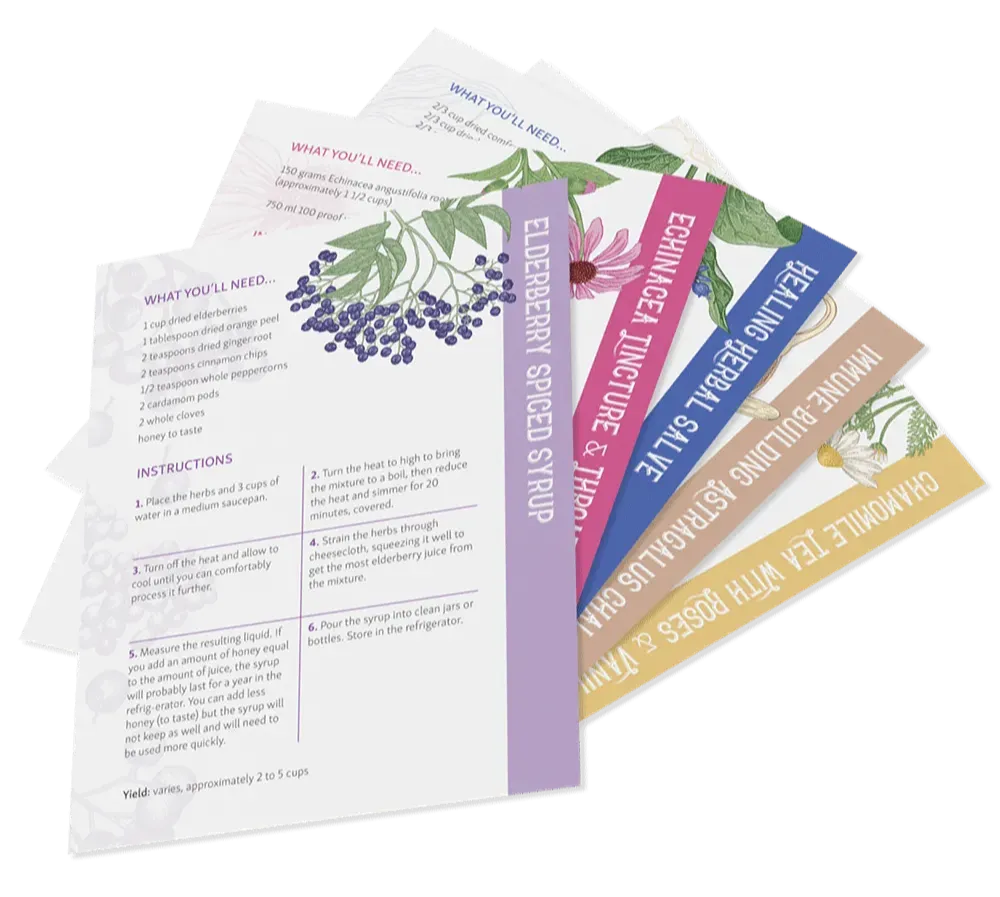
Well, here’s the easy way to get more info about some of our favorite herbs: download a FREE deck of our top 12 Herb Notes here. You’ll learn all about the medicinal properties of common herbs like elderberry, dandelion, and more.
P.S. Here are some frequently asked questions about holy basil…
What is the best way to work with holy basil?
The most common and accessible way to enjoy holy basil is as an herbal infusion, or tea. Because tulsi is high in volatile oils, steep it covered for 5–10 minutes to keep those aromatic compounds in the cup. Start with 1 teaspoon of dried leaf – there's very little risk of taking too much with this gentle herb.
One of the most delightful preparations is a cold overnight infusion: toss a handful of fresh flowering tips in a quart of cold water, let it steep overnight in the fridge, strain in the morning, and sip throughout the day. It has a wonderfully aromatic, cooling quality – especially soothing when the lungs feel dry or irritated.
You can also tincture it, infuse it in honey (highly recommended… it's delicious!), or simply add it fresh to your cooking.
What parts of holy basil are used?
The entire above-ground plant can be used medicinally, but the highest concentration of medicinal benefits are in the aromatic leaves and flowers.
What are the suggested doses for holy basil?
- Tea: 1 teaspoon dried leaf per cup, steeped covered 5–10 minutes, up to 4 ounces of herb per day
- Tincture (fresh herb): 1:2, 75% alcohol, 3–5 mL, three times per day

Footnotes
The Herbal Remedy Vault has all of our printable recipe cards...