Discovering Calendula: Free Herbal Activity Book
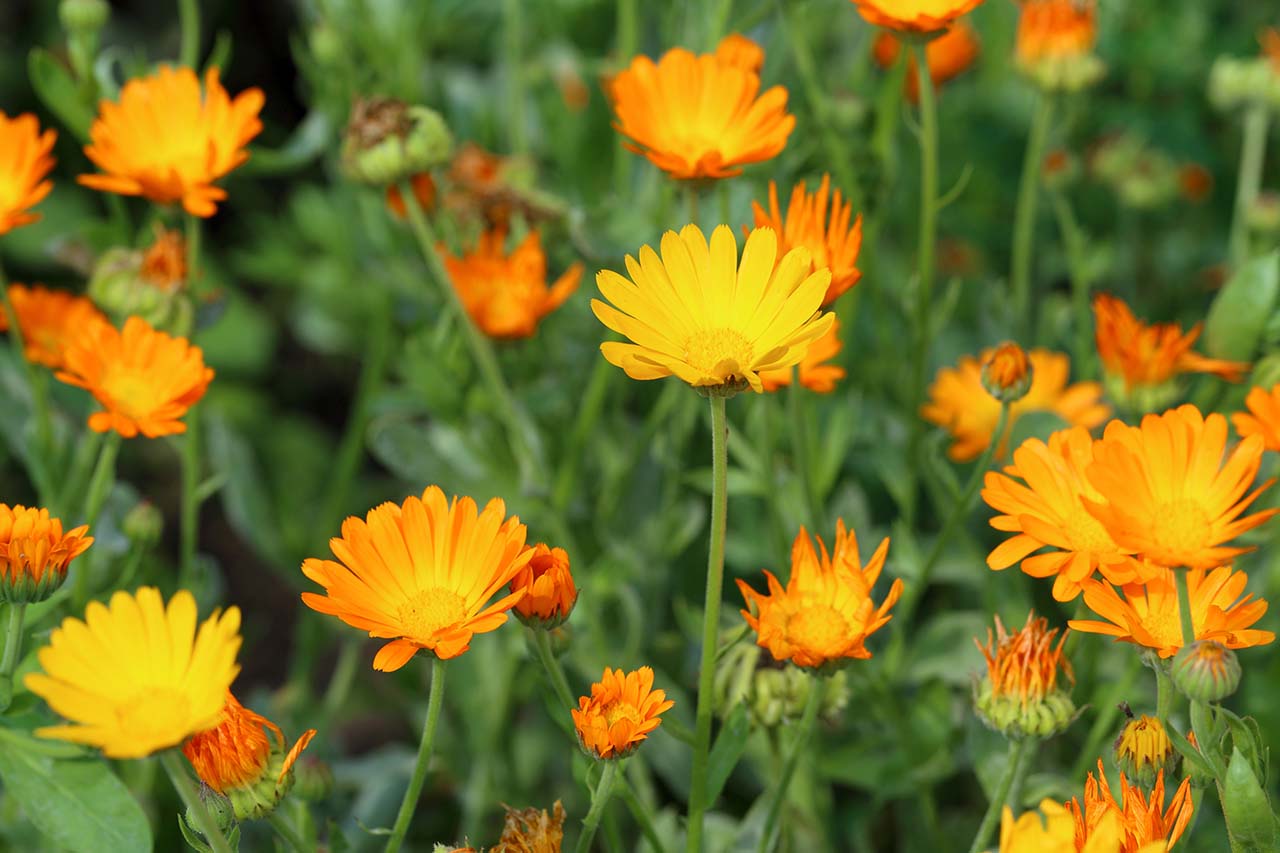
Calendula sometimes blooms all year round here in the Pacific Northwest. These sunny yellow flowers always brighten my day and bring a smile to my lips. I have lots of them growing under my cherry tree in my medicinal herb garden.
Calendula belongs in this garden, for sure. The blossoms are not only beautiful, they are one of the very best herbs to help us take care of our skin and to heal burns, cuts, and scrapes. It’s also good medicine for healing earaches and even minor sprains.
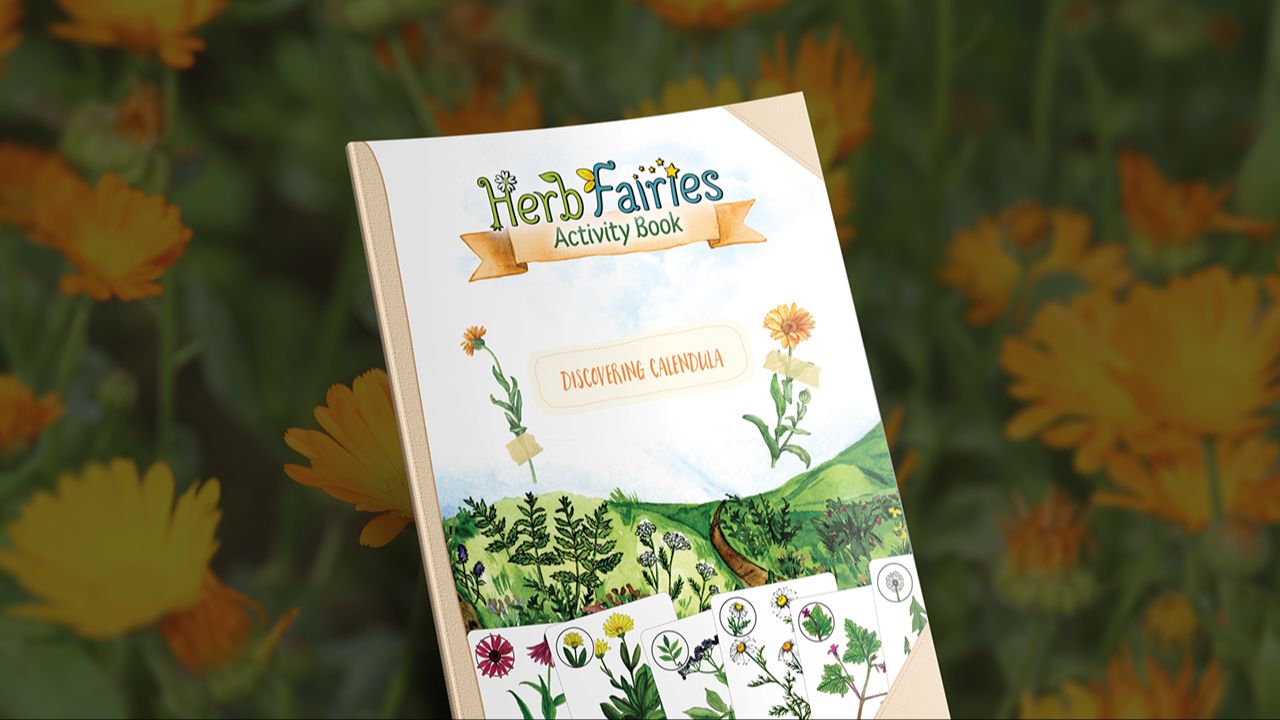
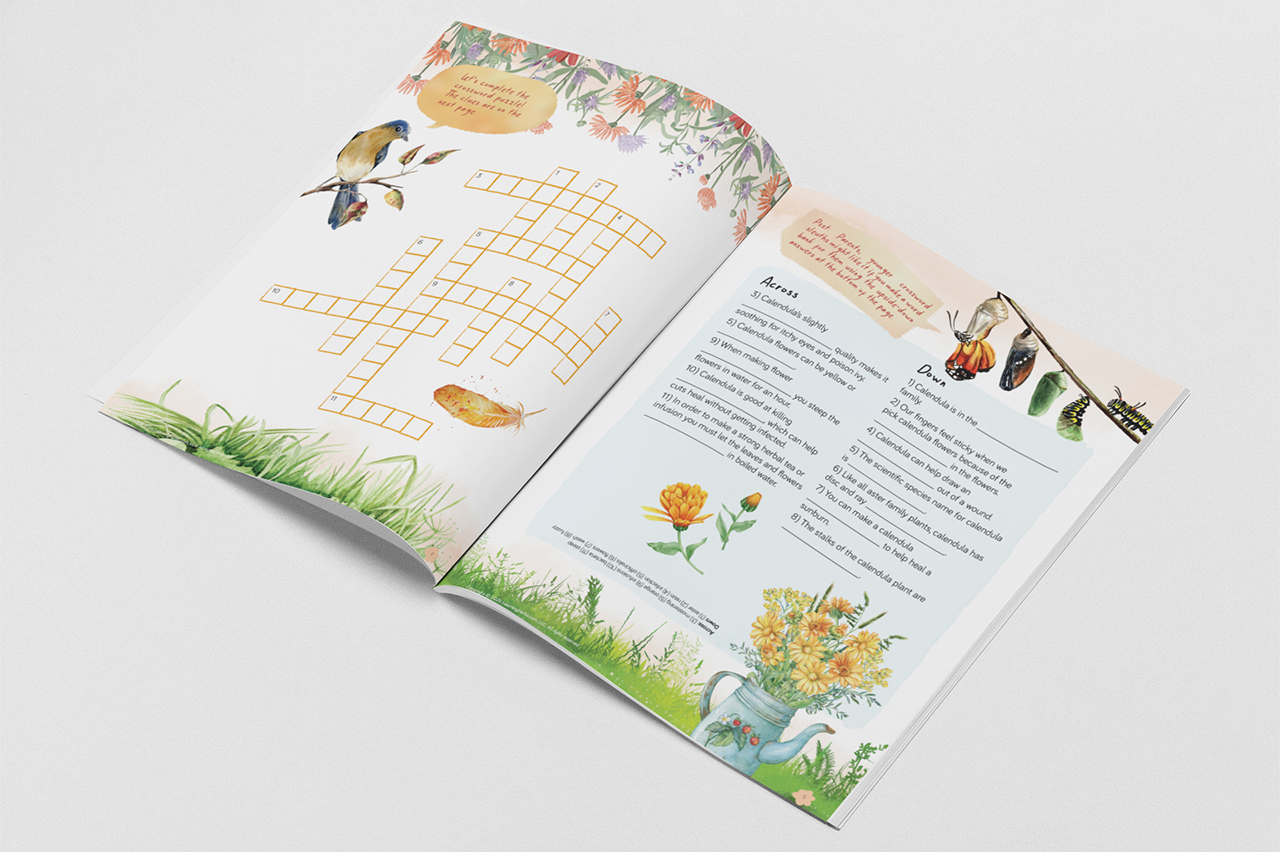
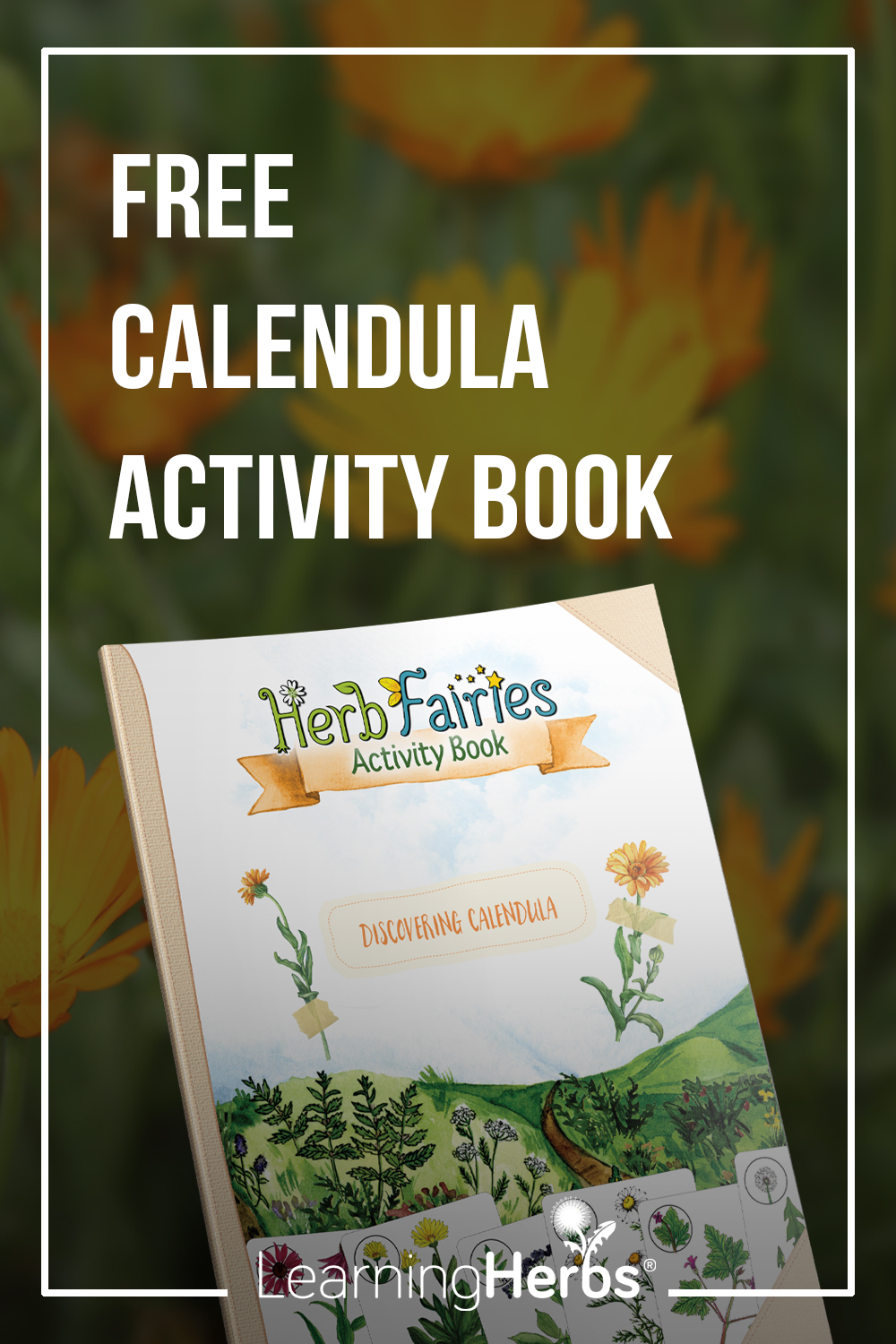
For this holiday season, our LearningHerbs team has put together a special activity book so that you and your kids can have fun learning all about calendula together.
Fun Learning Activities for the Whole Family
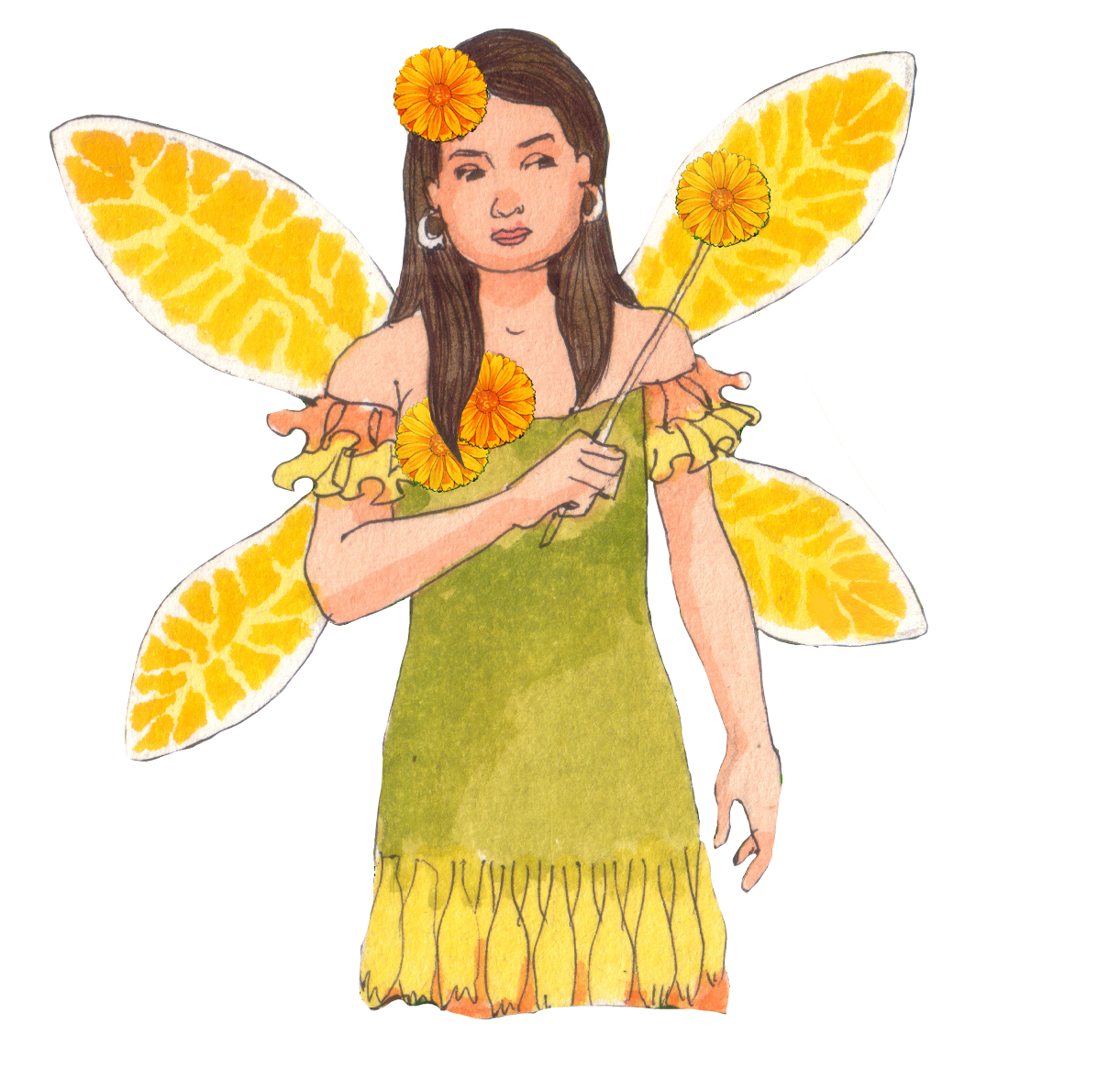
The book includes a crossword puzzle that you can all work on together, a dot-to-dot for the littler ones, and a coloring page that shows the identifying characteristics of the calendula plant. There’s also a coloring page of Cally, the calendula fairy, from my Herb Fairies book series and a paper doll version of Cally as well.
Want to get off the printed page and get messy with a craft? You’ll find instructions for making your own handmade paper using calendula petals.
An Easy Calendula Recipe for Kids
Or perhaps you’ll want to roll up your sleeves and get into the kitchen to make a special holiday treat. These calendula chocolate chip raspberry muffins can be made with dried calendula petals if the calendula plants have stopped blooming where you are. Perhaps they are covered in snow, waiting for warmer summer days to show their sunny orange and yellow blossoms.
Here are some frequently asked questions about calendula...
Why is calendula good for our skin?
Calendula is antimicrobial and immune stimulating. It helps heal wounds and has anti-inflammatory properties. It also contains healing constituents like flavonoids and antioxidants. Calendula is a gentle herb that is well-suited for dry skin and sensitive skin: it’s a great herbal ally to incorporate into a daily skincare routine. You could use calendula as a salve for chapped lips, as a calendula cream for daily skincare, or as a calendula-infused herbal oil—for a face oil or for a calendula massage oil for the whole body. Topical applications of a calendula tincture also make a great liniment for promoting wound healing. You could also make a soothing face mist with a calendula tea.
Are calendula flowers good to eat?
Yes! Calendula flowers can be baked into muffins or sprinkled on salads or included in other delicious recipes as well. They do have a somewhat bitter taste, so you will probably not enjoy them in large quantities, but they bring a lot of sunny beauty to the food you are preparing.
How do I use calendula flowers?
Some of my favorite ways to use calendula flowers include infused calendula oil in a healing salve or lotion that I can spread on my skin or use to heal cuts and scrapes. That oil can also be used as eardrops to help heal earaches. You can infuse calendula flowers into extra virgin olive oil, sunflower oil, and more.
Sharing the Gifts of Herbs
We hope you enjoy this special holiday gift from LearningHerbs. Print and share your Discovering Calendula Activity Book as many times as you would like.
If you want to share your passion for herbs with the young people in your life in another fun way, consider Herb Fairies. Herb Fairies is my herbal children’s book series and learning system. Herb Fairies is a fantastic way for kids to dive deep into learning herbs while having lots of fun.
May we all stay healthy, warm, and nourished this winter!
—Kimberly

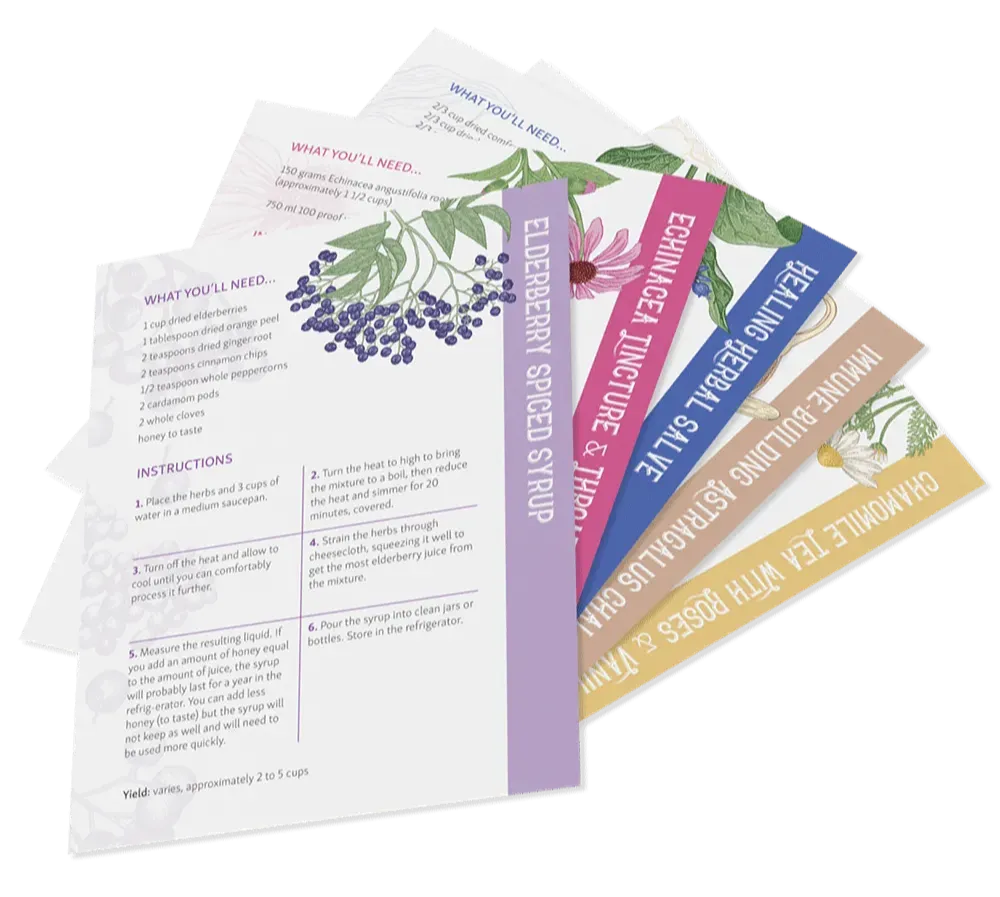
The Herbal Remedy Vault has all of our printable recipe cards...